


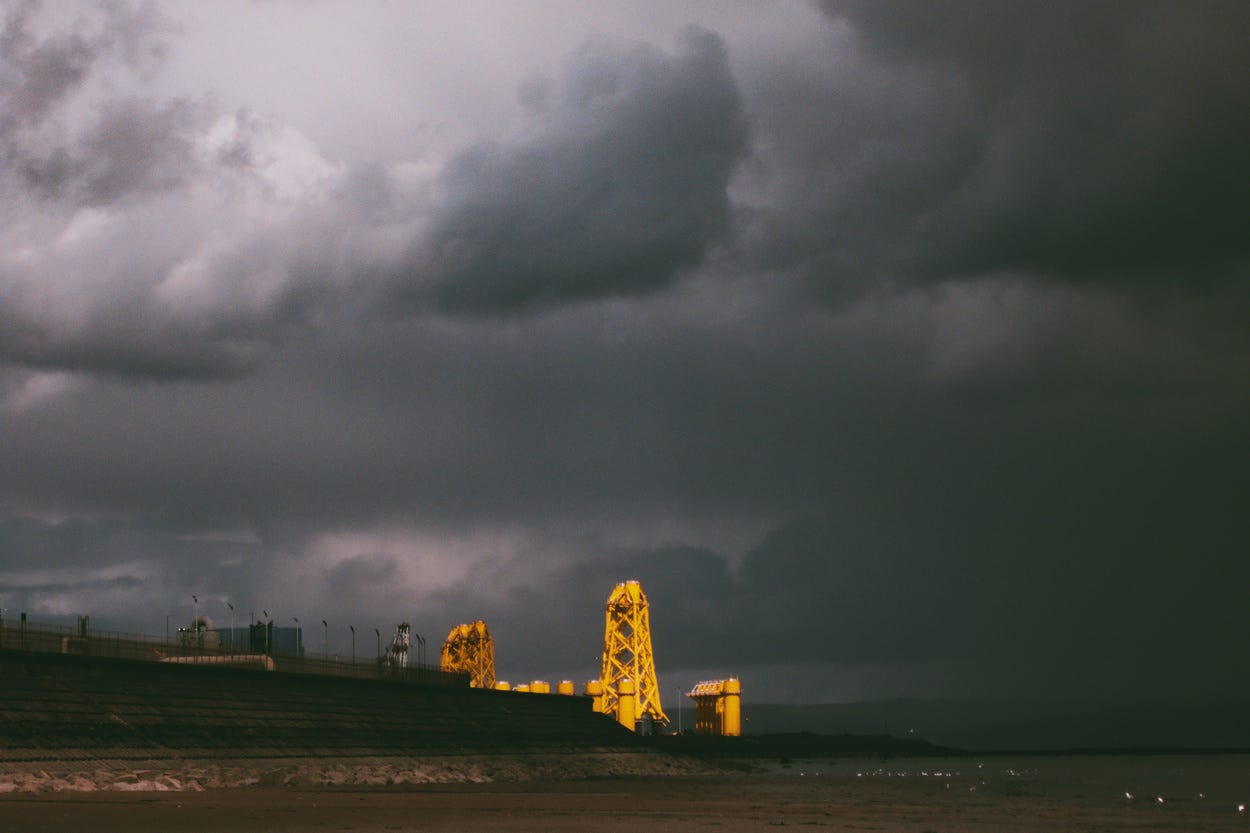
“They blow my mind. I can’t believe that they’re going to go underwater.”
Like illustrator Maria Stoian, many of us have responded with awe and curiosity to the immense structures that have stood towering over the port of Leith for the past eight months.
The vivid yellow turbine bases, set to depart Leith docks for the North Sea in the new year, have inspired a swell of artistic responses – and given us a front row seat of the energy transition
In that time, they have become a much-loved industrial addition to Edinburgh’s historic cityscape, of a staggering scale that the Inquirer detailed earlier this year. One devoted fan even got a tattoo of them.
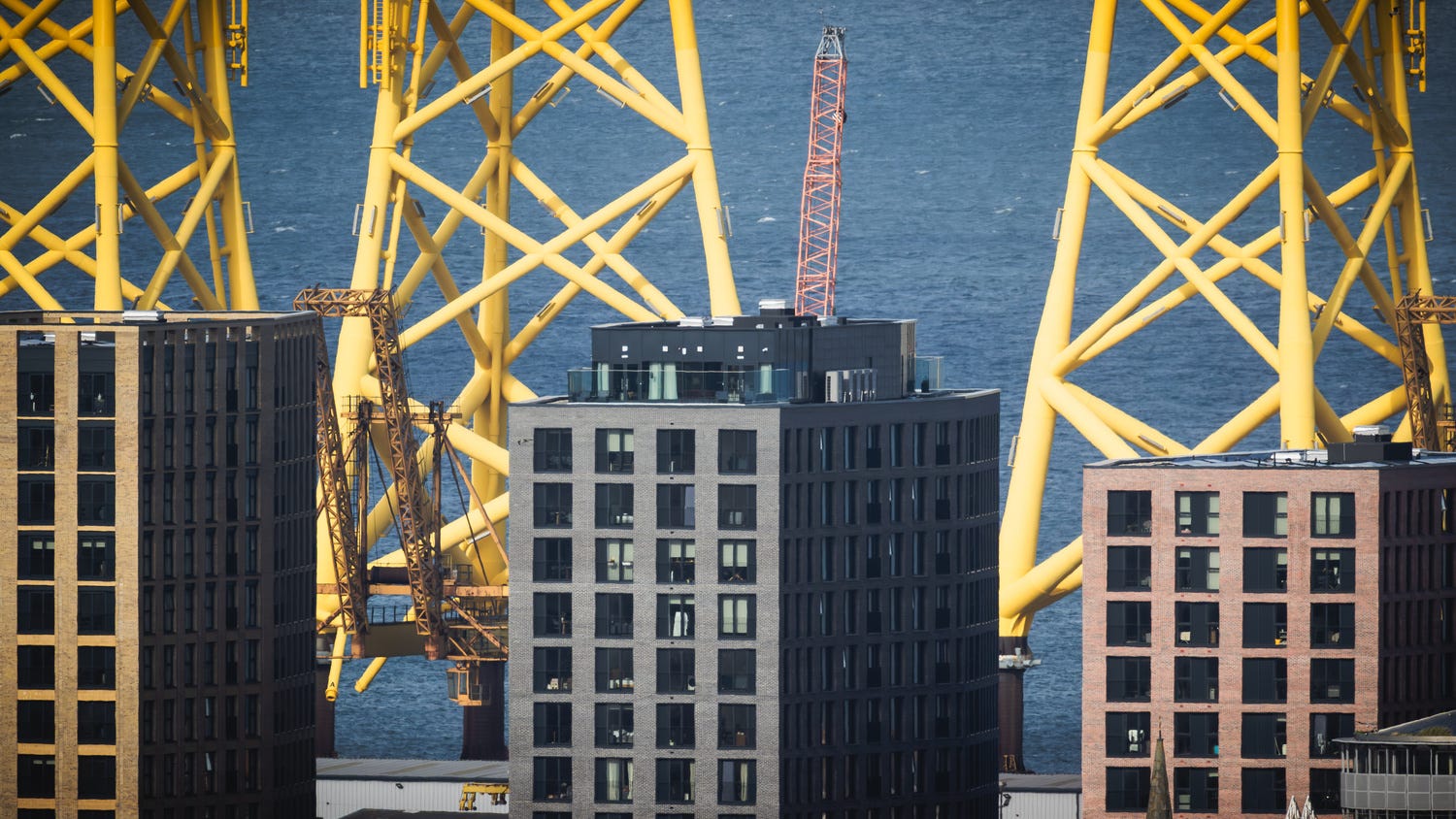
The 83-metre-tall towers will anchor huge wind turbines in the under-construction Inch Cape wind farm in the North Sea near Angus, about 45 miles from the capital.
Infrastructure, art, or both?
Their sheer dizzying scale was what initially drew Stoian and writer Christina Neuwirth to the idea of making an album of photographs of the structures taken from locations around the city. The idea has since blossomed into a community art project, Yellow Towers, that has so far received around 130 public submissions inspired by the towers. A fundraising effort to stage an exhibition of the project hits its deadline later today, with funds still needed.
“We’re fascinated with them as art objects or sculptures that exist in our neighbourhood temporarily,” says Stoian, who is a teaching fellow at Edinburgh College of Art.
People have submitted photographs, drawings, paintings, embroidery, graphic designs, sculptures, letters, poetry and even music inspired by the 2,250-tonne tripods to the project’s website.
Stoian and Neuwirth hope to exhibit the work in February next year. This month the pair launched a crowdfunder to raise £7,770 to host two exhibitions plus a workshop and to print a booklet showcasing some of the contributions.
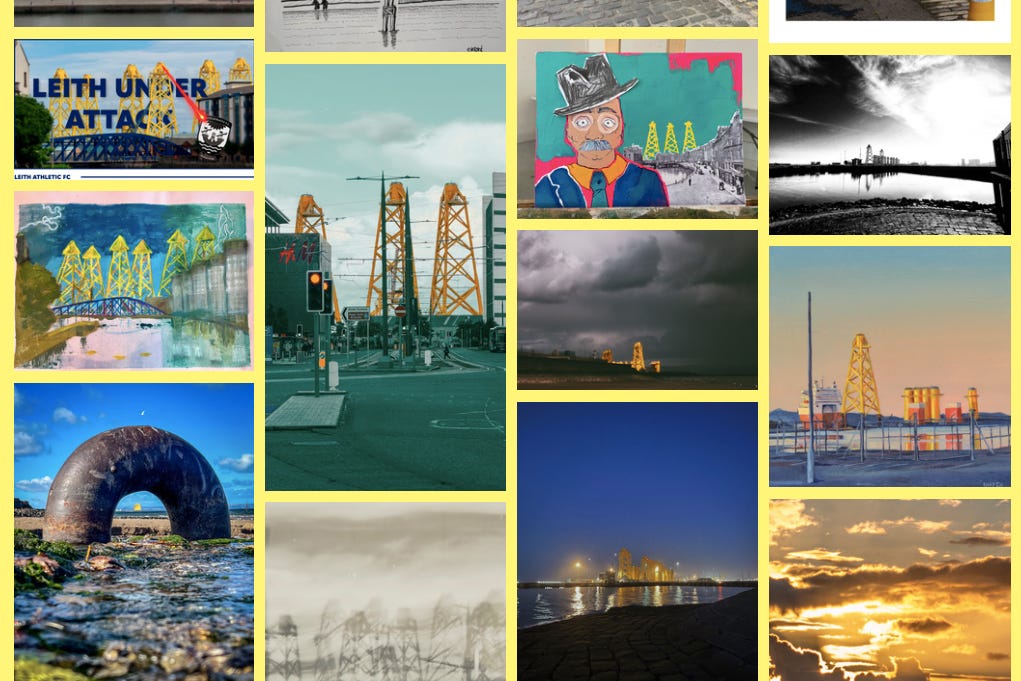
Stoian says many of the responses suggest that people see the towers as already belonging in the city, despite being here less than a year. The names used to refer to them, such as My Boys, Neighbours and Our big yellow friends, “really speak to how people have taken ownership of the towers” she says.
“Oddly, their looming will be missed,” wrote one contributor.
What is behind this surprising popularity? “They are just so visible,” says Stoian. “They’re visible from Fife. You come across them crossing the street, then suddenly they’ll appear again somewhere else.”
She adds that people are naturally attracted to the bright yellow hue – a standard colour of paint for offshore structures to ensure visibility at sea. “They are the colour of sunshine. That just makes them inherently fun.”
For many, the towers are welcome as symbols of renewable energy and progress toward tackling the climate crisis. Stoian points out it is rare to get such a close-up view of the nuts and bolts, literally, of the transition to low-carbon energy in a metropolitan area like Edinburgh.
“So much of this is hidden when you live in a city” says Maria. “You just don’t see this kind of activity. It’s quite exciting to see it, and feel kind of part of it.”
What next?
The jacket foundations will start to leave in the new year.
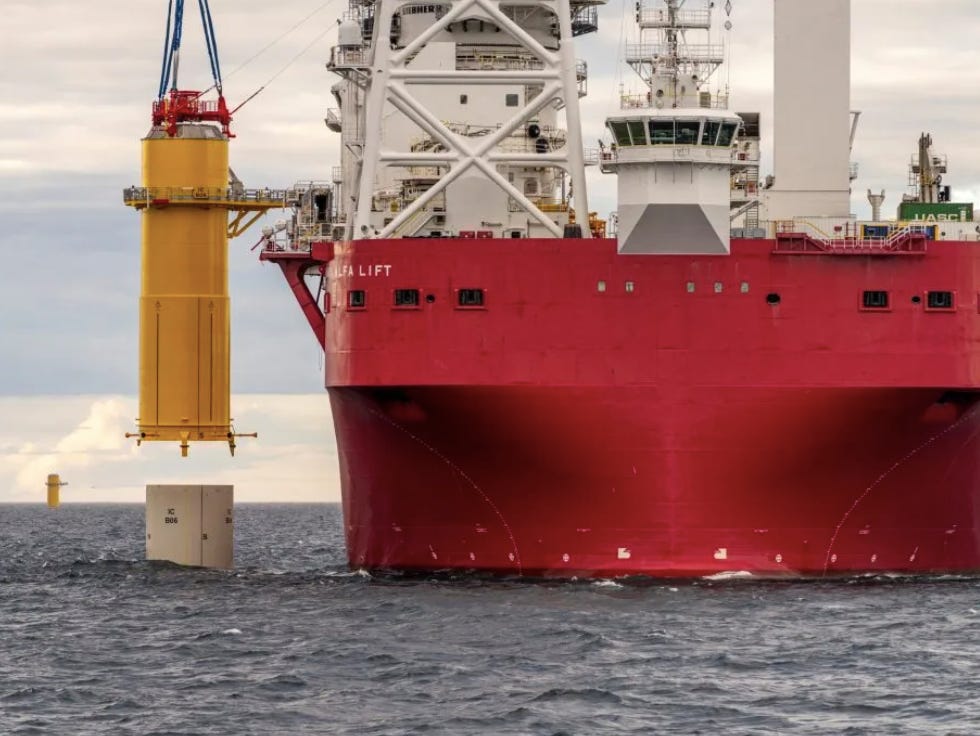
They will be ferried 45 miles out to sea and installed by Seaway Alfa Lift, the same low, red vessel which is currently installing the pin piles (the rust-and-yellow-coloured tubes that have been laid flat at the docks).
Three pin piles, installed in advance, will anchor each jacket to the seabed. The tower is lowered into place and held there by a ‘pile gripper’, like a pair of pliers holding a nail in place.
Installation must be precise and requires “significant engineering planning,” said a spokesperson for Inch Cape Offshore.
Inch Cape’s 72 turbines will be spread across 58 square miles, an area a little over half the size of Edinburgh and within a boundary whose shape looks curiously like classic video game character Pacman.
While offshore wind turbines are generally much taller than their land-based cousins, the yellow towers’ dizzying height is thanks to Inch Cape being one of the world’s deepest offshore wind farms. The structures will stand in the ocean at depths of up to 64 metres, holding up 274-metre-tall wind turbines.
The blustery seas off Scotland’s east coast are no stranger to offshore activity. The towers’ journey will take them past Neart na Gaoithe wind farm, nine miles from the Fife coast. Last year, its 54 turbines started generating enough electricity to power around 375,000 homes.
Clearly visible nearby are the 114 turbines of Seagreen 1, currently the largest wind farm in Scotland; a title soon to be taken by the now-approved Berwick Bank.
The Inquirer has reported on the controversy surrounding this behemoth development, which could prevent emissions of 8 million tonnes of CO2 a year, but is projected to result in the deaths of more than 40,000 vulnerable seabirds over two decades.
Out of sight…
The focus of construction at Inch Cape will now shift to the Dundee, where the recognisable white turbine parts are now being assembled. The first turbines are due to be carried offshore and installed in November.
What of the yellow towers? After a short stint in the limelight, the foundations will remain almost entirely out of sight to humans for the next 35 years – the planned lifetime of Inch Cape wind farm. During that time, they will play a vital but quiet role in generating clean electricity for millions of UK residents.
If you’re still around in 2062, when the wind farm is scheduled to be decommissioned, you might be lucky enough to catch a glimpse of the ‘big yellow fellows’ returning to Leith docks once again. Meantime, if you want to support the exhibition you can do so here.
