


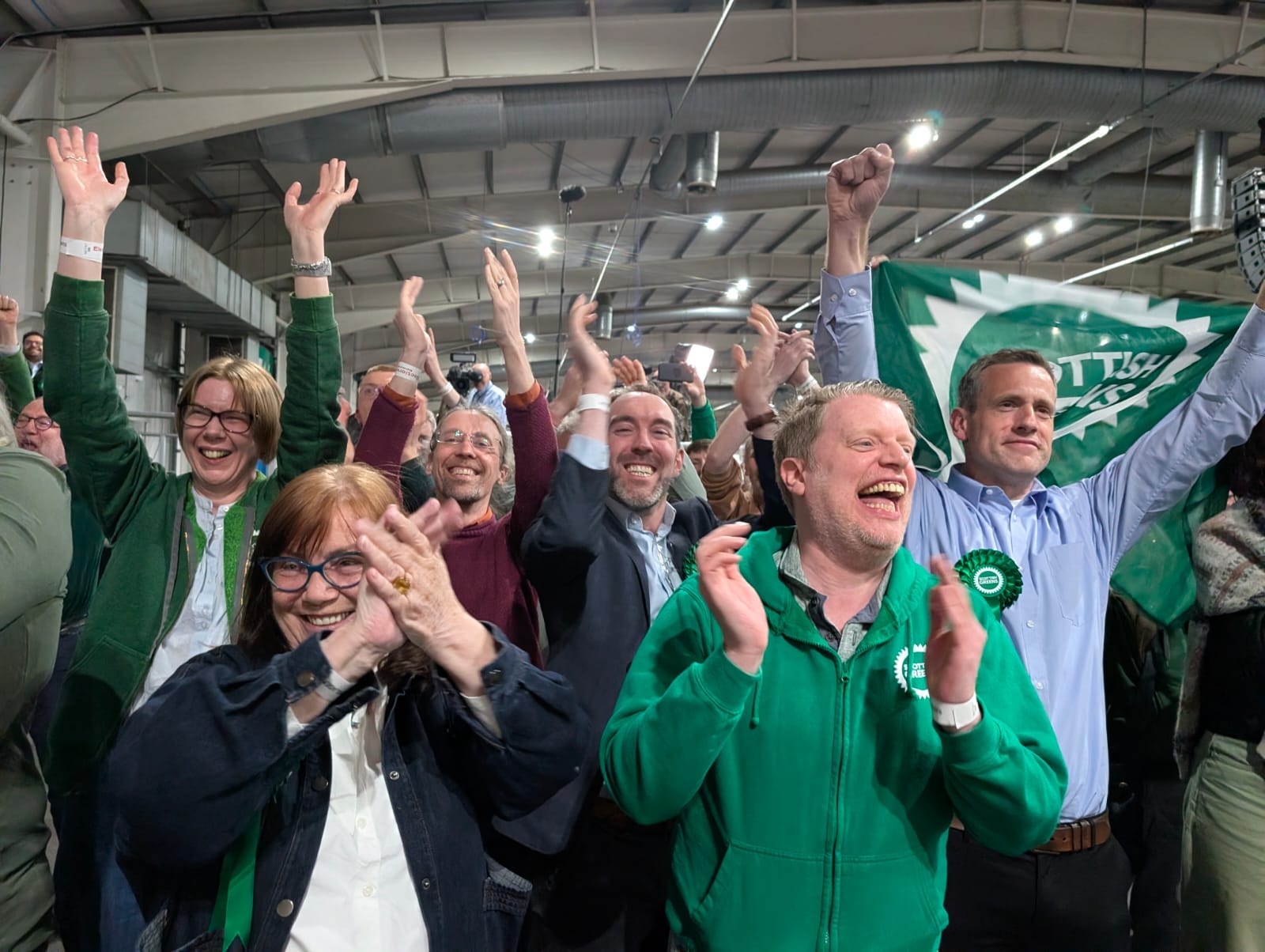
No one saw it coming. Not even the jubilant Green Party candidates who embraced each other in disbelief in the Royal Highland Centre.
Twenty-seven years after making British political history by electing Robin Harper as the UK’s first Green Party parliamentarian, Edinburgh has done it again.
Unbelievably, the Greens are now Edinburgh’s biggest political party at Holyrood. They now have four MSPs representing the Capital. One more than SNP and Labour, two more than the Liberal Democrats, three more than the Conservatives and Reform.
While the Labour Party argued with itself about who was the biggest threat to its ambitions - Reform or the Greens? - Edinburgh offered an emphatic answer.
Labour’s Red Wall might have disintegrated in the north of England, but Lorna Slater and her colleagues appear to be building a Green Wall in Edinburgh.
Is this the start of a new era of multi-party politics? Or will everything be turned on its head again next time we go to the polls? Only time will tell.
But everything looks very different today.
Lorna Slater, Kate Nevens (who hit the headlines for her commitment to the abolition of prisons), Q Manivannan (the first trans person elected to the Scottish Parliament) and Kayleigh Kinross-O’Neill are all Green MSPs representing the Capital.
Kinross-O’Neill described the result a “momentous”, while Mannivanan said the result showed the people of Lothian had voted for “hope over fear.”
All change, little changed?
And yet, and yet… When the smoke cleared, the levers of power within Scotland remain in the hands of the new establishment, the SNP.
Scotland remains split down the middle, stuck in a constitutional loop on the thistly question of whether to stay in the UK or strike out through independence.
The impasse means we have essentially the same Government we’ve had since the iphone first went on sale in June 2007, just a month after Alex Salmond led the SNP to form its first minority government.
In that time, Apple have released more than 50 versions of the world’s most popular smartphone, and in Scotland we’ve had SNP-led government. By the time the next election comes around in 2031, we’ll be awfully close to our silver wedding anniversary.
The Holyrood government might have been deeply unpopular for large parts of their past five years in office, but the SNP remains dominant. Meantime the Unionist vote is fractured and shared amongst four parties.
The SNP appear to have gone past the point of being the status quo and become an immovable object.
Overall, the SNP finished streets ahead with more than three times as many seats as any other party (58), but short of an overall majority (65). Labour and Reform tied for second (17 seats), followed closely by the Greens (15), then the Conservatives (12) and Lib Dems (10).
Our paying members make all our high-quality local journalism possible. Please consider joining them from as little as £1.54 a week and helping secure our future.
Confounding expectations
The first news in the count hall was universally good news - voter turnout had been unexpectedly high, with some constituencies seeing more than 60% and none below 50. Voters in Edinburgh, at least, confounded predictions of a disappointingly disengaged electorate.
By late afternoon, one of the biggest stories of election day unfolded.
As predicted in The Inquirer, the Greens came out on top in the battle for Edinburgh Central, and by a bigger margin than many thought, taking 35% of the vote. This is historic in two senses - it is the first time in Scottish Parliamentary history that the Greens have held a constituency. The result also makes Angus Robertson, the SNP’s Cabinet Secretary for External Affairs and Culture, one of the high-profile casualties, tumbling to third place behind Labour. Many independence supporters switched their allegiance to Green, often citing Robertson’s meeting with Israeli deputy ambassador Daniela Grudsky in 2024 as a key motivation, with constituency boundary changes also helping the Green’s cause.
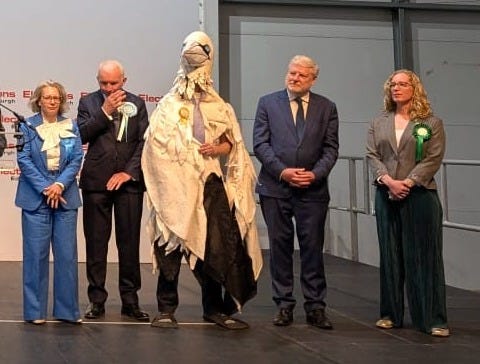
Watching the end of twenty years in politics, standing next to a campaign candidate in a gannet costume in protest against the Guga hunt where gannet chicks are harvested one day per year, Robertson must have felt acutely the absurdity of political life. He responded with grace to his defeat, saying he took comfort in being bested by a “fellow progressive candidate,” who supports independence. The pair shared a genuinely friendly embrace before leaving the stage at the Royal Highland Centre.
Those scenes were later surpassed when the regional list results were announced, with an unprecedented three Green candidates joining Slater as victors, prompting emotional embraces.
THE RESULTS
Edinburgh Central
Lorna Slater (GRN) - 12,680
James Dalgleish (LAB) - 8,098
Angus Robertson (SNP) - 7,702
Jo Mowat (CON) - 2,262
Charles Dundas (LIB) - 2,168
Gary Neill (REF) - 1,876
Edinburgh North Eastern and Leith
Ben McPherson (SNP) - 13,630
Kate Nevens (GRN) - 10,559
Oliver Thomas (LAB) - 7,894
Liss Owen (LIB DEM) - 1,895
David Lees (REF) - 2,746
Haris Young (CON) - 1,297
Edinburgh North Western
Alex Cole-Hamilton (LIB DEM) - 22,959
Lyn Jardine (SNP) - 9,943
Irshad Ahmed (LAB) - 1,879
David Thomson (REF) - 3,342
Rachel Cairns (CON) - 1,749
Edinburgh Northern
Sanne Dijkstra-Downie (LIB DEM) - 12,972
Euan Hyslop (SNP) - 10,479
Kayleigh Kinross-O’Neill (GRN) - 5,289
Eleanor Ryan-Saha (LAB) - 3,744
Andrew McLaughlin (REF) - 2,867
Christopher Cowdy (CON) - 1,900
Edinburgh South Western
Simita Kumar (SNP) - 11,727
Catriona Munro (LAB) - 8,438
Sue Webber (CON) - 4,636
Cameron Rose (REF) - 3,936
Andy Williamson (LIB DEM) - 3,672
Edinburgh Southern
Daniel Johnson (LAB) - 16,963
Deidre Brock (SNP) - 12,000
Marie-Clair Munro (CON) - 3,421
Jane Alliston Pickard (LIB) - 3,334
Charles Turner (REF) - 3,317
Edinburgh Eastern, Musselburgh & Tranent
Kate Campbell (SNP) - 14,083
Katherine Sangster (LAB) - 9,097
Angela Ross (REF) - 4,120
Alan Grant (LIB DEM) - 2,057
Tim Jones (CON) - 1,819
East Lothian Coast & Lammermuirs
Paul McLennan (SNP) - 11,677
Martin Whitfield (LAB) - 11,259
Miles Briggs (CON) - 4,719
Nigel Douglas (REFORM) - 4,611
Tim McKay (LIB DEM) - 2,802
Midlothian North
Colin Beattie (SNP) - 11,250
Caitlin Stott (LAB) - 8,754
Pal Chidambaram (REF) - 4,506
Jenny Claire Marr Butler (LIB DEM) - 2,387
Phil Doggart (CON) - 2,032
Midlothian South, Tweeddale & Lauderdale
Calum Kerr (SNP) - 14,091
Keith Cockburn (CON) - 6,930
Duncan Dunlop (LIB DEM) - 4,649
Daniel Coleman (LAB) - 4,614
Carolyn Grant (REF) - 4,199
Edinburgh and Lothians East (Region)
Kate Nevens (GRN)
Angela Ross (REF)
Irshad Ahmed (LAB)
Miles Briggs (CON)
Q Manivannan (GRN)
Katherine Sangster (LAB)
Kayleigh Ferguson Kinross-O’Neill (GRN)
Other parties
The other unpredictable seat was the newly created constituency of Edinburgh Northern, which was taken by Liberal Democrat Sanne Dijkstra-Downie. The Dutch-born city councillor took 34% of the vote, 6% ahead of favourite, barrista and fellow city councillor Euan Hyslop of the SNP. It was a good day for the Lib Dems, who took a second constituency adding to Alex Cole-Hamilton’s stronghold in the north-west, where he chalked up the most votes of any candidate across the city with a whopping nearly 23,000 (57%). Cole-Hamilton was visibly emotional, speaking with hope of a resurgence in liberalism in Scotland. The Lib Dems success in Edinburgh and elsewhere in Scotland prompted the party’s UK leader Ed Davey to head north to celebrate yesterday afternoon.
Edinburgh Northern and Leith became a last-minute mystery, with on-the-day polls predicting a win for the Scottish Greens. In the end Ben MacPherson held his seat, continuing for a third term in the Scottish Parliament. That makes him the longest serving SNP MSP in Edinburgh. Highly regarded by colleagues and political opponents, and having already taken ministerial positions in previous terms, MacPherson looks like the best bet for an Edinburgh-based Cabinet Secretary.
For Labour, the constituency results are less positive, but not dreadful. Daniel Johnson held his seat in Edinburgh Southern by a comfortable 4900 vote (12%) margin, increasing his majority, against the SNP’s Deidre Brock. However, the party failed to get their campaign over the line in Edinburgh South Western, where Simita Kumar - leader of the SNP group on the city council - maintained her party’s dominance and Labour’s Catriona Munro coming in far better than in 2021, but still 10% behind the SNP.
Labour will have been relieved to hang on to their two regional seats, with Katherine Sangster and Irshad Ahmed. Ahmed, who surprisingly topped the party’s regional list despite only recently defecting to Labour from Alba, promised to work with the party. “Today has been a hard day,” he said. “But tomorrow we rebuild.”
The final constituency went to the SNP, too, with Kate Campbell holding Edinburgh Eastern, Musselburgh and Leith for the SNP, again with a comfortable lead on Labour.
Reform surge fails to materialise
The greatest losses were undoubtedly for the Scottish Conservatives. The party’s vote share dropped dramatically across the city - in Edinburgh South Western, the party’s best hope for a constituency, the vote share dropped from 32% to 14%. In most constituencies, the Tories didn’t even break double figures. While the party wasn’t holding out for any constituencies, it will have been disappointed to return only one MSP, through the regional list.
Miles Briggs is now the Conservatives’ only MSP in Edinburgh and East Lothian, down from three in 2021, with the sole survivor admitting the campaign had been a difficult one for his party.
Reform have also done marginally worse than they will have hoped. In the constituency votes, Reform UK did not see the same surge of support as some had projected. In fact they were notably absent, with several candidates failing to arrive on stage for the constituency results. By contrast, even the perennial independent candidate Bonnie Prince Bob turned up to hear that he had won 176 seats. But perhaps it’s just as well, considering Reform’s best candidates placed no higher than 3rd in any constituency.
After polls suggested they would take anywhere from one to three seats, Reform UK ended up with only one MSP in the region. This is partly because, in the constituency votes, Reform UK did not see the same surge of support as projected - mostly falling below the 10%-plus share that they were polled to get.
Two incumbent list MSPs stood as independents in this election; Ash Regan (formerly of the SNP and Alba) and Jeremy Balfour (formerly Conservatives). Neither were re-elected. Regan was not present at the Edinburgh declaration, while Balfour made a short speech to mark the end of ten years in Holyrood. The former Conservative, who has focussed most of his parliamentary work on representing people with disabilities, raised his concern that several MSPs with disabilities were not going to be re-elected, and urged his successors to continue to advocate for people with disabilities in the next parliamentary term.
This has been an election that had been approached with uncertainty, disillusionment and division. The atmosphere at the count seemed to be self-consciously anti-division. Many acceptance speeches, from the Conservatives to the SNP and Labour, contained a continuous thread of unity, tolerance and civility in public life, as well as the need to restore trust in politics.
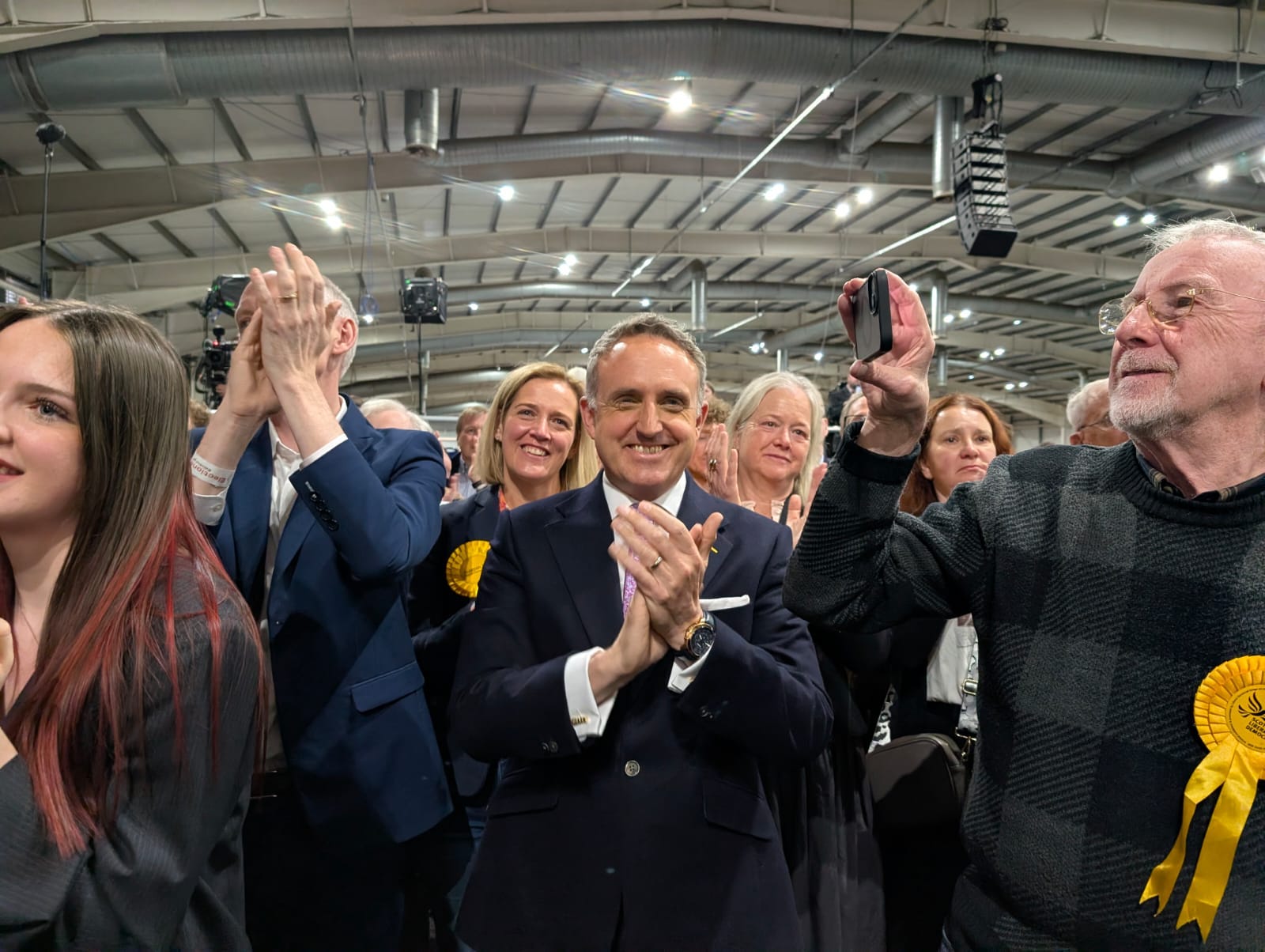
Simita Kumar, who was the first person of the day to make an acceptance speech, said: “We won’t always agree, and that’s okay, but we must let kindness and civility guide us in disagreement.” Daniel Johnson declared: “We must reflect on the politics we seek to create,” promoting politics of solidarity, which seeks to unite rather than divide. Miles Briggs added he was “certain that his new colleagues would quickly learn that we must work together.”
MacPherson addressed his fellow candidates by name, saying to Conservative and Reform candidates that “though I profoundly disagree with your politics, you’re local guys and I respect you for standing,” before going on to thank his voters for supporting “social justice and positive politics.”