


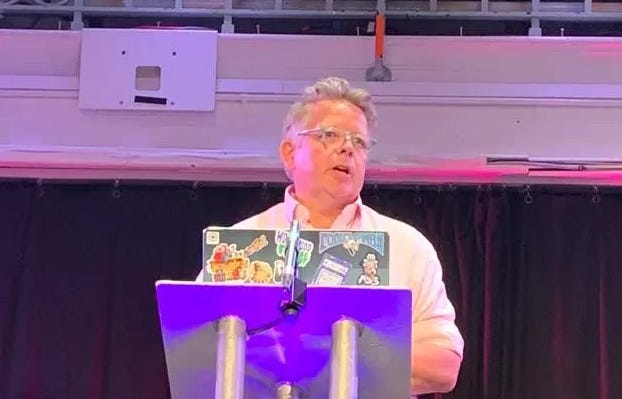
‘We were set up as a nomadic organisation - that was our business plan,’ says Sam Gough. ‘But we’d love to be here because this is where everything started and it’s what we know. The building is part of our ethos and always was and always will be.’
Armed with a firm handshake and a forthright gaze, Gough is the chief executive of Summerhall Arts, the charity managing the cultural output of the former veterinary college in Edinburgh, writes Will Quinn.
The site, recently acquired by property developer AMA Homes, faces partial demolition to accommodate student housing and a boutique hotel. It’s the stuff of cultural nightmares, yet Gough, undaunted, views the current public consultation as a practical test of the city’s commitment to the arts.
‘We know that the arts in Scotland are under threat,’ says Gough. ‘Especially building-based organisations are under threat every day. This is another threat to a significant building-based organisation.’
Following the publication of AMA’s initial plans, Summerhall Arts issued a statement objecting to the developer’s proposed footprint, and echoing his comments to me.
‘We are concerned that the current plans appear to earmark some of Summerhall’s most distinctive spaces for demolition,’ the statement reads. ‘These spaces are not simply parts of a building. They are integral to Summerhall’s identity, character and cultural offer.’
The proposed development affects up to 80% of the site, encompassing the historic Anatomy Lecture Theatre, Tech Cube 0, and the Dissection Room. While Gough acknowledges the sprawling campus requires maintenance, he questions the framing of the evidence presented in the developer’s early presentations.

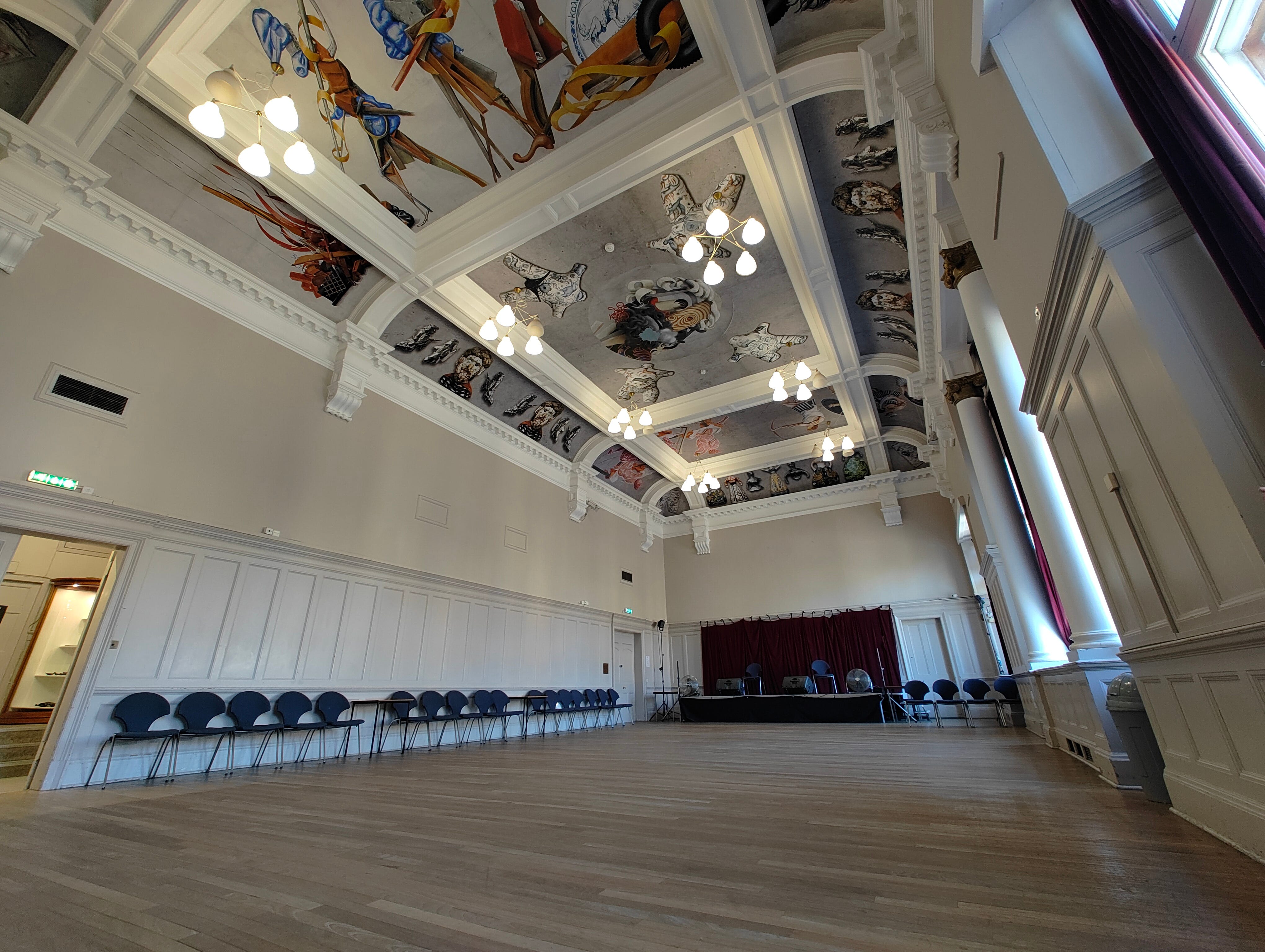
‘I’m not sure some of the photographs that were put on in the consultation are as bad as they look,’ he says when we sit down in one of Summerhall’s undeniably stately rooms. Without a comprehensive structural report, he maintains it is difficult to determine whether the highlighted defects are foundational or superficial.
‘What you don’t photograph is the beautiful artwork on the ceilings, the amount of activity that a hundred of us are doing, plus the beautiful spaces,’ he says.
A track record of resistance
This is not a sudden crisis, but the latest development in a protracted struggle. Summerhall’s future was abruptly destabilised three years ago when its former owners - Oesselmann Estate Limited, the family trust through which founder Robert McDowell and his relatives held the property - placed the labyrinthine site on the open market, pulling the rug out from under McDowell, who did not want to sell, and the creative community that had built its home there.
The resulting shockwave generated a local petition that gathered 15,000 signatures in just 48 hours. It proved the civic attachment to Summerhall was no shallow affair, but a deep-rooted commitment to the venue’s survival that has helped sustain the charity throughout the long sale process.
Reflecting on how communities protect their cultural assets, Gough notes that campaigns to save venues like the Leith Theatre and the Filmhouse proved that collective action could successfully challenge unwanted redevelopment. He also emphasises the importance of institutional allies, pointing out that Summerhall Arts has actively engaged with the Southside Community Council - noting they are ‘the one organisation that the planning (authority) have to consult with.’
To view AMA’s current plans and submit feedback, go to: https://summerhallconsultation.co.uk/index.php
In a city where cultural venues rely heavily on public subsidy, Summerhall operates differently. ‘The Trav have got two spaces, Lyceum have got two spaces... they can be busy and book up 18 months in advance,’ says Gough. ‘What we’re doing is different. We have a very different business model.’
Summerhall uses multi-year funding from Creative Scotland strictly to support year-round artistic development. The large-scale Fringe operation is budgeted to break even. Commercial lets and private events fund the remainder.
This approach relies on intelligent space management rather than constant expansion. Gough points out that in 2025, Summerhall deliberately ‘de-grew’ its Fringe programme from 125 shows to 85, closing two venues, yet maintaining the same ticket sales and revenue.
Part of that operational agility lies in how fluidly the site adapts to its tenants. ‘All of the other organisations in there run their businesses and make it work,’ says Gough. ‘Without removing 81% of what is here, we can make it work. We need some things repaired.
‘Viable is the important word. ‘Viable is enough space for us to do the work. It’s affordable enough for us to be able to pay the rent. That to us is what viable is.’
Reading between the developer’s lines
AMA Homes built its business on premium residential developments. Acquiring a multi-tenant arts complex marks a departure from their standard portfolio. The developer has stated an ambition to create a thriving arts quarter (Edinburgh Council’s planning department has made it a condition of any permissions), but Summerhall currently houses over 110 sitting tenants, ranging from independent artists to commercial distillers. Most have no obvious place in AMA’s visions for the future.
Yet whilst locals and this publication frequently point to AMA’s unfulfilled planning obligations at Cramond as poor evidence of any sense of civic responsibility, Gough chooses a measured approach. He prefers to operate in good faith, though he recognises the difference between constructing residential property and managing a creative hub.
‘I’m a great believer that you do business with people and not with organisations,’ says Gough. He prefers to look his counterparts in the eye and expect them to honour their word.
