


Welcome to your midweek edition of The Inquirer.
For today’s long read Will Quinn has been looking into the cost of staging a show at the Fringe. Every year, we hear dire warnings about the soaring cost of accommodation in Edinburgh - and there is no doubt it has generally become eye-watering - and the impact on the affordability of performing at the Fringe.
The cost of staying in the capital in August creates many issues, from forcing homeless families out of accommodation in the city to turning Edinburgh into one of Edinburgh’s premium tourist destinations.
But what does it mean for the performers who continue to beat a path to the city each summer? Are we pricing out all but the most affluent from putting on a show at the Fringe? The answer is more complicated than you may have been led to believe.
More on that below, but first your regular midweek news roundup and your cultural highlights for the week ahead.
Your Edinburgh Briefing
TAX AXE: Scottish Ballet has blamed the city’s incoming Visitor Levy - which starts to be charged from tomorrow - for cancelling plans for some of its festive shows. This year’s Christmas show Cinders! will go ahead but plans to stage five performances of a touring show between Christmas and New Year will not. Steven Roth, executive director of Scottish Ballet, told The Herald said: “A visitor economy that becomes too expensive for both the artists who animate it and the audiences who come to see them risks undermining the very thing that makes Edinburgh worth visiting.” Overnight visitors will be charged an extra 5% on the cost of their first five nights in the city from tomorrow.
FRINGE SWITCH: Pop-up Fringe venues are set to move to St Andrew Square as a result of buses being diverted along George Street in the wake of the Princes Street fire. The area outside the Assembly Rooms was due to be pedestrianised for the duration of the Festivals, but those plans are to be scrapped. St Andrew Square was until recently the home of the book festival.
HOSPITAL CRASH: An 85-year-old woman and a man aged 88 are fighting for their lives after being hit by the driver of a car outside one of the main entrances to the Royal Infirmary of Edinburgh. Police are appealing for dash-cam footage of the incident involving a red Peugeot 208 on the Midlothian side of the hospital at about 3:40pm on Monday.
NEURODIVERSITY WAITS: NHS Lothian has been ordered to develop a plan for dealing with long waits for neurodiversity testing for children. The Scottish Public Services Ombudsman found the health board failed to develop an appropriate plan to cut down a waiting list that has risen to around 11,000 children after concerns were raised by a whistleblower in 2024.

MAN CHARGED OVER DEATH: A man has been charged in connection with the death of a beauty clinic boss Vikki Soloman, aged 44, who was found dead in her home in the city’s East Craigs on Monday evening. A 46-year-old man has been charged after police were called to a disturbance at the property and is due to appear at Edinburgh Sheriff Court today.
Pick of the (Cultural) Pops
Greetings, Pop Pickers!
August is fast approaching, and the city council is worried about preserving ‘heritage features’ at the burned-out husk of the old Debenhams building on Princes Street, writes Will Quinn. You might think that decades of mismanagement have made the city’s principal thoroughfare a hideous hodgepodge, and that restoring the tram service and not compromising the Fringe’s remaining New Town stronghold on George Street with traffic diversions should be the obvious priorities… but I couldn’t possibly comment.
Appreciated by those in power or not, however, the Fringe’s shadow now looms so large that it’s hard for the other cultural flowers to bloom - but not impossible! The Honourable Mentions have wilted away, however, leaving only 5 choice dates for your diary before the world’s largest celebration of the performing arts takes over. Alright? Let’s get on…
New in at Number 5 is... Modern Love (Netherbow Theatre, tonight)
We are starting things off at the Scottish Storytelling Centre with the debut production from new theatre-makers Atelier 32. The piece follows Estelle and Andrew, a couple who have been together since their university days. When Estelle suddenly pulls the plug on the relationship, the play explores the messy six-week period where they are forced to continue living under the same roof before finally separating. It looks to be a grounded, realistic look at the emotional fallout and practical tensions of untangling a long-term partnership, examining how people actually treat each other when love is on the line.
New in at Number 4 is... Escape from New York (Filmhouse, Ongoing). Crashing straight into the charts is John Carpenter’s sci-fi cult classic, back on the big screen where it belongs. It remains a brilliant retro treat. Watching Kurt Russell’s iconic, eye-patch-wearing Snake Plissken navigate the gritty ruins of a maximum-security Manhattan to rescue the US President is pure 80s cinematic tension. Catching this properly projected in the dark at the resurrected Filmhouse is a great excuse to get out of the sun!
Moving to Number 3 is... Edinburgh Folk & Food Festival (Assembly George Square Gardens, Friday – August 2nd)
The Assembly Festival’s now annual warm-up in Assembly George Square Gardens makes certain no one takes their thoroughly curated food-vendor line-up for granted. Not all the trucks and stalls will still be here come August however, so don’t make the mistake of thinking your favourites will be here until September comes calling. Over at theQR.co.uk, my wife and I produce an annual Fringe Food Guide, so you can believe me when I say there’s not a bad stall on offer. But if you’d like an insider’s tip, whilst you can stop by for a nice meal at Ting Thai on Lothian Road (and elsewhere), their street-food incarnation is something (very delicious) else! Oh yes, and there’s some spectacular folk to enjoy alongside your scran, not least multi-award-winning contemporary folk stars Breabach. Delicious!
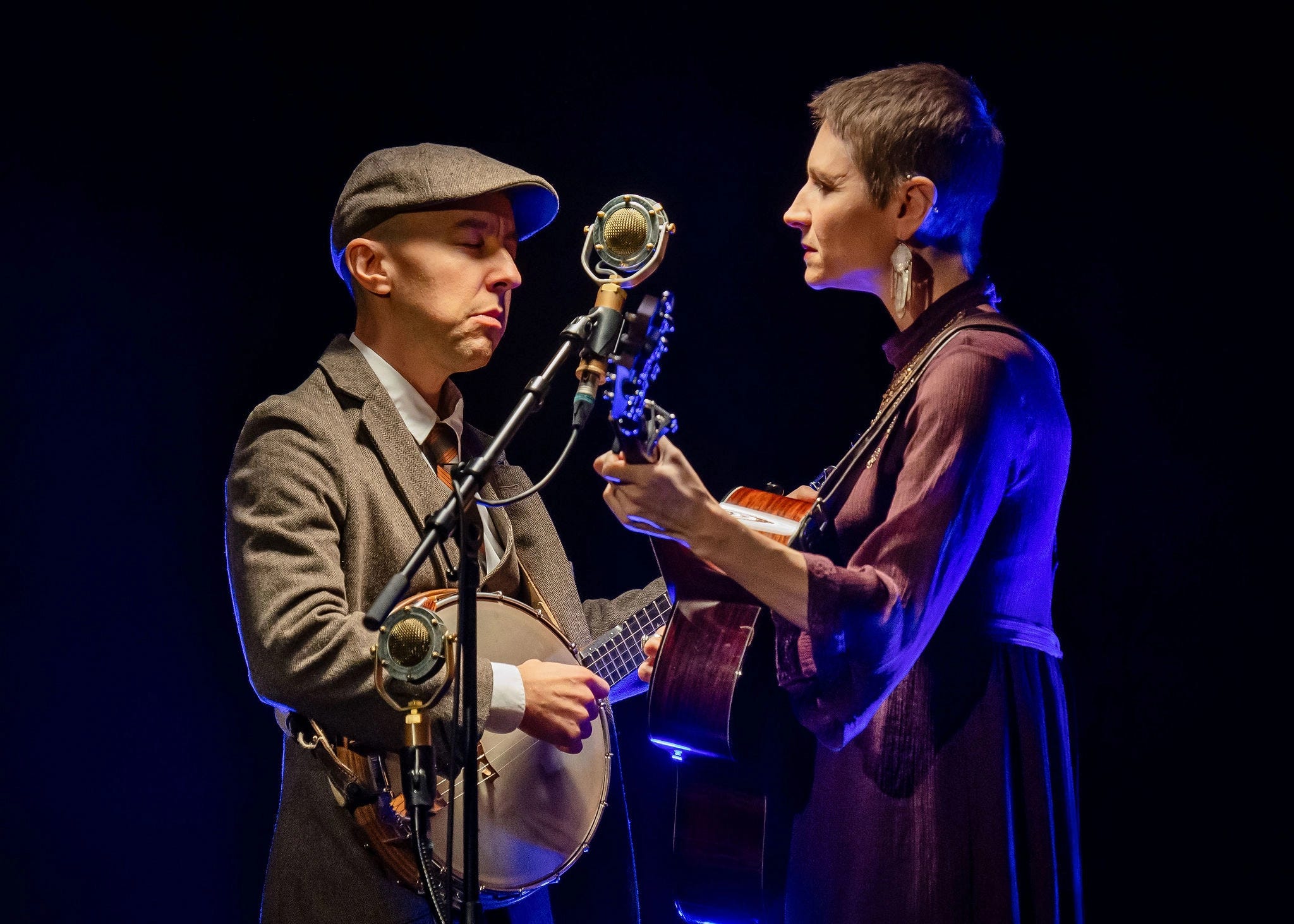
New at Number 2 is... Ordinary Elephant (Traverse Theatre, July 27th)
Stopping by the Traverse on their latest tour is the husband-and-wife Americana duo, Ordinary Elephant. Crystal and Pete Damore aren’t just rehashing the traditional folk canon; they bring their own character-driven storytelling to the table. If you appreciate clean harmonies, sharp banjo and guitar work, and a straightforward, unpretentious approach to acoustic music, this should be right up your street.
Staying at Number 1 is... Edinburgh Jazz & Blues Festival (Across the city, until Sunday)
And still reigning supreme at the top of the pops! Before the August madness takes over the capital entirely, the city’s premier musical showcase is serving up its final weekend. If you want to lean into the smoother, blues-influenced side of the tracks, there are some absolute standouts left to catch. On Thursday, British blues powerhouses The Cinelli Brothers team up with the spectacular Alice Armstrong. On Friday, Jerron Paxton brings his multi-instrumental acoustic blues to the stage. And for the ultimate weekend vibe, you cannot go wrong with Saturday’s dedicated Blues Afternoon. Brilliant stuff! Yes, indeed!
And that’s your Top 5! As the festival countdown ticks away and the shadow of the Fringe grows by the second, these five crackers will give you all the high-quality cultural fuel (and literal fuel if you stop by the Folk & Food Fest) you need. Grab those tickets, support our fantastic local venues, watch out for those traffic diversions around the New Town, and let me know what you’re seeing in the comments below!
Until next week: Stay bright!
Can you help secure the future of our high-quality local journalism? We rely on the support of our paying members to make everything we do possible. If you haven’t done so yet, you can sign up here from as little as £1.54 a week - and enjoy two exclusive editions a week.
You can still perform at the Fringe as cheaply as in the 1990s
The real cost crisis hitting the Festivals, its roots and what it means for performers
by Will Quinn
It is an August tradition as reliable as the rain: the annual lament over the cost of participation in the Edinburgh Festival Fringe. PR Matthew Shelley captures the prevailing industry mood precisely: “There is a continued steep trajectory towards total unaffordability for those without substantial private means - or who don’t make serious sacrifices.”
Headlines routinely declare the festival financially impossible. Even the then Fringe Society CEO Shona McCarthy warned the Scottish Government - as I reported back in a 2024 investigation for The Edinburgh Inquirer (Rats, Rents and Missing Data) - that the “dreaded rising cost of accommodation” had become a “grim reaper” threatening the event’s survival. Performers publish balance sheets detailing five-figure losses. The sector blames landlords, greed, and a broken system. Yet, run the data through a Bank of England inflation calculator and the numbers tell a more nuanced story.
According to historical accounts from former Fringe Administrator Michael Dale and contemporary industry reporting in The Guardian and The Stage, staging a self-funded solo run at a commercial venue in the year 2000 cost between £2,500 and £4,000. Adjusted for inflation to 2026, that upper limit equals roughly £5,750. Today - as an itemised budget breakdown later in this piece will detail - an artist willing to bypass the super-venues such as the Pleasance or Underbelly can execute a four-week run for under £3,000. In real monetary terms, the bare-bones Fringe may be cheaper now than it was at the turn of the millennium.
Edinburgh’s affordability problem, you see, did not appear overnight. It represents a long-term structural shift. To understand why performing in the Scottish capital feels cripplingly expensive, you must understand both the city’s affordable accommodation crisis - at least partially self-inflicted - and the commercial machinery of the Festival itself. You must, trace the industry’s obsession with costly, high-end production back forty years. First, however, let’s look at some more recent developments.
