


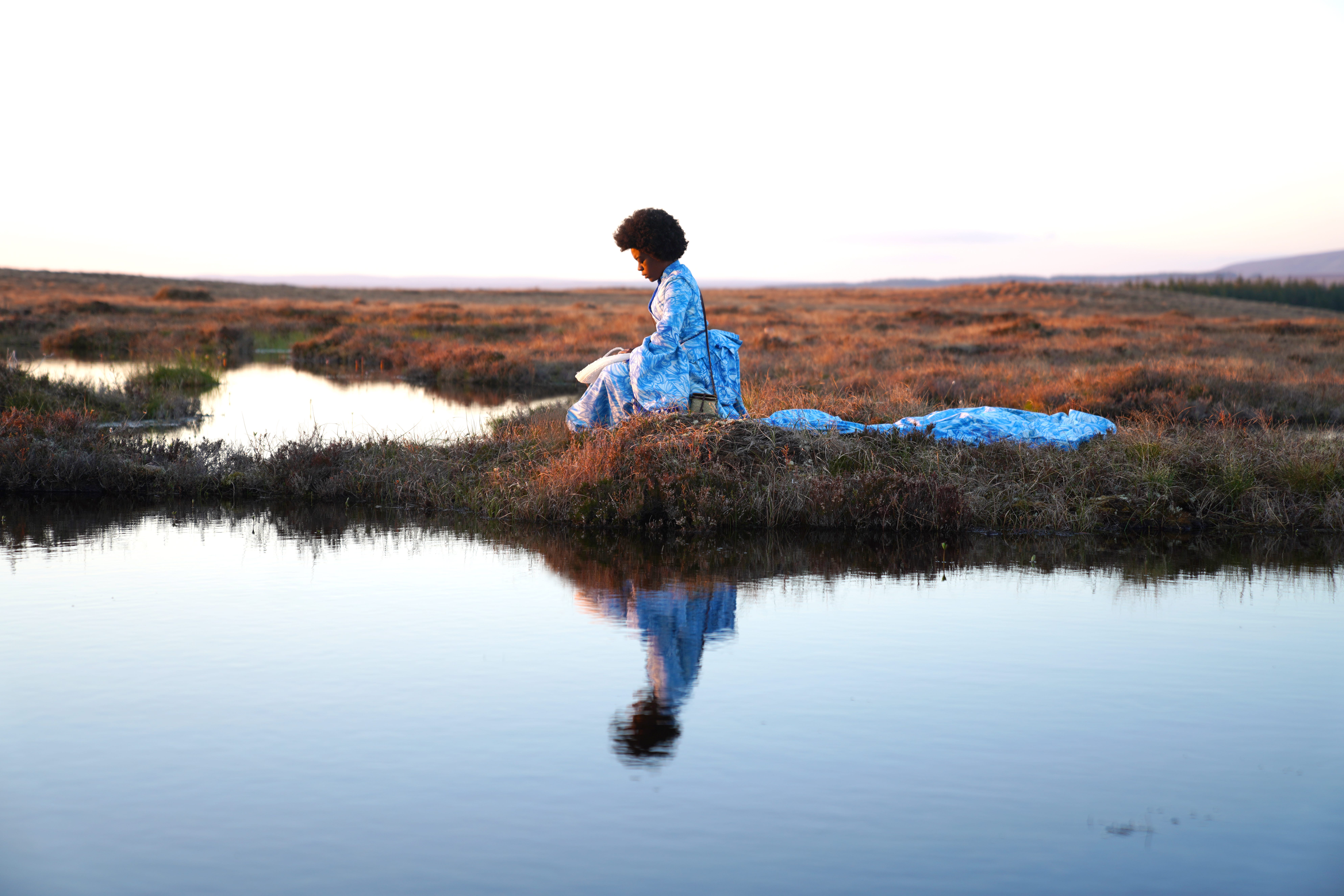
“It’s about us having somewhere we can call our own, where we can open our doors, and it feels like we have a bit more agency.”
Kim McAleese is tired of borrowing space. Since its inception in 2004, the Edinburgh Art Festival (EAF) has operated as a glamorous squatter, reliant on partner galleries and temporary leases to carve out room during the August madness. For years, the festival’s nerve centre has been a modest administrative office tucked inside the French Institute of Scotland on West Parliament Square, writes Will Quinn.
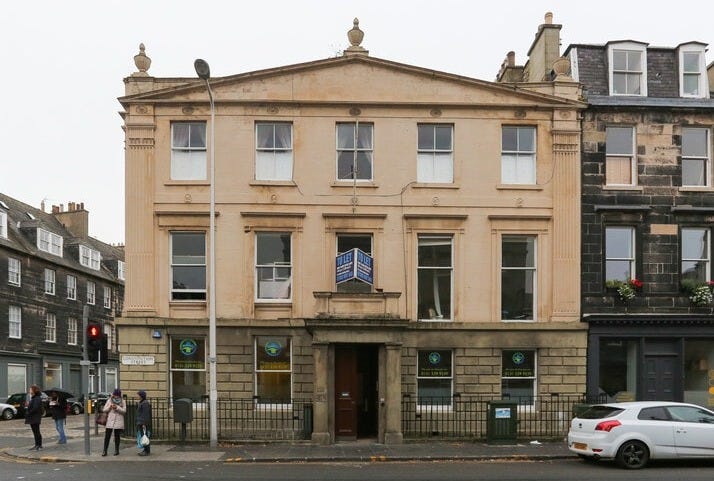
That model ends this August. As the UK’s largest annual visual art festival prepares to launch its 2026 iteration, McAleese is leading the organisation to a less nomadic existence. The EAF is putting down permanent roots with a new public-facing headquarters at 92 Constitution Street in Leith.
“Currently, in the building we’re in, we just have an office space,” McAleese explains. “EAF tends to operate in lots of different parts of the city in spaces that we can borrow, whereas this new headquarters gives us an event space and an exhibition space to do work all year round.”
Leaving the Old Town for Leith’s creative grit
Taking up residence on The Shore, and not the New Town, isn’t (just) an ideological pivot. As any Edinburgh resident knows, the property market is rather broken, and the cultural sector is not immune.
“Everything costs money!” McAleese notes with the candour of a director who has stared down one too many venue invoices. However, it’s amazing what an ample supply of ‘Can-Do’ spirit can achieve. It was a highly successful trial run that, at least in part, sparked the move. “Last year, we had a pavilion space at the top of Leith Walk, and it was amazing,” she recalls. “I think that put it in our minds.”
“If we had the flexibility,” they thought, “of being able to open our doors to put on an exhibition for a week, to have an archive people could visit, or run events without always paying rental fees for other spaces…”
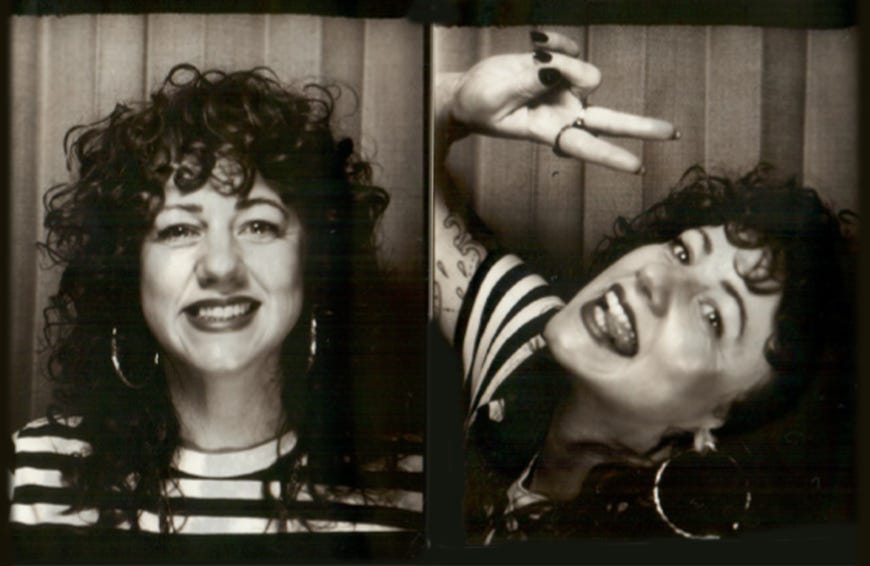
In the end, it was simple: “It’s about us having somewhere we can call our own.”
Decamping from the Palladian splendour of The French Institute matches McAleese’s curatorial compass, though she admits it is the formalisation of an existing geographical drift. “We do things everywhere, but in the past couple of years, there’s been an increasing presence within Leith,” she points out. “For example, our closing performance was by a movement and dance artist called Les Walker, and that was at First Stage Studios on the docks in Leith.”
“There’s a really interesting, young, and quite entrepreneurial community of people doing amazing things in Leith,” she observes. “If you look at its historical roots as a working-class place where people were self-organised, it has its own identity. There’s just something about the spirit of that place that felt very in line with the artists we want to work with and the work we want to present - thinking about overlooked histories or giving a platform to people who have historically been marginalised.”
Anchoring the festival on Constitution Street isn’t about retreating from the wider capital; it is about establishing a base camp that mirrors this ethos. “You see a lot of that in Leith, and it felt very in line with what EAF is trying to do at the minute,” McAleese adds, “whilst also maintaining connections across all our partners throughout the city.”
To further strip away the intimidating white-cube image, which can easily alienate wider audiences, this physical anchor will be flanked by a new welcome hub at Brown’s of Leith. “At Brown’s of Leith, you can go in, speak to people about the festival, buy merch and artists’ editions, and have a cocktail, a glass of wine, or a pizza,” she points out. It is a clear effort to establish the EAF as a neighbourhood fixture rather than a temporary imposition.
Queer archives and alternative histories
When a cohort of frustrated gallery directors banded together to launch the EAF twenty-two years ago, their strategy was essentially defensive. Visual arts had been quietly severed from the official Edinburgh International Festival programme in the 1960s, leaving major summer exhibitions to be routinely drowned out by the deafening, profitable churn of the Fringe. The EAF was built to reclaim August.
Under McAleese’s directorship, that fight for visibility may be coming to an end. The festival has pivoted away from acting as a temporary summer megaphone toward a model of sustained, year-round civic intervention. The programming slated for the new Leith venues firmly backs up her assertion that “everything we do definitely has a social justice lens.”
At the new Constitution Street headquarters, the festival will mount Love Bites Back, a show by photographer Del LaGrace Volcano drawn from the Queer Archive of Resistance.
“They are presenting work that has never been seen from a time when they lived in Edinburgh with their then lover, Sylvia,” McAleese says, her enthusiasm palpable. “They’ve unearthed an archive of gorgeous photos and scanned all the negatives of them out and about in Edinburgh. I can’t wait for people to see that.”
Down the road at Custom Lane, audiences will encounter Carnal Desires, a rare UK exhibition by Sadao Hasegawa, the post-war Japanese gay fetish artist whose hypermasculine paintings have long remained virtually inaccessible outside his home country. In the same venue, Ellis Jackson Kroese of Trans Masc Studies will present History is a Home, an interactive trans masculine archive designed as a functional workspace for visitors.
This compulsion to drag buried narratives into the light extends across the city’s twenty-five partner galleries. At the City Art Centre, Start from the Level will be the largest-ever presentation of photography by the late Sandra George, a community worker who spent 30 years intimately documenting social-action projects across Edinburgh.
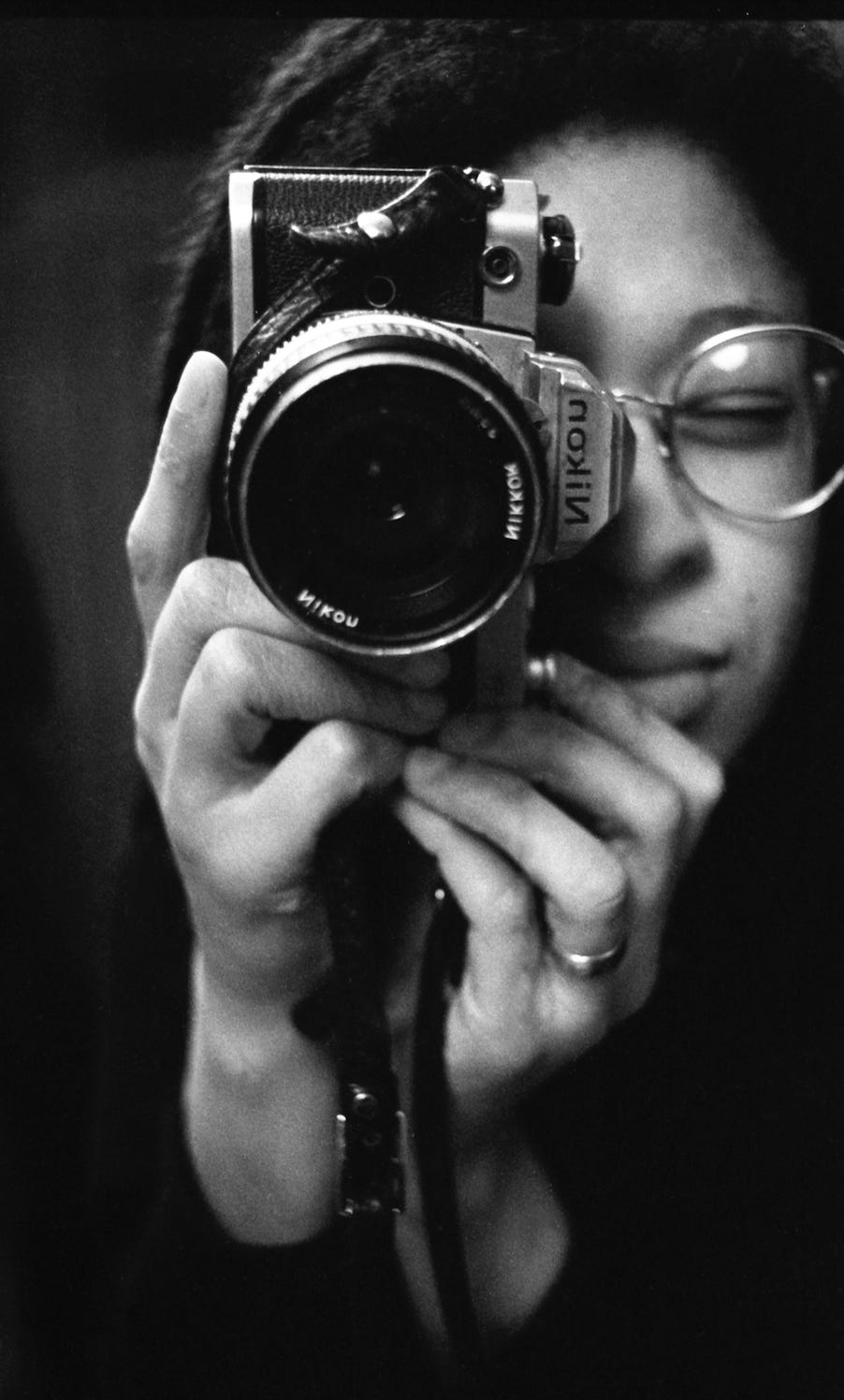
“To think about what we’re showcasing this summer, we’re showing work by queer photographers that are 50 years old - amazing lesbian photographers that have never really had their moment,” McAleese notes.
Radical acts in colonial settings
Art festivals are notorious for parachuting into working-class postcodes, throwing a launch party, and vanishing. McAleese has no interest in hit-and-run curation. She points to a landmark 2022 project as proof of the festival’s commitment to slow activism.
“When I first joined the festival in 2022, there was a landmark project we were doing in a shopping centre in Wester Hailes called the Community Wellbeing Collective,” she recalls. “They now have a long-term residence and a building that they manage themselves, and we still have very strong and tight relationships with them.”
This willingness to tackle fraught political realities seems hardwired into McAleese’s history. “I love Scotland,” she says. “I was born and bred in Belfast, and I did a lot of work in public space because, for a long time, public space was really contested - and arguably still is - in the North of Ireland. We were going through a civil war.”
That lived experience informs her approach to programming within Edinburgh’s highly curated, colonial-era architecture. Take the festival’s collaboration with Brazilian artist Davi Pontes. Placing a queer, Black artist in the historically loaded environment of the Royal Botanic Garden to interrogate physical endurance and climate justice is an undeniably subversive move.
“We’re co-commissioning a performance with a beautiful, energetic queer dance artist who will be in residence here in Edinburgh, making a performance in the Botanic Gardens,” McAleese details. “A lot of their work is about their identity as a Black person within the Global South and how that relates to the body.”
This appetite for disruption isn’t confined to satellite spaces. “We’ve got sculptors who are going to be intervening in public spaces with big landmark projects popping up in the middle of the city,” McAleese teases, pointing to a desire to force visual art into the daily commute.
This global dialogue expands further towards the end of August, when the EAF formally partners with the Falastin Film Festival for a dedicated final-weekend focus on Palestinian and Lebanese artists.
But the EAF’s commitment to these narratives will actually extend across the entire month. “One thing I’m really proud of this year is that we’re working with the newly formed Palestine Museum on Dundas Street to co-present a programme,” McAleese states.
That collaboration manifests in the Majazz Project, a festival-long installation by artist Mo’min Swaitat. Through a series of listening parties, audiences will be given access to an extraordinary archive of Palestinian records - spanning everything from Bedouin field recordings to revolutionary albums from the Intifadas.
“I think it’s amazing that we have that in our city,” she adds, “and their director, Faisal and I have been chatting for a long time about what we could do together.”
Surviving the Scottish arts funding crisis
Championing diasporic artists and feminist histories is only half the equation; the other is ensuring creatives can actually afford to pay their rent.
The visual arts sector in Scotland hasn’t so much been battered by funding crises as put through a financial meat grinder. McAleese is confronting this economic reality directly through the festival’s restructured PLATFORM initiative. Moving away from the short-term burst of an August show, it now operates as a sustained eighteen-month residency model designed to offer genuine financial security.
“This year, we’ve rethought it so that over an 18-month period, two artists will be supported with a £10,000 fee, plus production money and an exhibition,” McAleese details. “That’s really thinking about long-term support. Those artists are Olivia Priya Foster and Moira Salt. They will be with us over the next 18 months, doing a small in-conversation event this year, and next year they’ll have a big solo show.”
Structural support cannot stop at isolated festival grants. The conversation inevitably turns to national policy and the fragile economics of a creative life in the UK.
“Thinking about artists’ living and working conditions is vital,” she stresses. “It’s interesting you bring that up because I know the SNP have been toying with introducing a basic universal income for artists, similar to what Ireland has. I was just fresh from a meeting with someone who works for the Irish government, and we were chatting about the successes of the Irish universal basic income. I would love to see something like that rolled out here.”
Relying on shifting governmental policy for survival is, of course, a precarious waiting game. “We’ll see what happens with the elections!” she adds, with a dry, pragmatic edge.
The 2026 EAF Programme
Despite the intense local focus on the new Leith headquarters and Scottish arts funding, the sheer scale of the EAF’s August footprint remains formidable. The original 2004 mandate of unifying the visual arts sector has simply been sharpened, drawing together twenty-five distinct partner institutions under a single curatorial banner.
“As a network, we’re very interconnected, personally and professionally,” McAleese says of this sprawling, pan-city coalition. “Seeing all those different institutional structures, the pace at which people operate, and the opportunities for us to work together is fantastic. EAF is uniquely placed in that way; you don’t get it in many different cities. I think it’s a real strength and in the foundations of who we are.”
Indeed, I don’t think enthusiasts for the city’s art-scene come any more motivated…
“There’s such a vast range of things to see here,” she notes. “I’m sitting in the National Galleries right now and I’ve just come from the RSA show, which is a showcase of 60 emerging artists who have just graduated. There’s going to be a beautiful photography show by an artist I adore called Catherine Opie. The Fruitmarket is presenting an Eva Rothschild show, an amazing Irish sculptor who I really love. The partners bring a lot to EAF.”
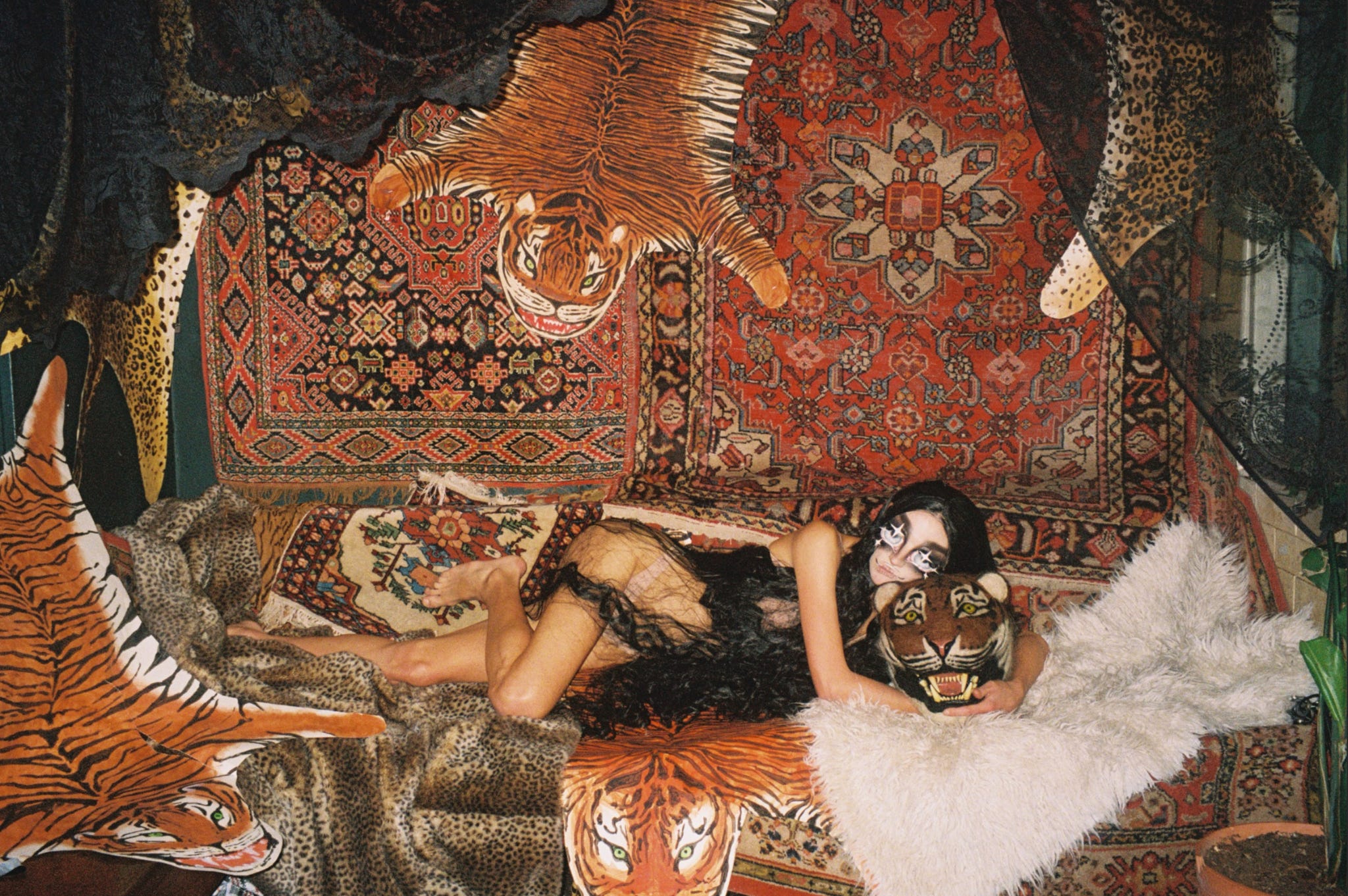
That collaborative energy extends outward to the city’s fringes, where Sgàire Wood will take over the Jupiter Rising mini-festival at Jupiter Artland, and up the hill to Collective, where Katie Paterson is installing nearly two hundred amulets crafted from endangered ecosystems. Managing this beast of an itinerary is an administrative titan, but it is friction that the director clearly relishes.
“I also get really excited by the pace of an annual festival,” she admits. “It can be tough going for some, but I get a lot of energy from it, and I know the partners do too.”
The festival officially launches on August 14th at the Biscuit Factory, just around the corner from the new office. It will feature “an amazing artist from Orkney called Magnus Westwell,” McAleese notes. Crucially, this isn’t just a gig booked to fill an opening night slot. “They’re going to launch the festival with a snippet of a new performance that we’re working on over the next 18 months.” It perfectly encapsulates the festival’s shifting rhythm: long-term cultivation replacing short-term spectacle.
It feels, I suggest to her, like an organisation finally moving out of a borrowed bedroom and into its own home.
“I hope so,” she warmly agrees. This year, that energy is firmly anchored in Leith. As the August rush approaches, the festival is finally unlocking the doors to a space that belongs to them, ready to welcome the city inside. “In August,” McAleese promises, “I’ll invite everyone for a housewarming.”
But once the doors are open, the real work begins. The EAF is no longer content to simply hang pictures on historic walls for three weeks; it exists to question the foundations entirely. It is a politically charged, historically conscious project that looks ready to permanently alter Edinburgh’s cultural geography.
“We’re so interconnected in the world, and whenever I move around a city, I’m always thinking about the colonial histories, the intangible histories, and how the city was built,” McAleese reflects. “In a city like Edinburgh, which is undeniably stunning, there are so many different layers you can interrogate.”
Ultimately, that is what this new era of the festival is built to do.
“Hopefully, you find that within our festival programme,” she concludes. “We’re quite bold in trying to ask questions about difficult histories or the difficult present.” Housewarming? Kim McAleese and the newly Leith-centred Edinburgh Art Festival sound as if they are lighting a fire.
Hi Elly,
Thanks for getting in touch and raising this. We'll look into it. You can email us any further details you might have at editors@edinburghinquirer.co.uk.
EM
Unrelated comment as I cannot DM:
Please look into number 6 and their funding deficit (£500,000). They are an independent body that can carry out autism and ADHD assessments, why has the NHS stopped its contract (after having millions unspent last year)? With the NHS overwhelmed with requests for assessment and this service's ability to take on a large number of these, why are they no longer being commissioned? To further, the NHS is proposing the centre now take in ADHD members (diagnosed as well as on the waiting list) without any additional funding; which would likely more than double service users. Autistic people have extremely high suicide rates compared to the general population and the double empathy problem means a safe space to socialise with peers is essential for maintaining health (as per NICE guidelines).