


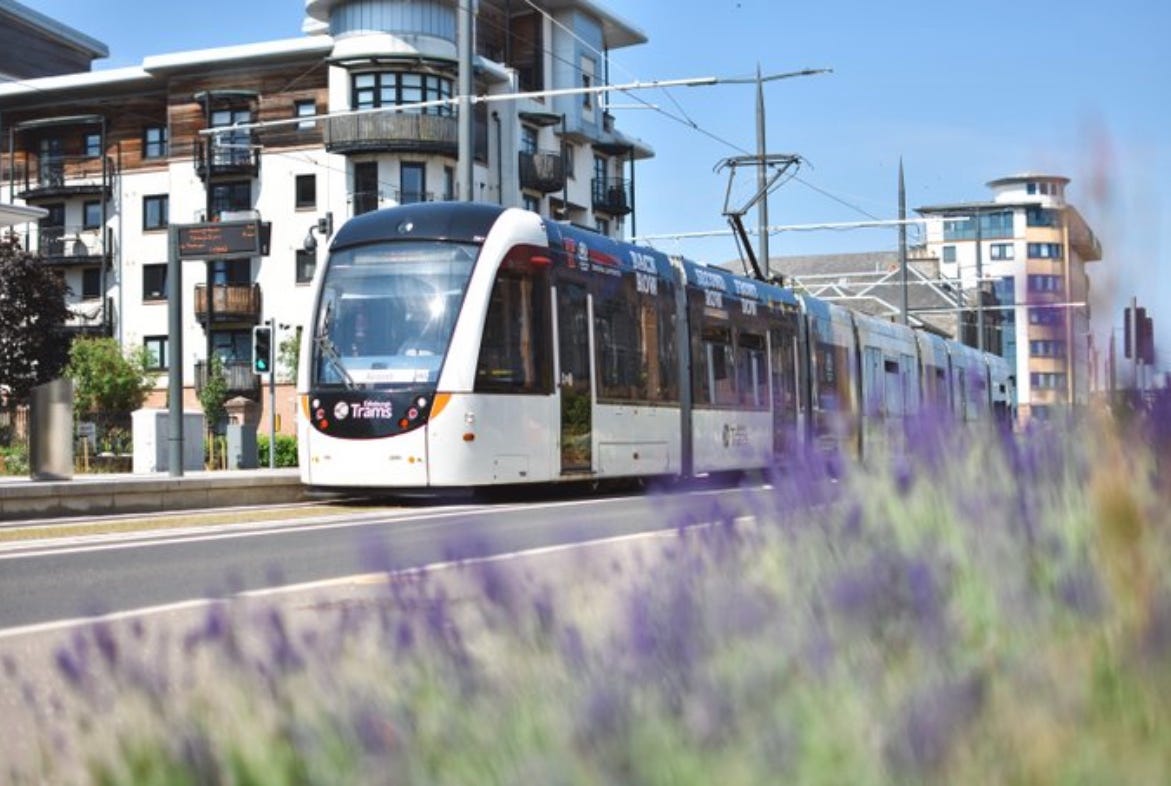
“Transport is absolutely key in tackling both the population growth question and the economic growth question... Making the choice of taking the tram North out to Granton is about flattening that curve a little bit and investing in an area of the city which…. there are parts of the city, which I know because I speak to people all the time, that feel that they’ve been left behind.”
Councillor Stephen Jenkinson, convenor of the Transport and Environment Committee.
The proposed £2bn tram extension has been a huge talking point in the city, garnering over 11,000 responses to the council’s public consultation. The debate so far has focussed on the city’s transport needs, and the proposed routes. But there is evidence that public transport improvements can impact far more than just how busy the roads are. The North South tram will pass through some of Edinburgh’s most deprived neighbourhoods; what impact could it have on their residents?
The tram is not appearing in a vacuum; in Granton, for example, the £1.3bn waterfront development is promising 3500 net zero homes, commercial and cultural spaces, and greenspace. The area already has a pioneering community support network, with four key organisations offering unprecedented support to the area through the North Edinburgh Support Service (NESSie). The scale of change in this coastal pocket of Edinburgh over the next decade will be monumental - could this help existing residents be less “left behind”?
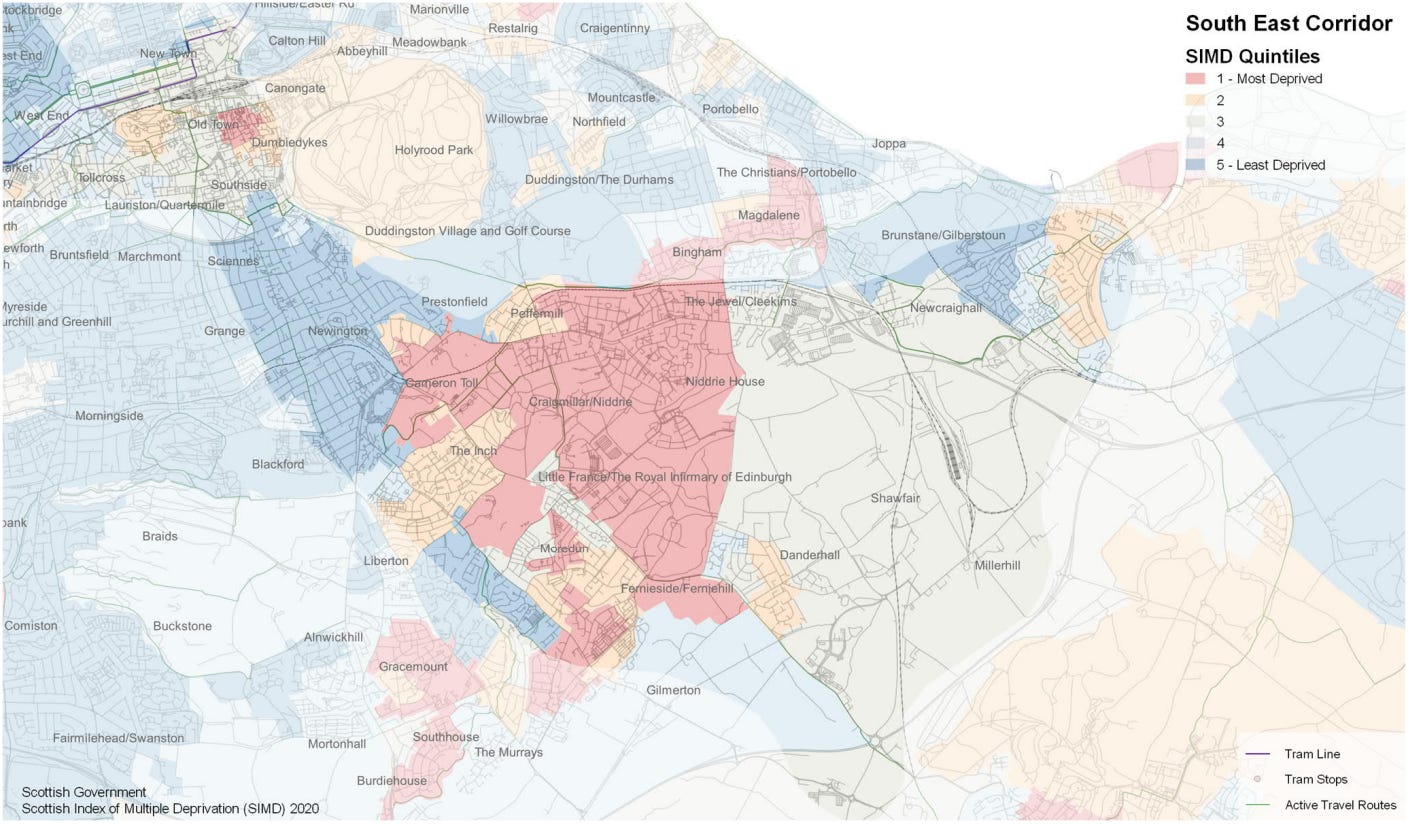
Image from a 2021 study into potential routes for the tram: data from Scottish Index of Multiple Deprivation (SIMD) quintiles in the area surrounding the proposed North-South tram link. (credit Jacobs Steer).
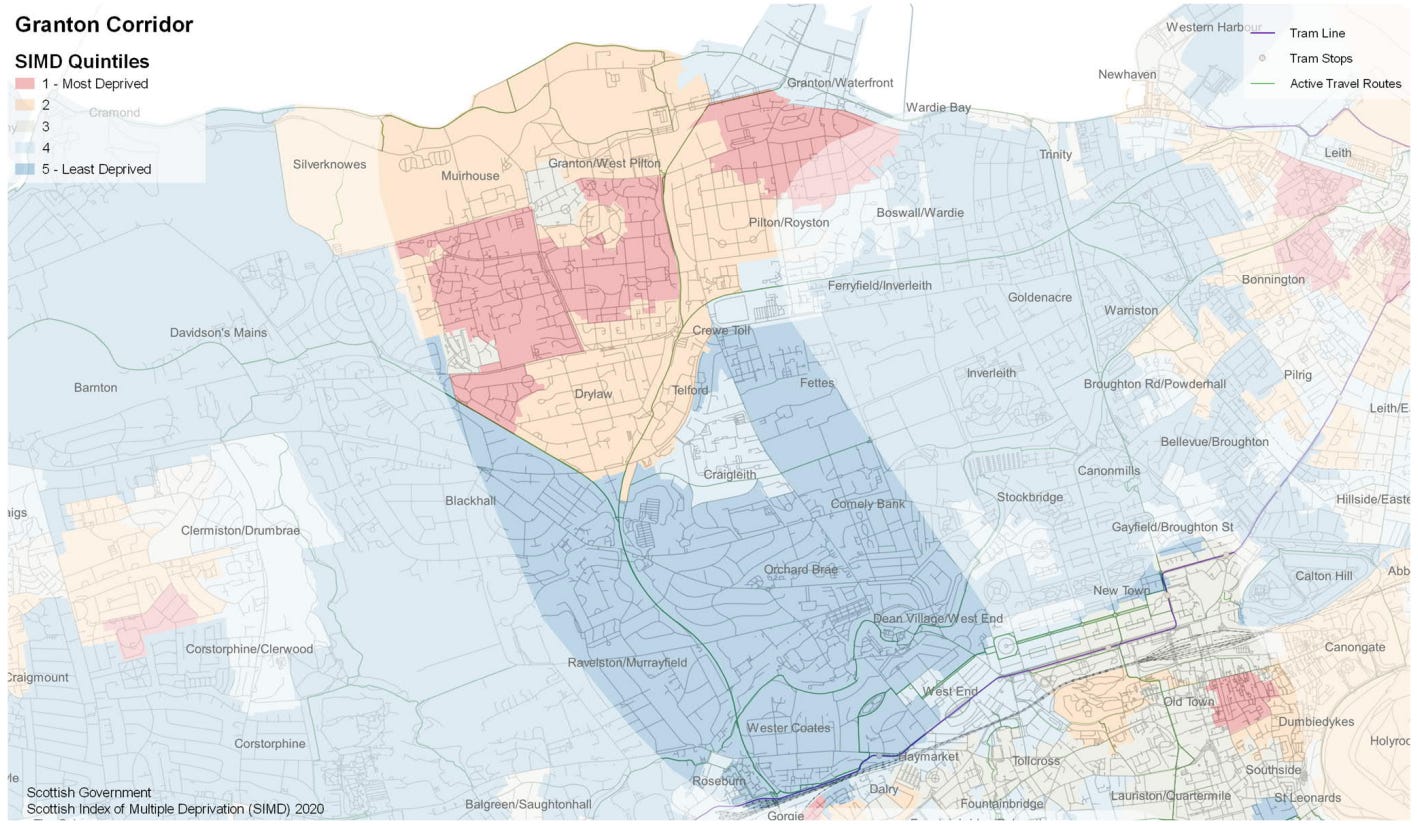
Image from a 2021 study into potential routes for the tram: data from Scottish Index of Multiple Deprivation (SIMD) quintiles in the area surrounding the proposed North-South tram link. (credit Jacobs Steer).
The research: transport and poverty
Studies show that good, affordable public transport can raise incomes through giving people more access to employment. Improving transport can also reduce the acuteness of poverty by facilitating access to services and reducing isolation. A transport system which assumes car ownership also disadvantages lower income households who are less likely to own a car - according to Transport Scotland, car ownership is 87% among the richest 20% of Scots, and only 45% among the poorest 20% of Scots. With households in poverty spending as much as 26% of their income on transport, increasing the reach and frequency of affordable public transport can go some way to reducing these costs.
Learning from Manchester Metrolink extension
The Manchester Metrolink light rail network is, undoubtedly, a lot bigger than our wee tram not-yet-a-network. But its recent expansion (Phase 3) was a relatably lengthy saga; taking sixteen years to plan, fund, and build out - but tripling the network to add four new lines, 40 miles of new track and 55 stops.
