


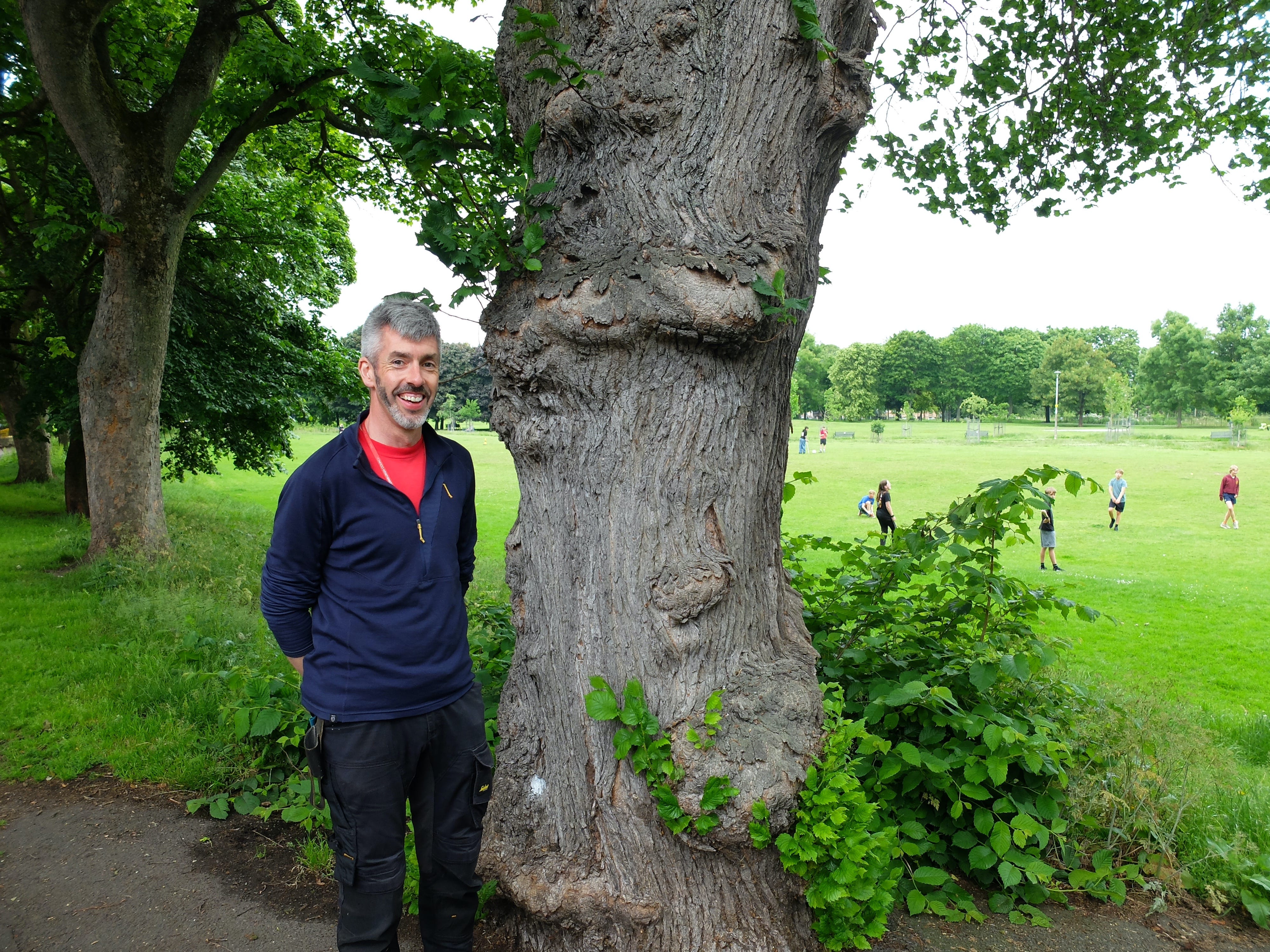
Ian Morrison has an enviable job. As the council’s Trees and Woodlands Officer for southeast Edinburgh, he spends several days a week ambling through the capital’s verdant parks, gardens and tree-lined streets.
Among the jobs he is tasked with is “systematic inspection of the city’s tree stock.” Nowhere near as sterile as it sounds, this means he looks for signs that trees might be likely to fall, have been damaged, or have been infected by a disease of some kind.
One in particular is a constant source of worry: Dutch elm disease.
It began in 1967 when a tiny Scolytus bark beetle, no more than half a centimetre long, arrived on the shores of the British Isles. It was inadvertently giving a ride to thousands of microscopic fungal stowaways, spores of the species Ophiostoma novo-ulmi. When the fungus comes into contact with an elm, it quickly spreads throughout the branches, trunk and roots, inevitably killing the tree.
While the disease had been recorded in the UK before, this was a particularly virulent new species. It swept across the country in a few short years and is estimated to have killed between 25 and 30 million elms.
Edinburgh was not spared. “It went through them like wildfire,” says Morrison. He estimates that around 30,000 elms have been lost since it was first recorded in 1976.
Yet, against the odds, Edinburgh today is home to around 15,000 healthy elms, according to council records — far more than any other city in the UK (except perhaps Brighton and Hove, whose 17,000-strong population garnered the accolade of being the ‘National Elm Collection’).
A city of elms
“Edinburgh was a city of elms,” says Morrison.
In Victorian Edinburgh, it was the preferred tree for planting in the public realm, a status attested to by streets like Elm Row, named after the double row of elms that once extended 600 feet down Leith Walk. “Trees were a status symbol,” he adds, and competition to cultivate the most impressive specimens created a wealth of expertise that has largely been lost.

