

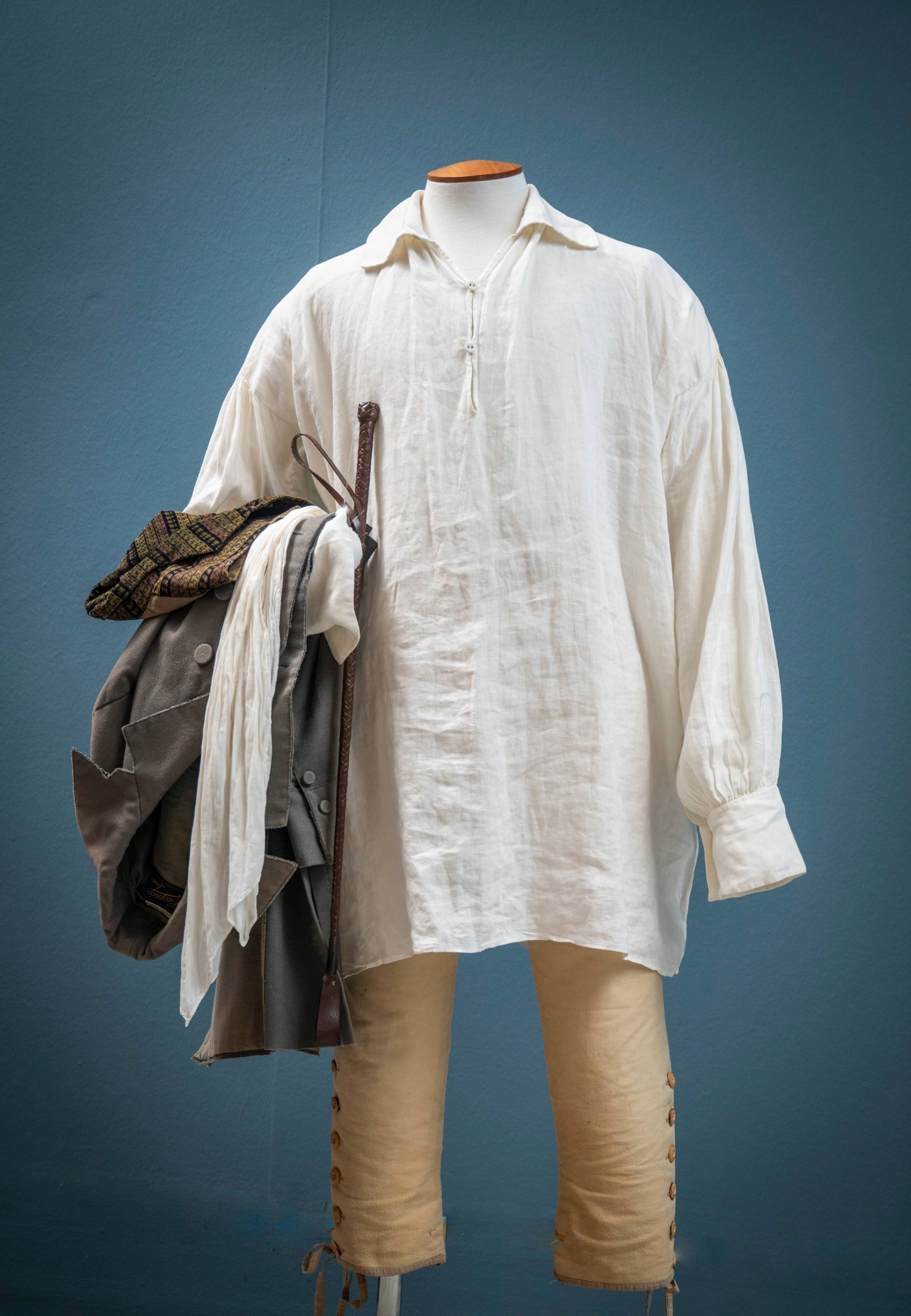
The moment when Colin Firth appeared in his soaked shirt after apparently swimming in a lake in Pride and Prejudice has already been credited with many things.
It has been described as the scene which captured millions of hearts and created one of the most memorable sequences in TV history. It has also been seen as the saviour of Lyme Park, the once ailing stately home on the edge of the Peak District where the BBC adaptation was shot, and which saw a huge upsurge in paying visitors after the series was first broadcast in 1995.
Now staff and students at Edinburgh College of Art are hoping the famous shirt - which is currently on display in the Old Town - can play a small part in another dramatic rescue mission.
Visitors to Dovecot Studios’ Costume Couture: Sixty Years of Cosprop exhibition can admire the shirt which more than almost any item embodies the huge impact of the costume industry on the public consciousness.
‘This garment transformed a character first introduced in Jane Austen’s novel into a modern screen icon,’ say the organisers of the exhibition, which also features meticulously crafted costumes worn in a range of prestigious productions such as A Room with a View and Out of Africa.
Just a stone’s throw away are premises that form part of Edinburgh College of Art (ECA), where a drama of a different kind is unfolding.
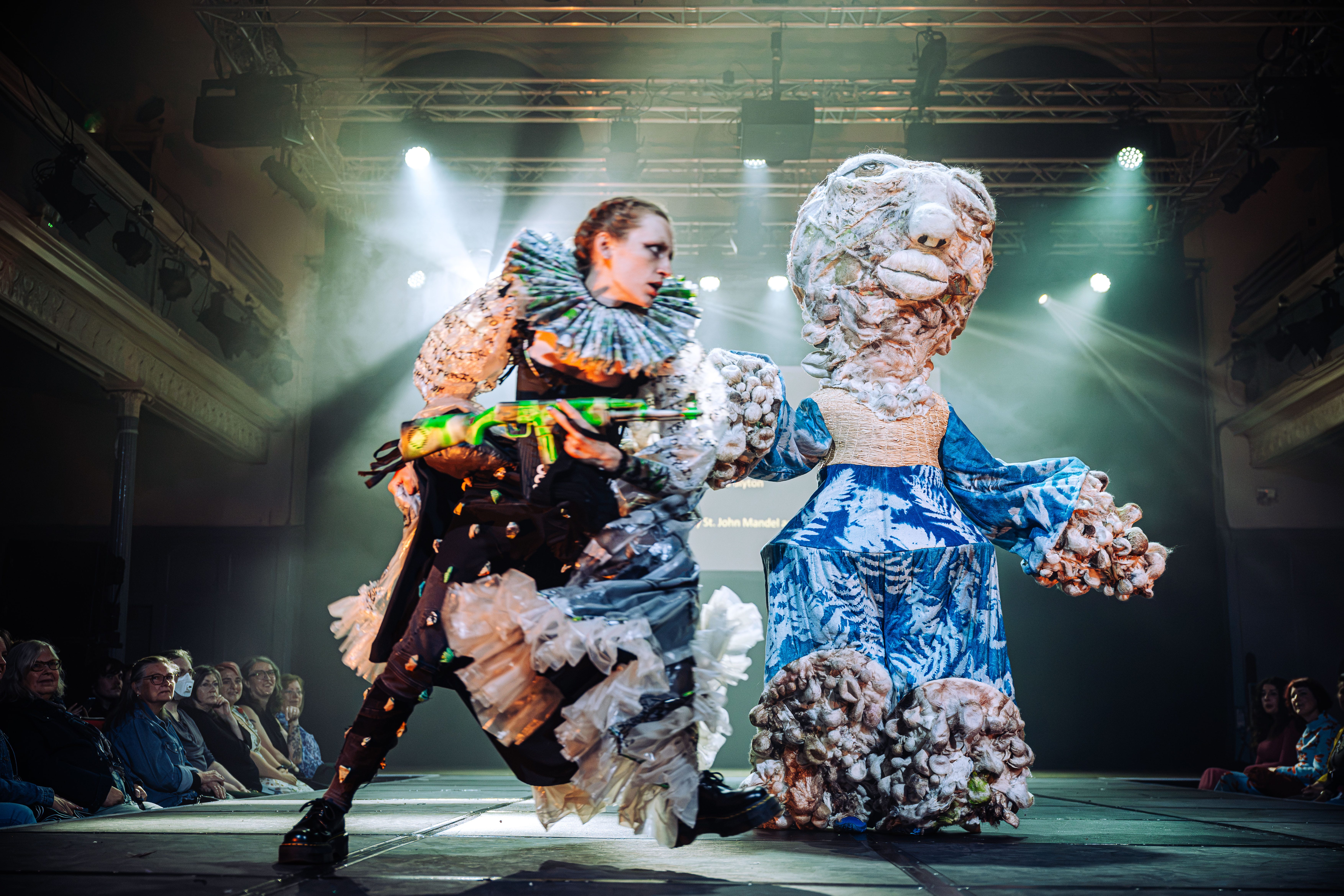
The institution’s renowned Performance Costume undergraduate degree - which has long provided a pipeline of talent flowing into top film and TV productions around the world - faces the final curtain, as do fellow courses in jewellery and silversmithing, and textiles.
Such a decision has prompted a howl of outrage from students past, present, and future - as well as those working in the craft, design, and entertainment ecosystems in Scotland and far beyond. The move, they say, is “shortsighted” and will unravel an asset tightly woven into the national cultural fabric.
One petition calling for ECA and budget-slashing University of Edinburgh - the two merged in 2015 - to reverse the decision now has around 17,000 signatures.
Craft Scotland’s petition to “save the craft and design courses at Edinburgh College of Art can be found here.
The issue has reached the Scottish Parliament, where Q Manivannan, MSP for Edinburgh and Lothians East, says the closures will severely erode the arts in Scotland, and hamper the economy for decades. “I am convening an emergency public arts meeting at Summerhall on the 1st of November, to address the ongoing crisis in culture and arts in Edinburgh,” he says, “with students and staff from ECA, MSPs, councillors, and members of the wider arts sector.”
‘An incredible reputation for our cultural output’
In the role of petition-starter is Irene Kernan, director of Craft Scotland, the national development agency for craft. She tells The Edinburgh Inquirer that people across the costume industry and beyond are “at a loss” to understand why the courses have “suddenly” been cut.
“It’s just bewildering, because the courses are excellent,” she says. “They attract [students] from across the globe, the outputs are incredible.
“It’s obviously going to have an impact on Edinburgh, but it will have an impact Scotland-wide as well, and on the reputation and prestige of Scotland’s culture.
“Scotland has an incredible reputation for its cultural output and its cultural talent, so I just don’t understand this decision to damage that.”

ECA graduates have worked on marquee showbiz productions including Outlander, The Crown, Game of Thrones, House of the Dragon, Barbie, and the Marvel and DC franchises, as well as recently defunct Scottish soap River City, and helped bring to life theatre productions for the RSC, English National Ballet, and Scottish Opera, for example.
The petition quotes signatories including Katy from Glasgow, who says: “I graduated in 2010 from the BA in Performance Costume Design, and owe my 16 years working in film and [high-end television] to the foundational skills I was taught during my studies. Losing this essential course at a time when Scotland’s film industry is growing is incredibly misjudged.”
Design industry ‘worth more than retail sector’
Screen Scotland last year said the sector was on course to contribute £1 billion to the economy by the end of 2030/31, having already leapt by 15 per cent to £718 million between 2021 and 2023. And there have since been many screen productions filming north of the Border, such as The Batman: Part II in Glasgow and Dept Q in Edinburgh in the last few months alone.
Anna Campbell-Jones, renowned Scottish interior designer and judge on Scotland’s Home of the Year, says the creative industry supports the economy in many ways.
“It supports manufacturing, it supports retail, it supports absolutely everything. It filters up and down through the entire supply chain,” she tells The Edinburgh Inquirer.
She cites the British Design Council in September 2026 publishing a report finding that the design sector boosted the UK economy by £136.7bn in 2023, an increase of 40 per cent from 2019, and more than the UK’s entire retail sector (£114bn).
Campbell-Jones is also among many making the point that the affected ECA courses offer skills that are resistant to and the antithesis of artificial intelligence (AI).
Specifically, she cites growing “ennui” with AI-generated design, and increasing interest instead in something “human-made,” citing major fashion house Hermès’ hand-drawn, hand-animated website.
“These high-end companies are pivoting away from super-slick imagery. It just feels like the wrong time to ditch courses that support jobs that young people can have where they are using their hands, because there aren’t many.
