


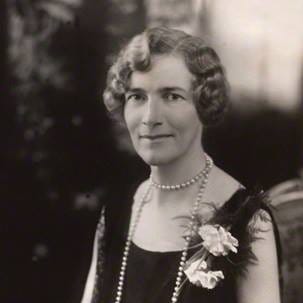
One hundred years ago tomorrow a small piece of Scottish history was made in a room in Edinburgh’s Canongate. An aristocrat sat down with two former soldiers who had survived the First World War, the “war to end all wars.”
The unusual team set to work with scissors and paper and created a poppy with four crimped petals. The world had taken up the flower as a symbol of remembrance following the publication during the war of the celebrated poem In Flanders Field by Canadian army doctor John McCrae. Soldiers had noticed that poppies grew in the disturbed earth of new graves.
In Flanders fields the poppies blow
Between the crosses, row on row
That mark our place, and in the sky
The larks still bravely singing, fly
Scarce heard amid the guns below
Countess Dorothy, wife of Field Marshall Earl Haig, launched the enterprising venture which still bears her name within the rooms of Whitefoord House, near the foot of the Canongate, then the first Scottish Veterans Residence (SVR).
With her two willing co-workers she fashioned the very first poppies in what was to become the Lady Haig Poppy Factory, which would help transform the care of Scotland’s military veterans.
Today, the factory is situated in the Warriston area, and produces three million poppies, 40,000 wreaths and thousands of other Remembrance items annually. The funds it raises finances a wide range of services for ex-service men and women.
Just as importantly, it still provides work for 28 disabled former services personnel.
Give to Gain
The centenary of Lady Haig’s Poppy Factory falls on International Women’s Day which this year has a theme of “Give to Gain” celebrating generosity and collaboration. Appropriate then to remember the remarkable woman who worked alongside her husband for the rights for former service personnel – with far less recognition.
It was Countess Dorothy, who saw the opportunity to create the factory in Edinburgh, after the Royal British Legion founded the first of its kind in Richmond, on the banks of the Thames, in 1922. Demand for remembrance poppies was so great in the south that few were making their way north of the Border.
The factory would not only raise funds to care for those injured in the war, but provide them with the dignity and opportunity of work and support.
From wood chopping to poppy making
The SVR annual report of 1926-27 tells how an old wood chopping factory was identified as an ideal site.
“In February 1926 the idea of starting a factory for the purpose of making poppies for sale on Poppy Day throughout Scotland was suggested by Lady Haig.
“The question of finding suitable, economical premises for the purpose of starting this new venture was one of some difficulty and Colonel William Robertson, VC, who was consulted, took Lady Haig down to the Scottish Naval and Military Veterans’ Residence, Whitefoord House, and suggested that it might be possible to get suitable accommodation to start the factory there. So delighted was Lady Haig with the premises proposed, that her committee proceeded to turn the old Wood Chopping Factory into a Poppy Factory without delay.
“As in the instance of the residence itself, the Poppy Factory was begun in a small way, and it was not long before it was seen that larger premises were required for the expansion and development of the work.”
Robertson had been awarded the Victoria Cross, Britain’s highest military award for gallantry, during the Boer War when as a Sergeant Major in the Gordon Highlanders he led his men to capture and hold an enemy position despite suffering two serious wounds. He died in 1949 and is buried in Portobello Cemetery on Milton Road.
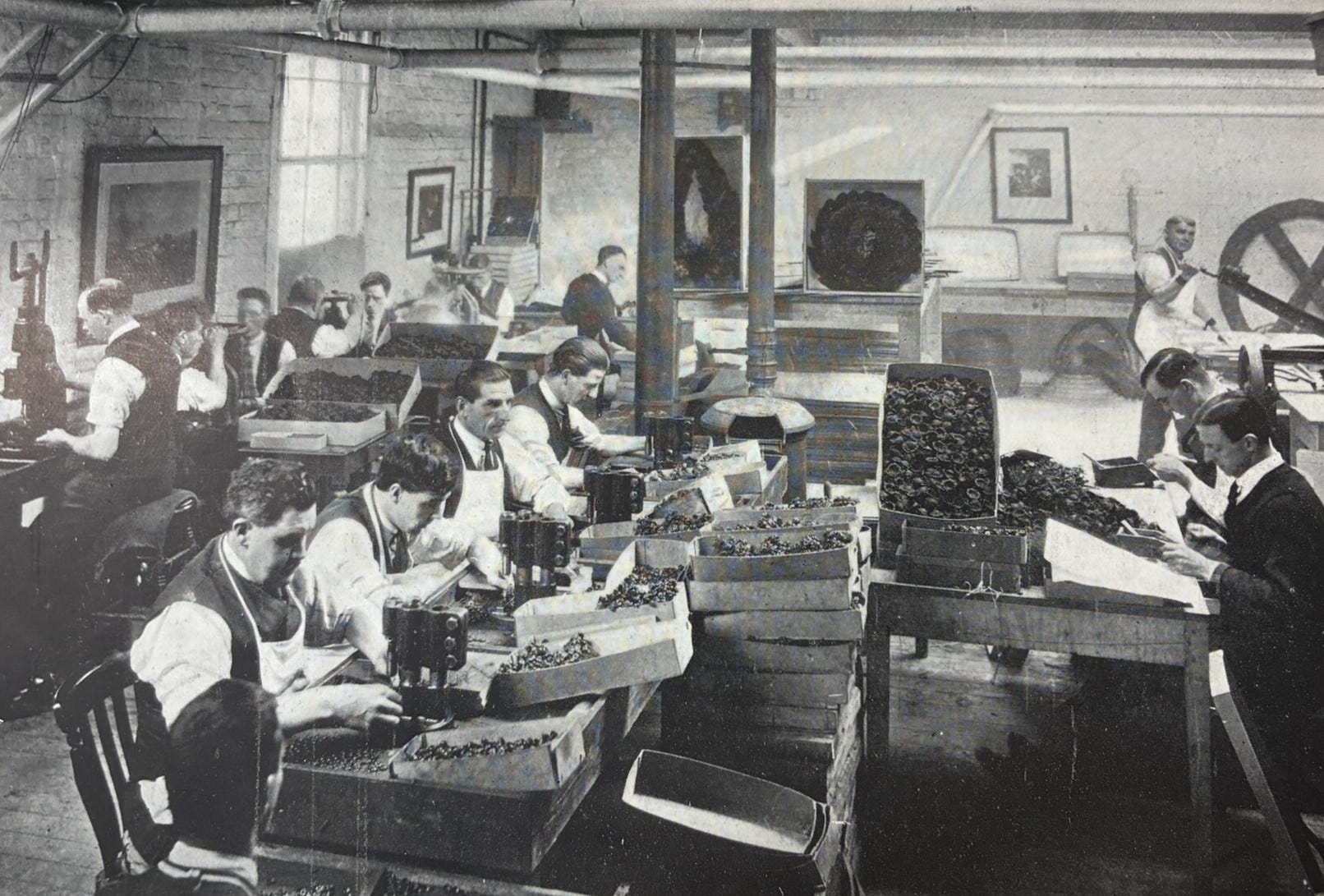
The original factory in Whitefoord House saw an initial workforce of 30 disabled former soldiers employed, representing 17 units of the Army, but within the first year the factory trebled in size. In Year 1, the veterans produced 488 wreaths, 157 poppy sprays, 6200 large silk poppies, 379,800 crepe paper poppies, 180,250 lawn poppies, 1,224,150 paper poppies and 7810 wreath poppies.
Poppy growth
Incredibly, within two years, the factory was producing upwards of 3 million poppies and 1,500 wreaths, numbers not dissimilar to today’s production levels. Continued growth in demand saw the short move to larger premises in nearby Panmure Close, and then again in 1965 to its present home in Warriston, where it is now operated by Poppyscotland (The Earl Haig Fund Scotland).
One of the unsung heroes of the early operation and expansion was Colonel Archibald Campbell Holmes Maclean who managed the venture and was the driving force behind its success. Either side of his involvement with the poppy factory, he served in the First and Second World Wars.
In a 1927 newspaper interview, Col Maclean explained the intricate technical process of producing the early poppies and wreaths. “The poppies are formed out of lawn, sateen, silk, and paper, and all the materials are made in Britain. There are quite a number of different processes to be gone through in the production of a single poppy. It has to be stamped out by a cutter, dyed, put through a machine to give it the crinkles, and then made up into the flower. The centre has to be cut and stamped, coconut fibre put in, and the tips dipped in boiling wax to make the seed. The process, allowing for the drying after dyeing, takes 48 hours.”
The factory has enjoyed booms and near busts during its 100 years – at its peak employing almost 120 with a waiting list of almost 340 hoping for work there.
A palace wedding with Royals
The then Major-General Douglas Haig married the Honourable Dorothy Maud Vivian on the 11th July 1905. She was the daughter of 3rd Baron Vivian and a maid of honour to Queen Alexandra. She was a favourite of the Queen, and met Douglas Haig while he was a guest of King Edward VII at Windsor Castle. They married in the private chapel at Buckingham Palace with both the Queen and King Edward VII attending. During the First World War Countess Haig worked with the Red Cross, and was appointed a Lady of Grace of St John of Jerusalem, a high chivalric Royal Order.
Lady Haig’s Poppy Factory continues to employ disabled veterans to make the poppies every year for the Scottish Poppy Appeal and they also make thousands of poppy wreaths which are sold commercially across the UK and beyond.
Modern production mean the factory can meet current and future demand, producing three million poppies, 40,000 wreaths and thousands of other Remembrance items annually, but the ever-reliable 1926 machine used in Whitefoord House to cut the silk petals for wreaths is still going strong!
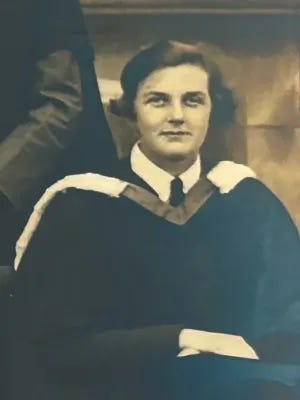
Amongst the women being celebrated this year in Scotland’s Capital to mark International Women’s Day will be pioneering civil engineer Molly Fergusson, who was the first woman to graduate with honours in civil engineering from the University of Edinburgh in 1936. She would go on to become the first female Fellow of the Institution of Civil Engineers, and after retirement used consultancy fees to help create a fund for engineering students. A room in the university is to be named after her.
The focal point for International Women’s Day in Edinburgh this year will be the annual IWD march, from the Mercat Cross down to the Scottish Parliament, close to Whitefoord House.