


‘You can go, “Gosh, we lost our building,” and you can either sink or swim,’ says Fiona O’Sullivan, sitting in her office at John Muir House in Haddington. ‘And we’re choosing to swim.’
The general manager of the Brunton Theatre Trust projects a brisk, unselfpitying energy that upends the premise I brought into our conversation. For more than half a century, the Brunton was synonymous with a single modernist landmark in Musselburgh - built from an industrialist’s bequest and opened by the Queen Mother in 1971. In the 1980s, under artistic director Charles Nowosielski, it helped put Scottish drama on the national map, writes Will Quinn.
Three years after Reinforced Autoclaved Aerated Concrete (RAAC), known as ‘crumbling concrete’, forced the building’s abrupt closure - and just months after East Lothian Council permanently vacated the site in August ahead of demolition - I expected to find an organisation huddling around a metaphorical campfire, nursing dreams of a return.
O’Sullivan gently, firmly, rejects the notion.
‘Maybe if you’d spoken to us a couple of years ago and everything was very much more up in the air and very new, it might have felt a bit more like that,’ she admits. ‘Three years down the line, we’re feeling a lot more confident in where we are and how we want to move forward. We don’t feel in exile. We feel very much at home where we are and how we can build on that.’
How do you run a theatre without a building?
O’Sullivan stepped into the dual remit of general manager for the Trust and team manager for East Lothian Council’s arts service roughly a year ago, succeeding long-serving manager Lesley Smith and interim lead Kirsty Somerville. Her route to the post spanned nearly three decades, beginning as a freelance community artist in Liverpool before she moved north to Wester Hailes’s WHALE Arts Agency and spent 13 years at the Edinburgh Children’s Hospital Charity, rising to director of children’s wellbeing.

‘This opportunity came up, and to be back purely in the arts and in the area that I live in just felt like a dream,’ she says, smiling. ‘I still pinch myself and think I can’t believe I actually managed to get this job. I’m so lucky.’
Arriving mid-crisis without personal history inside the old Musselburgh complex proved unexpectedly liberating. Unburdened by nostalgia for the building itself, O’Sullivan leaned on a veteran staff who knew the organisation’s DNA.
‘The Brunton Hall was the venue, but it’s actually the people that make the Brunton Theatre Trust,’ she says. ‘Come to the (Haddington) Corn Exchange or Northesk Parish Church (Musselburgh) and come to one of our performances and you will have that same Brunton experience because of the people who are there bringing that warm, friendly Brunton magic. Obviously we miss the function of the building. That is something we don’t currently have, but it does not take away from what the team produce and what shows we put on.’
To keep that identity legible across multiple postcodes, the Trust has subtly adapted how it bills its events - and being untethered from one civic auditorium has forced a shift in programming philosophy whenever a touring show does not fit the dimensions of Haddington’s Corn Exchange.
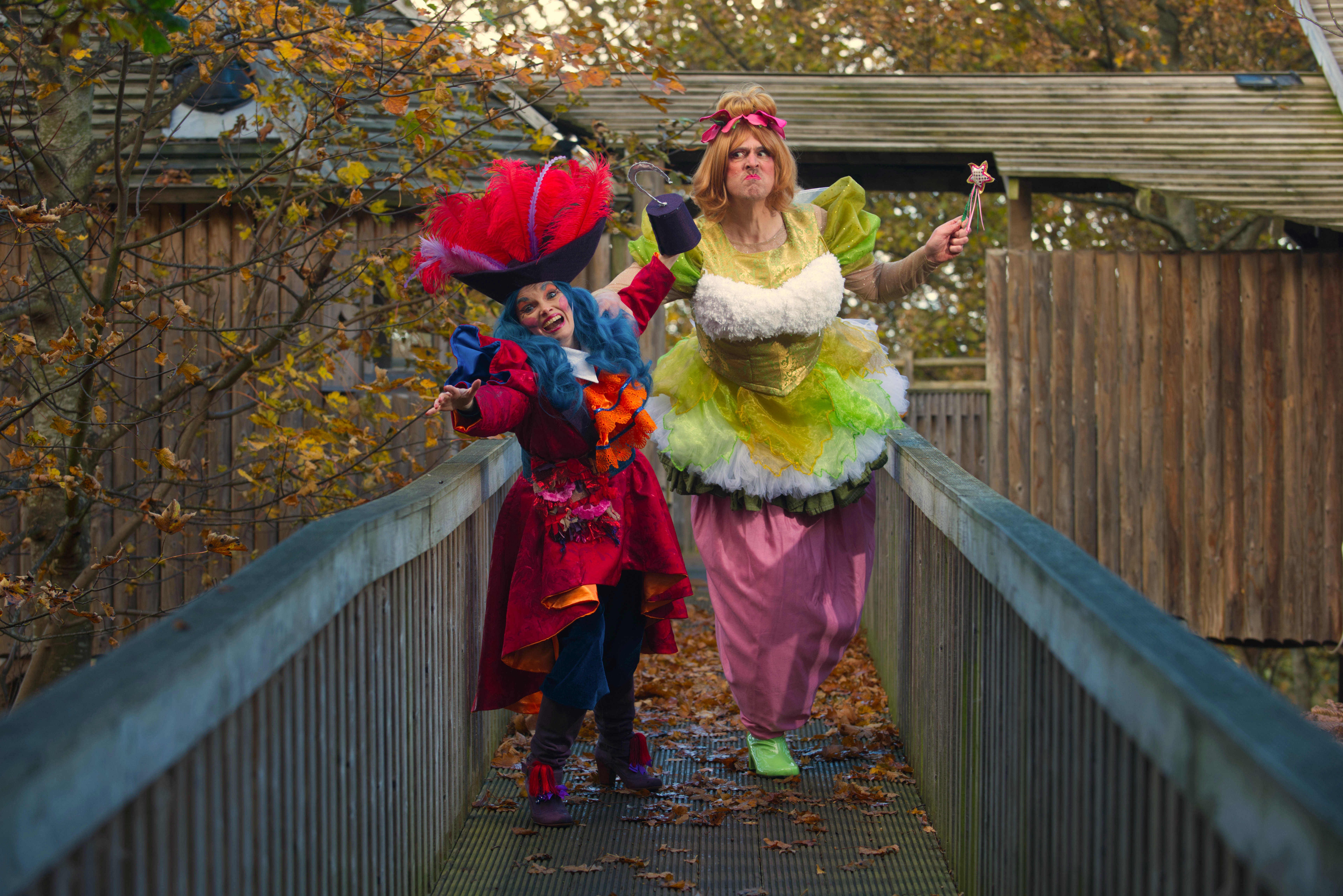
‘We’re looking at how we change what we’re saying,’ O’Sullivan explains. ‘So we’re saying The Brunton Corn Exchange, or The Brunton Haddington, for a specific performance. And we’ve got The Brunton Musselburgh, when we’re in North Esk. But it’s always about the Brunton Theatre Trust because that’s who we are. And you’re thinking outside the box. So you think, “All right, this is a really interesting production, but it might not work in the Corn Exchange. So where else in the community can we take it?’
Taking work out to local venues also solves a practical problem across a dispersed rural county. ‘Transport isn’t always accessible to everybody,’ she notes. ‘They might not drive, they might not be able to get buses for whatever reason. So if we’re able to take things to them, that opens up a whole new audience for us, and it means that we’re giving people the opportunity to experience what we can offer on their doorstep.’
Even so, she is unsentimental about the economics of taking on further permanent leases before perfecting the Haddington model. ‘Having a building is not a cheap thing,’ she says candidly. ‘It comes with an awful lot of money required to be able to run it. So for us, I think it’s a case of making sure we get a model that really works, and then seeing if there are opportunities further within the county. But never say never. Right now, we need to just be where we are.’
Why does the festive panto matter so much right now?
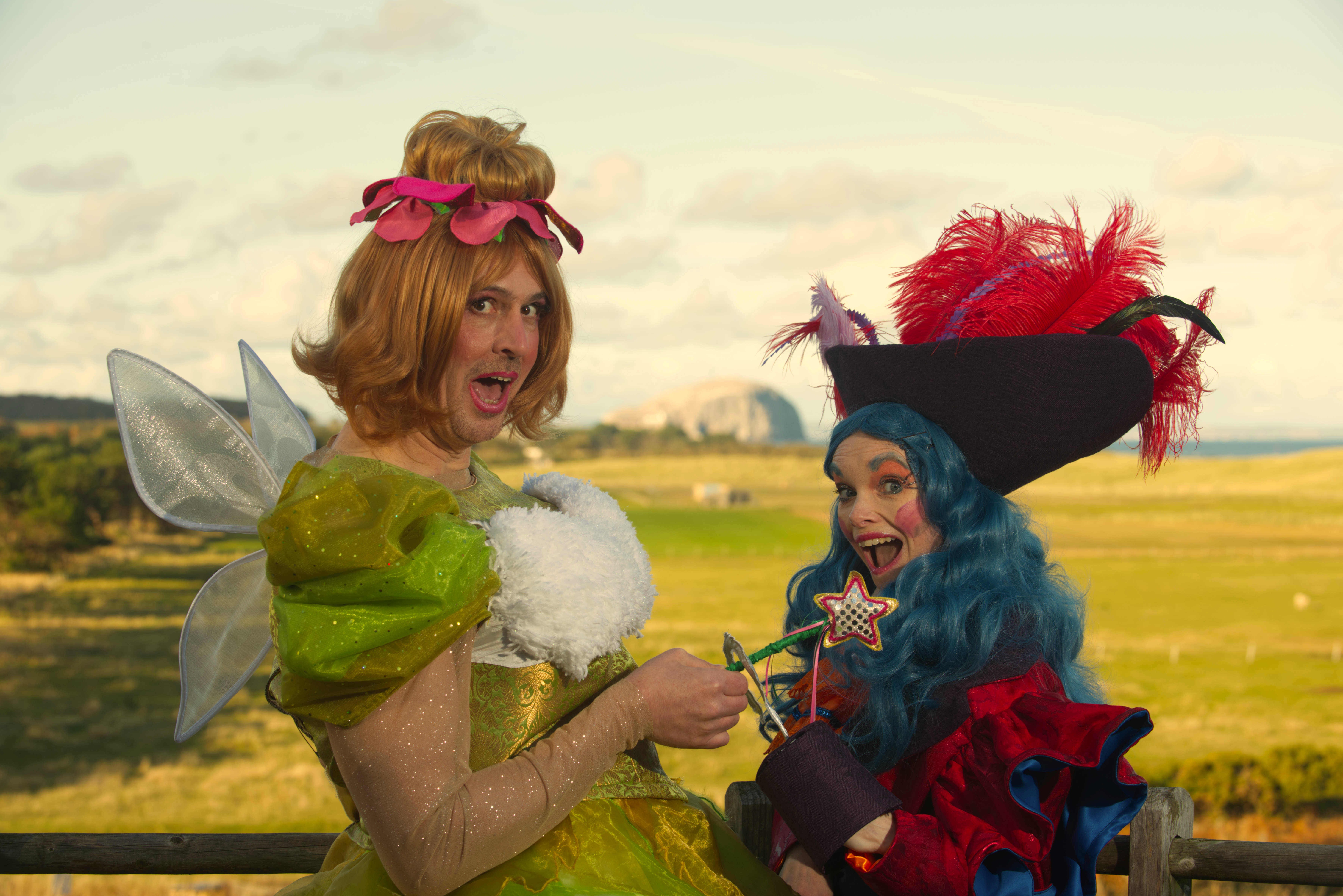
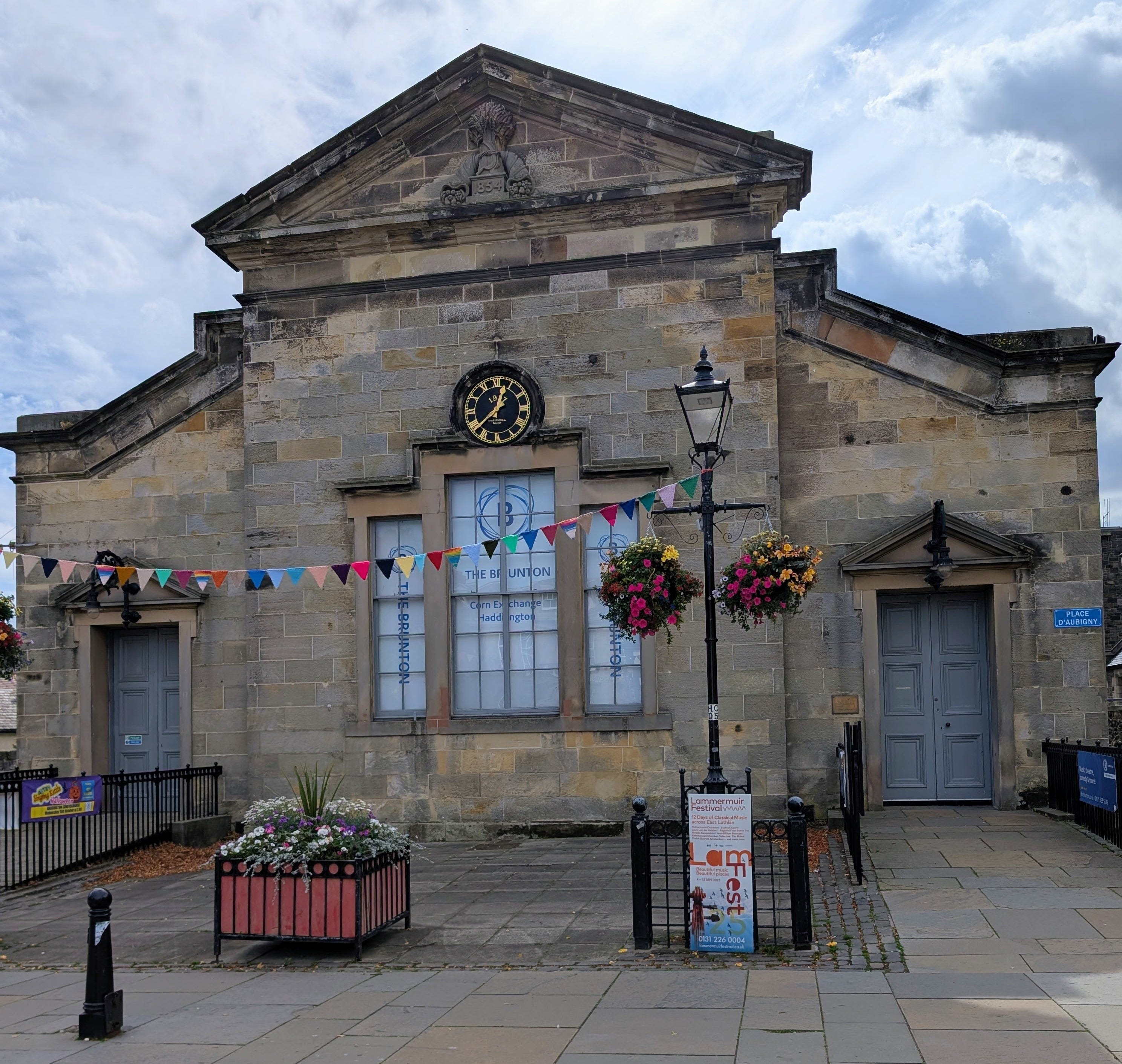
Nowhere is that resilience clearer than in the Trust’s flagship festive production. Running at Haddington’s Corn Exchange from 4 to 27 December, Peter Pans (fae ‘The Pans’ doon the coast from Musselburgh) reunites director Bruce Strachan and writer Paul Beeson following last year’s The Wizard of Oz. Though audiences will miss longtime dame and local favourite Graham Crammond, who has stepped back this season, Beeson takes over the dame’s mantle himself alongside Queen Margaret University acting students and a young local chorus.
In Scottish regional theatre, the Christmas pantomime is the financial barometer by which the entire year is measured. Far from stalling during the nomadic transition, box office figures for the Brunton’s annual panto have climbed steadily over the past two years.
‘To see the stats over the last two years and just seeing how it’s steadily growing and steadily building, that’s a really wonderful thing to see,’ O’Sullivan says. ‘We had Covid before that, then you have RAAC, and everyone moved out - it’s been a journey for the team. For me to come in and take all the glory, it’s wonderful,’ she adds with a laugh, before turning serious. ‘I’m really just so pleased for the team that their hard work is paying off - more people coming, the schools re-engaging.’
For director Bruce Strachan, balancing those school-only matinees with full family crowds is precisely what gives the Brunton panto its charge.
‘There are very few forms of theatre where you can have three generations of a family sitting together, all enjoying the same show, but often for completely different reasons,’ Strachan says. ‘For some children, it’s their first experience of live theatre, which is quite a lovely thing to be part of. And children’s laughter is one of the great things to hear in life.
‘One of the particular challenges of the Brunton panto is that we’re really making a show for two different audiences. We have performances made up entirely of schoolchildren, and then other performances where we’re entertaining whole families, from young children to grandparents. What works brilliantly for one audience might not necessarily work for the other, so you have to find a way of making the show entertaining for everyone.’
Staging a flying fantasy inside a converted civic hall like the Corn Exchange also demands theatrical wit rather than West End hydraulics.
‘Well, if somebody wants to give me a West End budget and a flying rig, I certainly won’t turn them down,’ Strachan admits. ‘But there’s also something quite enjoyable about having to work around those limitations. You have to concentrate on the storytelling and the relationships between the characters, and sometimes be a little bit tongue-in-cheek about how you achieve certain effects. It’s pantomime after all, and sometimes letting the audience see how you’re doing something is part of the joke. Eve Murray, our set designer, does a brilliant job creating our sets, and this year she’s created a world that really does transport us to Neverland - or NeverPans in this case.’
As for the script’s barrage of puns, Strachan makes no apologies: ‘There’s a real pleasure in a joke that’s so dreadful it somehow becomes funny again. You can hear the audience groaning before they start laughing. If people leave smiling, slightly hoarse from shouting, and complaining about how terrible some of the jokes were, I’ll consider that a success.’
In Haddington, that seasonal footfall is spilling onto the high street, though building local commercial ties took patience. ‘We’d built those strong relationships in Musselburgh with local businesses, but we’ve had to start from scratch here,’ O’Sullivan says. ‘And it’s been wonderful; they’ve been so welcoming, and they’re seeing a rise in footfall when we have events. They’re seeing more people coming into the town for shopping or for restaurants and bars. So it’s been really nice to be able to contribute to Haddington in that way.’
Meanwhile, O’Sullivan is opening the Corn Exchange to daytime community initiatives - from a monthly Parkinson’s UK café to early-years reading groups - drawing directly on her 13 years in paediatric healthcare. ‘I really want us to be opening the doors to community events and for community groups to come and use the space that we have,’ she says. ‘It makes a huge difference. It reduces isolation, it builds confidence, it reduces stress levels. It can help with cognitive skills. So even if you’re just sitting participating, you’re part of something bigger because you’re doing that as part of the community and you’ve got that shared experience.’
Will Musselburgh ever get a new theatre?
Momentum in Haddington has not dimmed the campaign for a permanent replacement back in Musselburgh, with box office data showing Musselburgh residents travelling across the county in large numbers to back the Trust.
‘The people of Musselburgh are extremely supportive and are still coming to our events and want to support the theatre because they want it to come back,’ O’Sullivan says. ‘That’s really powerful for us, and we want to respect that.’
With no confirmed timescale or capital budget on the table for a new building, O’Sullivan walks a pragmatic line between long-term advocacy with East Lothian Council and immediate operational realism.
‘I think it’s really important for Musselburgh and obviously East Lothian, Edinburgh and beyond that we have this theatre - and not just as a theatre, but you want it to be that community arts space for local creatives to be able to showcase their work,’ she says. ‘It is very much in our thoughts. But the focus for us right now is what we do here. There is no timescale at this stage for a new building. So as much as you have it in the back of your mind, we have to focus really on what we’re doing right now.’
Looking ahead to a 2027 programme spanning live music, sports talks, Scottish Dance Theatre collaborations, and in-house youth productions, O’Sullivan views the Trust’s unmoored state not as a holding pattern, but as an evolution.
‘We have got such a brilliant programme for next year, really exciting programme,’ she says. ‘What we want is to tell people about it and to get people to come. Everything is an opportunity, isn’t it? Even when we move to a new building, a new theatre, hopefully in the future, we will remain as the Brunton Theatre Trust. That’s who we are. It is an opportunity for us to keep growing and strengthening our brand - and that’s what we will continue to do.’