

“When I borrowed our client’s architect drawings of a proposal to refurbish the grimy John Menzies newsagent kiosk in the then St Andrew Square Bus Station in early December 1994… I felt something much better could become of this most important part of the city.
“It was cold and wet and miserable at the time, not just the weather.
“Having scribbled endlessly with tracing paper, to the amusement and tolerance of some in the office, I mused I had created something of a ‘fantasy’ scheme transforming the whole of the bus station and removing an ugly office building too.
“Thankfully, the architect said it could all work.
“I made a phone call to a London office of a retailer. Harvey Nichols were mooted to be going to George Square in Glasgow, so I cheekily left a voicemail for the CEO that there was a vision in Edinburgh that they needed to know about… he called back.”
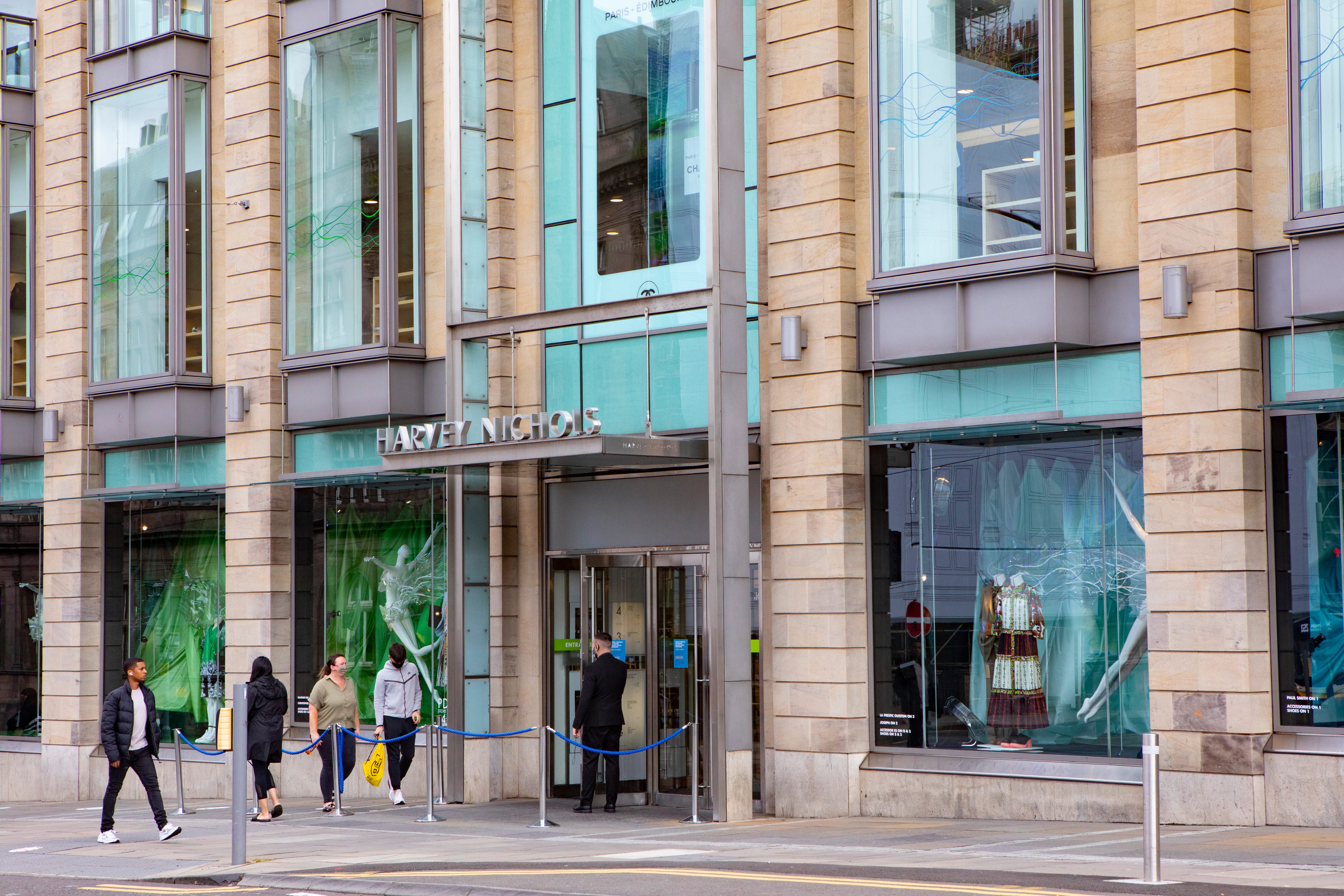
It can be hard to imagine now, looking back from the vantage point of 2026, how much of an impact Harvey Nicks opening had on Edinburgh, writes Emma Newlands.
Much of what the city’s shops were offering in the late 1990s when hotelier David Orr made that call was rather traditional, even staid.
While shoppers were more familiar with seeing tartan and tins of shortbread on sale in the city centre’s department stores, Harvey Nichols brought bright lights and colours and blinging designer labels when five years later it opened its doors, in 2002.
The department store brand had proclaimed itself “the place to be” and “the club that doesn't require a membership”.
Everyone knew the name, not just fashionistas, thanks to Jennifer Saunders’ and Joanna Lumley’s smash hit BBC sitcom Absolutely Fabulous.
The glitzy opening of the new store overlooking St Andrew Square attracted celebrities, including Ewan McGregor and Meg Matthews, then the wife of Oasis star Noel Gallagher.
The city’s newest department store was even named one of the world’s best ten shops by trade publication Retail Week, which said: “Harvey Nichols in London has a great reputation, but the Edinburgh store tops it as a location.”
Orr (pictured below) had the idea of bringing the famous brand to the city, while working earlier in his career as a partner in a property advisory company.

It was a call which would dramatically change the development of the city centre and the way the outside world saw Edinburgh as a shopping destination.
The glamour, excitement and anticipation which Harvey Nicks brought to Edinburgh then can seem like a distant memory when you consider the prospects of the store today.
Having recently been rescued at the 11th hour by retail behemoth and serial accumulator of ailing brands Sports Direct, can it still have a sparkling future despite the myriad challenges facing the high street? Or has it lost its lustre as shoppers desert bricks-and-mortar department stores and look to take their spending power elsewhere?
Edinburgh 1 Glasgow 0
Orr’s vision was “an act of genius that paid off big style for the city,” says Donald Anderson, now director of consultancy Playfair Scotland.
Anderson also played a key role in then bringing the plan to life, while he was a city councillor and convenor of economic development at City of Edinburgh Council.
It was “quite a coup,” and “huge” for the city, he says, adding that bringing the Knightsbridge-based brand’s first Scottish branch to Edinburgh rather than Glasgow was significant at the time.
In the 1990s, the trains running into Edinburgh from Glasgow Queen Street late on Saturday afternoons tended to be packed with shoppers returning home from spending their money in the much more alluring west. The arrival of Harvey Nicks was seen as giving the capital significant firepower to better compete with the retail attractions of Glasgow.
“Our shopping at the time was just not what you would expect in a city the size of Edinburgh. We were losing 19 per cent of retail spend to the Glasgow area, so it was a really really important issue.” This would later fall to 3 per cent after Harvey Nichols arrived, he adds.
“Edinburgh didn't [previously] really have that extent of luxury shopping. Harvey Nichols was at the time the most fashionable brand out there in terms of retail, and bringing it to Edinburgh was really exciting for us.”
Anderson has his name inscribed on Multrees Walk, now surrounded by designer brands such as Gucci, Mulberry, Louis Vuitton, and Longchamp. The prevalence of such high-end brands validates the council’s claim in 2004 that Edinburgh Harvey Nichols being named one of the world’s top stores would help to attract new big name outlets to the Scottish capital.
That didn’t just stop on Multrees Walk. The now somewhat beleaguered Harvey Nicks sits a stone’s throw from the £1 billion St James Quarter, which boasts brands such as Harrods Beauty and the newly opened Sephora. The huge shopping centre is also on track to rack up 100 million visitors to date by the end of 2026, with more than eight million in the first five months of the year alone. Also in the shadow of Harvey Nichols are Gleneagles and The Ivy, while the forthcoming Dunard Centre will add to the area’s prestige and footfall. All these developments, Orr notes, were ultimately sparked by the arrival of the department store.
Anderson says the arrival of Harvey Nichols was crucial “in terms of delivering radical change for Edinburgh,” as it helped pave the way for replacing the St James Centre. “Bringing Harvey Nichols to the city made a huge difference, both in terms of actual spend, but also in the perception of the city as a retail destination.”
