


Every year, around one hundred people in Edinburgh lose their lives due to drug use.
The highest concentration of drug-related deaths in the city is found in the Old Town. There were 36 within a 15-minute walk of Spittal Street, one of the potential sites for the city’s proposed safe drug consumption room, in the last three years alone.
Despite years of debate and hand-wringing, Scotland has seen the highest rate of drug-related deaths in Europe for seven years.
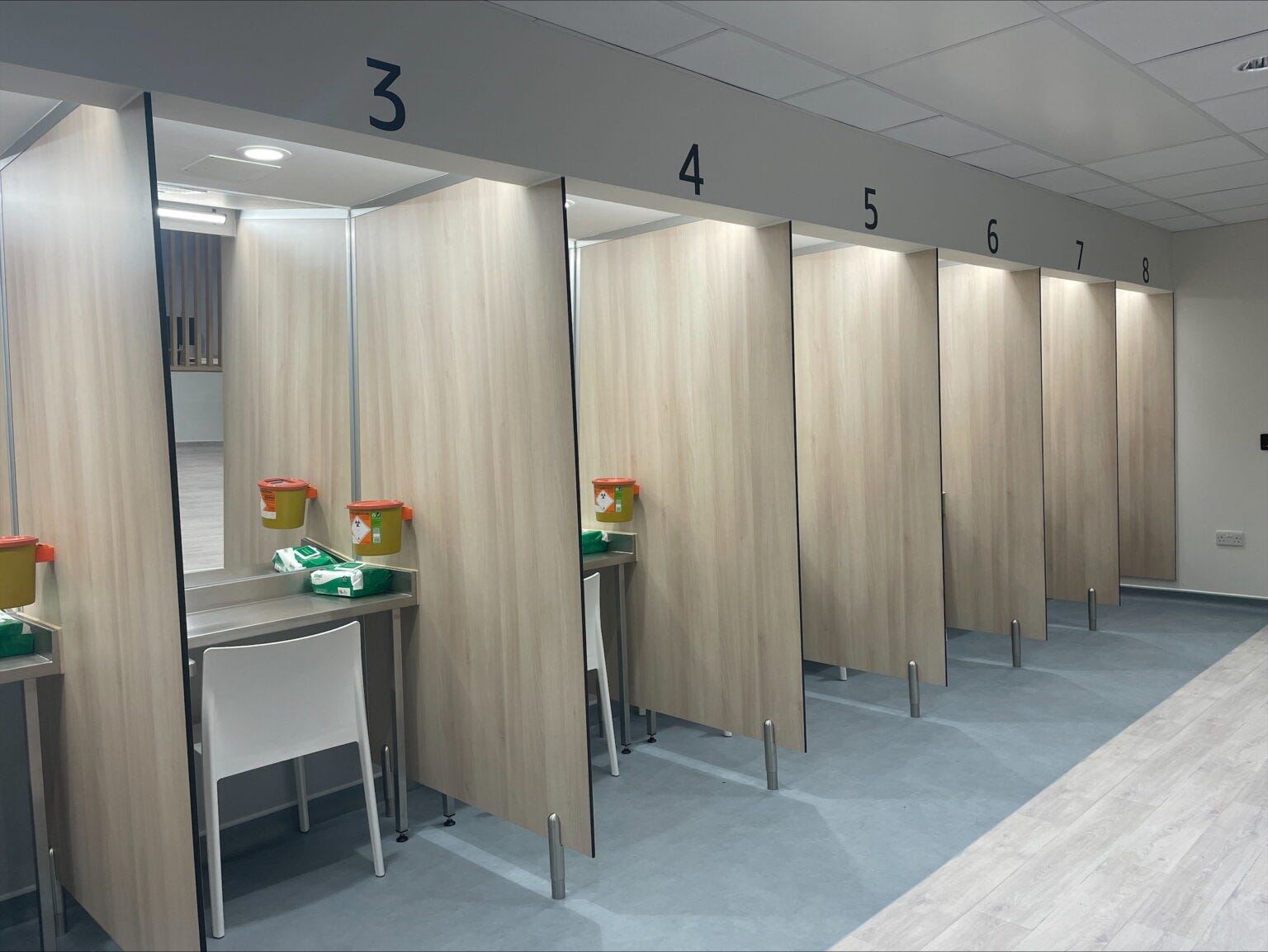
That is the crisis which prompted the opening of the UK’s first safe drug consumption facility (SDCF) in Glasgow in January 2025. The facilities, which were first opened in Switzerland and now operate in around a dozen countries globally, allow individuals to take drugs with safe equipment and under supervision of medical teams who can intervene to prevent death due to overdose.
Next week, Edinburgh’s Integrated Joint Board (IJB) - which oversees health and social care services jointly run by the NHS and the city council - is expected to approve a public consultation on plans to open a safe drug consumption facility (SDCF) in Edinburgh’s Old Town; either around Spittal Street or in the area around the Cowgate and Holyrood Road.
The consultation would run from 1 April to 1 July this year. For more background on the arguments for a SCDF in Edinburgh you can see our article from last year.
How likely is a SDCF now?
Many key players are already behind the idea in principle of an Edinburgh-based SDCF: NHS Lothian, the city council and Scottish Government. However, IJB Chief Officer Christine Laverty was still hesitant to make any definitive statements ahead of a consultation. “I wouldn’t want to preempt what the consultation is going to say,” she said. “Certainly we are entering this in a positive way that we think this would benefit the people of Edinburgh; not only those who sadly lose their life to an overdose but actually the wider impacts to the public in terms of public injecting… [but] it will be needs-led, rather than us putting in place something that actually people with lived experience say that’s not what [they’re] looking for.”
Although a survey will be available to the general public, this SCDF consultation will focus on the perspectives of those who have personal experience of drug-related harms. This is in line with all work under the Edinburgh Alcohol and Drugs Partnership - the public agency coordinating services for people struggling with substance misuse in the capital - which aims to reduce stigma against drug users and to prioritise those who are most affected when making decisions.
The EIJB are unlikely to make a final decision on pursuing a SCDF for Edinburgh until late this year or early next. After that, the final decision will rest with the Scottish Government, both from a legal and financial perspective. The Thistle, Glasgow’s SCDF, functions based on a statement from the Lord Advocate that individuals will not be prosecuted for possession of illegal drugs and similar offences on the premises. The EIJB would need a similar legal exception to be made for a SCDF in the capital.
Apart from that, Laverty said that a SCDF in Edinburgh would have to be 100% funded by the Scottish government, as the EIJB is not willing to cut any of its existing support to drug users. Holyrood currently foots the £2.3 million annual bill for the Thistle, and is explicitly supportive of Edinburgh progressing with plans for a SCDF, but there is not yet a guarantee of Scottish Government funding for a second facility.
What will it offer?
The existing SCDF in Glasgow offers space for injecting drug users, but does not have the legal ability to allow the smoking of drugs, such as crack cocaine. This has been a key criticism of the Thistle facility, as drug use patterns shift towards more smoking. However, IJB representative have said “nothing is off the table” for the Edinburgh facility, suggesting the capital’s centre could offer its services to a wider range of drug users than its Glaswegian counterpart.
Learning from Glasgow
