


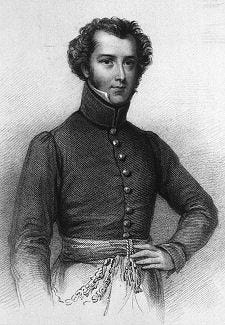
It was a savage death in a hot and merciless place, even as the evening cooled from the day’s 100 degrees. There was nothing to see but scorched sand, and one scrubby acacia tree throwing miserable but welcome shade.
When Major Alexander Gordon Laing understood his fate was to be murdered in that remote part of the lonely Sahara – far from his new bride Emma and even further from his comfortable home in Edinburgh’s burgeoning New Town - he must have felt desperate at the injustice of it all.
One of Edinburgh’s often forgotten heroes of exploration, he was the first European to set foot in Timbuktu in then largely unexplored North Africa. A military officer, his death – thought to have happened 200 years ago today - was for many years shrouded in mystery, making headlines around the world and creating diplomatic tensions. His papers charting his journey, stolen in the murderous attack, were never found.
His story is the stuff of Boy’s Own adventure combined with an Agatha Christie murder mystery concerning a man of great courage and an apparently limitless reservoir of determination. He would come to be recognised as the first European to set eyes on Timbuktu after many failed British and other expeditions, two of which had been led by the famed and controversial Scot, Mungo Park, whose treatment of native people had fuelled deep enmity and distrust of Christians.
Hacked and wounded, but on he went
The irony is that just weeks before his death, Laing had thought the worst lay behind him, surviving a night-time attack by a band of Tuaregs that left him with 24 wounds, 18 of them severe, as they hacked at his fallen body with curved scimitars.
Extraordinarily he had insisted that he soldier on within a day or two. Covered in bandages, tied to his camel he finally reached the fabled city of Timbuktu – the first European to set eyes upon it. It was a lifetime goal, a glorious achievement that would see his name celebrated around the world. Even more, he would soon to be reunited with his beloved Emma.
His dearest Emma, the daughter of Hanmer Warrington, Britain’s Consul in Tripoli. They had spent so little time together, weeks only. He had married her just two days before setting off on his quest to find Timbuktu, seen at that time as the greatest prize of exploration on earth. Laing felt guilt at how little time they had spent together, and in one of his letters from his journey to her father he said: “If it pleases God to spare us for each other (and that it will so please Him I have implicit faith) I shall devote the remainder of my life to atone for the unhappiness I have occasioned her…”
All of his hopes and dreams, his very future was being snatched away as his killers stalked towards him in that dark evening, armed with blades and spears but bearing no pity. There would be no happy ending.
A shallow grave under an acacia tree
Alexander Gordon Laing’s story is one of heroism and tragedy. The full truth of it may never be known, but in what appears to be the most likely version he was betrayed and murdered at the end, then buried in a shallow grave at the foot of a lonely acacia tree where he may earlier have sought shelter. He may have been beheaded, only bones were ever found. The detail of his story, and its place in the pantheon of exploration, can be discovered in Frank T Kryza’s book “The Race for Timbuktu.” The later discovery of his assumed remains, and most reliable information on his fate, are described by the man who found them, French military officer and explorer M. Bonnel de Mézières, whose account was later published in the Journal of the Royal Geographical Society.
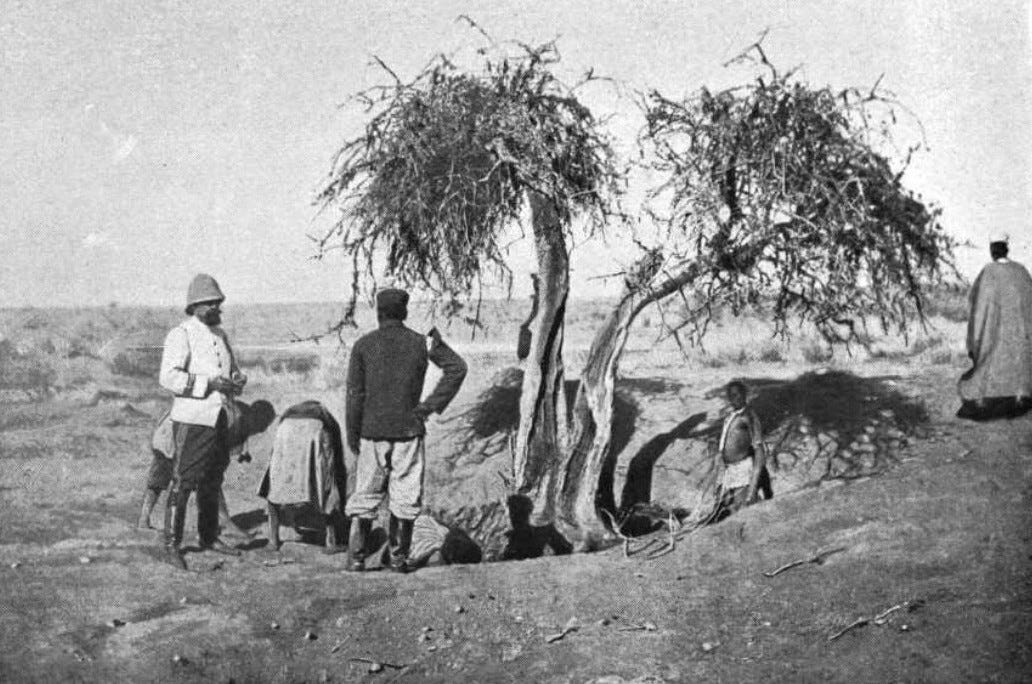
He spoke in Timbuktu to a man who claimed to descend from one of the killers, a fact he spoke proudly of, and showed the Frenchman a small ornamental bird which Emma is thought to have given Laing, and following his description of events found the place and recovered several bones buried in a shallow grave.
Laing was born in Edinburgh in 1794, educated at his father’s own academy and showed himself a brilliant student who enrolled at University at 12 years old, he was to emerged from early military service in the Caribbean and West Africa as one of Britain’s most ambitious explorers. By the mid‑1820s he had already traced sections of the Niger River and published Travels in the Timannee, Kooranko and Soolima Countries (1825), all of which established him as a credible candidate for the era’s most coveted geographical challenge: reaching the Timbuktu.
What was to be his last expedition began in 1825 under the UK’s Colonial Secretary, Henry Bathurst with instructions ringing in his ears to reach Timbuktu. His starting point would be Tripoli, where the consul was Hanmer Warrington. During his weeks of preparation there he fell in love with Emma Warrington, and they were wed on July 14.
Ambushed, suffering 24 wounds
Two days later, he left her as he set out with a caravan led by a local sheikh, who was later suspected of plotting against him. He expected to be away a few months at most. In the event it took him more than a year of overcoming challenges, illness, disease and injury to reach Timbuktu.
The worst of these obstacles was undoubtedly the Tuareg attack, which is likely to have been in the earliest days of February 1826. The caravan was joined by a heavily armed band of around 20 Tuareg. After a few days of rising tension, Laing was violently ambushed, the group surrounding his tent and firing into it, before hacking at him with their blades.
In a letter to his wife, written as he and his group continued their journey across a never ending plain of rocks and sand, Laing asked her to excuse his writing and the brevity of the note as “I write with only a finger and thumb, having a very severe cut on my forefinger.” His fingers were left hanging off by the sword slashes he had endured, but he did not mention the attack.
He did, however, detail them all in a letter to his father-in-law – who also kept them from Emma to protect her.
Timbuktu is reached
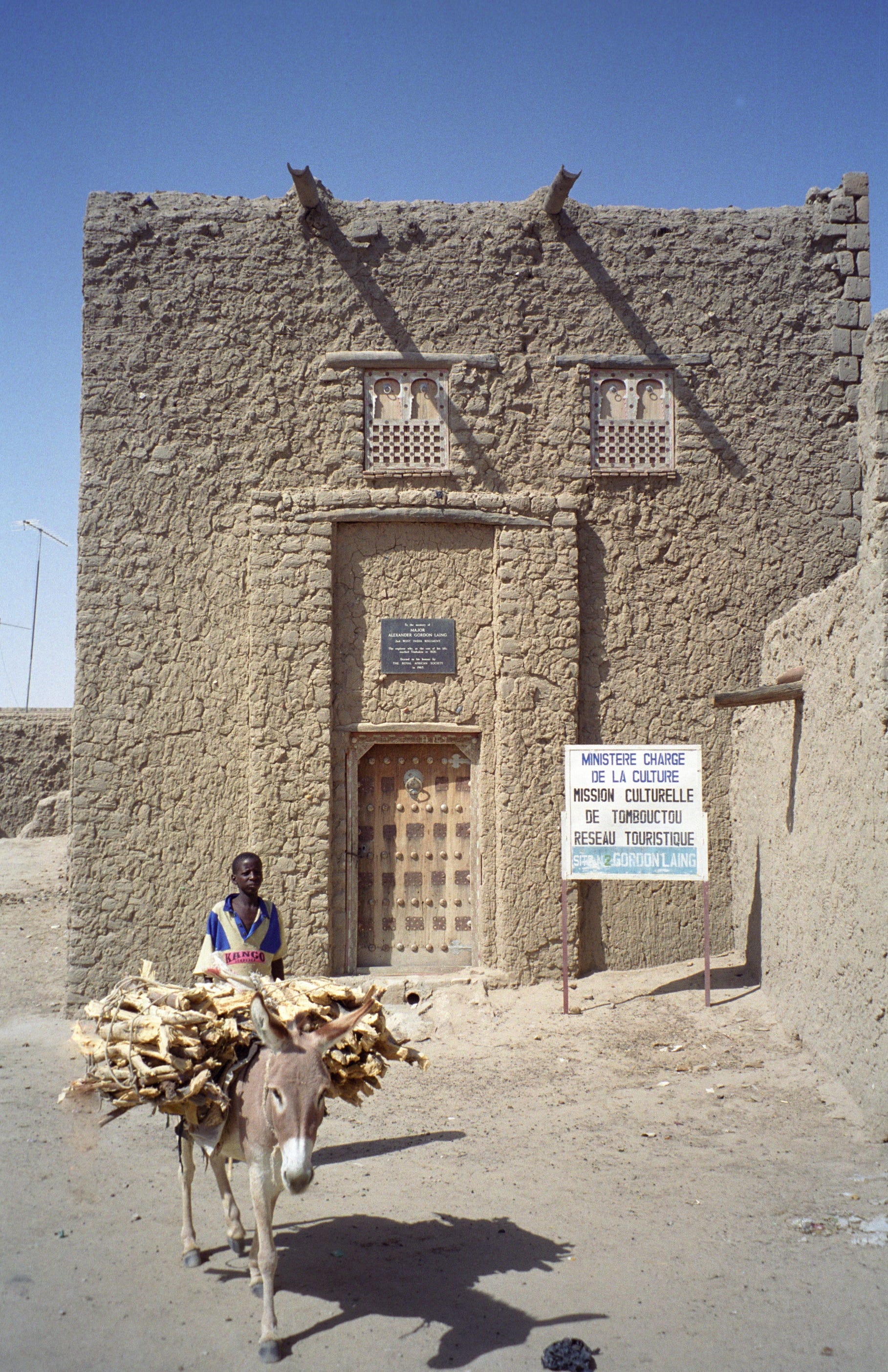
On 18 August, 2026, he arrived in Timbuktu. Despite concerns as to how a Christian might be treated in this very Muslim city, he was initially met with great courtesy, and was given a small house for his use (which still exists today). He spent weeks walking around the city, taking notes as he studied the city’s architecture and culture, and became known as “The Chief” to the population because of his dignified military bearing.
In arriving at Timbuktu, Laing was ahead of all competitors and was also in line to win a significant financial prize being offered by the Geographical Society of Paris to the first man to reach Timbuktu and return.
Despite the courteous welcome he had received, the overall political situation made him extremely vulnerable – as a foreigner and a Christian and wounded as he still was. He was warned that his life would be in danger if he stayed much longer and so decided to begin the final leg of his journey – back to Tripoli and Emma.
On or around 24 September he left the city and began the arduous journey home. It is thought he was killed on 26 September, murdered by his Arab escort who, it is believed, demanded he renounce his faith and, when he refused, killed him with spear and sword.
Laing’s journals and papers vanished with him. The story was eventually pieced together from a variety of sources, including eye-witnesses.
Sadly, the tragedy did not end with Laing’s death. His wife Emma remarried, this time to her father’s second-in-command Thomas Wood, in April 1829. He was posted to Italy, where he had hoped the climate would restore her shattered health and spirit. Instead, within six months, she would be dead of consumption.
A Franchman, Rene Caillie, made it to Timbuktu more than 600 days after Laing. He was to visit the house in which Laing had briefly lived, before himself returning to Paris to claim the 10,000 franc prize. The Gold Medal that went with it, however, was awarded to both men.