


Welcome to your midweek edition of The Inquirer, which is once again packed full of goodness. First, there’s your news roundup of the most interesting and important developments you might have missed. Next up is your guide to the cultural highlights for the week ahead in Edinburgh.
Last, and by no means least, we have Jolene Campbell’s in-depth report on the future of the Radical Road, the famous footpath in Holyrood Park that runs beneath Salisbury Crags.
The Radical Road has a fascinating history, a contentious present and an uncertain future. You may have seen the headlines in recent weeks about plans to partially reopen the footpath after years of it being fenced off due to the risk of rock falls from the cliff face above.
Amid fears the path might never reopen to the public, the idea of a partial reopening has been welcomed as a positive step forward, but everything is not quite as it might seem. As Jolene reports below, the partial reopening of the path could come with a major sting in the tail, the permanent closure of most of the 200-year-old route.
Your Edinburgh Briefing
SKULLS RETURNED: The University of Edinburgh has returned the skulls of six Native American people to their ancestors more than 150 years after they were taken. The handover to the Muscogee (Creek) Nation, based in Oklahoma, is believed to be the first international repatriation of ancestral remains to mainland United States. The skulls were originally held in the Edinburgh Phrenological Society’s museum until the 1880s, before being transferred to the university’s Department of Anatomy.
DAY BLOCKED: Former city council leader Cammy Day has been blocked from joining the board of NHS Lothian. The proposed appointment of the Labour councillor has been vetoed by Health Minister Neil Gray after objections were raised by SNP MSP Gordon MacDonald and the party’s leader on the city council Simita Kumar. Day recently apologised after using a fake name to make a formal complaint against a fellow councillor.
LAW STUDENTS: The former Scottish Law Commission offices on Causewayside are to be demolished to make way for student accommodation. The city council has approved plans for the vacant building to be replaced by six-storey accommodation blocks with a total of 172 bedrooms.
HIBS’ BILLIONAIRE SUPPORTER: Hearts might have the backing of gambling industry billionaire Tony Bloom, but Hibs apparently have the support of another member of the super-rich. Scotland’s richest man, the Highlands-based Danish billionaire Andres Holch Povlsen, has reportedly been advising Hibs owner Ian Gordon. According to The Sun, Povlsen and Gordon have been discussing the best ways to develop the club commercially, but investment by the Dane is not apparently on the agenda.
FETTES ABUSE FAILURES: Fettes College failed to protect pupils from sexual and physical abuse, the Scottish Child Abuse Inquiry has found. Inquiry chairwoman Lady Smith said children at the leading private school were regularly abused by teachers and other pupils from the 1950s until the end of the 1980s. Ex-headmaster Anthony Chenevix-Trench was among several members of staff named as being complicit in the abuse. The school’s governors have apologised “unreservedly” to those who suffered abuse and “were wholly failed by the school”.
FOOTBALL FAN ZONE: The Pitt in Granton has been named as the first official fan zone for supporters looking to cheer on the men’s national football team at the World Cup in the US, Mexico and Canada. The food market and arts venue will stay open into the wee small hours to allow fans to take in Scotland’s matches this summer.
Pick of the (Cultural) Pops
Greetings, Pop-Pickers. Welcome to the hit parade! Cue the jingle, dim the lights, and settle in, because the needle is dropping on another countdown of the capital’s cultural chart-toppers, writes Will Quinn.
We are currently hurtling towards February, a month usually reserved for freezing rain and sombre reflections on short-lived January gym adventures. But not this year. This year, Edinburgh is putting on a coat of many colours (and possibly sequins) to keep the gloom at bay.
The quality on offer this week is so high that we have a serious logjam in the midfield - a testament to just how spoilt we are for choice. We have Cuban ballet superstars, a festival of visual wonders that defies logic, and a comedy line-up that has forced a deadlock. It’s all happening, and it’s happening right here.
Let’s count them down…
Dancing into Number 5 is... Carlos Acosta’s Nutcracker in Havana at the Festival Theatre (Feb 3rd – 4th).
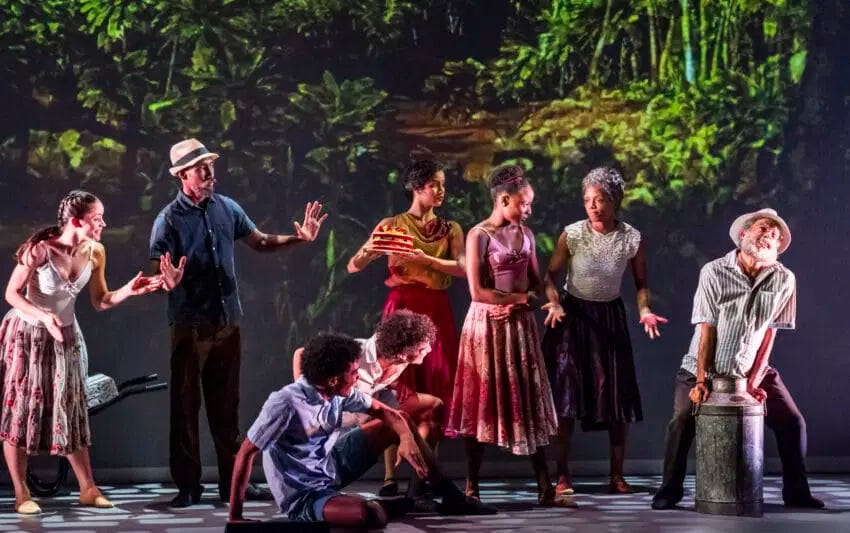
Carlos Acosta has been one of ballet’s brightest lights for decades, first as a darling of the Royal Ballet and now as a director shaking up the establishment. His company, Acosta Danza, has become internationally famous for fusing classical precision with Cuban flair, and next week they bring a unique take on a festive classic to Edinburgh. Expect a vibrant blend of artful storytelling and technical prowess, choreographed by an artist with a deep love for the old and new elements he is bringing together.
Locked in a tie at Number 4 are... Fawlty Towers & Ian Smith. It’s a dead heat between nostalgic farce and cutting-edge comedy. Fawlty Towers - The Play stays on the list because, quite simply, it’s a polished, excellently staged trip down memory lane that is delighting audiences at the Playhouse (Ends Jan 31st). But matching it pound-for-pound is Ian Smith at the Monkey Barrel (Feb 7th). I’ve been a huge fan since reviewing his show Crushing in 2023. A familiar wit to Radio 4 listeners and fresh from his Live at the Apollo debut, Smith brings a unique brand of stressed-out Northern humour that is impossible not to love. Catching this rising star in an Edinburgh basement is not an opportunity to miss.
Storming into Number 3 is... Soundhouse: Foghorn Stringband at the Traverse. If you want the real deal, this is it. On Sunday, the Foghorn Stringband bring their blistering American roots music to the Traverse. This isn’t polite folk music; it’s played with a ferocity and virtuosity that could strip paint. It’s the kind of hootenanny that grabs you by the collar and demands you have a good time. A perfect antidote to the February chill.
Surging up to Number 2 is... The RSA 200th Anniversary Season (Open Now). I mentioned them last week, but they have shot up the chart for a simple reason: I went, and the reality lived up to the hype. The sheer diversity and quality of the concurrent exhibitions currently filling the Royal Scottish Academy is properly impressive. From Origin Stories to Generation, there is truly something for everyone here—and more than you’ll expect. This is world-class art, rooted in Edinburgh and freely available to anyone with the time to visit.
And finally, claiming the Number 1 spot is... Manipulate Festival 2026: Auntie Empire (Festival: Feb 5th – 15th). Manipulate is a true gem on Edinburgh’s cultural calendar, brightening the dark days of February with a sparkling array of visual theatre, puppetry, and animated film. Amongst this year’s dazzling international offerings, the top pick has to be the homegrown production Auntie Empire at Summerhall (From Feb 6th).
This is the latest anarchic creation from Scottish theatrical titans Julia Taudevin and Kieran Hurley (Disaster Plan), and it promises to be messy. As Julia told me when I interviewed the pair recently, she created the titular Auntie as “a character who I might like to most disembowel—a sort of Maggie Thatcher, The Queen, and Liz Truss mash-up.” If that image doesn’t sell you a ticket, I don’t know what will.
(You can read my interview with Julia Taudevin for The QR here)
Chart Bubbling Under (The “Sold Out” Siren): No account of the best productions coming to town next week would be complete without mentioning Jodie Comer’s bravura turn in Prima Facie at the Lyceum (Feb 3rd – 7th). However, that show sold out a long, long time ago. You might get in line for a return, but this chart exists to point you towards cultural gems you won’t have to win a lottery to see.
And there we have it! The countdown is complete, the vinyl is back in the sleeve. But the music never really stops, does it? If you catch any of these chart-toppers, drop me a line or shout it from the rooftops. Will Auntie Empire reign supreme? Will the foghorns keep blowing? Tune in next week—same time, same channel—to find out.
Stay bright.
The fight to stop the Radical Road being closed for ever
The reopening of part of the famous path below Salisbury Crags could come with a sting in the tail
by JOLENE CAMPBELL
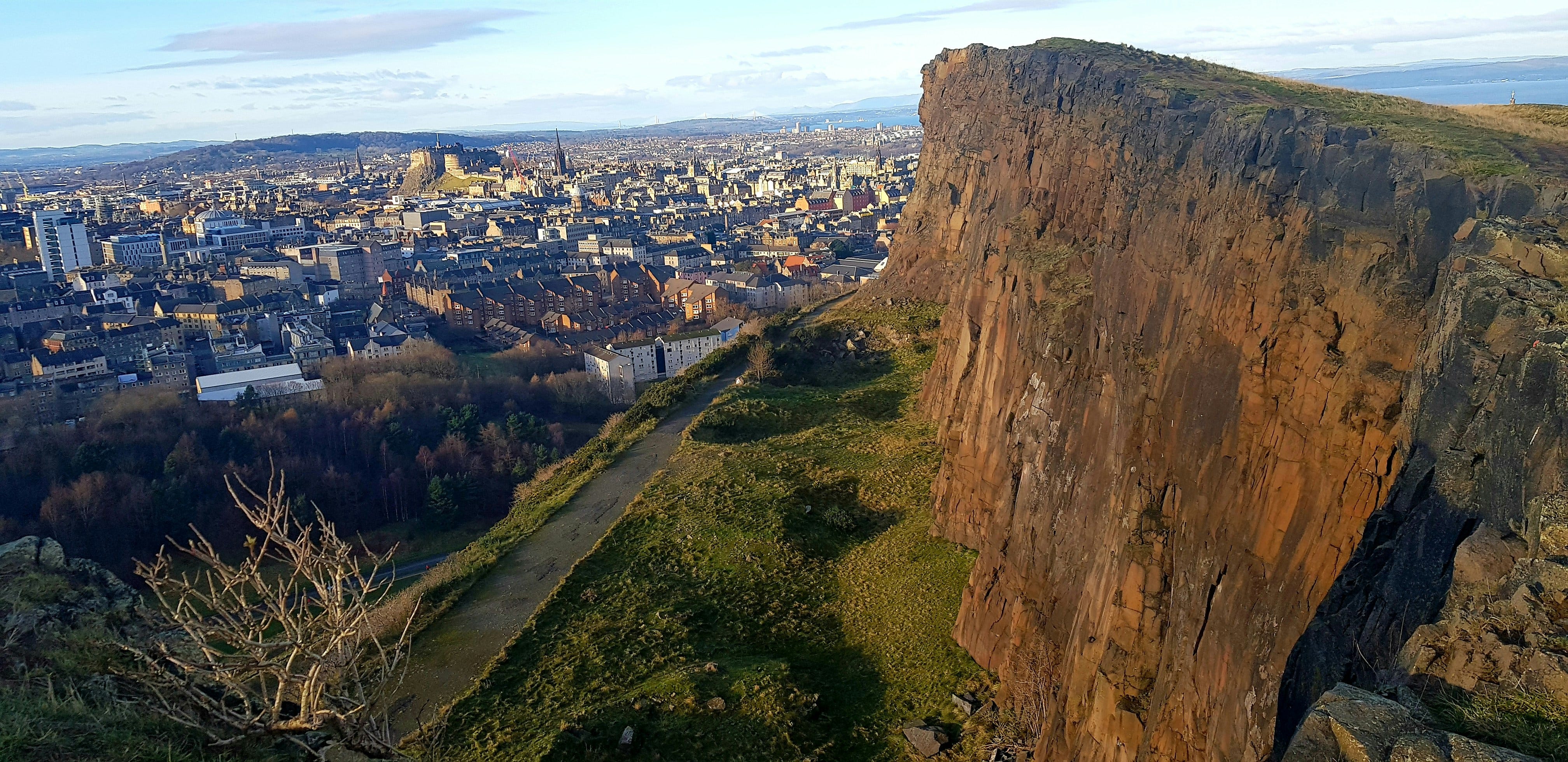
More than 200 years ago unemployed weavers were put to work with picks and shovels to create a path built into the cliffs of an extinct volcano at the Salisbury Crags.
The Radical Road perched high above the capital got its name in the aftermath of the Radical War of 1820.
It stands as a silent reminder of the people’s history; a symbol of social revolution. But its significance is even older, deeper and richer.
Hutton’s Section tells the story of the evolution of the earth itself. This spot is where the founding father of geology James Hutton arrived at his theory of how and when the world was formed.
Today it remains one of the most popular ways up Arthur’s Seat for residents and visitors alike and one of Edinburgh’s top attractions on TripAdvisor.
Walking groups and locals have long campaigned for the path to be reopened since part of the iconic route was shut in 2018 after 50 tonnes of rock fell from nearby cliffs.
Historic Environment Scotland confirmed plans last year to re-open part of the Radical Road by summer 2026, after considering full closure.
Now HES which manages the site has submitted plans to city councillors to reopen The Hawse to the northern end of South Quarry.
Heritage chiefs and ramblers have responded with cautious optimism to the plans, which would also see the removal of two sets of temporary barriers to the north and the addition of new mesh panels and chain fencing.
But the move has also sparked fears that it could lead to permanent closure, opening the way for HES to continue to shut access to the rest of the road which is much closer to crags.
On one hand HES says it’s a necessary mitigation “whilst further measures are considered for managed access to the remainder of the Radical Road”.
However, the planning application is seeking permanent consent for the measures.
It follows widespread criticism of HES for ‘dithering’ over restoring full access and claims it has managed the world-famous geological feature “like a crumbling historic building”.
More than 50 organisations and individuals have responded to the current application with 49 out of 53 responses being objections. A new Friends of Holyrood Park Group has warned that HES has a ‘fight on their hands’.
Rocks falling ‘all the time’
Since the 200-year-old road was shut seven years ago over safety concerns, HES has since carried out a review of how it assessed and managed rock risk safety with specialists.
In their strategic plan HES says it’s working to expedite the reopening of parts of the Radical Road, but safety of visitors and staff is its top priority.
According to latest figures from HES, there were at least 82 rock fall incidents between 2017 and 2020, with the majority either small, or small to medium, rocks.
Two incidents have involved large or very large rocks. Since the COVID-19 pandemic in 2020, HES has not actively monitored rock fall incidents along the majority of the Radical Road due to the path being closed to protect the public and its staff.
The body says there were at least two rock falls since 2020 in the unmonitored section and a further 15 rock fall incidents at the southern end where monitoring has continued.
As of last year, the section with the highest risk had an estimated probability of a fatality from a rockfall event of one in 4,886. That’s substantially less than in 2019 when it was estimated at one in 2000.
Fairhurst, an engineering firm used by HES, told the BBC the “number of actual rockfalls is higher than the number that is identified and reported in all areas “.
For safety reasons, HES no longer allow the team of twelve park rangers to carry out assessments and have drafted in geotechnical engineers who come in regularly to review rockfall. One Park Ranger told The Inquirer that “rocks are falling all the time”.
Plans ‘not proportionate’
But ramblers and conservation groups say after seven years of ‘unauthorised’ closure, a solution should be found to fully open the road again.
Writing on the Parkswatch website and blog one conservationist claims HES has ‘misrepresented’ the report and the risk to a pedestrian walking one mile on public roads in the UK is around 50 times higher.
Lorna Slater, Green MSP, is concerned that HES approach is unreasonably cautious.
Slater is Chair of the new Friends of Holyrood Park Group, which met for the first time in December.
“The problem is that HES has not convinced the public that this is proportionate to the danger posed. I think they are trying to do the right thing. But they are going to have a fight on their hands.
“They need to explain how they have done the risk calculations, and why they have chosen this approach. What’s the thinking behind it and what are the other options? Ultimately, if the priority is to allow access again the question should be how do we make that happen? The approach so far seems heavy handed.”
