


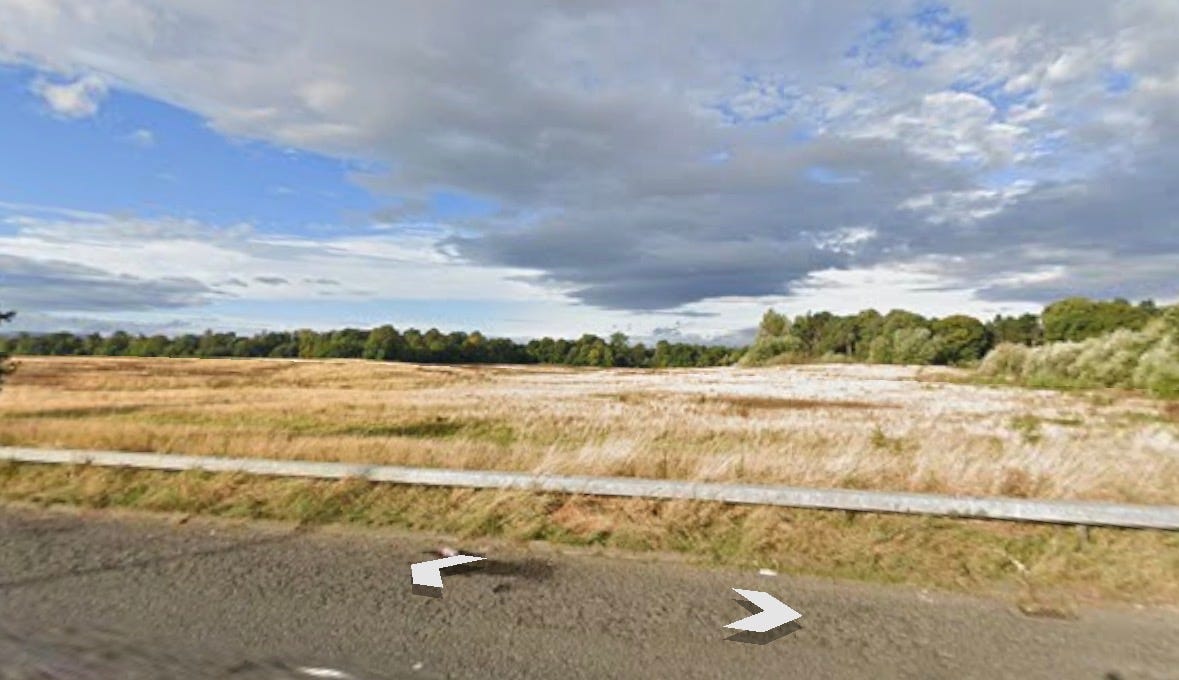
Over the last ten years, Edinburgh’s proposed “Garden District” has periodically caused a stir - from neighbouring suburbs and villages right up to the Scottish Government. The proposed construction of thousands of homes to the west of the City Bypass faced opposition for its Green Belt location and concerns about the strain the thousands of incoming households would put on the surrounding roads and infrastructure.
The first phase was eventually approved by both city council and Scottish Government, due in large part to the benefit to the city of the jobs and much-needed housing it would bring.
The full plans approved in principle in 2016 promised 6000 homes constructed over twenty years, with a first phase of 1350 homes at “Redheughs Village”. And yet, 10 years on, not a single brick of the Garden District has been laid.
The past decade has brought more than its fair share of economic turmoil, from Brexit and the pandemic to war in Ukraine and trans-Atlantic trade wars. But even against that remarkable background, the glacially slow progress on the city’s most significant housing development – at a time when Edinburgh has declared a housing emergency – has been staggering.
What has gone wrong? Why has progress been so mind-blowingly slow? The reasons are many and complex, but they raise important questions about our approach to the provision of new homes.
A timeline of delays: The Garden District
1989: Sir David Murray purchases over 600 hectares of land to the West of Edinburgh.
2010: Murray Estates Limited announce plans for a development “dedicated to gardening” including an international gardening showcase alongside 3500 homes, a 25,000 seat sports stadium, and potentially a national curling centre.
2016: Plans for the Garden District have now evolved to include 6000 homes and leisure, health and school facilities. Planning in principle is granted by the City of Edinburgh Council for the first phase of the Garden District, which will include 1350 homes and associated amenities. The plans are approved despite officers recommending they be refused due to their not being included in the existing Local Development Plan.
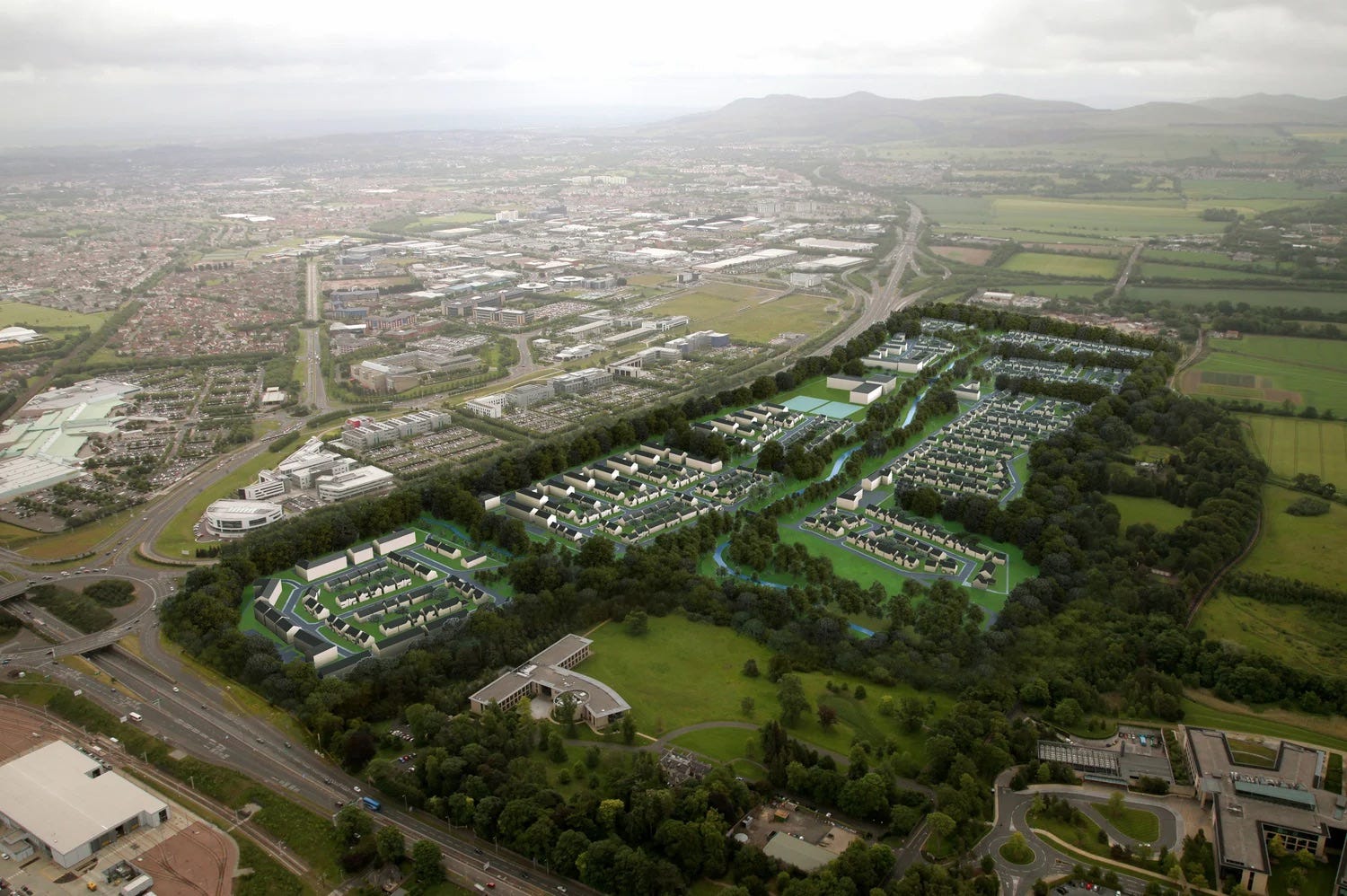
2016: The phase 1 plans are called in for consideration by the Scottish Government over concerns about infrastructure.
April 2022: Scottish Government grants permission to the first phase of the garden district under certain conditions, including the drafting of a masterplan for the site.
7 November 2024: A new local development plan (City Plan 2030) is approved by council, which includes Garden District Phase 1 (also known as Redheughs Village).
February 2025: Murray Estates announce sale of the Redheughs Village site to Places for People Developments, a social enterprise housing developer- for £18 million profit. Places for People drafts and submits a masterplan alongside other plans required as conditions of the planning consent.
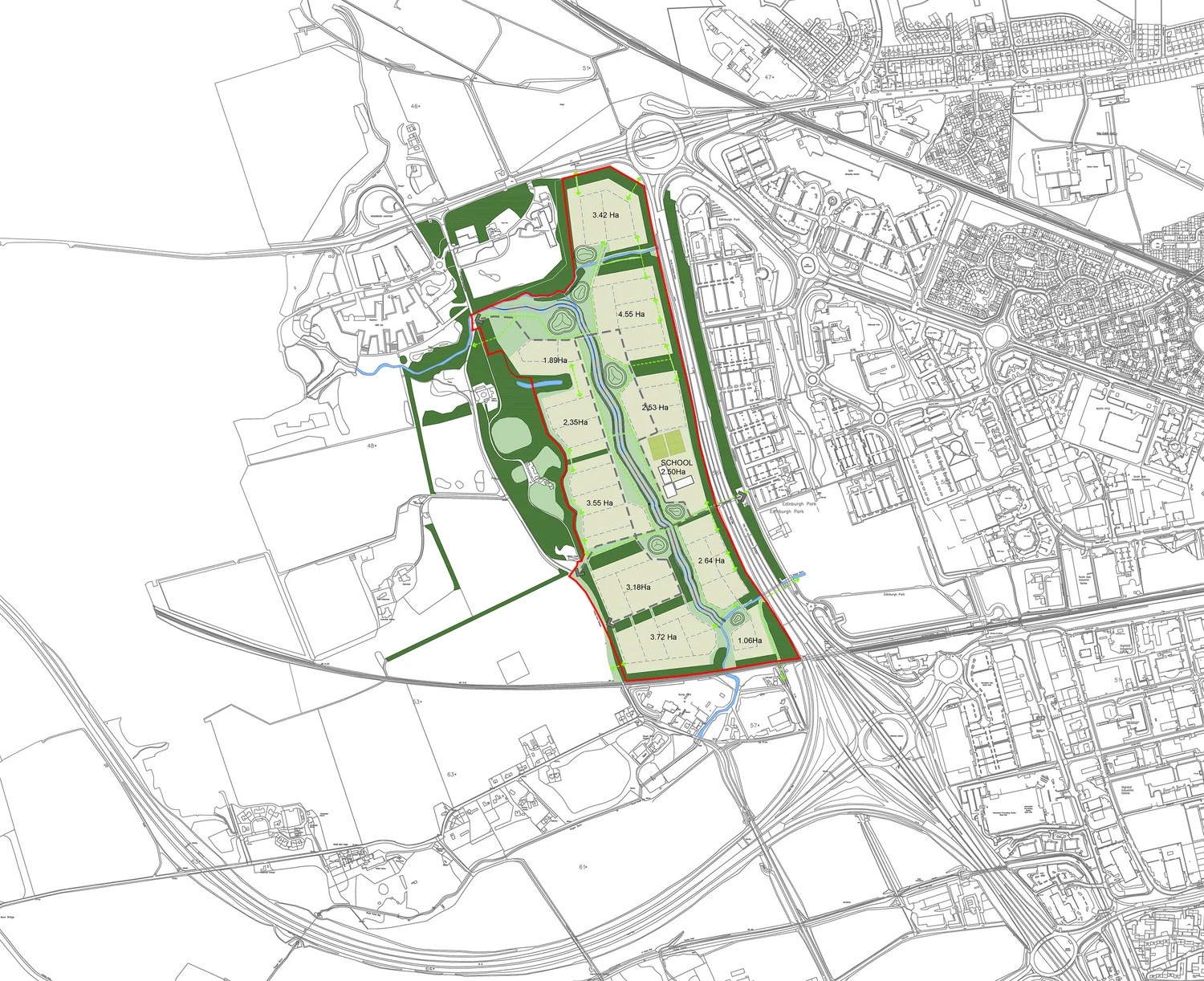
November 2025: Edinburgh Council approves the masterplan for Redheughs Village.
May 2026: Groundworks begin at Redheughs Village.
2028: 50 homes are estimated to be completed at Redheughs Village.
2034: According to the Council housing land audit, the last of the 1350 homes in Redhueghs Village will be built.
Fewer homes and slower to appear
There are, finally, signs of progress being made – and homes actually being built – on the Garden District site. However, it may be far fewer than initially planned, and even the first few dozen homes are still two years away.
Earthworks in preparation for housebuilding began on the site in May of this year, and according to the council’s estimations, the full first phase won’t be finished until 2034.
Ten years after the council approved the Murray Estate’s development, the agreement in place is only for 1350 homes, rather than the initial goal of 6000 by 2034.
According to Murray Estates, a proposal for a further 5000 homes will be put forward for inclusion in the renewed local development plan (the City Plan 2040). This plan, which allocates land for housing to be built between 2029 and 2039, has not yet been drafted- the city council has not yet had the go ahead to draft it from Scottish Government ministers, however the current evidence suggests that Edinburgh needs nearly 40,000 new homes by 2039 - and that two thirds of these should be affordable or social housing.
When asked about the timeline, Murray Estates maintains that it has the capacity to deliver another five thousand homes over the two decades - starting from when planning permission is granted and “subject to planning approvals and commercial viability”.
Professor Kenneth Gibb, director of the UK Collaborative Centre for Housing Evidence, points to a few of the commercial constraints that private housing developers operate under.
“They tie up their capital and land until the properties are built. As limited companies, developers have committed to a certain return on investment for their shareholders - maintaining that profit level can require waiting out years-long lulls in the housing market, or slowly phased construction to maintain housing price levels in the specific area of construction.
“These market dynamics are mismatched to the goal of Edinburgh council to provide an urgently-needed, rapid supply of affordable housing. There are some fundamental big picture questions here about the nature of private sector housing development, which can be known to follow this kind of business logic,” he says.
On the other hand, Gibb points out that the obligation on private developers to include a certain percentage of affordable housing, within a phased development, can work well. Developers may wish to build out the social housing during the early phases, providing a guaranteed return at the beginning of the overall development. The affordable housing obligation on private developers in Edinburgh is now 35% as of 2024 - the highest in Scotland.
We asked Sir David Murray how he balances the acuteness of a housing crisis with his self-description as a “patient developer.”
“It is exactly that - a delicate balance of ambition and patience.” he says. “The allocation of sites for new homes is addressed through the Local Development Plan. The preparation of the Local Development Plan is a lengthy process but we will pursue projects on the land we own when the time is right to do so.
“I’ve said before that I believe the sites being opened up on the western fringes of the city - including within the Garden District - will be key to tackling the housing crisis in Edinburgh. We want to play our part by bringing forward good projects, in collaboration with the council and by working with the right housebuilding partners, whoever they may be.”
Is the Garden District the answer to Edinburgh’s housing crisis?
