


Using plastic waste to treat Parkinson’s - the Edinburgh breakthrough that could change drug production
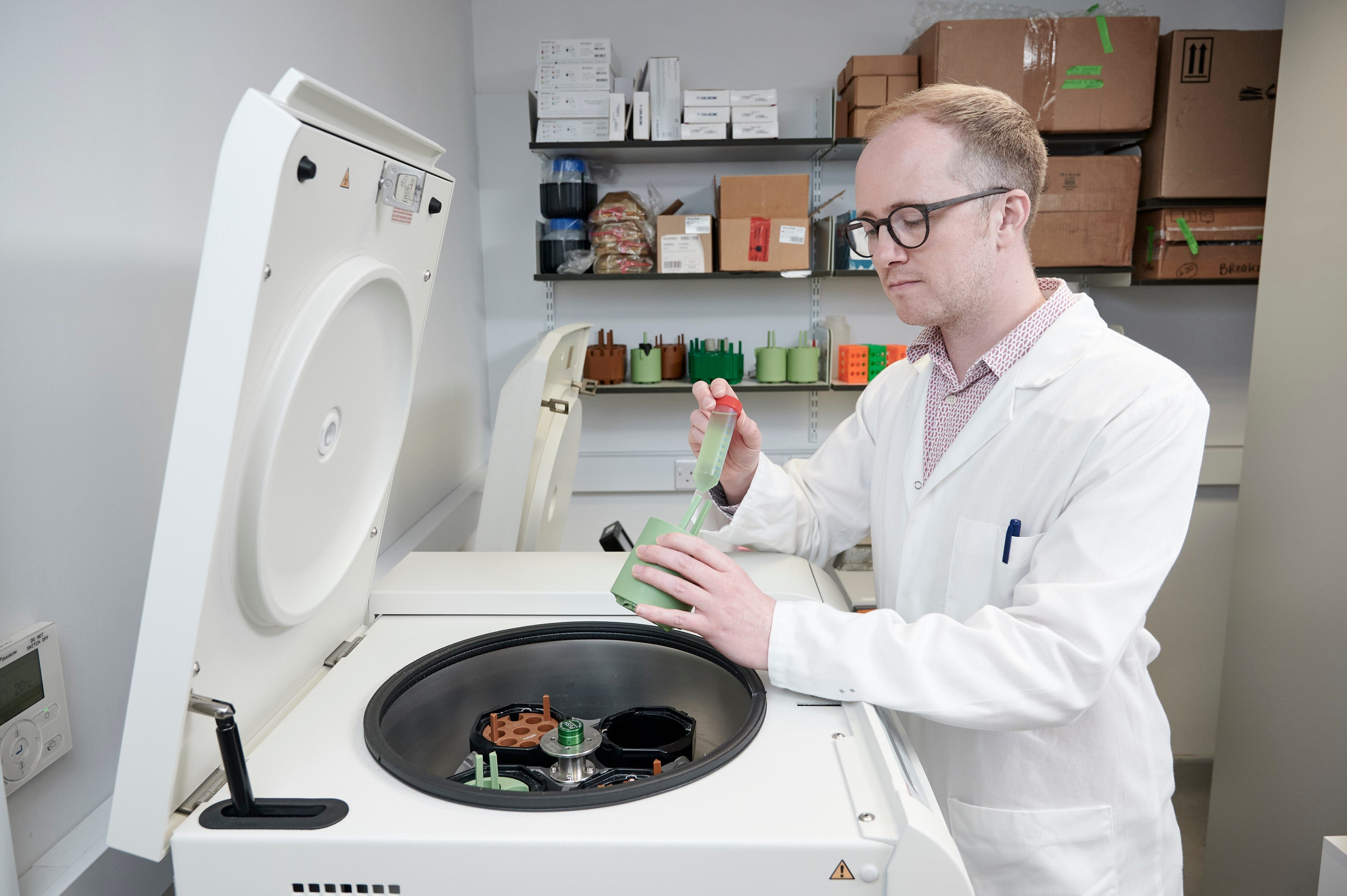
The result of years of painstaking research led by a team of scientists from the University of Edinburgh was announced today – and it could change the way some medications are made in future.
The team has demonstrated that a drug to treat Parkinson’s disease can be made from waste plastic bottles using a pioneering method, and now they are looking to explore further uses.
The findings are published in the journal Nature Sustainability.
How does it work?
The approach harnesses the power of programmed bacteria to transform post-consumer plastic into L-DOPA, a frontline medication for the neurological disorder. It is the first time a natural, biological process has been engineered to turn plastic waste into a therapeutic for a neurological disease, researchers say.
The team had already demonstrated in recent years that the process could be used to produce food flavouring vanillin – but they are now hoping to attract the investment and opportunity to scale the process to create a new, sustainable manufacturing method that turns what is viewed as a problem – waste plastic – into a resource for the pharmacy industry.
The team of researchers engineered E. coli bacteria to turn a type of plastic used widely in food and drink packaging – polyethylene terephthalate, or PET – into L-DOPA.
Sustainable how?
The process involves first breaking down PET waste – some 50 million tonnes of which are produced annually – into its chemical building blocks which are then transformed into L-DOPA by the engineered bacteria through a series of biological reactions.
The team, led by Professor Stephen Wallace at the School of Biological Sciences, maintain this is much more sustainable than the traditional methods of making pharmaceuticals, which rely on the use of finite and non-renewable fossil fuels.
PET is primary used to make plastic bottles, food trays and in fibre form polyester. The team maintains there is an urgent need for new methods to recycle PET. Existing recycling processes are not completely efficient, creating new forms of plastic, and is turned into performance fabrics, tote bags, and other products, and still contribute to plastic pollution worldwide. The leap forward reported offers a sustainable way of re-using a resource which is essentially valuable carbon in plastic waste that “would otherwise be lost to landfill, incineration or environmental pollution.
Where did all this happen?
Here in the Capital. The research was funded by the UK Research and Innovation (UKRI) and the Industrial Biotechnology Innovation Centre (IBioIC) and was carried out at a pioneering new hub involving seven universities and dozens of industry partners that aims to help transform UK manufacturing by converting industrial waste into valuable, sustainable chemicals and materials - the UK Government funded £14 million Carbon-Loop Sustainable Biomanufacturing Hub (C-Loop) which opened last year.
What next?
Professor Wallace told the Inquirer: “We’ve kept this under wraps for some time, and now we are ready for the next step, and it is very exciting. Now it is about seeing how far we can apply the science. We are still at an early stage, but we’ve proven the technology and now it is about scaling it.”
The team will next focus on advancing the technology towards industrial application. This will involve further optimising the process, improving its scalability, and further assessing its environmental and economic performance.
The research is supported by Edinburgh Innovations, the University of Edinburgh’s commercialisation service, and the Director, Dr Susan Brodie, said: “Professor Wallace is one of several pioneering researchers at the University using innovative and sustainable engineering biology techniques to valorise waste, including with industry partners as part of the new Carbon Loop Hub. These techniques could help bring about a green revolution in industrial manufacture in the UK and beyond, and we would urge companies interested in working with us to get in touch.”
How else might this be used?
The team believes the advance could pave the way for growth of a bio-upcycling industry for producing not only pharmaceuticals but a wide range of products including flavourings, fragrances, cosmetics, and industrial chemicals.
Professor Wallace said: “From the start we have taken the approach that plastic is carbon, that’s the essential thing to remember, and as a source of carbon we believe there will be many applications where it can now be sustainably made to replace the use of oil and other non-renewable sources of carbon.”
He added: “This feels like just the beginning. If we can create medicines for neurological disease from a waste plastic bottle, it’s exciting to imagine what else this technology could achieve. Plastic waste is often seen as an environmental problem, but it also represents a vast, untapped source of carbon. By engineering biology to transform plastic into an essential medicine, we show how waste materials can be reimagined as valuable resources that support human health.”
YOUR EDINBURGH BRIEFING
FLIGHT CLUB: The man who has overseen the dramatic growth of Edinburgh Airport over the last 14 years is planning to open a music venue in the capital. Gordon Dewar, who is stepping down as chief executive later this year after turning 60, is looking for a suitable venue to showcase up-and-coming local bands. great. He told The Herald he believes there is a gap in the market for a 300-400- capacity venue following the closure of clubs in the city.
HERITAGE HERO: Tributes have been paid to conservationist, campaigner and journalist David J Black, following his death of prostate cancer, aged 78. His campaigning in the 1970s is credited with playing a key role in saving large parts of the heritage of the Southside which were under threat from Edinburgh University development plans. His obituary from The Times has been published with permission in Scottish Legal News for which he used to write.
FESTIVAL PROTEST: Pro-Palestine campaigners who led protests against the Book Festival are targeting the Edinburgh International Festival this year. Art Workers for Palestine Scotland are calling on the public and artists to boycott the Festival until it cuts all ties with sponsor Baillie Gifford. The Festival said protests like this put the work of cultural organisations, which give a platform to artists tackling issues such as the humanitarian crisis in Palestine, at risk.
SIMPLY THE BEST: The Book Lovers Bookshop in Newington has been named the best in Scotland at the British Book Awards. The Newington shop, which is the UK’s only bricks and mortar store dedicated to romance books, beat fellow finalist Argonaut Books on Leith Walk to the title. Meanwhile, Oxgangs Library has been named Scotland’s Library of the Year.
NOT APPY: Edinburgh Zoo is calling on the Met Office to review the way weather forecasts are displayed in apps, saying misleading warnings are needlessly putting off visitors. The Royal Zoological Society says poor forecasts can reduce visitor numbers by as much as 30%, costing it up to £40,000 a day in lost revenue across its venues, Edinburgh Zoo and Highland Wildlife Park.
GUN FIND: Police have discovered a gun and ammunition as part of their ongoing investigation into the crime gang feud in the capital and Glasgow. The weapon had been hidden among trees close to Niddrie Mains Road.
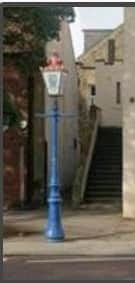
REPAIR SHOP: East Lothian Council is in talks with the BBC’s The Repair Shop about restoring a 100-year-old lamppost in North Berwick. Known as The Provost’s Lamp, it is one of two gifted to the town by a local gas company.
GERMAN AXED: Some of the UK’s leading German language academics have joined the German Consul General in Edinburgh Christiane Hullman in criticising plans by Heriot-Watt University to stop teaching undergraduate courses in German and Chinese. Professor Peter Davies, Professor of Modern German Studies at Edinburgh University and President of the Association for German Studies of Great Britain and Ireland (AGS), is among the signatories to a letter warning of the reputational damage to the university. The university plans to cut the course, with the loss of 11 jobs, as part of cost-cutting measures.
ROAD REVOTE: A fresh vote will need to be held on plans to dismantle traffic filters on Morningside’s Braid estate after two councillors who took part in the decision failed to declare an interest. The city council agreed to remove the filters, reopen roads in the estate, and install a segregated cycle lane on Braid Avenue and Hermitage Drive. The work was put on hold due to complaints that two Morningside councillors, Lib Dem Neil Ross and Conservatives Marie-Clair Munro, failed to declare an interest and took part in the vote despite living in or near the area. The pair have now been reprimanded and the vote will be restaged.
Pic of the week

THE BUSINESS
Edinburgh Worldwide offers shareholders exit to end Saba conflict
The ongoing saga of the running of Edinburgh-managed investment trust Edinburgh Worldwide may be coming to an end. The fund, administered by Baillie Gifford, has successfully seen off several efforts by activist US-based hedge fund Saba Capital to oust the existing board of directors.
However, after the most recent effort failed at the end of January, Saba – which has a significant minority stake – said it would bring forward another resolution aimed at displacing the existing board and replacing it with its own nominees at the upcoming AGM.
The Board has decided to issue a 100% tender offer – which can be passed without needing the support of Saba. This effectively offers all shareholders to exit the trust at or near net asset value – in this case paying 85% up front with a further 15% deferred pending any listing upside of SpaceX.
FUNDING TEST: Edinburgh life sciences spin-out BIOCAPTIVA has secured almost £1.6 million in fresh investment to accelerate development of technology designed to improve how blood samples are prepared for cancer testing. The funding round was led by Archangels, with backing also from Old College Capital, BBI, Scottish Enterprise and new investor EverQuest Capital Partners.
WATER GOLD: Edinburgh-based water retailer Business Stream has retained its EcoVadis global gold sustainability award. More than 150,000 businesses in more than 200 industries are assessed based on international sustainability standards.
THAT’S ENTERTAINMENT
HIDDEN DOOR: The acclaimed Hidden Door festival is to return to The Paper Factory for the final tie to stage this summer’s edition of the multi arts festival. The huge industrial complex on the western edge of the city has been confirmed as the venue for the festival on 3-7 June, with headliners including Norwegian singer-songwriter Jenny Hval and electronic dance-gaelic folk music crossover act Valtos Presents: High Water Mark.

FUNK FAIR: Browse antique and vintage jewellery, clothes, collectables and more, with a drink in hand from the onsite cafe bar. Funk Fair Lates is the relaxed evening edition of the popular fairs. Catch it at Leith’s Out of the Blue Drill Hall on Thursday, 2 April, at 4-8pm.
GOTHIC FANTASY: From the Corpse Bride to Batman, enjoy the music of Tim Burton’s cult films played by a live orchestra. An Orchestral Tribute to Tim Burton & Dark Fantasy by Moonlight is at the Playhouse on Thursday, 26 March.
QUICK BITES
CHEERS: JD Wetherspoon has announced that their new mega-bar, the 485-seat William Chambers at 30a Chambers Street, is to open on July 27. The premises were formerly occupied by Revolution Bar.
GELATO PERFECTO: Portobello-based Oscar’s Gelato has scooped (see what we did there) the UK and Ireland accolade at the 2026 Golden Scoop Awards, achieving the highest overall score to be crowned National Champion.