


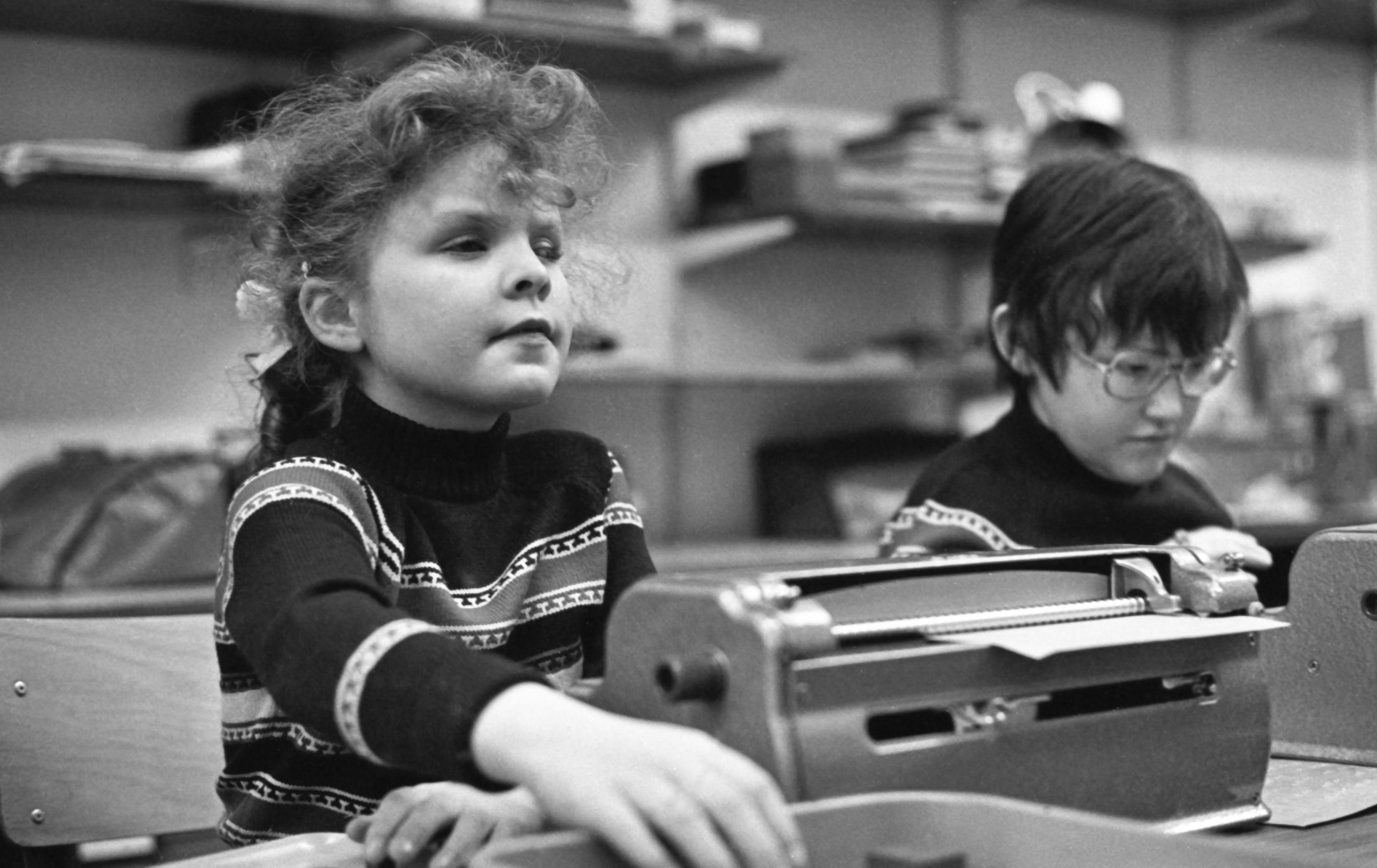
There are hairdressers and barber shops, bingo halls and snooker games, water aerobics classes for the elderly, kissing couples, classes at the Royal Blind School, dancing children, and numerous scenes of protest and resistance, writes Grace Campbell.
People are at rest and at play, alone and together, there are the young and the old. Depicted on black and white film, the images line the walls of two floors of the City Art Centre, where they comprise the largest exhibition to date of the work of prolific documentary photographer Sandra George, and the first at a major institution in the city she called her home.
George, who died in 2013, was a dedicated and well-known community worker in the Wester Hailes and Craigmillar areas, where she ran participatory workshops for children and young people on photography and other creative skills, was involved with numerous social action projects, and founded and administered a charity called the Niddrie Community Youth Group.
For thirty years she was also an accredited press photographer working freelance for a range of community papers and organisations across Edinburgh, who captured a vibrant social history of the city that went unexhibited and largely overlooked in her lifetime.
That is about to change. Depicted on black and white film, the images line the walls of two floors of the City Art Centre, where they comprise the largest exhibition to date of her prolific work of prolific, and the first at a major institution in the city she called her home.
Her son Tyler George Hewitt, himself now an artist and community organiser, describes the scale and scope of her work – in which he is tenderly featured – as “humbling.”
Documenting the lives of people
Born 1957 in Nottingham to Jamaican parents, George lived in Birmingham and Jamaica as a child, and moved to Edinburgh in the mid-1960s, living in the city for the rest of her life. She studied photography at Edinburgh University and became one of few women of colour working as documentary photographers in Scotland in the eighties and nineties, producing hundreds upon thousands of images of the people among whom she lived and worked. The title of the exhibition, “Start from the Level,” is taken from her own words, and embodies the compassion, respect and humour with which she approached her subjects.
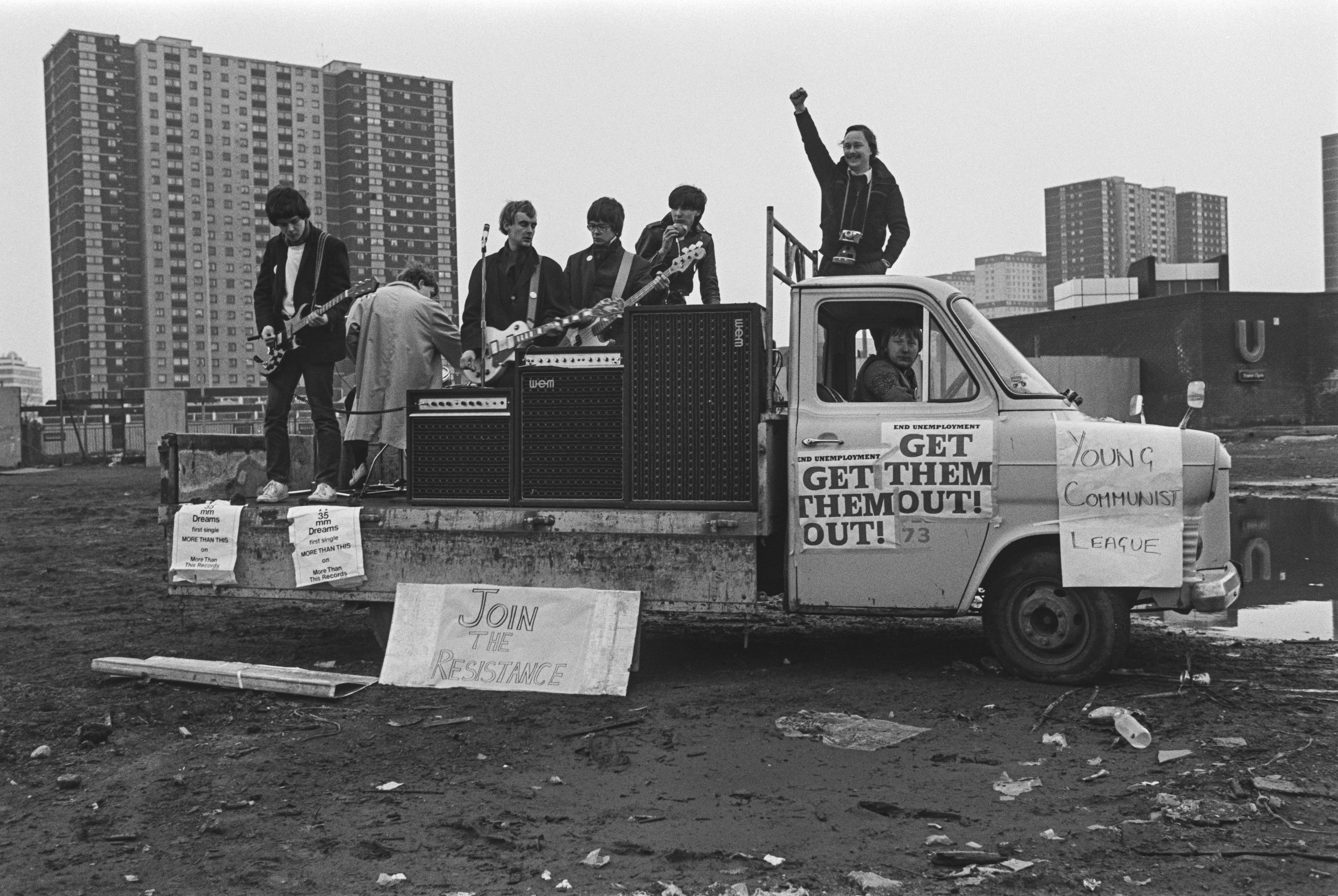
The exhibition, which is organised thematically, encompasses several decades of Edinburgh life. “Community,” captures the political upheaval of Scotland in Thatcher’s 1980s: protests against nuclear arms and pension cuts, arrests, meetings of various activist groups. In one photograph, members of the Young Communist League stand triumphantly astride an abandoned car, in another, radical feminist protest the opening of a sex shop. Other sections showcase George’s gift for capturing joy and togetherness.
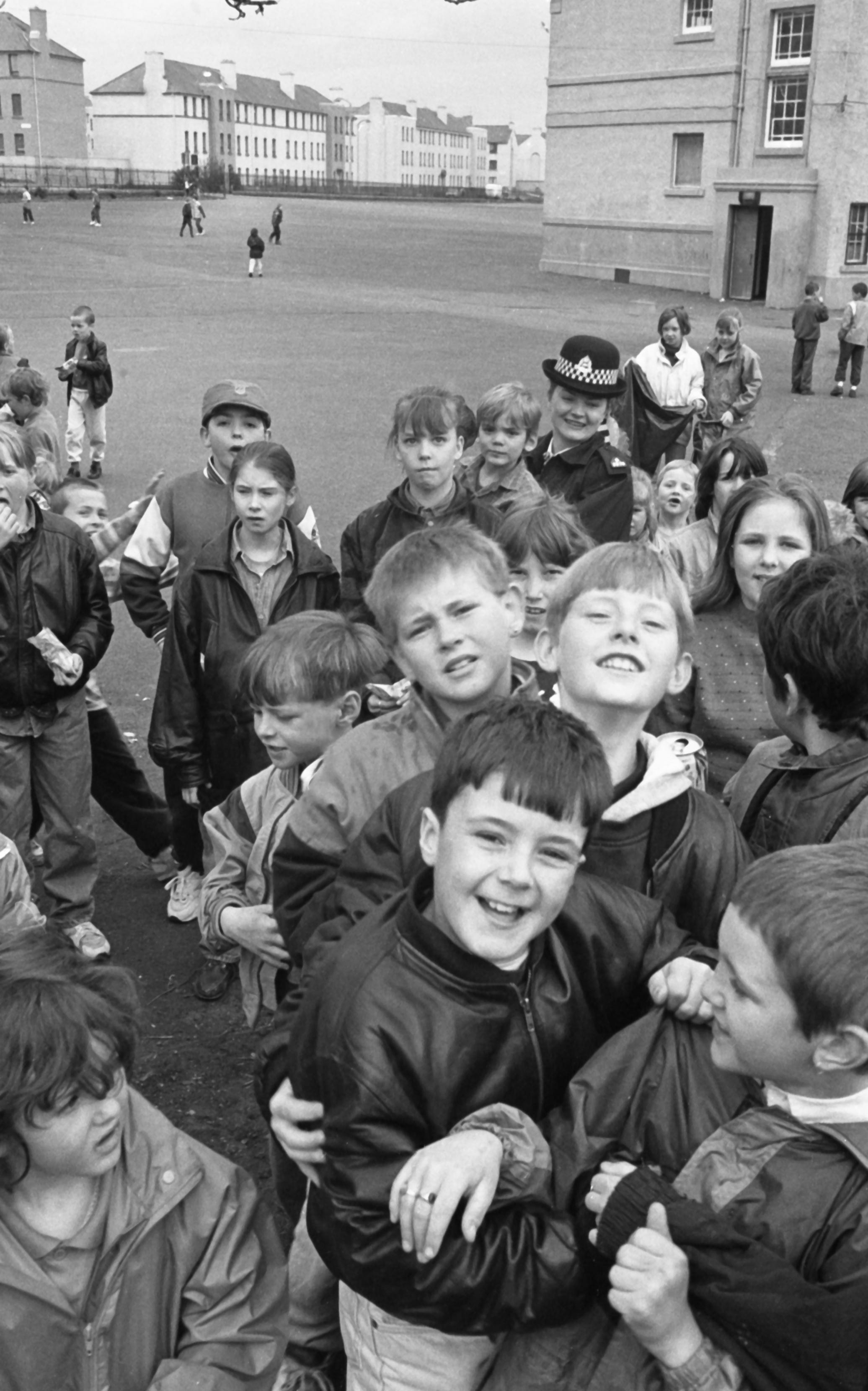
She was a particularly accomplished photographer of children: in the section entitled “Childhood,” they appear swinging from monkey bars, dancing ecstatically in a gym hall, jostling and grinning impishly for the camera. George’s artistic practice and her passion for social justice were seamlessly interwoven: among her personal effects displayed in glass cases throughout the exhibition are books on ethical issues and equality in youth work, one opened to reveal her meticulous annotations. This sensitivity to the vulnerabilities and interests of young people is evident in the photos themselves, which mostly picture children in unguarded moments of play and spontaneity.
At ease in her presence
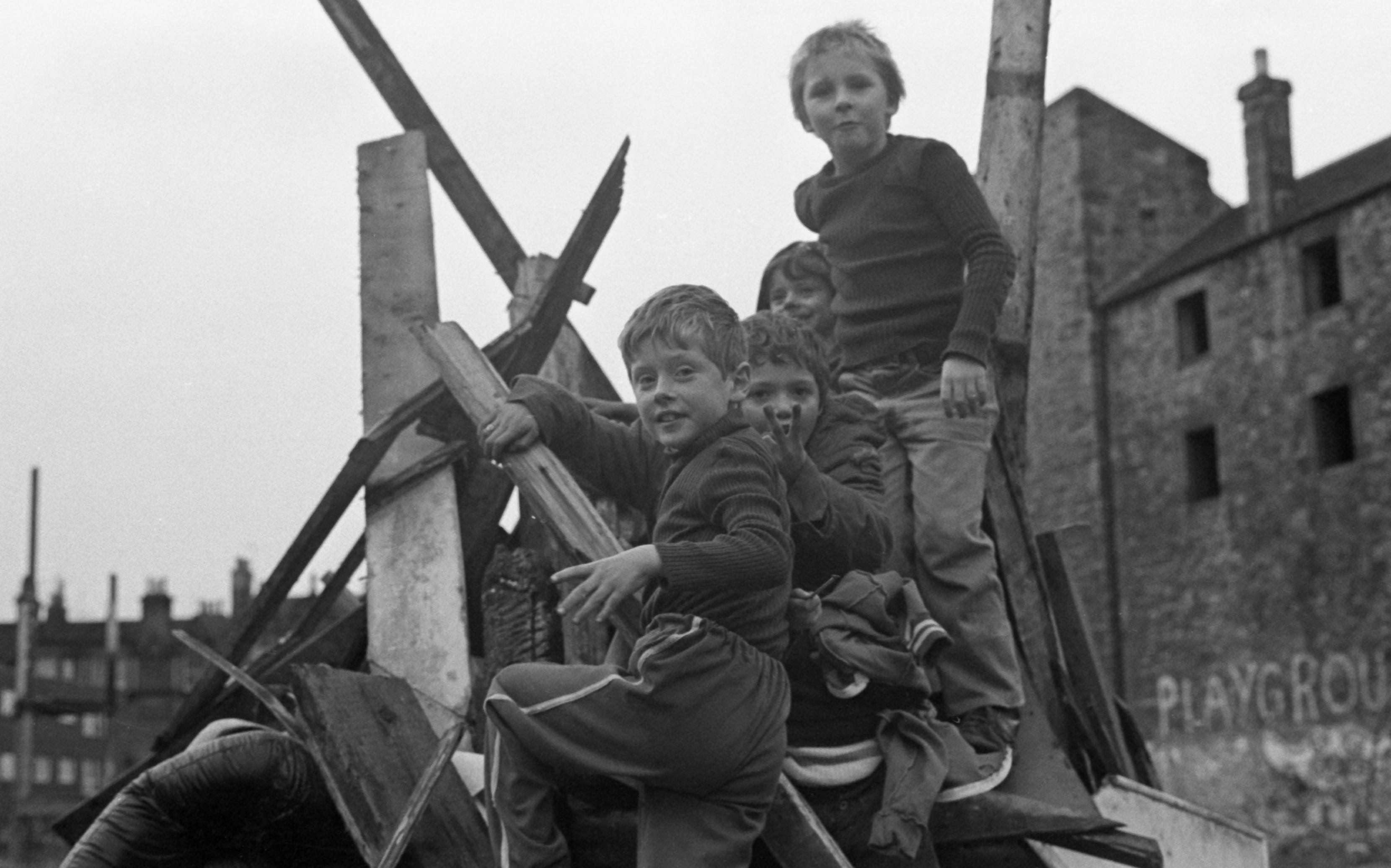
For Stuart Fallon, one of the exhibition’s curators, George’s images of children and young people showcase her unique ability to win the trust and respect of her subjects. “There’s one image in particular of 4 boys standing on a makeshift structure (possibly a bonfire) in Leith in 1979,” he says. “It’s a very different Leith from now. Sandra would have been in her early 20s, in her final year of studying at Napier. She must have had great confidence to choose to document these boys – on their territory. But there’s something in the eyes of the boys looking back at her that shows a reciprocal respect, that she must have created. Even as one of them gives her (and us) the V-sign! These looks are mirrored across all of Sandra’s work – people were clearly at ease in her presence.”
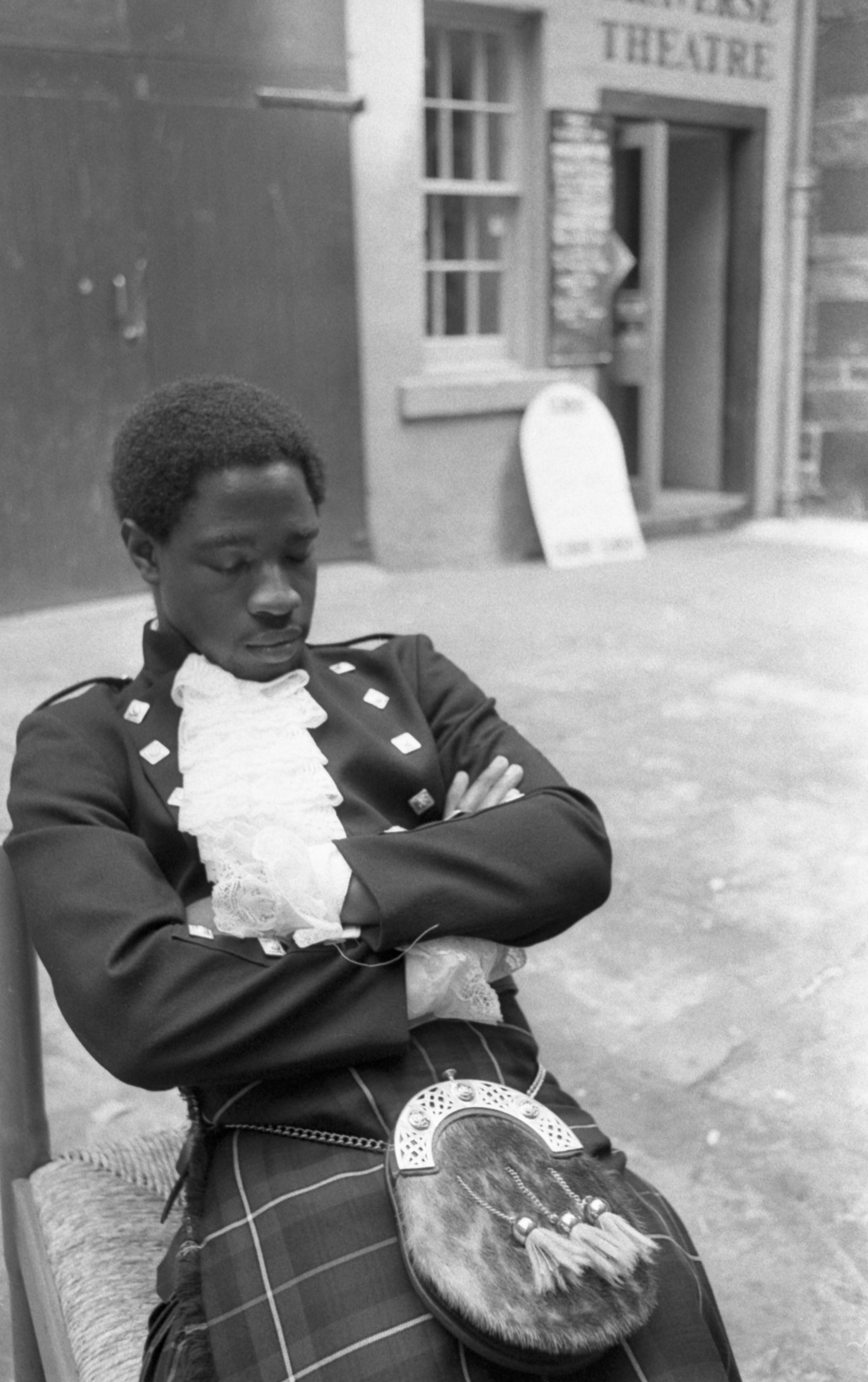
Some photos hint at the knottiness of both British and Scottish identity: an Orange Walk; a grinning man pulling open his shirt to reveal ENGLAND tattooed across his chest; a quiet, contemplative image of a young Black man in a kilt dosing in a chair. For Fallon, George’s perspective is that of a “Black woman, living in what was (and still are) predominantly white spaces. This results in work that has a sense of being ‘from’ the communities, as opposed to being ‘of’ them.”
Amidst George’s enduring fascination with the energy and bustle of the collective are more introspective, scenes of solitude In one shot, a young girl appears almost swallowed up by what looks like a deflating bouncy castle. Some of the most affecting pieces in the exhibition, gathered together in the section entitled “Home,” are those George produced for herself, not for any publication. They are family snapshots, delivered with an artist’s eye for composition. George’s pictures of her son Tyler are tender and wryly humorous: we see him as a scrunched-faced newborn being bathed in a bucket; as a toddler bundled up against the snow, captured mid-wail; as a child posing cheekily for the camera.
The close-knit bond between mother and son is evident, the poignancy of the images intensified by the fact Tyler was born three months premature, which came with a much more uncertain prognosis in the early eighties. Tyler believes the photographs were in part a means of coping with his delicate health as a baby: “At the time of taking them, Sandra would not have known if I would survive, and photography was something to help and also a way to remember. Oddly, thinking about it just now, she did the same thing nearing the end of her life, documenting her cancer, the treatments, and its effect on her body.”
Facing challenges
Although, in his own words, he “grew up in front of a camera,” and was used to seeing himself depicted in his mother’s work, he was unaware of the size of George’s oeuvre until it began to be catalogued. “I grew up with some pictures on display and in photo albums,” he says, “but to learn that there were so many more was quite humbling.”
As detailed in his essay in the exhibition catalogue, George faced various challenges in her personal life during Tyler’s childhood, including a diagnosis of cancer in her early 30s, and a period of hospitalisation for schizophrenia. It is notable that a photographer so adept at coaxing vulnerability and candour from her subjects, and so tireless in her service of others, appears in her own self-portraits as enigmatic, even elusive.
In one she is a blurred figure next to a painting; in another a shadow reflected on the ground beside her son. In another, blown up large onto the exhibition walls, she sits on the floor in front of a mirror, her face is half-obscured by the camera while Tyler, then a very small baby, is propped between her legs. These images seem to reflect the psyche of an artist involved in a complex process of self-interrogation– but always passionately committed to documenting her life and the world around her, even through periods of struggle and uncertainty.
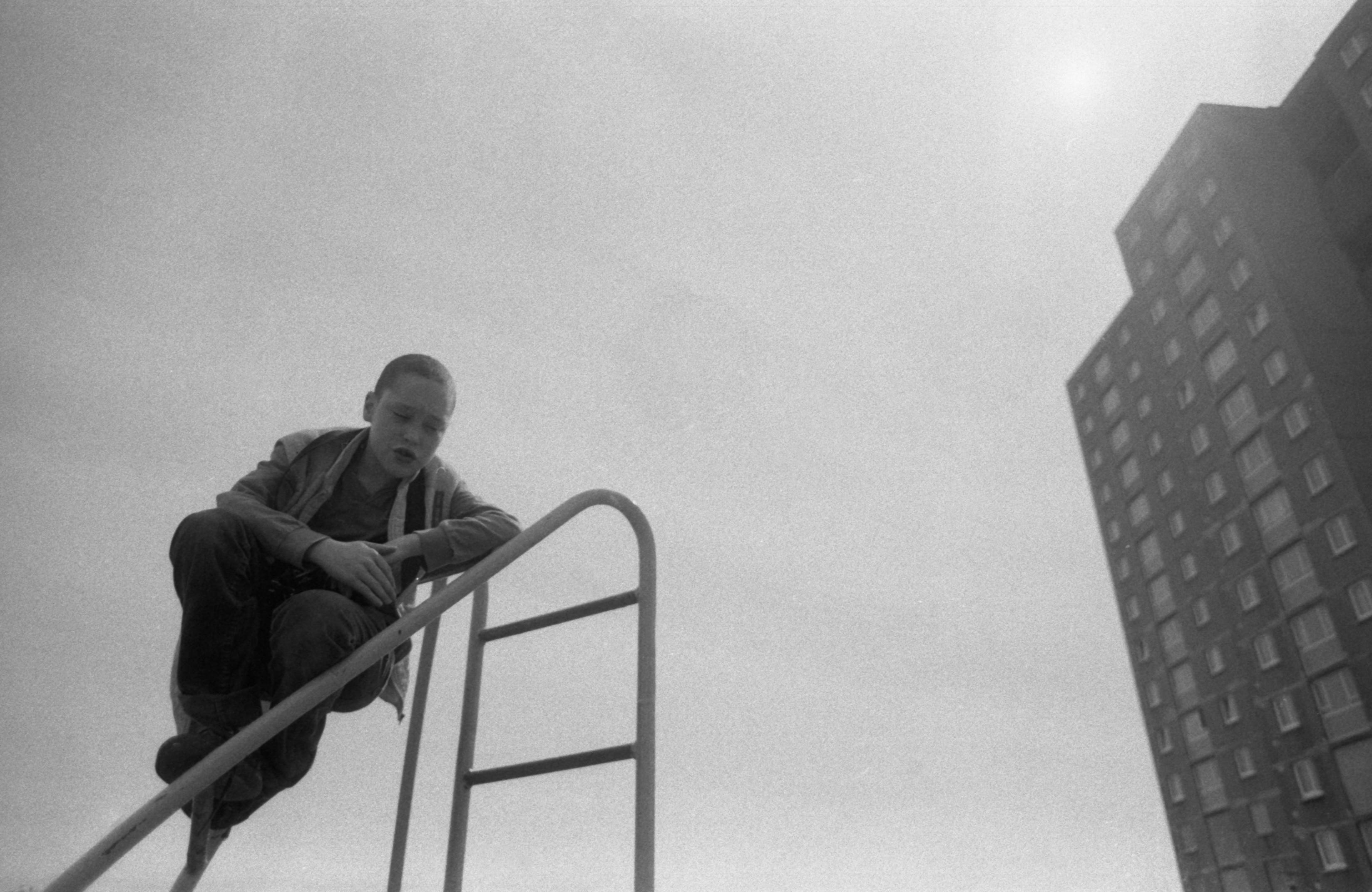
The breadth of the material on show is striking– especially when you consider that George’s work was almost never shown to the public at all. Indeed, it was not until 2020 that a chance conversation between Billy McKirdy– then a volunteer with the Craigmillar Now community arts centre– and Jimmy Hewitt, the father of George’s son, revealed the scale of her achievement. When Hewitt mentioned in passing that he had George’s entire life’s work– some 80,000 pieces – stored in boxes and binders at home, McKirdy and others were prompted to create a dedicated archive at the arts centre, ensuring George’s work could be properly catalogued and preserved for posterity.
McKirdy says, “I truly believe that Sandra’s work is of international importance, I profoundly believe the depth and range of events recorded by Sandra through her camera lens over nearly 40 years of dedication is remarkable and unparalleled in its scope and range.”
In keeping with her passion for community education, the archive is maintained by volunteers, many of whom are from the local area, who learn skills in curation, preservation and cataloguing.
Of and from this city
Fallon first became aware of George’s work when visiting her 2024 exhibition in Glasgow, curated by Jenny Brownrigg from Glasgow School of Art: “I was struck by the quality of the work initially, but was also struck by why the work hadn’t been shown in Edinburgh – since it’s almost entirely of, and from this city. So I made it a priority to bring the work here [...] It was at that point that I really understood the scale of the archive, and the amazing work CN [Craigmillar Now] have been doing to care for it over the past 5 years.”
The New York-born, Glasgow based artist Christian Noelle Charles, who co-curated the show, thinks one of the reasons George’s work has been overlooked is because it presents an alternative vision of Edinburgh to what is often marketed to tourists. “The first impression of going into Edinburgh is that it is a tourist city; it is a picturesque city.” George’s work, meanwhile, is more concerned with the day- to-day lives of the city’s residents, particularly its working-class residents. Fallon agrees, describing George’s as, “a slice of Edinburgh that is rarely seen – the vitality of communities that have been traditionally placed on the peripheries.”
Tyler, who writes in his catalogue essay of finding his mother propped up in bed writing funding applications for her charity just a few days before her death from cancer, hopes her work will continue through community arts projects and other initiatives: “She loved learning and believed deeply that education, done right, was a great leveller.”