


We have another packed midweek edition for you with your news roundup, cultural highlights and an indepth look at one of the biggest challenges facing the Capital, that of poverty.
In a city as rich as Edinburgh, the fact around one in five children continue to grow up in poverty should be a matter of shame.
Recognising the scale of the challenge and the importance of making progresss, the city council established the Edinburgh Poverty Commission in 2018.
So, what has happened in the intervening years? How much - or how little - progress has been made? And are there grounds for hope?
Sarah McArthur met some of those on the frontline of Edinburgh’s battle against poverty to find out about the reality on the ground. Despite the terrible toll that poverty continues to take on the lives of thousands in the Capital, she found grounds for genuine optimism about a slightly brighter future.
You can read her report below, but before that here is your news roundup and our pick of the cultural highlights for the week ahead.
Your Edinburgh Briefing
PENTLANDS PARKING CHARGES: Parking charges are set to be introduced at car parks in the Pentland Hills to help maintain the regional park and its visitor facilities. The charges will be £2.50 for up to two hours and £5 for a full day, with a limited number of £110 a year permits made available. Around one in five visitors paid the fees during a six-month trial of voluntary parking charges.
RACE HATE MUM AND DAUGHTER JAILED: A mother and daughter have been jailed after admitting to sharing “deeply disturbing” neo-Nazi, antisemitic, racist and transphobic material on social medi. Shirley Craughwell, 51, who called for another Holocaust, was jailed for 20 months at Edinbugh Sheriff Court and her daughter Hannah Craughwell, 27, who described herself online as “Hannah Hitler”, was sentenced to 16 months.
MSP SUSPENDED: Edinburgh Eastern MSP Ash Regan has been suspended from the Scottish Parliament for two days for breaking the MSPs’ code of conduct. Her fellow MSPs agreed the unusual step after she made public her intention to make a a formal complaint against Green MSP Maggie Chapman. The Independent MSP, a former SNP Minister who defected to Alba, objected to Chapman’s characterisation of last year’s UK Supreme Court decision on sex and gender as a “political attack”.
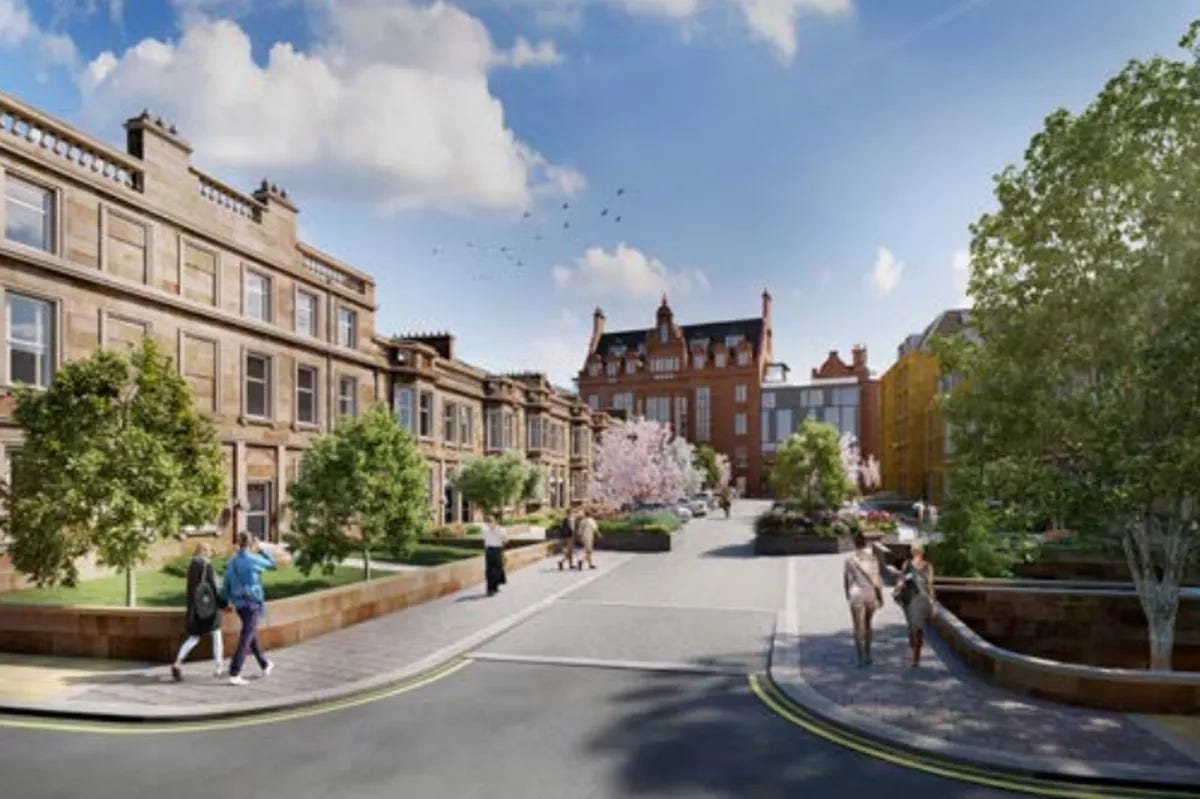
SICK KIDS APARTMENTS: A row of townhouses beside the Meadows, which were part of Sick Kids Hospital before its move to Little France, would be turned into serviced apartments under new proposals. Developer Rillbank Developments has submitted plans to the city council to convert the properties into 46 apartments. It has told the local authority it aims to attract “longer-stay visitors… rather than short-term visitor spikes.”
Your Pick of the Cultural Pops
Happy New Year. With the festive excesses still looming large in the rear-view mirror (is that a hint at one of this week’s entries?!), January arrives as a traditionally quiet month in the show business calendar. However, Edinburgh’s stages and screens are far from dormant, writes Will Quinn. Without further ado, let’s begin the drumroll for our first top five of the year…
5. Kill Bill: The Whole Bloody Affair. “This woman deserves revenge, and we all deserve to die.” So utters the late, great Michael Madsen in Quentin Tarantino’s 2003/2004 martial arts masterpiece, Kill Bill. Originally filmed as a single epic, the production was famously split by Harvey Weinstein to minimise runtime and maximise revenue. Now that the rights have returned to Tarantino, you can experience ‘The Whole Bloody Affair’ as originally intended. This isn’t just the two volumes stitched together; it’s the original vision, complete with material previously left on the cutting room floor. Thanks to the welcome resurrection of Edinburgh’s Filmhouse, you can catch it in glorious 35mm until Sunday.
4. The Stone Combo. I am asking you to take a chance, but it will only cost you £3 - and a flexible Monday morning. The Stone Combo are a young jazz outfit enamoured with the Great American Songbook - think Irving Berlin, Rodgers & Hart, and the Gershwins. The trio - Cameron Duff (Double Bass), Calum Steel (Guitar), and Charlotte Stuart (Vocals) - are becoming fixtures on the Glasgow jazz scene and are already in demand for more discerning wedding planners. Their selection by Live Music Scotland (LMNS) for the 2024 emerging artists roster puts them in elite company, marking them as performers keen to reach the socially diverse audiences LMNS was founded to serve by Yehudi Menuhin and Sir Ian Stoutzker in 1977. I have yet to attend an Emerging Artists show I haven’t enjoyed, and I suspect this outing to the Usher Hall, at 11am on January 12th, will be no exception.
3. SCO: Lorenza Borrani. In at number three is a fiddler who emerged aged 12 at the Scuola di Musica di Fiesole, playing Bach’s Concerto for 2 Violins with Pavel Vernikov. To say Lorenza Borrani has since flourished is an understatement; she has served as Leader/Director of the eminent Chamber Orchestra of Europe since 2008. Following an impressive directorial debut with the Scottish Chamber Orchestra (SCO) in 2024, she returns to direct a series of concerts starting at the Queen’s Hall this January 15th. The programme - Haydn, Schnittke, and Schubert - promises a blend of ‘Smouldering Drama’ and ‘Daring Humour’. You won’t find Borrani on a conductor’s podium; she leads from the first violin chair. Having previously applied this ‘invisible conductor’ model to Mozart and Beethoven with her own ensemble, Spira Mirabilis, it will be a particular delight to see her and the SCO tackle Schubert’s “Unfinished” Symphony No. 8.
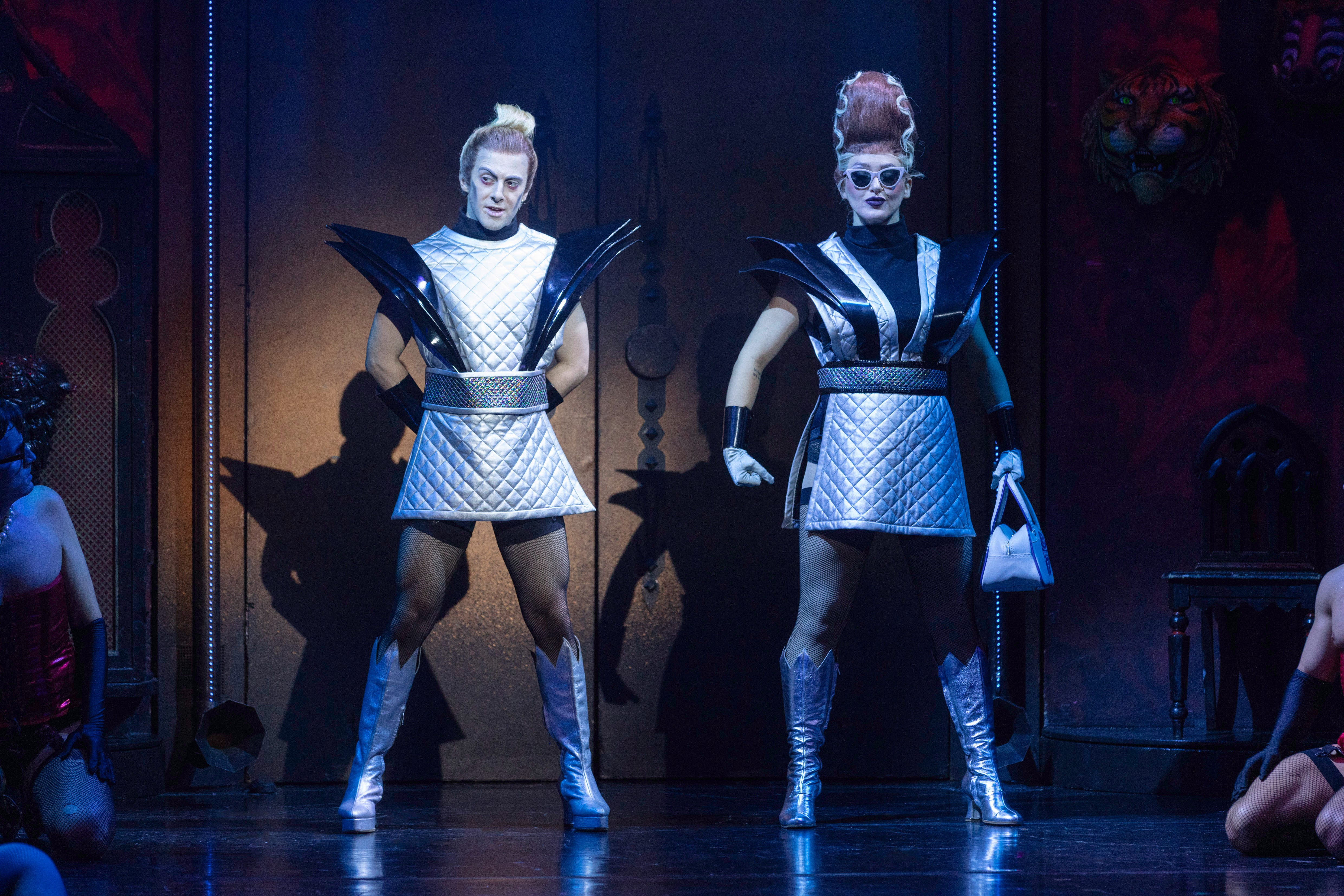
2. The Rocky Horror Show. Jason Donovan has led the evergreen Rocky Horror Show into town before, but this is the show’s first entry on this list. Richard O’Brien’s masterpiece musical ode to B-movie Sci-Fi Horror debuted at the Royal Court in 1973 before a swift West End transfer and a superb 1975 film adaptation, and endless national and international tours and revivals. You can “Do The Time Warp (Again)” when the show returns to the Edinburgh Playhouse from the 6th to the 10th of January. Donovan may not be my personal favourite Frank-N-Furter, but there is no doubting the power of a soundtrack featuring ‘Dammit, Janet’ and ‘Sweet Transvestite’, or the lavish production values that turn every number into an event. The stage show has long since embraced the ribald call-backs made famous by generations of film fans — learn your lines, and you can even take part! Expect fun and filth in equal measure.
1. Jack and the Beanstalk. Keeping Rocky Horror in the runner-up spot is our reigning champion. At 58, Grant Stott is one year older than Jason Donovan, and on the evidence of previous Edinburgh Panto outings, he has significantly more fun in gender-non-conforming regalia. I cannot say for certain, but I suspect he’d work high heels with more grace - but I digress. Jack and the Beanstalk, playing at the Festival Theatre until January 11th, may not spend much time on plot development, but it remains an all-guns-blazing comedy variety show with immense pizzazz. The central trio of Stott, whippernsapper Jordan Young, and venerable crooning entertainer Allan Stewart possess a natural comic chemistry that they aren’t afraid to indulge. The result is a perpetual risk of ‘mistakes’ that are often funnier than the script, and a glimpse of music-hall fun rarely seen today. With a no-cost-spared set, a superb ensemble, and a vibrant band, it is a spectacle fit for the whole family.
That completes this week’s chart. Come back next week to see if these five can retain their placing. Should you catch any of these shows, I would love to hear if your experience matched my assessment - my opinions are unlikely to change, but as a critic, I am always interested in yours.
Poverty in Edinburgh: what’s changed in the last five years?
Poverty statistics are damningly static in the capital, but the third sector is optimistic about long term solutions
by Sarah McArthur
A lot has changed since 2020; but in Edinburgh, one metric has stayed stubbornly similar, and that’s poverty. According to a new report by the Edinburgh Poverty Commission, poverty rates in most of Scotland dropped when the Scottish Child Payment was introduced, but in Edinburgh the rates remain at 17% of adults, and 21% of children, compared with 16% and 20% in 2020. The intensity of poverty that many people are experiencing is also worsening; the proportion of those below the poverty line who are experiencing destitution (going without basic essentials like food, shelter, heat, light, clothing or toiletries) has increased, as has the average length of time people spend below the poverty line.
This interim report of the Poverty Commission arrives five years after the commission was formed and laid out actions to end poverty in Edinburgh by 2030. This is thought to be the largest single enquiry into the experience of, and solutions to, poverty, in any local authority in Scotland, and led to Edinburgh Council becoming Scotland’s first local authority to set a goal for ending poverty. The specific target is to bring levels of destitution and persistent poverty to zero, and to keep levels of relative poverty below 10%. The commission also led to the creation of the End Poverty Edinburgh group, made up primarily of those with direct experience of poverty, who have continued to raise awareness of poverty and hold decision makers to account on their progress towards reducing it.
While the mid-term assessment that none of this reduction has been achieved is far from heartening, the Poverty Commission, and several of the charities working at the coalface of poverty in our communities, believe that the foundations for change are there, and are cautiously hoping that these will soon be fruitful.
“It’s actually quite incredible that five years on, we’re still talking about it. Because often these things go on a shelf and they disappear,” says Ewan Aitken, chair of the board at the Ripple Project.
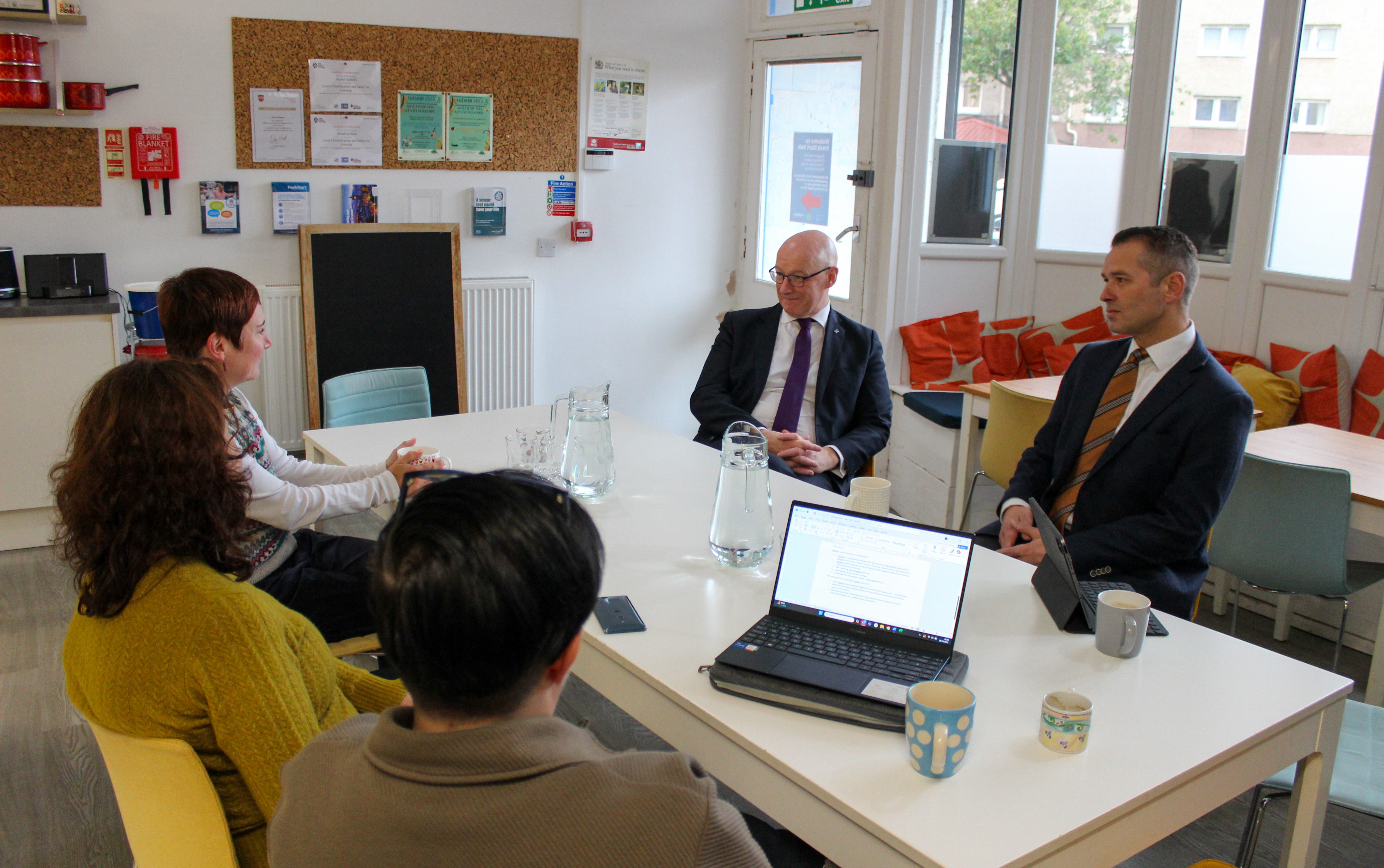
Biddy Kelly, CEO of Fresh Start said: “Things have actually gotten worse for people, and people are dealing with more complex needs…. [but] I think now we’re at an opportune moment too because there’s recognition that we need to do more and we need to do better and we need to do things differently.”
Why are so many Edinburgh citizens stuck in poverty?
The new report from the Poverty Commission highlights two keys to bringing poverty rates down in the capital: tackling the housing crisis, and making the process of seeking support “less painful, more humane, and more compassionate.”
It’s no surprise to see housing as one of the key drivers of poverty in our city. Analysts believe that the reason for Edinburgh’s poverty rates remaining low, despite the boost to incomes from the Scottish Child Payment, is because of how much households are paying for housing. Although local services have prevented 4300 people from becoming homeless in the last two years, the number of open homeless cases in Edinburgh is almost double the level it was in 2020.
The Commission makes a very clear and bold ask for more housing funds from the Scottish Government: the Poverty Commission estimates that meeting the levels of house building set out in Edinburgh’s 2025-30 Strategic Housing Investment Plan would require £587 million from the Scottish Government over the next five years. Since the report was published, an extra £13.8 million boost in housing funds from the Scottish Government for next year, bringing the total to £73.7 million for the year. An additional £42 million over the course of the Granton housing redevelopment has also been announced.
Aitken also highlights another way of reducing the impact of high housing costs on households; which is raising wages. There has been progress on this since 2020; the number of people being paid less than the real living wage has dropped from 15% down to 6% in the last 5 years, and the median wage in the city has grown by 21%. However, this has not kept up with a cost of living crisis, where food and electricity have gone up by 57% and 48%, respectively. In an economy dominated by the hospitality and tourism industries it can be difficult to raise these wages any higher. 23% of jobs in Edinburgh are at national living wage level, and as the hospitality industry sees hundreds of thousands of job losses across the UK these businesses are hardly in a position to pay more. “That is not a criticism of those industries… it’s great those jobs exist, and it’s great they’re paying the national living wage. But it means that the ability of the economy as a whole to pull people up further out of poverty is far more difficult,” says Aitken.
Aitken highlights the growing tech industry in Edinburgh, which has received hundreds of millions of pounds from the UK and Scottish governments through the City Regional Deal. “How do you make sure that those jobs A: are created and B: stay in Edinburgh,” says Aitken. Aitken highlights further education colleges as a key driver for training local young people in the skills for emerging high-paying industries.
