


If you’re hosting or going to a Burns Supper, you’ll enjoy something that the vast majority of us do once a year and once a year only.
No, it’s not eating haggis (it’s a staple on your weekly menu, surely?). Nor ribbing the opposite sex. Or even enjoying a bagpipe solo at close quarters.
At the heart of the 25 January celebrations is something many of us don’t experience outside weddings and funerals: hearing poetry recited out loud.
The fact that we turn to poetry in moments of joy or grief shows its power to unite us. Hearing universal truths spoken aloud can take us out of our everyday lives and remind us of our shared experiences and emotions.
At a time when certain media moguls and world leaders seem to be stoking division, this ability of spoken poetry to bring people together was one I thought worth exploring.
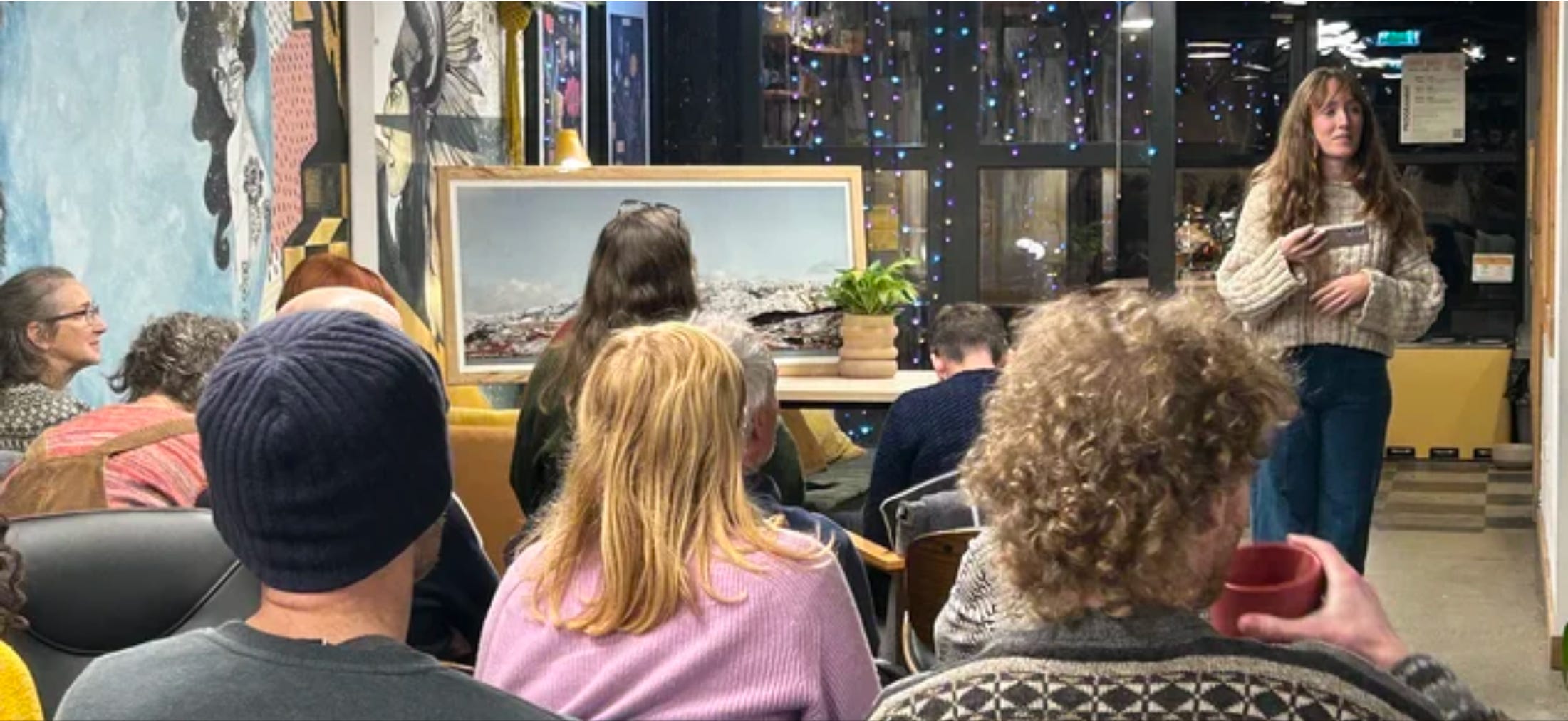
So, inspired by Sarah McArthur’s Inquirer article on Edinburgh’s Spoken Word scene, I set out on a wet and windy night to brave my first spoken word event, ‘Wild Lines’ at Tribe Porty in Portobello.
The perils of herding sheep
Organised by Bookshop and Events Assistant at Wild Fungarium, Lizzie Whitlock, it was billed as a Nature Open Mic night, and I found myself part of a welcoming crowd at the sold-out event, where everyone was happy to chat to the newcomer in their midst.
With a complimentary cuppa in hand, I took my place in the rows of ad hoc seating as performers – some established poets, some nervously sharing their work for the first time – offered poems and prose based on their encounters with and responses to nature.
It was a brilliantly varied night: there were poems about meetings with birds, the perils of herding sheep, an encounter with a tray of eggs, and even a riff on a classic John Denver track.
While some writers were more comfortable than others with the ‘performance’ aspect of the event – reciting rather than reading, punctuating their words with physical actions – in every case I felt an almost electric connection with the reader and their words.
Hearing the words out loud gave them immediacy and impact, while the appreciative responses from the audience meant the writers received instant and instinctive feedback on their work.
The evening felt less like a performance and more like a dialogue.
It’s something that Naomi Head, a poet and writer who performed at Wild Lines, is keenly aware of.
‘There’s something special about using my voice to read through my work by myself or with an audience,’ she explains. ‘Each setting adds layers of life to a piece. The audience adds that life and their own rhythm and I feel like it’s more vital than ever for us to share those kinds of experiences and space with each other. It’s very humbling and humanising.’
‘Listening to other people’s work is not only inspiring, it’s relaxing and a great way to step away from screens and the chaos of the outside world,’ she suggests. ‘It’s also been immensely helpful when I’ve been struggling with my mental health or writers’ block.’
Rewriting worlds
It’s these potential benefits for people’s mental health that have inspired two Edinburgh-based initiatives to take spoken word poetry in unexpected directions.
At the University of Edinburgh, Dr Patrick Errington is collaborating with neuroscientists, psychologists, literacy experts and even an Edinburgh-based tech company to research the benefits of engaging with poetry for children and young people.
If this conjures memories of plodding through a set-text poem at school, trying to ‘deconstruct’ its meaning and remember the difference between assonance and alliteration, Errington’s approach couldn’t be more different.
He’s leading a research initiative, Rewriting Wor(l)ds, that will explore how ‘active reading’ of poems can boost children and young people’s mental health and wellbeing.
‘We’re bringing together art and science,’ he explains, ‘by curating poems and using neuroimaging and behavioural psychology studies to assess the physical and neural changes that occur when we engage with poetry.’
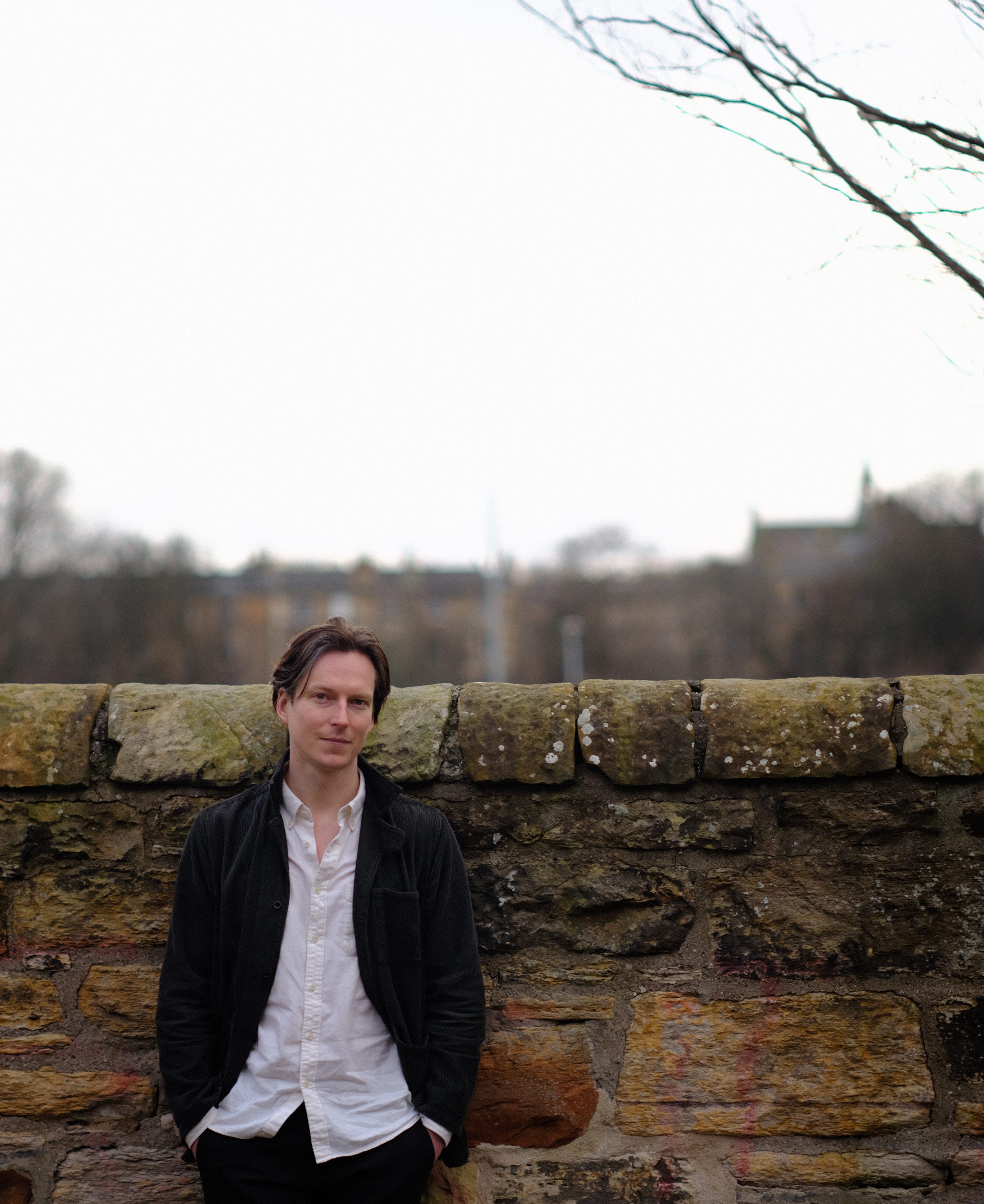
For Errington, this means taking a playful approach to poetry. ‘Poetry has a long tradition of play,’ Errington points out. ‘Poets have experimented with ‘found’ texts, or erasure, where they create a new poem by removing words from an existing one.’
Errington brims with enthusiasm as he outlines the benefits of this approach. ‘Engagement with poetry in this way increases literacy, and increased literacy means increased wellbeing,’ he explains. ‘Not just because it improves young people’s life chances as they move beyond school, but also in a more holistic sense because it involves a mindshift – it’s a creative act over time. It encourages us to creatively navigate our way through life as we take what we’re given and re-work it, re-write it.’
Taking their research out into the real world, Errington and his team are working with the Edinburgh-based firm, Playable Technology, to create ReWriter, a reading and writing app that offers poems alongside prompts for re-creating them, recording performances of them and sharing them with others.
However, the mental health benefit of sharing poetry with others isn’t just for young people, as an initiative aimed at older people is demonstrating.
Relaxing rhymes
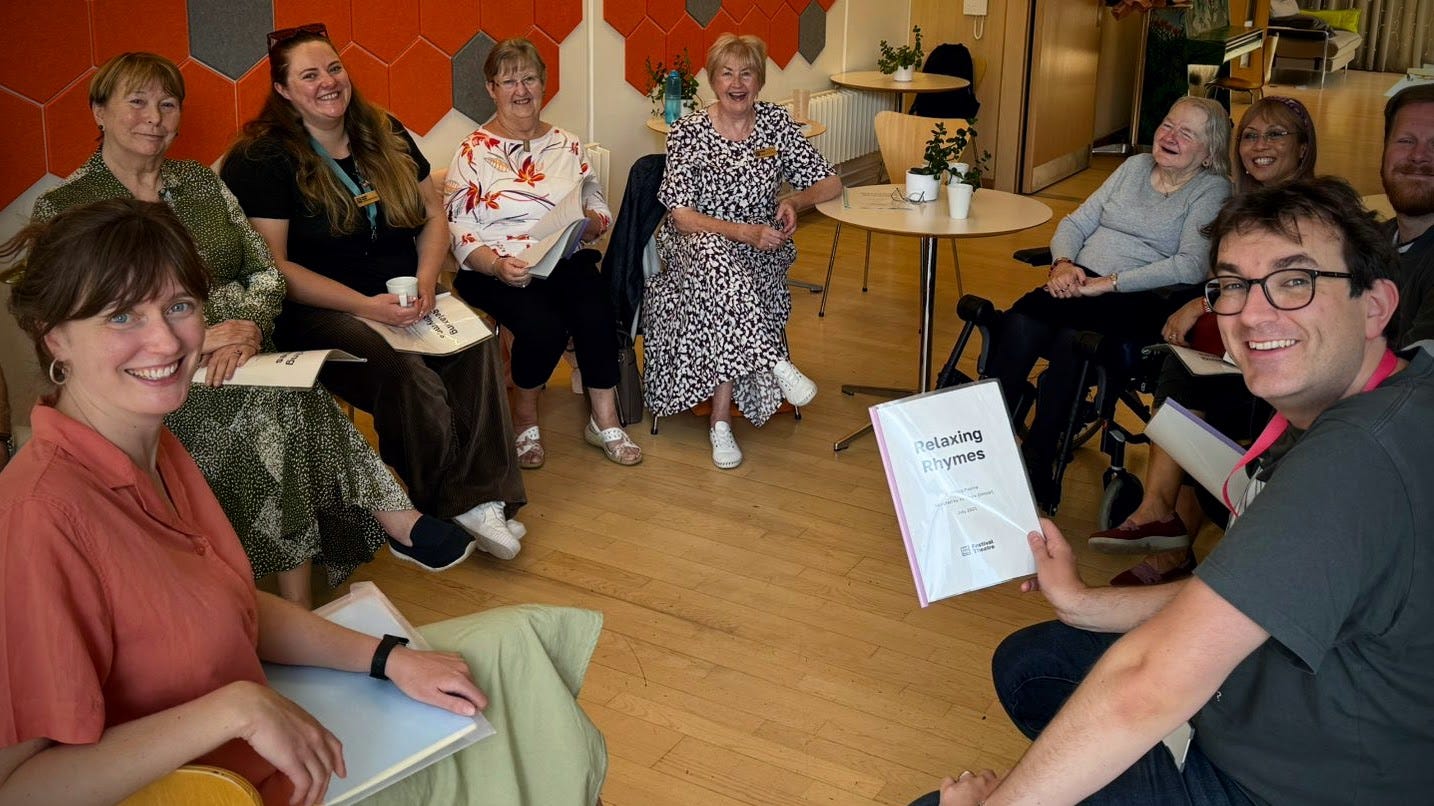
Every two months, a group of people gather for Relaxing Rhymes at the Festival Theatre where they hear a selection of poems read aloud by Editor, Writer and Consultant, Xa Shaw Stewart.
Over the course of an hour, Stewart leads a session of ‘shared poetry reading’ for people with dementia. ‘If you have a book or a poem that you read aloud together, you call that shared reading,’ she explains. ‘It’s a wonderful way just to spend time that’s very low pressure. You can be very relaxed and poems are particularly good because they often have quite a musical quality to them and they’re short – and they’re beautiful!’
For people who may be worried about the stigma surrounding dementia, Stewart stresses that she likes ‘working with poems that are uplifting and that offer you something. It might be a connection to nature or remembering that you’re part of something bigger. It’s really uplifting.’
When I ask whether some people with dementia might find poetry a challenge, Stewart is quick to describe the incredible way people in her sessions connect with the words and the topics.
‘I tend to find that one of two things will happen,’ Stewart explains. ‘Either someone will start leaning forward and their eyes are lighting up, or they’ll start leaning backwards and start closing their eyes and relaxing.’
Either way, it’s about ‘being in the moment and finding a connection to the poem and each other.’ And there’s a benefit to poetry over prose. ‘I think you can spend a lot of time with a poem, you can keep coming back to it in a way that perhaps re-reading other things like a story or a book or a novel maybe gets a bit tired.’
‘But with a poem you get something fresh every time you read it and so that’s something people can share when they’re reading aloud together. I think that’s a pretty wonderful thing to be able to offer.’
Stewart’s comments reminded me of Naomi Head noting the extra layers that reading aloud can bring to a poem. It seems that whatever your stage of life or cognitive abilities, hearing or reading poetry aloud can have a profound and uplifting effect on your mental health.
At Wild Lines, the atmosphere was one of openness and mutual support among the poetry community, so it’s no surprise that when Stewart reached out to poets Jackie Kay and John Glenday for suggestions of poems she could use, they were enthusiastic and generous in their responses.
‘They picked out some of their own poems and I was able to bring them to the next session and say, ‘look, the poet has picked this specially for us’ and the group were just thrilled.’
Stewart is hoping to produce a book of poetry designed specifically for people with dementia to share with others, so she has clear ideas of what kind of poetry is best for speaking aloud.
‘I like if possible to find poems where there’s a really strong rhythm or clear repeated imagery. Rhyming is great for reading aloud as it makes it easy to read and enjoyable.’
Enjoyment, a shared experience and poetry spoken aloud lie at the heart of a Burns Night supper, and perhaps we don’t have to restrict these benefits to one single night a year.
Even if attending or performing at a spoken word event isn’t your thing, how about sharing someone else’s poems with friends or loved-ones, through an app like ReWriter, or an at an event like Relaxing Rhymes? In this, the UK National Year of Reading, what better way to start reading than by reading aloud?
Your reading - and reciting - list
If you’re looking for inspiration, here are some recommendations of poets and poems to read aloud:
Naomi Head suggests Maria Ferguson’s ‘I Take My Toddler Out For Dinner’ (from her collection Swell) and Dean Tsang’s ‘Where Would You Put Me, Reform UK?’
Dr Patrick Errington recommends the poetry of Harry Josephine Giles and John Burnside
Xa Shaw Stewart uses ‘Hope’ is a thing with Feathers by Emily Dickinson
Kevin Williamson from the Scottish Poetry Library recommends Bagpipe Music by Louis MacNeice and Beasley Street John Cooper Clarke
Edinburgh-based publisher, Luath Books, has an anthology of Scottish poems to read aloud
For more information on events for those with dementia, see DementiArts, a free magazine produced by Capital Theatres.
