


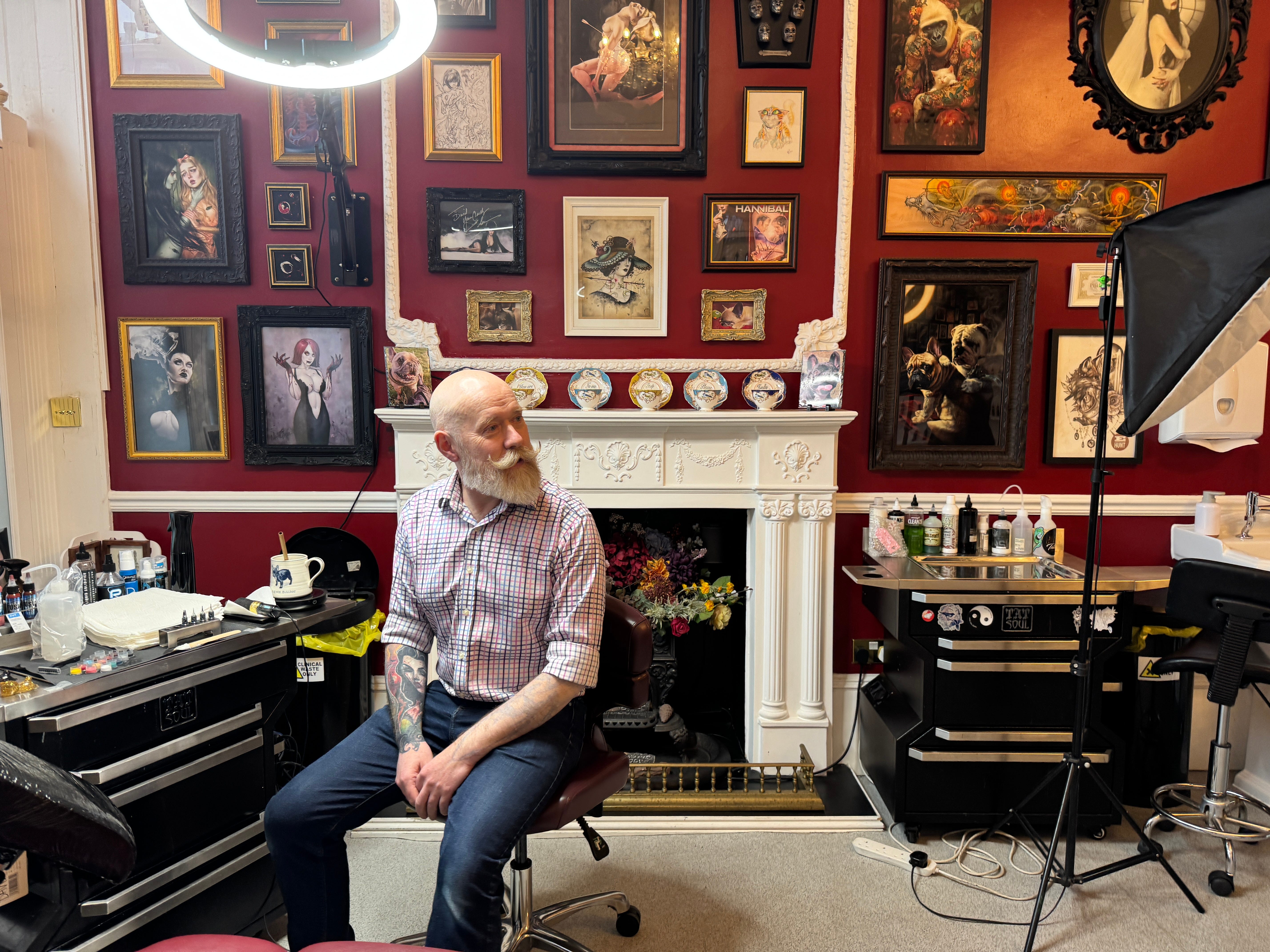
David Corden is sitting in his Grassmarket studio.
The work space is neat, the walls cluttered with an eclectic mix of art. With his Imperial moustache. dapper style and jeans, he exudes punk and Victorian gentleman in equal measure.
Step outside into the heart of the Old Town and you find yourself gazing up at the Castle Esplanade, home in the summer months to the world’s most famous display of pipe bands and military pageantry. Corden is concerned with tattoos of an altogether different kind.
“There’s no tattoo I’ve ever done that I don’t look at and think ‘I could have done that bit better’,” he muses. “That’s what makes you keep trying. If you think you’re great, your work will suffer.”
The 53-year-old is, objectively, great.
His ultra-realistic portraits have earned him not just national, but international, recognition. He is a former winner of the UK Tattoo Artist of the Year and was a guest judge on the E4 series of the same name. “Whenever the show gets repeated, I get an influx of customers,” he remarks.
Corden is one of the tattoo world’s elite who attract customers not just from across Scotland but further afield. Other leading Edinburgh artists include Beth Rose and Michelle Maddison of Thistle & The Fable.
Their skills are in high demand and come with a hefty price tag. At the top end of the UK market, day rates can reach as much as £2000, while the city’s top tattoo artists can charge up to £800, the day-rate equivalent of a £180,000 salary.
‘Everything about the place gets your juices flowing’
Originally from Sittingbourne in Kent, Corden relocated his life and studio to Edinburgh in 2013. He had never visited before holidaying here, but fell in love with the city and the buzz of the festivals. “If you’re a creative type, everything about the place gets your juices flowing,” he says.
Corden tells me he also entered the profession by accident; he loved realistic drawing as a child, but received a U for his A-level Art. The examiners said he might as well have submitted a photograph. Despite the setback, he went on to study Graphic Design at Canterbury College of Art and Design.
Afterwards, he ended up working on building sites as a ventilation engineer for 18 years. At the age of 30, he got his first tattoo - a dragon on his shoulder. He carefully drew the image himself, and it clearly made an impression on the tattoo artist, who didn’t have to alter the design.
When his cousin went back for a tattoo, the tattooist recalled Corden and asked him to show him his portfolio before offering him an apprenticeship. There’s no set time frame with an apprenticeship, Corden explains. “It takes as long as it takes until you’re competent and you can be trusted to tattoo on your own.”
After working in the studio for eight years, he decided to set up on his own, before making the move to Edinburgh in 2013. His Semper studio celebrated its 10th anniversary this year.
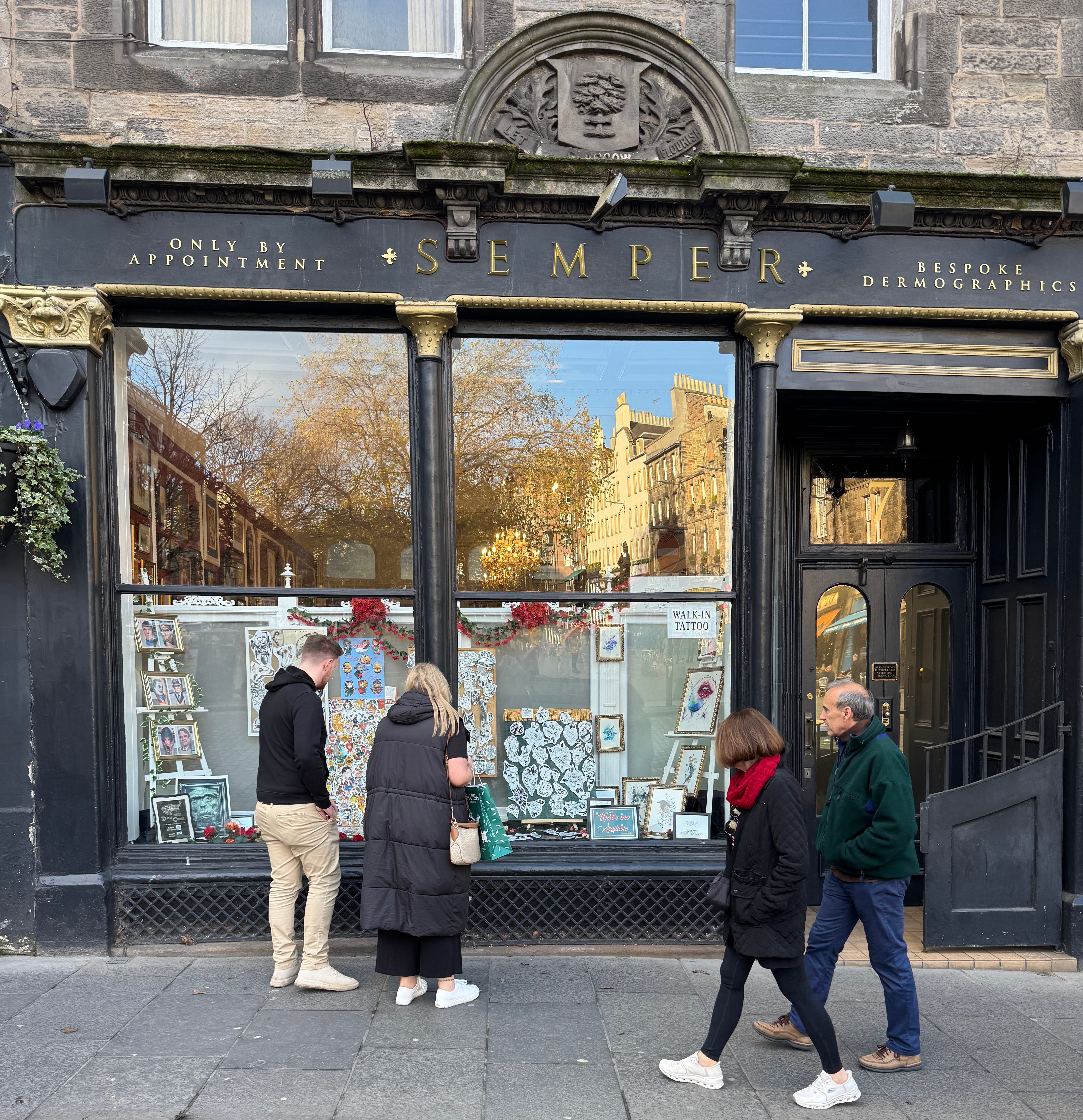
He shares the studio space with eight other freelance tattoo artists, surrounding himself with other talents in a community who spur each other on creatively. “I like to surround myself with people that can kick my ass,” he says.
Every studio has its own system for paying freelance artists; people either rent a chair at a set price, a weekly price, or a percentage taken from what they charge their customers.
Corden tells me about his diverse clientele. “It’s anything from a high court judge, a priest to everything in between. People you would never think have tattoos, have got tattoos.”
It’s a small world
Corden’s skills are in demand in America, Australia, Canada, and Europe, recently returning from a stint at Calgary tattoo and arts festival, which is North America’s largest tattoo show. “There are some really good studios in Edinburgh,” he explains. “We don’t all hang out together; but we do keep a close eye on what the competition is doing.”
When he was in Calgary, he met another Edinburgh artist, Beth Rose, who is making waves on the scene. “We were tattooing opposite each other. We both work in Edinburgh, but this was the first time we had spoken to each other.”
Beth Rose works with her fiancé, Jamie Allan (@calamitytattoo), another talented tattoo artist. Rose grew up in Clermiston and tells me: “I was always an arty kid and then a little goth teen.” Her parents were pharmacists, so she didn’t know anybody with tattoos, but she loved the art of them.
“I thought that tattooing was for cool kids. I’ve always been really shy. I don’t drink, I don’t smoke, I don’t do anything crazy. Tattooers, for the most part, are the awkward, nerdy, shy, introverted kids from your school.”
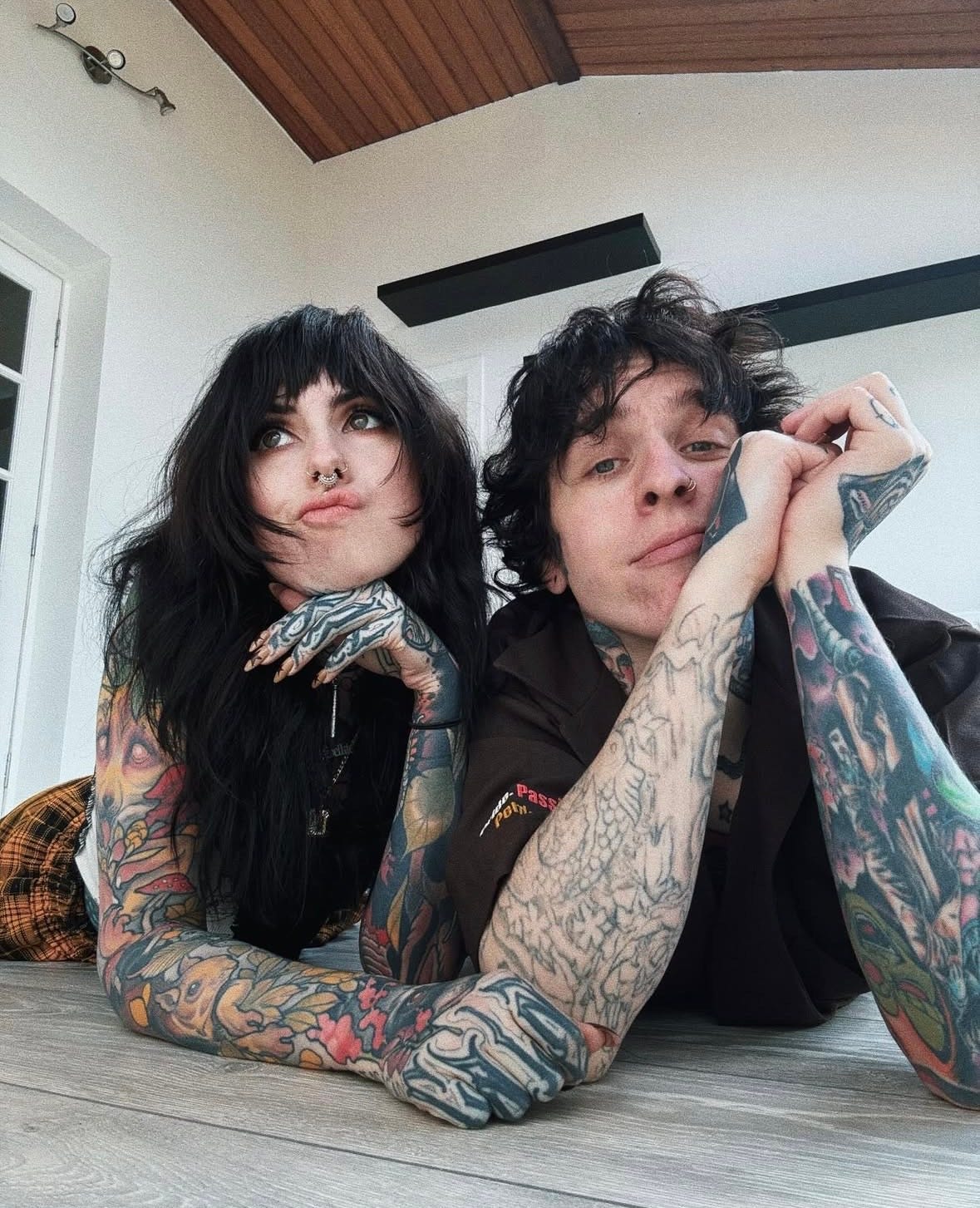
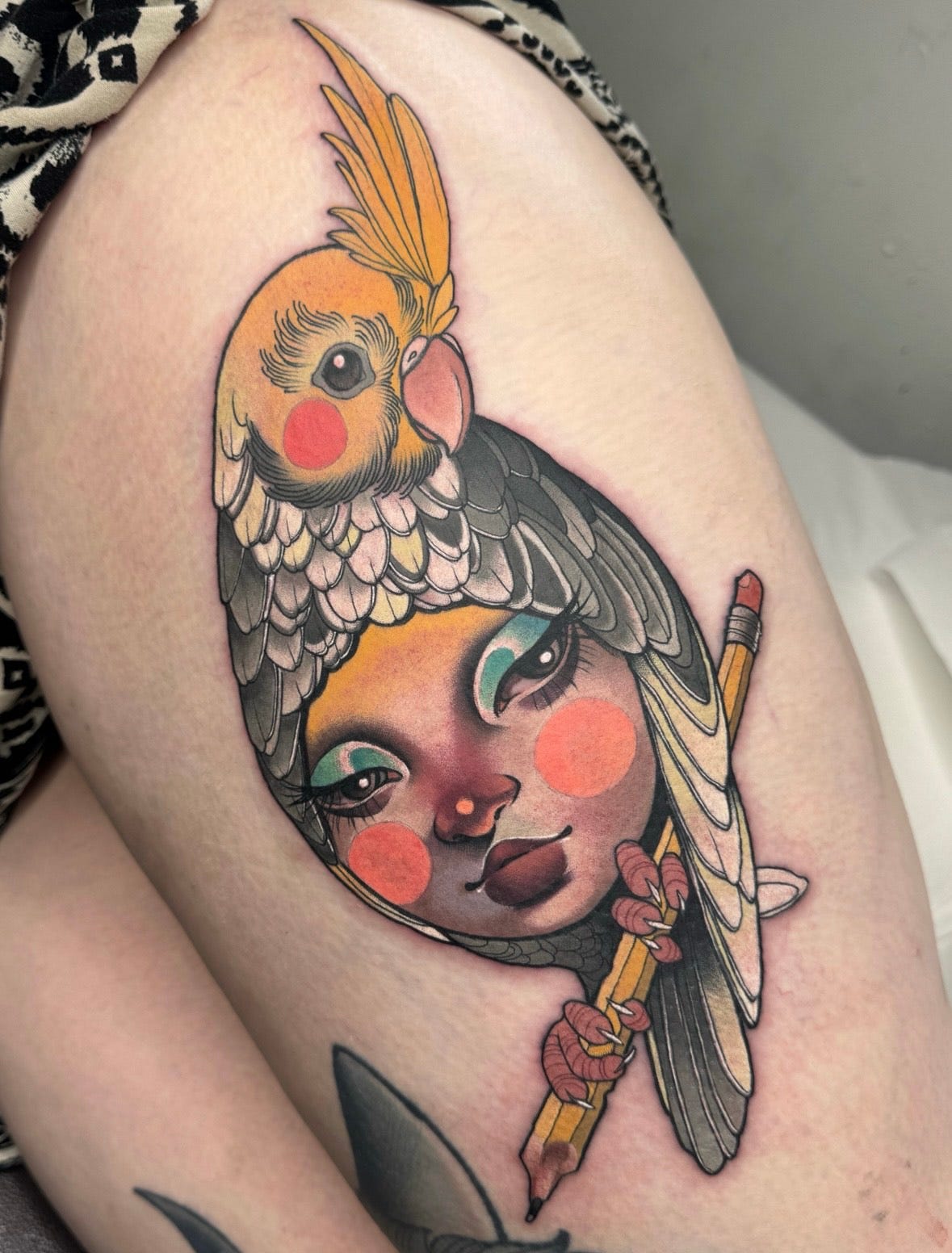
She dropped out of an animation course at college but continued to draw before starting an apprenticeship. Rose charges £600 for a full session and is known for her neo-traditional tattoo style featuring lady faces. “There are a lot of days that you finish early. Sometimes people struggle with the pain, and they tap out early, so I only charge for a couple of hours.”
Like with any freelancers, “if you’re sick or you go on holiday, you don’t make any money. I certainly don’t know any tattooers making 180K,” she says, suggesting a realistic figure for the city’s top body artists might be £40-70K. Corden is coy about his exact charges, but, although being much sought after, prefers to charge less to keep busy.
Rose adds: “If you are busy, the temptation is to just keep putting your prices up. I make a wonderful wage. I’m never going to complain about how much money I make. I make more now in a day than I used to make in a week working in retail.
“But there are people that I still tattoo when I started out as an apprentice, who I charged £50 a tattoo. I don’t want them to get to a point that they can’t come to me anymore. So, I think you just need to really look at yourself and say, you’re making plenty of money, you don’t need more than this.”
By working internationally, tattoo artists can increase their charges by several hundred dollars. The increased rates still works for overseas clients as it is cheaper than travelling to Scotland. Many though travel from across the globe to be tattooed in Edinburgh by their favourite artist.
Thistle do
Another leading city tattooist is Michelle Maddison, 41, who leads the team @Thistle & The Fable in the Edinburgh Printmakers building in Fountainbridge, alongside Claire Hamill (@clairehamilltattoo) and Keira Rose (@keirarosetattoo).
Her Instagram account is a riot of colourful botanicals, animals, birds and cartoon characters. Originally from Peterlee in County Durham, she says: “I always knew I was going to do something creative, but the idea that I could be a tattoo artist definitely came much later.”
Social media is vital for showcasing their prodigious talents and all three have huge followings on Instagram. Beth Rose has 169K followers, Corden 180K followers and Maddison 66K followers.
Corden’s work mainly involves portraits of private individuals, but he normally posts his tattoos of celebrities online. “Everybody knows what they look like.” Throughout his career, he has often been asked for images of Marilyn Monroe and Elvis. Star Wars characters are another popular theme. Corden has had his work approved by Disney and Lucasfilm in order to attend and tattoo fans at the Star Wars Celebration convention in the US.
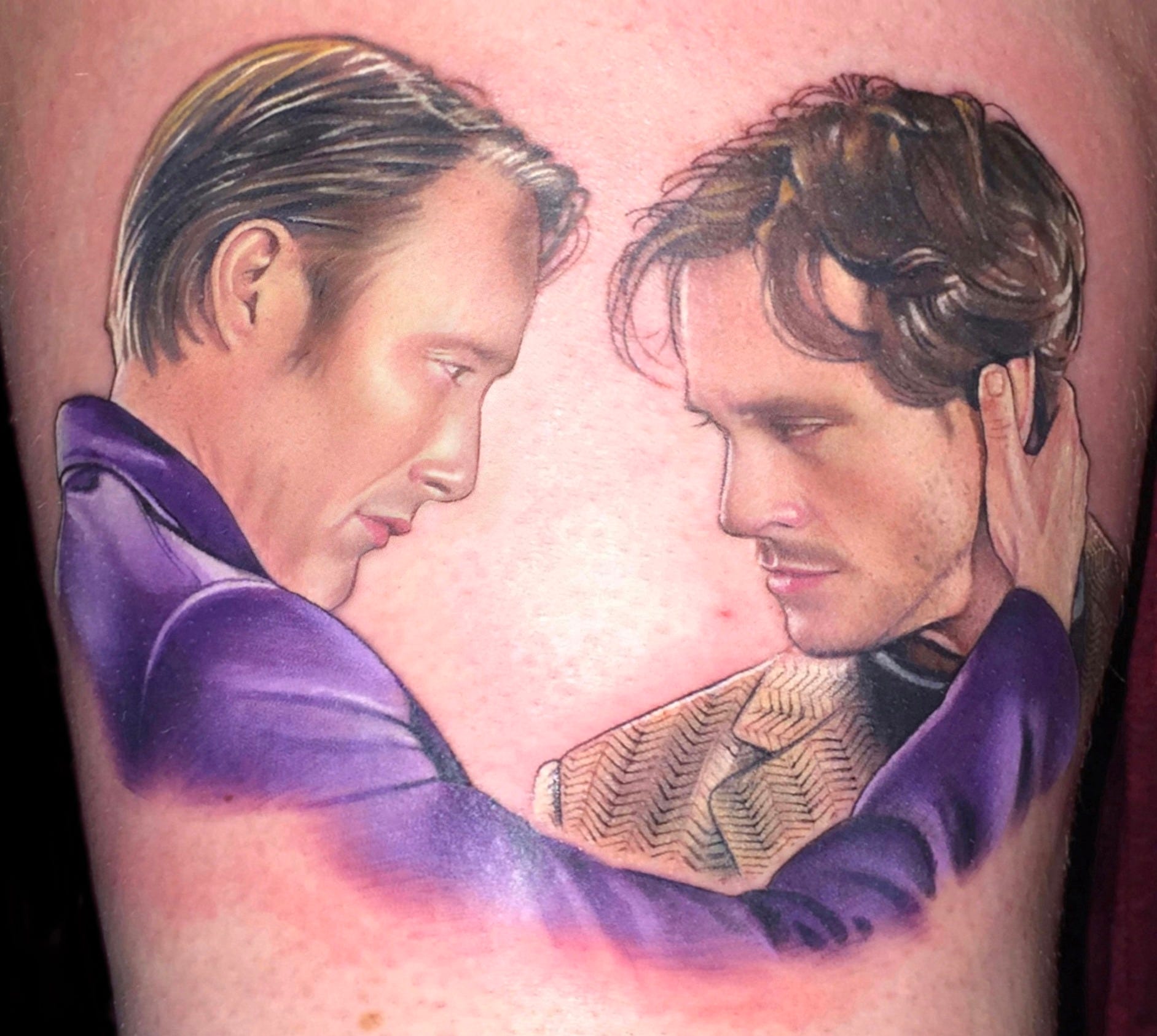
Scrolling through Corden’s account is to come face to face with a diverse cast of celebrities as diverse as Liam Gallagher, Sir David Attenborough, Stephen Hawkin, Judy Garland, Frida Kahlo and even a self-portrait painting of Rembrandt. While his ultra-realistic portrait of rock star Prince went viral, his personal favourite is one of horror icon, Elvira, which was shared by the Mistress of the Darkness herself.
Making her mark
Although she loves her chosen profession, becoming a tattooist has not been straightforward for Maddison. Her parents always told her ‘you’ll regret getting a tattoo when you’re older.’ Fortunately, they are both now supportive, and she has even given both of them tattoos.
After school, she studied set, prop and costume making at Cleveland College of Art and Design, but remained fascinated with everything tattoo-related. She sought out an apprenticeship, commuting between York and the north-east of England to learn her trade. “It was a year before I started doing any tattooing, but I spent a few months tattooing pig skin to get a feel for it.”
All her practice paid off. She received the Best Newcomer at both the Liverpool Tattoo Convention and the Tattoo Jam in Doncaster, before moving north to Edinburgh. “I just jumped on the opportunity to work with David Corden he is an amazing artist, and Edinburgh is a beautiful city.”
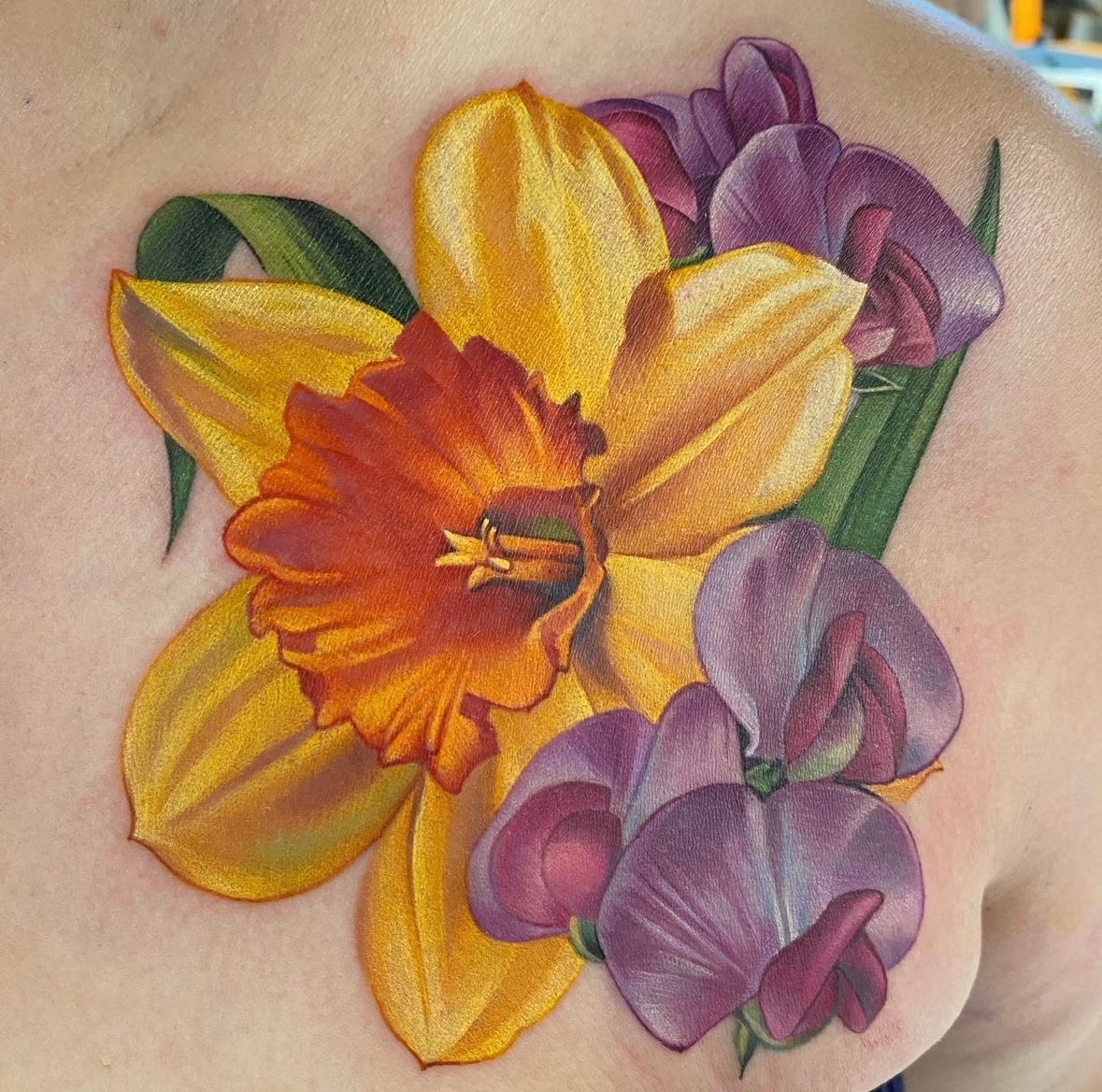
“Getting a tattoo is more mainstream than it has ever been,” she muses. “It can be a significant life event, a family member passing, the loss of a child, or to celebrate the family they have. They want to get a specific flower to signify a certain family member, or just because they like it. Some people get tattooed because they’ve overcome cancer and they want to celebrate that stage of their life being over and have a new lease of life.”
Corden notes that sensitively dealing with people’s grief is a huge part of the job. “Most people find that the tattooing process helps them reconnect to their loved ones.”
The clients that come through the door are a mix of ages and sexes, but it is the women in Corden’s experience who have the higher threshold for pain.
There is also, he finds, a confessional element to the process. “People will tell you everything. There is something about the intimacy of the tattooing process and breaking of skin, which means there is a level of trust you won’t find anywhere else. People admit affairs within minutes of being in the chair, tell you about health issues, and things their family don’t know.”
No bad blood
Corden recalls the 9-month closure during the pandemic was rough.
Lockdown saw Beth Rose at home. “Drawing out my feelings, drawing loads of pictures of sad women. And that seemed to really resonate with people.” Her work resonated, and her profile grew massively.
When work resumed, business exploded for all the artists I spoke to, but now the impact of the cost-of-living crisis is biting hard. Like many sectors which rely on discretionary spending they are finding their customers are putting off spending their hard-earned cash.
“Right now we’re kind of living in the worst tattoo recession that there’s ever been,” says Rose. “We’re seeing more and more tattooers being forced to drop out and get another job.”
Maddison has worked across Europe, in Milan and Venice, Brussels, and in the USA and New Zealand. There is a downside to this remote way of working, however. “Always taking all your gear everywhere, can be quite stressful, so I don’t really travel to tattoo as much anymore.”
She is looking forward to a major industry gathering on home turf, Scotland’s only Tattoo Convention, at Corn Exchange, March 2026. “Getting to make tattoos as a job every day is amazing. It’s such a weird and wonderful job,” she says. “The best part is when you finish a piece, and someone looks in the mirror and they love it. You’ve made their day.”
Corden is also happy with his chosen vocation despite being affected by the current downturn as much as everyone else. “I love it. It’s not work; it’s just drawing pictures and talking to people.”
