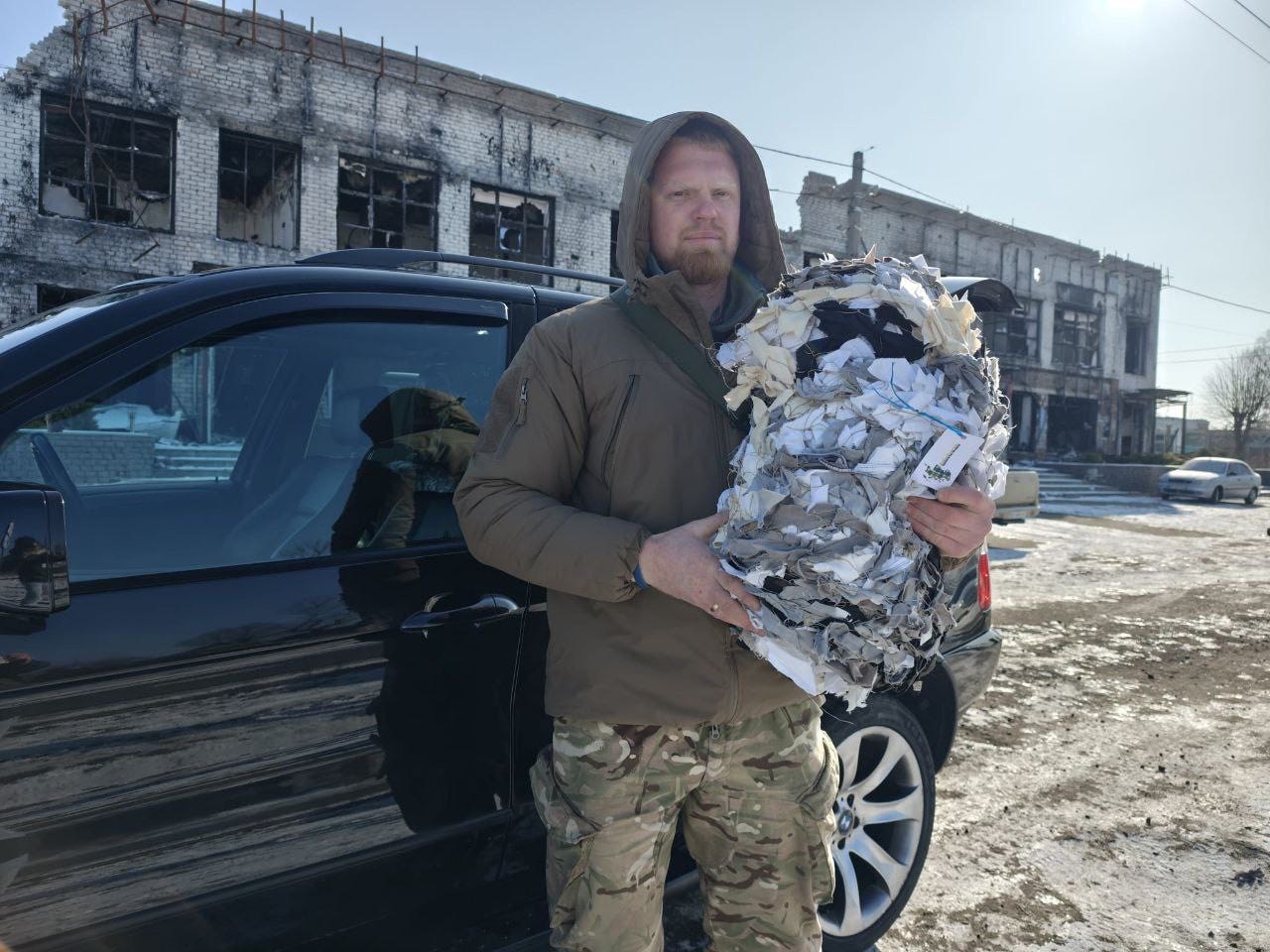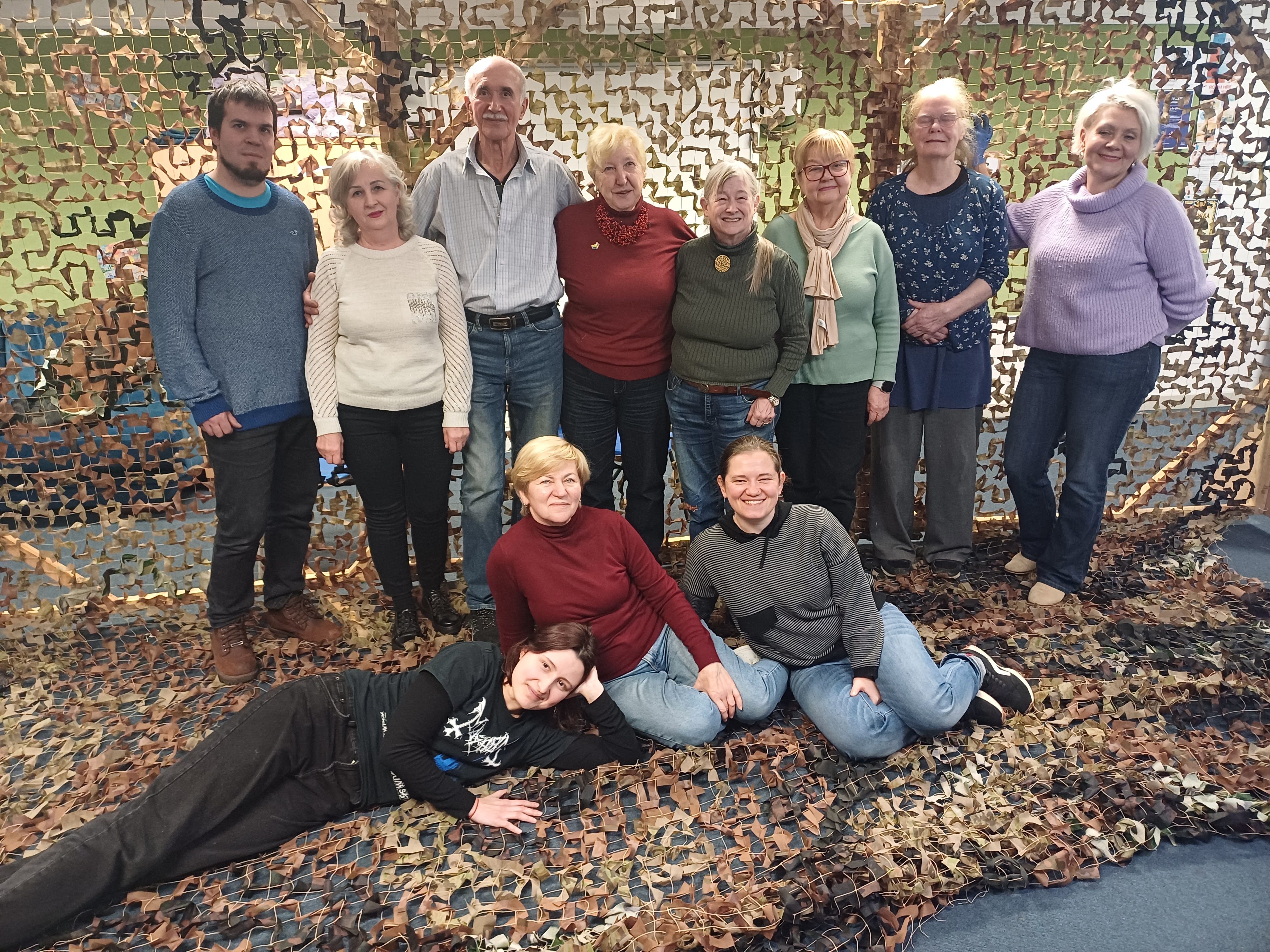
“In Ukraine we have a saying. Today’s civilians are tomorrow’s military. It’s all hands on deck. We help protect the people who protect us.”
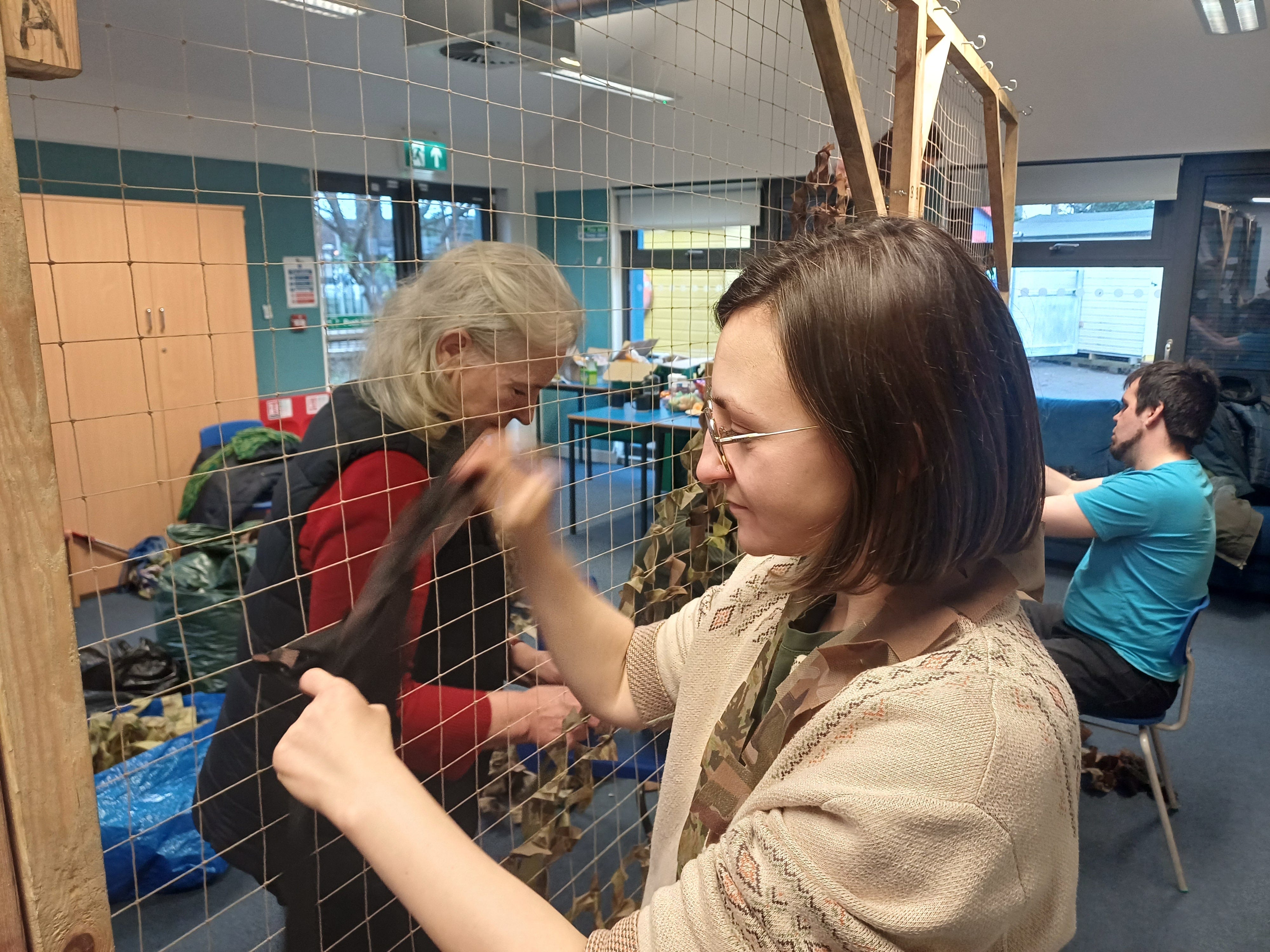
It’s a cold, overcast Saturday afternoon. In a bright room in Newhaven community centre a handful of volunteers stand quietly side-by-side, tying brown fabric strips through a net inside a big wooden frame. It forms a perfect, tight canvas.
They are focused on the motions as they carefully twist the fabric, forming what looks like a giant cobweb. On the other side of the room a group of ladies sit at a table preparing ribbons, talking animatedly while they cut and sort bundles by colours.
For many of them, their sons, husbands and other family are fighting in Ukraine right now.
IInessa Rezanova was one of the first Spiders for Ukraine when the international movement came to Newhaven in 2023.
“We watched videos at first, but most people figure out their own technique as they practice” she explains, showing me how to weave the fabric so every corner of the cells is covered.
“We can’t stop the war but wherever you are you can always do one little thing. Making nets is what we do.”
Everything produced reaches the frontline. Armed forces put the nets over vehicles, including tanks or ambulances, helping them to hide from Russian strikes.
The first nets were made from a donated van load of old hotel bedding. Reams of sheets were ripped into long ribbon shapes and dyed.
It is a creative process using up to ten different colors to achieve a seasonal camouflage effect. “Green and lightweight are good for wooded areas in summer, beige for the grasses in autumn and white and thick for winter cover,” Inessa explains.
They can also use gardening anti-pigeon nets and khaki-coloured spun bound fabric, paid with money out of their own pockets.
Up to 25 volunteers come along on Saturdays and finish a net in four hours, check it for quality and roll it into a tight bundle for dispatch.
It takes roughly a week from pickup by truck to drop-off to locations. Volunteers often add a note on a postcard, or a little gift.
How it started
Camouflage nets are in huge demand as part of the war effort. They have also become a symbol of unity.
It first started in 2014 when the war broke out. People knitted socks and gloves, weaved kykymoras (camouflage capes) and nets.
Now it’s a cultural phenomenon that has swept Ukraine and beyond. Word spread quickly with volunteer groups forming across Europe. Many share videos online showing how to make the nets and appeal for more volunteers.
In Edinburgh, it was a small group of first evacuees in Morningside that set up Spiders for Ukraine.
Nataliya started the first Spiders group in Morningside after arriving in April 2022 with her mum and sister joining later in June.
Her aunt, cousins, godson and other family members are still in Ukraine, often woken by the sound of shelling and tanks.
The Morningside group now also runs a Saturday school for children, but the Newhaven group is focused on efforts to support those at the frontline.
“We started out as four then we had lots of people coming and needed a new space. We were offered a room at Newhaven and the Men’s Shed made us the wooden frame. Many who help can’t go home because it’s too dangerous.
“Every time when we gather to weave nets, Scots, Ukrainians, and other nationalities unite to help Ukraine. This support gives me the feeling that I am at home.”
Others have been inspired and followed suit in Dundee, Ayr, Glasgow and Stirling.
As more people joined, they began hosting bake sales, art and cooking workshops too. Soldiers on the frontline sent photos of the nets and words of thanks.
But Nataliya soon realised they could do more.
In 2023, she joined forces with an artist from Kyiv who was using ammunition boxes and painting icons on them.
With money raised from the ammunition box art sales the group has now bought ten evacuation trucks and an ambulance. In late summer, they sent an ambulance to Kharkiv region, in north-east of Ukraine.