


“It is quite a mad idea, I must say.”
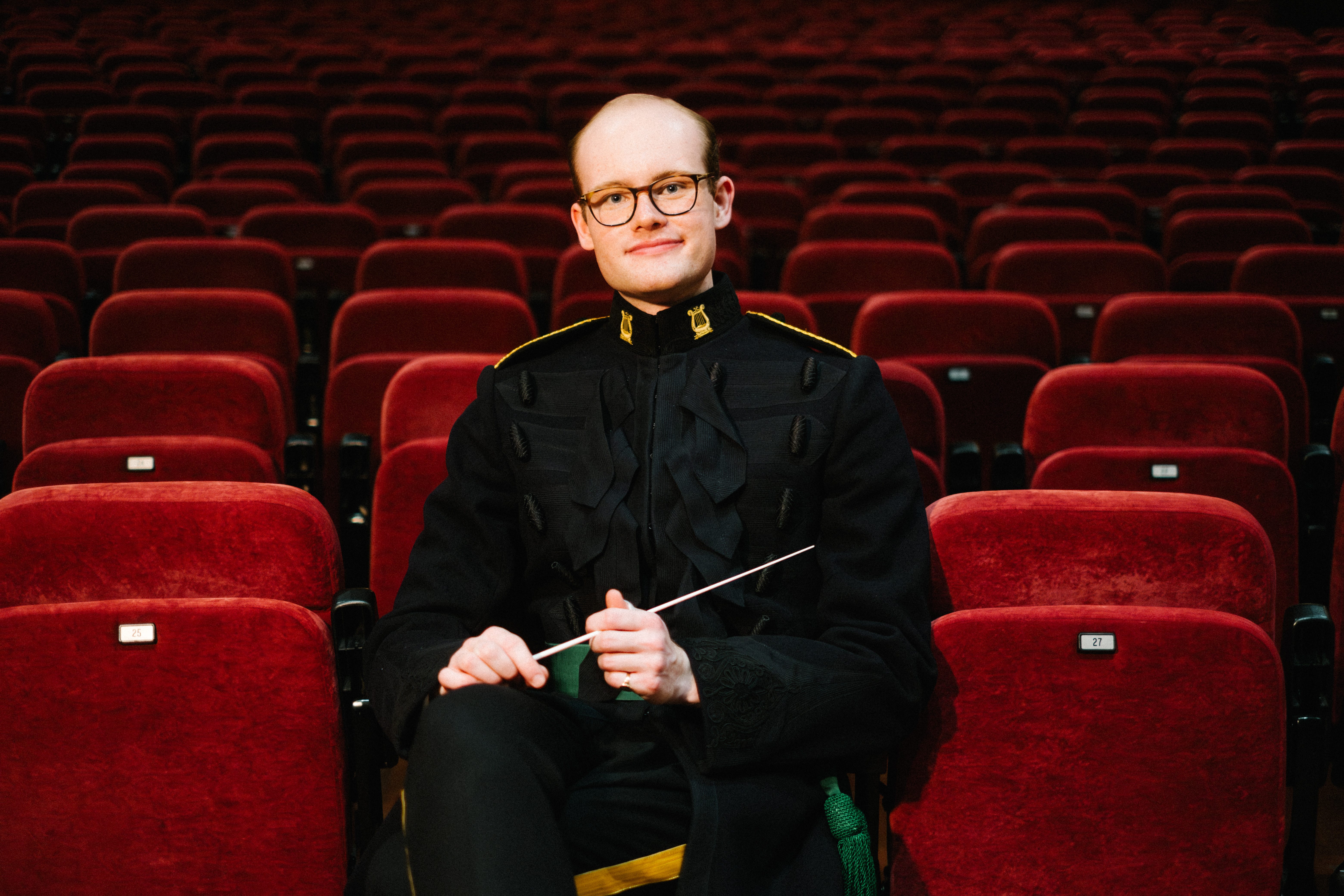
That’s Luis Schmidt, 21, assessing his own handiwork. He’s the conductor who, at an age when most are still trying to get into orchestras, simply decided to build his own. From scratch.
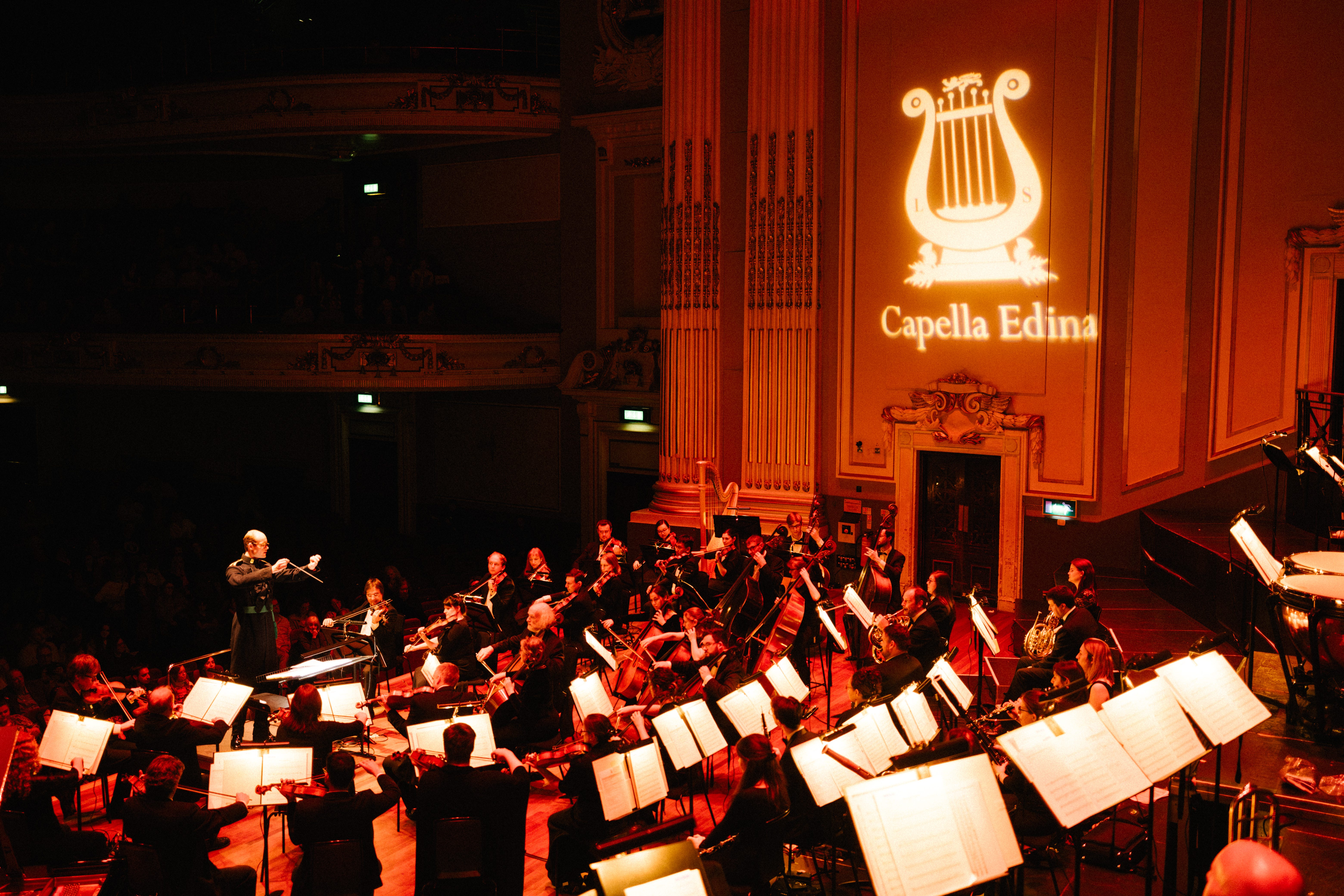
When we speak, a glorious concert at the Usher Hall is still a fresh, resounding memory. That performance was the culmination of his “mad idea”: Capella Edina, Edinburgh’s first resident professional philharmonic orchestra in nearly 90 years, writes Will Quinn.
Now, the venture has been stamped with serious establishment approval. The Duke of Hamilton is the new patron and opera legend Sir Thomas Allen is honorary president. Sir Thomas’s endorsement alone is a narrative in itself. “I travelled as a schoolboy to Edinburgh... to hear concerts in the Festival in the early ‘60s,” he recollects. “You can imagine then the pleasure it gives me to be associated once more with the great city.”
The establishment, in effect, is nodding its approval. But what possesses a 20-year-old to take on a task cities and governments have shied away from for decades? I sat down with Schmidt to let him tell the story. It starts, as it turns out, with a feeling of “weirdness” and a fateful visit to the castle.
The 90-Year Gap
“Me coming from Germany, it felt weird for the capital of Scotland not to have its own representative orchestra,” Schmidt says. “Not for Scotland as a whole, as a country, but for the city.”
In Germany, he explains, orchestras are part of the civic furniture, 80% state-subsidised. To him, the void in Edinburgh was a glaring, almost offensive, silence. But it was a string of conversations that turned an observation into a plan.
The first was with a fellow conductor, Rob Ames of the London Contemporary Orchestra.
“He said, ‘The best thing to do nowadays is just to start your own bands. Do your own calling.’ I thought that was quite an interesting take on it, but he had founded the London Contemporary Orchestra in 2008, so he was quite experienced in that.”
The second, and most pivotal, conversation took place in a setting dripping with Scottish history.
“I was invited up to Edinburgh Castle by its governor Alastair Bruce,” Schmidt recalls. “I had been living in the UK for about a month. I got a tour around the castle... and they closed the castle due to wind that day. So I was a really lucky one.
“We just got chatting about the music scene in Edinburgh. Alastair seemed to get it because he’s very well versed in history. We got chatting, and then I did some digging, and got back to Rob. I said, ‘Don’t you think Edinburgh could do with its own philharmonic orchestra?’ He thought it was a good idea and we started working out a few artistic ideas.”
‘No Idiot’s Guides’
An idea is one thing. Building a 75-person legal entity, a registered charity, is quite another. I ask Schmidt about the “nuts and bolts” - the brutal, unglamorous work of actually creating an orchestra from thin air.
“You hit it on the nail there,” he says, with the weary laugh of a man who has stared into the abyss of administration. “If you were to summarize it in one word, it was a very sleepless journey. Many hours went into it.
“Something I did in the very early stages was to go online and try to find guides on ‘how to establish an orchestra.’ You might be very surprised, but I couldn’t find anything. No ‘Idiot’s Guides’ here. Exactly. It was a very long journey, learning by doing.”
This “learning by doing” was, in reality, a crash course in UK governance, finance, and all the “little bits and bobs” of the Musicians’ Union.
“Running a business is something completely different,” he admits. “And running a charity... writing a chairman’s report, organizing trustee meetings, speaking to your accountant. I didn’t know anything in all these areas.”
The administrative burden became so great that he had to concede defeat. “About one year in, we got John as a freelance PA. I reached a stage where I said I just can’t do it on my own anymore. If you’ve got 70 people on stage, you need about three emails for every person. If you do that a number of times a year, the inbox is already full with that. And that’s just the musicians.”
Building the Band
Beyond the paperwork, Schmidt had to find his players. His goal wasn’t just to make music; it was to provide high-level, paid employment in a notoriously precarious industry.
“Nearly on a daily basis, we see articles about funding cuts to the arts in the UK. I just thought, ‘Okay’: we don’t just want to make music... but how can we be part of that ecosystem and provide employment for musicians in the area? We’ve got about 300 people now that want to play for us.”
The orchestra is a hand-picked group of freelancers, and Schmidt is keenly aware of the “scratch band” label. He says the opposite is true: he’s re-connecting a community.
“You could see it when they arrived in January,” he recalls, describing that first rehearsal. “I didn’t know many of them... And they were there and, ‘Oh gosh, I haven’t seen you in five years! How are you doing?’ I just thought, ‘That’s brilliant.’”
He’s also deliberately engineering a culture of mentorship, mixing veterans with emerging talent.
“I had some younger folks from the RCS (Royal Conservatoire of Scotland)... Emma, our second trombonist, just graduated... It felt a bit more like mentoring. John Kenny, our bass trombone, was professor for trombone at the Guildhall... Just seeing that mix was just fantastic.”
A ‘welcoming’ energy
When I ask him to define this character, this energy he’s fostering, his word is precise: “welcoming.”
“I think that is quite a good word to summarize it,” he says. “I’m the alien in this ecosystem that has existed. I’m the German one in the room. But also welcoming for trying out new things... and very welcoming of my vision for the orchestra.”
This positive energy, he says, was hard-won. He describes the abject terror of the very first rehearsal for their opening concert last January.
“It was the most nerve-wracking rehearsal I have ever done with anyone. I had about 75 people there on stage, all very experienced musicians. And there I was standing, I think I was 20 at that stage. I just thought, ‘It all won’t work out... Will they accept me? Or will they just do this because they want to get paid after?’”
“It was anything else but that,” he says with relief. “That fun in playing together is just amazing about this group.”

A Personal Capstone: The Enigma
The concert that capped this “mad” first season was the ‘Enigma’ performance at the Usher Hall. When we spoke, Schmidt was deep in preparation for it, and it was clear this wasn’t just another date in the diary. This one was personal.
“All our programs have an overarching theme,” he explained. “With the upcoming one now on Sunday, it’s Enigma. All about Elgar’s Enigma Variations at the heart of it all.”
The concert itself was a web of “shorter riddles” – from Arthur Bliss and film scores for The Imitation Game and The Theory of Everything – all leading to Elgar’s masterpiece. But for Schmidt, this was the piece.
“That concert is very special to me because the highlight will be the Enigma Variations,” he told me, the usual business-like focus softening. “The Enigma Variations are my favorite piece of music, and I think that’s what really got me into conducting. So it’s a very personal concert. I think it will be fantastic sharing that with our audience.”
This personal mission is also, for him, an educational one. The preparations for the Enigma concert were based at Portobello High School, the start of a new, deep partnership. “We are rehearsing at Portobello,” he explained, “and we are offering free tickets to the school community for all our concerts, and running workshops.”
It’s a way of “maybe giving people a similar experience to what I had in school”.
‘I want to play there’: An Accidental Origin
So where does this singular drive come from? A privileged musical upbringing? A family of maestros? Not a bit of it.
“My family’s completely unmusical,” Schmidt states plainly. He was forced into music by a quirk of the German school system.
“I went to secondary school and every other year they would have a wind band form group. Every pupil in that form group would have to learn a wind band instrument. My friends from primary school applied for that. I, of course, didn’t want to get separated from my best friends.”
“Lo and behold, I got in; all my best friends didn’t. I was devastated.”
He hated the trumpet. He “didn’t really enjoy it” for years. Then, one rainy Saturday, a new path was presented by the television.
“I think there was a moment that brought me first in touch with the UK, when I was 14. It was a rainy Saturday in June: Trooping the Colour on telly. I said, ‘I want to play there.’ I was just amazed by all the pomp and circumstance and the precision and musicianship.”
That, finally, was a goal. But his path was also forged by serious classical mentorship, particularly from a teacher at his “normal state school” in Munich.
“One of my other music teachers in school, he used to be an oboist and played with the Bavarian Radio Symphony Orchestra and did many recordings with people like Bernstein. Ralph has been just very encouraging of this entire journey. I think if it wouldn’t have for him, I wouldn’t have received that encouragement. Even though your family always tries to encourage you, perhaps coming from a musician is different.”
A Service to the City
From an accidental trumpeter to the founder of a philharmonic, the journey seems to be defined by an intense, almost defiant, sense of purpose. It’s not just about music; it’s about service. He proved this in June, celebrating the city’s 900th anniversary.
“The Lord Provost was there, about 1,600 people... It was a great honour to be asked by the Lord Provost to give such a concert as a new organization,” he says. “That’s why we made the last concert free as well.”
This is not a generic mission. It is geographically and culturally precise. As our conversation ends, he defines his vision with a focus that is sharp, unapologetic, and perfectly clear.
“That’s where the service aspect really comes in: that we are the professional orchestra of the city. Not of Scotland... I care what happens here.”
An Audacious Future
And ‘here’ is just the beginning. Schmidt is already planning the next phase, a 2026 season that shows the “mad idea” has serious momentum.
He’s plotting an expansion with a concert in Dundee’s Caird Hall, a “very special concert at Edinburgh Castle” - bringing his origin story full circle - and a joint performance with the Royal Marines Band, a direct nod to his ‘Trooping the Colour’ inspiration.
He also teases a collaboration with a “pop artist,” though he remains coy. “I can’t completely reveal who it is yet.”
From a rainy Saturday watching the telly to the podium of the Usher Hall, Luis Schmidt hasn’t just built an orchestra. He’s built a case for the “mad idea.” And he’s only just getting started.