


Welcome to your midweek edition of The Inquirer.
You might remember the UK Government announcing plans to build the next UK supercomputer in Edinburgh at a cost of £750 million. The investment was confirmed last summer, after the incoming Labour government initially dropped the plan saying it had been left unfunded by their Conservative predecessors.
Well, work is now underway in Midlothian to build what will be the most powerful supercomputer in the world when it is switched on in 2028.
Where do you build a facility that sounds more like it belongs in the pages of science fiction than in the real world? What will it look like? And what will it do?
We had so many questions that we sent Ilona Amos along to find out more.

You can read all about that below, but first your regular midweek news roundup and your cultural highlights for the week ahead.
Your Edinburgh Briefing
AIPORT PANNED: Edinburgh Airport has been named one of the worst in the UK for passengers in a report by the consumer champion Which? The capital’s airport was ranked 23rd out of 27 UK airports for the overall traveler experience - and worst in the UK for baggage waiting times. Which? surveyed more than 6,000 passengers to rate the airports on waiting times, food and drink, customer service, and more.
Waiting woes: The Which? findings broadly reflect the common themes on Google reviews of the airport. There passengers often praise the airside departure lounges and the security upgrade that has seen the removal of liquid limits, but regularly complain of baggage delays and long queues on the landside.
New chief and investment: The report will offer food for thought to new chief executive Mark Johnson who is joining from Gatwick Airport where he has been chief operating officer. The airport - the UK’s busiest outside of London and Manchester - has just announced a £500 million expansion over the next five years, including new gates, an expanded check-in hall and a 60% bigger terminal overall.
CONNERY FILM CENTRE: A major training centre for the next generation of filmmakers is to open in Edinburgh in memory of one of the city’s most famous sons, Sir Sean Connery. The late film star’s family have announced plans for the NFTS Sean Connery Institute, a collaboration between the Sean Connery Foundation and the National Film and Television School. A search is underway for a permanent, city centre home for the institute with a view to opening within 18 months.
CUTTING EDGE: The show must go on. Back in April we told you that a powerful knife-crime play that has had a terrific impact on pupils in city schools in recent years had been scrubbed from planned funding by the Edinburgh Integration Joint Board at short notice. Following our report, we’re happy to report that performances are now being funded by the city council and planned for pupils across 16 high schools in the city. BALINGSON was written by award-winning Scottish playwright Jennifer Adam and directed by Strange Town artistic director Steven Small, and explores the consequences of carrying a knife through the story of a 15-year-old boy. Performances are also on at the Traverse Theatre tomorrow and Saturday.
RAMBLING ON: Leith actor Mark Bonnar is to team up again with his Shetland co-star Ashley Jensen in a new BBC sitcom Rambling. Written by Burnistoun’s Iain Connell, the new series see them play an ‘odd couple’ pair in a comedy set in rain sodden Scotland.
DROPPING OFF: The council is looking to increase the number of coach parking and drop-off points around the city to cope with growing demand from tour operators. Coaches are generally directed to Castle Terrace, Regent Road and Inverleith Place, but new drop-off and parking points are being considered, including on Chambers Street, Market Street, King’s Stables Road, Grassmarket, Jeffrey Street, Queen Street, London Road.
NEW TOWN APARTHOTEL: Former offices at 16-26 Forth Street would be converted into a 53-bed aparthotel under plans to be considered by city councillors next Wednesday. The number of beds proposed has been cut from 90 following widespread objections. Council planning officials are recommending the new plans from Limetree Developments are approved.
SOUNDS OF WINTER: Irish singer Heidi Talbot, the Ivor Novello-nominated Boo Hewerdine and Scottish indie pair Sacred Paw are among the headliners at the Soundhouse Winter Festival. Returning to the Traverse Theatre on November 26-30, the festival wil kick off with a free performance by The Soundhouse Choir to celebrate its 10th anniversary.
Your Pick of the (Cultural) Pops
Greetings, Pop Pickers!
What a delightfully bonkers week in the entertainment business. While poor Ed Sheeran gazes miserably at the dismal ticket sales for his tour in the messy wake of Macklemore-gate, and Fife’s own KT Tunstall fronts the high-tech charge to bring digital holographic avatars of touring musicians to a venue near you, Edinburgh is keeping things flesh, blood, and stone.
It’s a big ‘no thank you’ to virtual tours as the capital prepares to throw open its doors - quite literally - for Doors Open Days this weekend. With 21 new buildings joining the roster of unlocked spaces across the city, from historic vaults and grand civic halls to hidden courtyards, it’s an unbeatable annual excuse to go poking your nose into Edinburgh’s best-kept architectural gems.
Inside our auditoriums, the autumn momentum is building fast. This week’s chart serves up the return of lunchtime theatre royalty, pink-hued Broadway comedy, a classical dream team under the Queen’s Hall lights, world-class dance bedding in a reborn stage, and what is indisputably the Scottish theatrical event of the season.
Let’s count them down...
Honourable Mentions: Gilbert O’Sullivan, Revel, NT Live, Wallace & RoboCop
Bubbling just outside the top five, there is a mouthwatering spread across town. Over at The Queen’s Hall (September 25th), you might still manage to snare a late ticket for veteran chart-topper Gilbert O’Sullivan; if you fancy seeing the Record Mirror 1972 Male Singer of the Year dispensing timeless gems from his hit-strewn songbook, click that link sooner rather than later, as at 79 we shouldn’t take too many more live runs for granted. Across town at The Studio on Saturday 26th, Company Chordelia presents Revel, a touching and witty dance-theatre duet exploring aging and memory that reviewer Cath Coutts, writing for independent arts review site The Quinntessential Review, praised in her review of its St Andrews premiere.
Down on Home Street on Sunday 27th, The Cameo screens the Director’s Cut of Paul Verhoeven’s RoboCop - one of the few childhood favourites of mine (despite that strict 18 rating!) to genuinely stand the test of time. That’s largely down to a satirical edge skewering corporate greed that feels every bit as pertinent now as it did in 1987. As dystopian sci-fi action-adventures go, it really doesn’t get any better.
Finally, heading into The Studio next week (September 30th – October 3rd) is Rob Drummond’s stirring musical Wallace, exploring Scotland’s mythic rebel.
New in at Number 5 is... A Play, a Pie and a Pint: The Whaler’s Wife (Traverse Theatre, September 29th – October 3rd)
Taking the fifth spot is the welcome return of Scotland’s undisputed hotbed of new dramatic writing. The legendary A Play, a Pie and a Pint kicks off its Edinburgh autumn diet at the Traverse (with an upcoming run at the Assembly Roxy still to drop), and if you have the time to catch even one of this season’s lunchtime offerings, you really should. Opening the slate is Izzy Gray’s The Whaler’s Wife, directed by Beth Morton. Set in 1820s Orkney, it blends sea shanties, ribald humour, and folklore as three rebellious women keep their coastal community afloat while the men hunt across icy Arctic waters. If you need proof of the institution’s pedigree, look no further than the above-mentioned Wallace over at The Studio - another proud PP&P alumnus! Pair forty-five minutes of cracking new drama with a warm pie and a pint, and you have an unbeatable lunch hour ahead…
New in at Number 4 is... Legally Blonde The Musical (Edinburgh Playhouse, September 29th – October 3rd)
Bursting into fourth place in a whirlwind of pink scented paper is a Broadway and West End juggernaut. Directed by Nikolai Foster (also responsible for recent stop-by Annie), this lavish new touring production lands on Greenside Place led by Amber Davies, who looks to be an inspired bit of casting for sorority queen turned legal eagle Elle Woods. Local unpaid professionals Allegro knocked it clean out of the park when I reviewed their exuberant run at the Church Hill Theatre for The Quinntessential Review back in 2022, setting a towering standard for community theatre in the capital. Let’s see if this star-studded, multi-million-pound national tour can match their infectious charm! Expect razor-sharp choreography, killer comic timing, and unstoppable earworms.
New in at Number 3 is... Dunedin Consort: Vienna and Beyond (The Queen’s Hall, September 27th)
Snatching the bronze medal is an unmissable evening of sublime classical artistry. Scotland’s Grammy-nominated Dunedin Consort are world-class on any given evening, but toss piano royalty Angela Hewitt into the mix - directing from the keyboard for Mozart’s sparkling Piano Concerto No. 9 “Jeunehomme” - and you will struggle to find a more tantalising classical concert anywhere in the UK this Sunday. Alongside C.P.E. Bach and Beethoven’s punchy First Symphony, this promises pure magic under the Queen’s Hall arches.
Dropping to Number 2 is... Lullaby (King’s Theatre, September 24th – 26th)
Slipping one spot from the summit, you still have a fleeting chance this weekend to catch the multi-million-pound restored King’s Theatre put through its dramatic paces. Seeing Jasmin Vardimon’s elite ensemble of dancers test the limits of physical theatre on the Old Lady’s freshly levelled, unraked flat stage is a thrill in itself. Reimagining her acclaimed 2003 breakthrough piece set inside an eerie hospital ward, Lullaby marries gravity-defying athletic movement with biting satirical wit and deep emotional resonance. If you want to celebrate the venue’s grand reopening while taking in contemporary dance of international calibre, grab one of the remaining seats before Saturday’s final curtain.
Straight in at Number 1 is... The Prime of Miss Jean Brodie (Royal Lyceum Theatre, October 2nd – 18th)
See how Gayle Rankin looks as Miss Jean Brodie in this National Theatre of Scotland video of her photoshoot with fashion photographer Rankin
Taking the top spot of the pops this week, this is without shadow of a doubt the biggest stage event in Scotland this autumn, never mind the town! Muriel Spark’s iconic Edinburgh novel comes home in a powerhouse co-production uniting the National Theatre of Scotland, The Royal Lyceum, and Pitlochry Festival Theatre. Adapted by playwright David Harrower and directed by Vicky Featherstone, the production stars the formidable Gayle Rankin as the fiercely charismatic, dangerous schoolmistress who famously commands her impressionable “crème de la crème” at the Marcia Blaine School. Fresh from a stellar turn in The Incomer opposite Domhnall Gleeson, and with Broadway (Cabaret) and House of the Dragon under her belt, Rankin stepping into Brodie’s shoes just a stone’s throw from Spark’s own school haunts is theatrical gold dust. Brilliant stuff!
And that’s your Top 5!
From Muriel Spark’s finest hours and Elle Woods’ courtroom triumphs to Angela Hewitt’s keyboard fireworks and the physical wizardry on the King’s new flat boards, our stages are positively spoiling us rotten. Get those seats booked, take a wander through a few historic civic doorways this weekend, and let me know in the comments what you’ll be catching under the footlights!
Until next week: Stay bright!
We need your support to produce the Edinburgh Inquirer. Only our paying members make all our high-quality journalism possible. Joining costs just £1.54 a week when you sign up for a full year. It is the only way to access all our writing, and your money goes directly to paying our professional journalists and supporting their work.
Inside the home of the world’s most powerful supercomputer
Subhead for main feature
by llona Amos
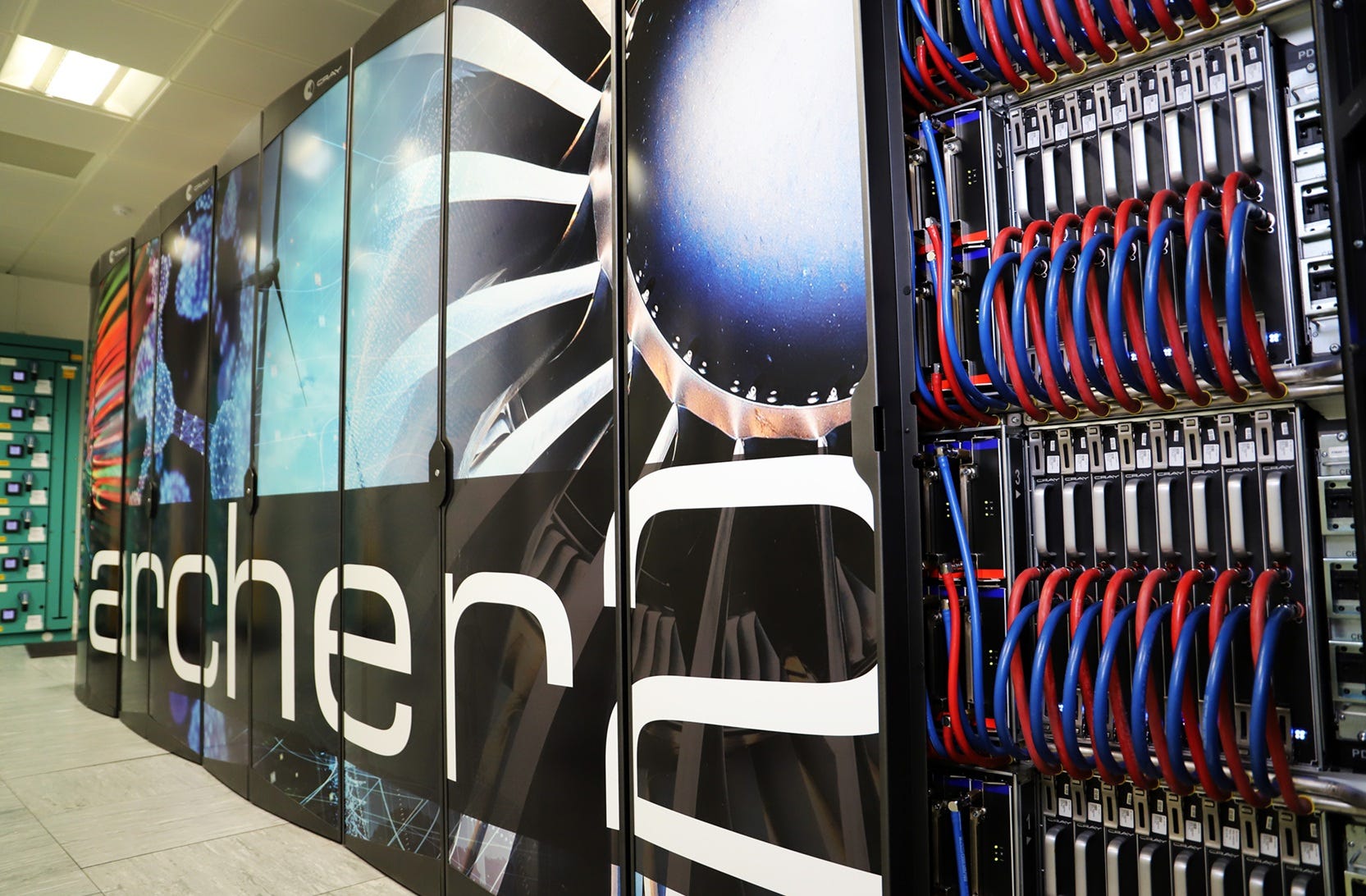
In a large warehouse not far from Edinburgh you’ll find hundreds of unremarkable-looking cabinets, all lined up in neat, orderly rows. The air inside has a particular smell, or perhaps it’s more like an absence of smell – sort of sterile with a plasticky hint. In some areas there is a constant background noise, something akin to the ambience on an aeroplane with the air-con turned up full. In others there are big tanks and pipes you could imagine in a dairy. And there’s not much sign of movement, save for the images flashing across a few big screens showing work that has taken place here.
But this sense of stillness belies the massive level of activity going on within these racks, which contain what could be thought of as Britain’s mega-brain.
We’re at the EPCC (Edinburgh Parallel Computing Centre) at the University of Edinburgh’s campus in Midlothian, home to the UK’s current national supercomputer. Known as ARCHER2, it has been used by academics for myriad projects, some of them world-changing – from aiding the discovery of drugs for treating Covid-19 to simulating earthquakes and maximising the efficiency of wind turbines and jet engines.
But things are about to get even more exciting. Construction is well under way on a new building that will soon house the next national supercomputer, a vastly more powerful system that will allow scientists and engineers to tackle even more complex problems.
The new machine, which is yet to be named, will be 50 times more powerful than ARCHER2 – capable of delivering an exaflop of calculations every second. That’s a quintillion, or billion-billion (which looks like this: 1,000,000,000,000,000,000), compared to ARCHER2’s 20 million-billion. It will be among the most powerful in the world – China’s LineShine is currently number one, with just over two exaflops.
Professor Mark Parsons is director of the EPCC and has been pushing hard to get the new supercomputer, which is owned by UK Research and Innovation, based at the university. He and his team are delighted that their expertise and leadership in high-performance computing and artificial intelligence (AI) have been recognised, with the UK government awarding £750 million of funding to make it happen.
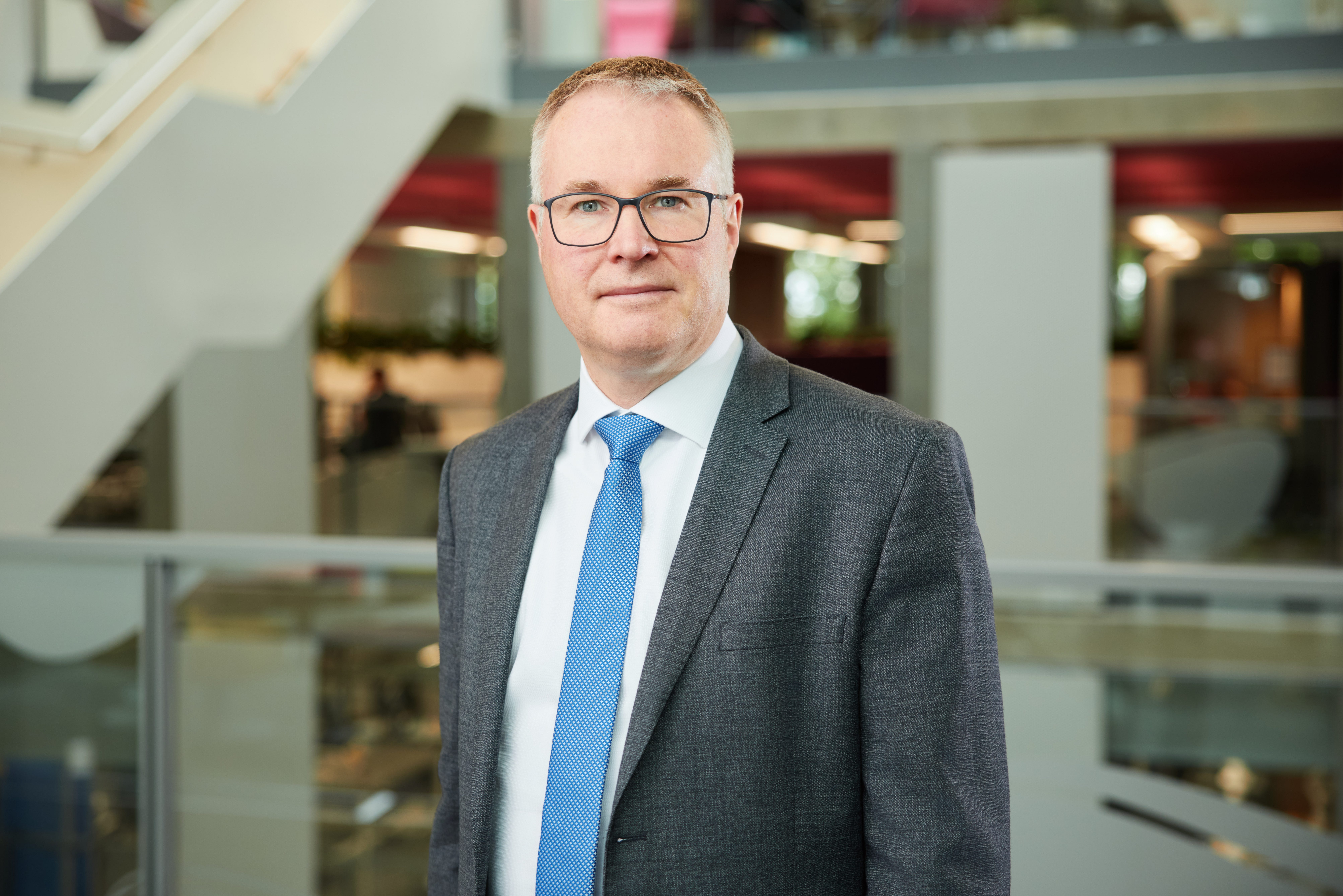
“We are at this amazing moment in the development of computing,” Parsons said. “Britain has always punched way above its weight in scientific research – we’re absolutely world-leading in many areas. To keep us relevant, we have to invest at an infrastructure level.”
UK minister for artificial intelligence Kanishka Narayan said the new supercomputer was “a decisive step” in building the sovereign computing power the country needs to stay in control of its future and science.
“This is what will unlock the next generation of breakthroughs,” he said.
So what does a national supercomputer do?
It allows researchers to quickly perform hugely complex calculations and studies that would take humans days, months or even years to carry out, as well as creating simulations of processes that would be impossible or too expensive to study in a real-life scenario. Research carried out at the EPCC is made available to the wider scientific community as well as businesses, helping to drive innovation and progress.
“The new computer will do traditional modelling and simulation, but it will also do AI for science-type modelling and simulation,” Parsons explains.
“AI is not just about ChatGPT or whatever. There are huge programmes of AI for science where we’re using the techniques of AI to solve scientific problems we have never been able to solve before. And the UK needs that capability.”
The EPCC has already handled too many cutting-edge projects to list, according to the professor, but much of the work could be globally significant.
“We might be looking for new drugs and how they will interact with cells. To do that, we’ve got to understand how to select candidate molecules, and we do that with modelling and simulation,” Parsons explains, pointing to a video screen showing a penicillin molecule interacting with a cell.
“What we’re trying to do is, using our understanding of chemistry and physics and biochemical processes, model that in the computer. Then we can compare the two.
“If they’re the same, we know we understand the processes. If they’re different, we don’t. And the more we understand the processes, the better we can understand other molecules that aren’t penicillin that we have maybe not even created before.”
Data centre controversy
The professor is keen to point out the difference between the supercomputer and the raft of hyperscale AI data centres that are being planned across the country – and causing significant concern among communities, with fears over their impacts on the environment, the electricity grid and local quality of life.
“The technologies used by us and the hyperscalers in terms of the basic computing bits and bobs are the same or very similar,” he says. “The difference is what you use that for, and the scale of the system.
“ARCHER2 is a 4MW system, using about twice the amount of power as Edinburgh Airport. Some of the hyperscales are 500MW or even 1GW.
“So these are at a completely different scale to the sort of research computers that we’re providing for the scientific community. Even the new national supercomputer will only be around 20MW. There’s a distinction between the needs of scientific computing and the needs of the hyperscales.”
Dr Kat Jones is director of the charity Action to Protect Rural Scotland, which has been campaigning hard to get planning guidelines put in place before the latest proposed hyperscale schemes get built. She has welcomed the new supercomputer coming to the capital, describing it as exactly the type of technology that Scotland needs.
