

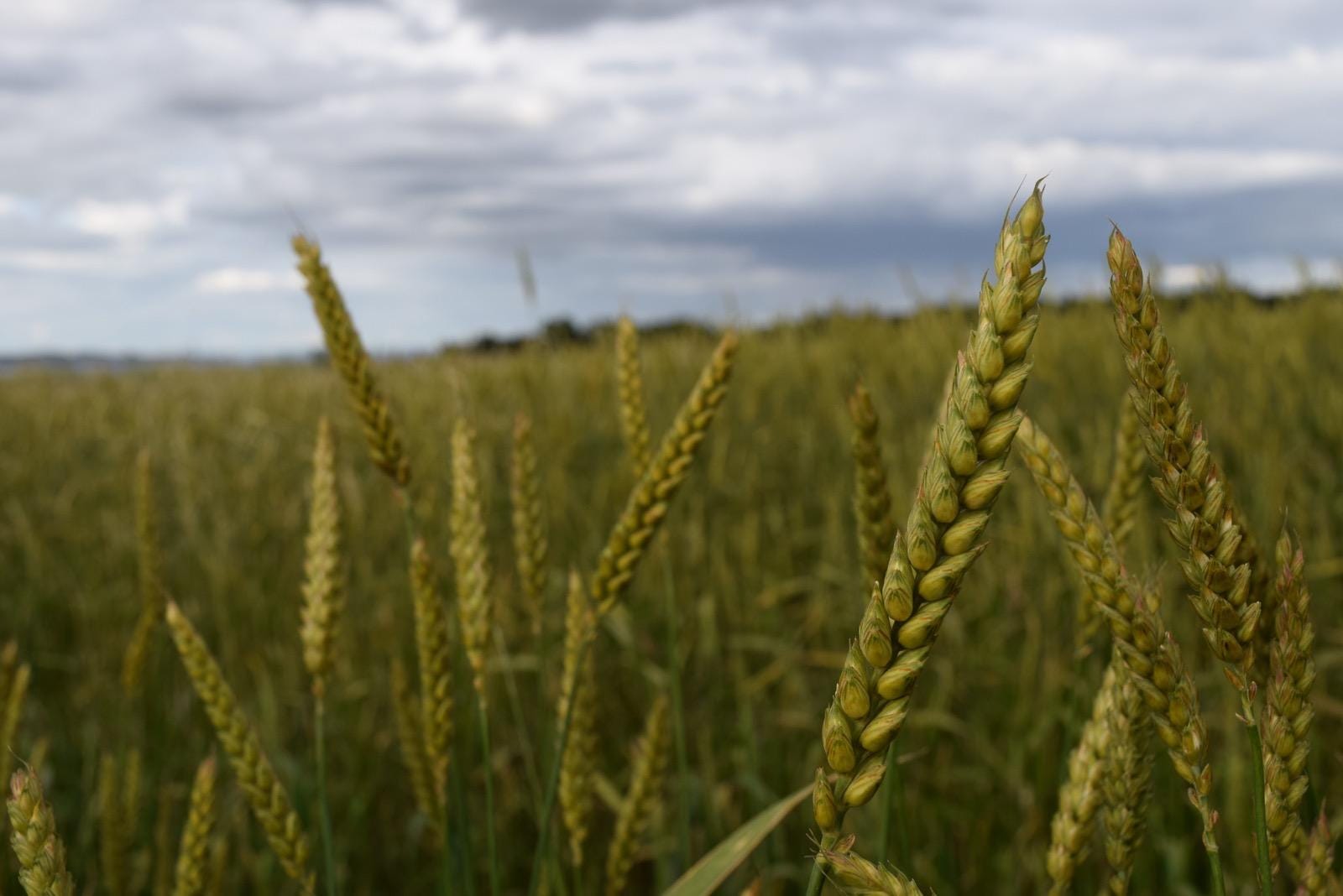
They are to all appearances unremarkable patches of ground on street corners across the north of Edinburgh.
But these spaces, scraps of land that you and I might walk past each day without noticing, are in fact part of a remarkable quest to revive one of our most ancient traditions - making bread out of grain grown on our doorstep, writes Emma Newlands.
Lauriston Farm is today (Saturday October 10) welcoming visitors to see the fruits of several years of work across the north of Edinburgh to revive an ancient Scottish grain locally.
The 100-acre farm, on the northern outskirts of the capital, is running guided tours to promote its efforts to bring the wheat variety known as Rouge D’Ecosse back into sustainable production.
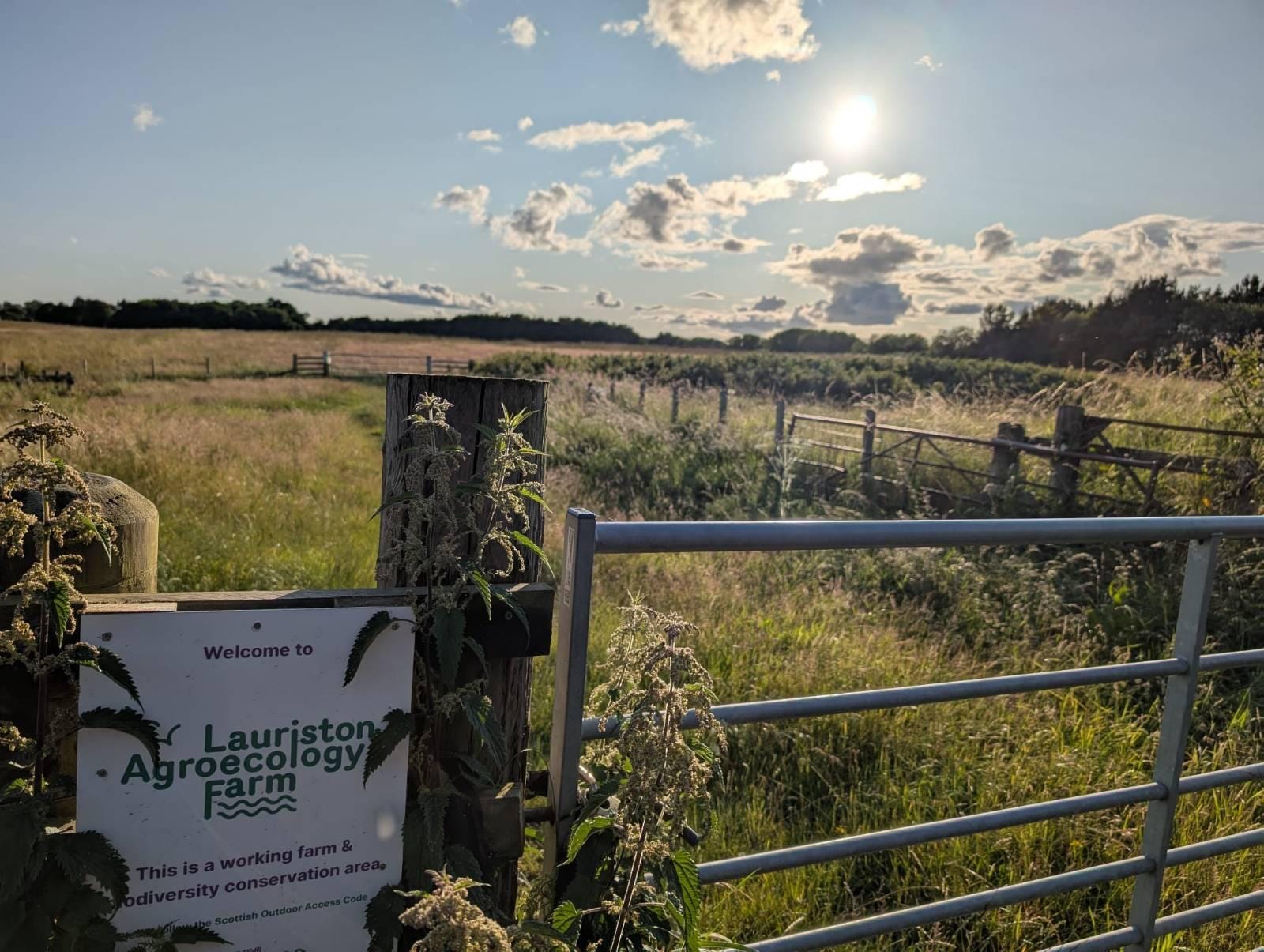
Visitors can buy some Rouge D’Ecosse flour, after the farm recently received its first batch, made from wheat grown onsite this year.
Kate MacDougall, from the Edinburgh Agroecology Co-op, which rents the farm from the city council, is delighted to see the project reaching such a key milestone. “It’s exciting. It’s quite emotional, bringing that flour in,” she tells The Edinburgh Inquirer. “It feels like we’re getting closer to something that has been the dream for a long time.”
The revival of Rouge D’Ecosse in Edinburgh is the result of years of painstaking work by many in the community to cultivate and then replant it in increasing quantities. Others have been bringing it back to life across Scotland, at Mungoswells in East Lothian, for example, and the UK.
Records show it was grown in East Lothian in the 1800s, and later across Scotland - but it then disappeared as more industrial wheat production took over.
The Scottish Government in its Good Food Nation Plan published in December 2025 stated that “much of Scotland’s wheat is unsuitable for breadmaking due to climatic constraints and is therefore used primarily as animal feed, while higher-quality bread wheat is imported”.
However, in a typical year only around 15 per cent of the wheat used by UK flour millers is imported, according to UK Flour Millers.
Rouge D’Ecosse is believed to have been granted its moniker by renowned Paris grain merchant Henry de Vilmorin, who catalogued it alongside other key wheats in a landmark 1880 publication.
It is recognised in the Slow Food Foundation for Biodiversity’s Ark of Taste, which collates small-scale quality food products at risk of disappearing.
And Rouge D’Ecosse is also classed as a Heritage Landrace Grain, a category developed to grow without chemicals. Its other key characteristics include being resistant to being dislodged by poor weather, and able to tolerate great cold - both handy when trying to thrive in Granton’s damp and chilly climes.
A pivotal moment in bringing it back to the soils and kitchen tables of Edinburgh was the formation in 2012 of Scotland The Bread, an organisation aiming to “grow better grain and bake better bread with the common purposes of nourishment, sustainability and food sovereignty”.
The goals of the organisation, now known as Bread for Good Community Benefit Society, also included tracking down and bringing back Rouge D’Ecosse. It worked with Brockwell Bake Association which searched seed banks around the world. Plant science specialist the John Innes Centre then germinated the handful of located seeds.
Troops assembled in Edinburgh in the form of small-scale farmers and community growers, with Granton Community Gardeners getting the Rouge D’Ecosse from Scotland the Bread in 2015 and sowing the seeds on street corners. Participants saved and re-planted more seeds every year.
“It became quite normal to walk around Granton housing estates, and there was wheat growing [there],” says MacDougall.

Lauriston Farm then took the baton. It took several years to produce enough Rouge D’Ecosse to send off for milling. “In 2026, the team hit the magic number of three acres - enough to start selling the flour to local people, and supplying Granton Garden Bakery.”
MacDougall notes that it is not all that long since a native grain would have been farmed, milled, and baked locally - and it is only thanks to the “huge” collective effort of a “very dynamic” local community that Rouge D’Ecosse has been brought back to life.
The project dovetails with an increased focus by consumers on locally produced artisanal products that have a clear, ethical, and sustainable provenance - and are healthier than mass-produced equivalents.
The Scottish Government has also been seeking to increase both organic farmland, and the proportion of locally produced food consumed by the public sector.
At the same time, the Covid pandemic and conflict in Ukraine and the Middle East have made consumers far more aware of the potential precariousness of the international food supply chain.
MacDougall says the mission to revive Rouge D’Ecosse has really struck a chord with those helping to cultivate it, with more and more saying “that feels important, that feels exciting, that feels like something I want to be part of”.
The initiative is part of Edinburgh Agroecology Co-op’s aim to tackle the growing challenges of climate change, biodiversity collapse, and lack of access to healthy, fresh and affordable food.


Lauriston’s first batch of flour was milled at Lapwing Mill in Aberdeen, but Granton Garden Bakery is working on setting up its own mill to grow and mill the wheat locally - a move that will be enabled by a move to The Pitt, which will give it the required space, says MacDougall.
“Small mills are beginning to come back now, and that changes what’s possible for small-scale growing,” says MacDougall.
Edinburgh’s bid to give an ancient grain a new lease of life is part of this broader trend, and Lauriston Farm says the network of heritage grain growers and bakers is growing, with “exciting” initiatives across the UK.
They include the Real Bread Campaign, which launched in 2008. Its aims include all bread being free of pesticides and other agrochemicals “because all grain, particularly wheat, will be grown by biodynamic, certified organic or other low-to-no-input farming”.
Also on the list is micronutritional values and flavour of grain being valued as much as yield and protein levels.
Analysis by what was then Scotland the Bread found that Rouge D’Ecosse is higher in minerals such as calcium, manganese, and iron than typical modern grain varieties.
A key mission of Lauriston Farm is to get nutrient-rich food on the plates of local communities, many of whom face poverty - which hampers their access to healthy food. Local charity Edinburgh Food Project said in its 2025/26 annual report that it provided 17,870 food parcels during the year.
Bread is the ages-old bedrock of meals and communities the world over, and MacDougall says this taps into something fundamental. “People get excited about the grains. It does move people, it’s a beloved staple.” The key part it plays in our diet was highlighted when First Minister John Swinney recently announced controversial plans for it to be among a list of key grocery items subject to a price cap.
Laurison Farm is looking to scale its production of vegetables, and bring in pulses, as well as possibly other grains such as oats.
“We’re looking at being very mixed in terms of what we produce,” says MacDougall.
Saturday’s tour will touch on this broader aim, as well as on the site’s community allotments, wildlife habitat areas, and land partners such as Rhyze Mushrooms Co-op.
Want to read more about Rhyze Mushrooms’ inspiring work. Check out Cat Thomson’s long read: Trailblazers changing the city’s daily coffee grind for the better
MacDougall adds that the Rouge D’Ecosse project is crucial, and shows that producing food locally stymies the climate, nature, and health crisis issues that all “collide” in the current global food system where quantity is prized over quality.
“The opportunity is within the problem… the food system is the place where you can make an enormous difference. You relate to the food in a different way, because it really is from here, and it really does belong to the community,” says MacDougall.
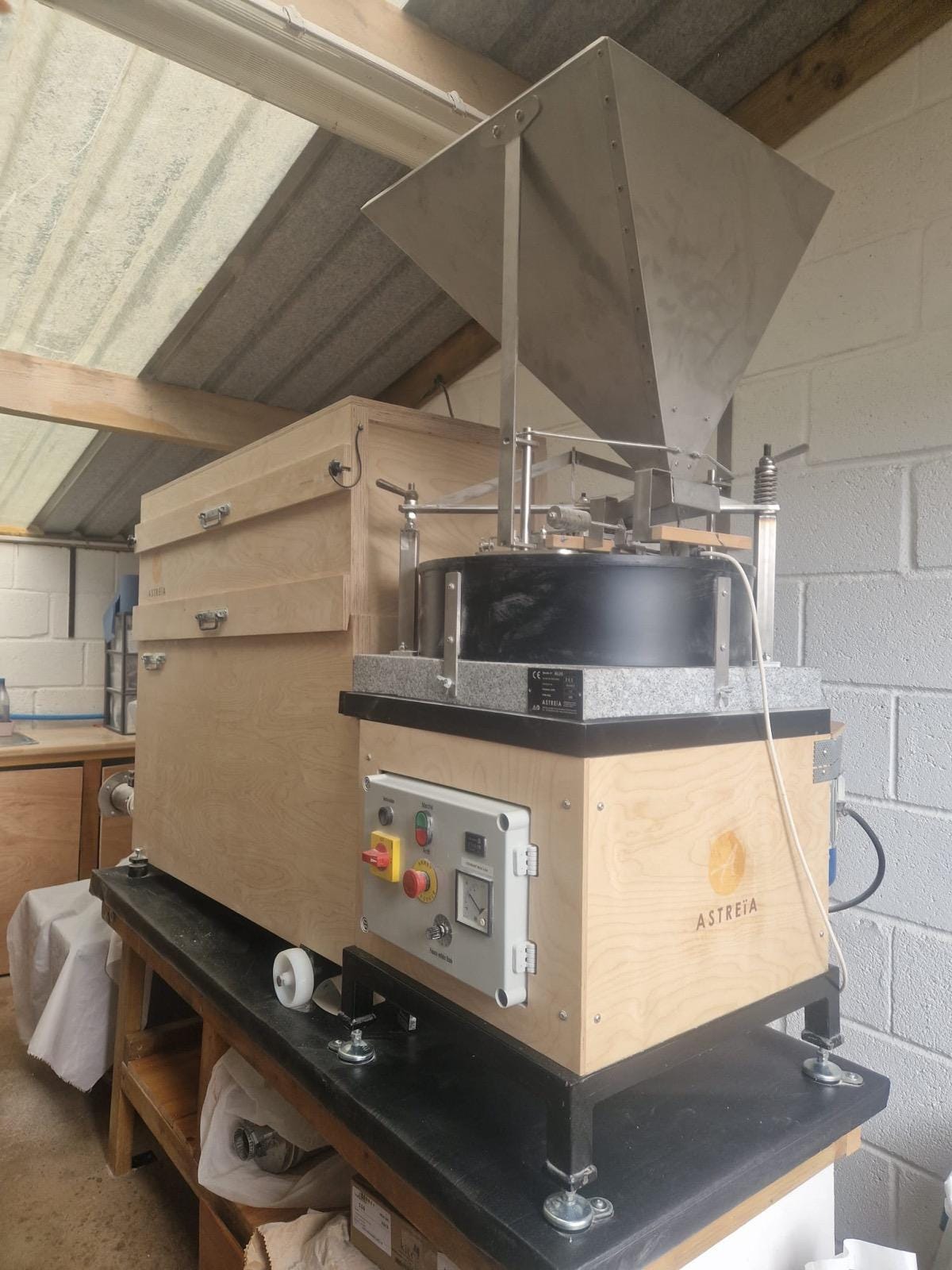
That said, reviving Rouge D’Ecosse has been far from straightforward, she adds. The many hurdles have included finding machinery suitable for smaller-scale production, and getting in line with associated rules and regulations.
Funding is also a key consideration, with the farm toiling to ensure it can balance the books while achieving a key objective of making its produce affordable. “We need to find more sponsorship or grant funding to keep it going at the moment,” adds MacDougall.
However, the importance of the farm’s pivotal work to again see Rouge D’Ecosse rising above the ground and milled into bags of flour is garnering prestigious praise.
The Soil Association Scotland’s farming lead Colleen McCulloch tells The Edinburgh Inquirer: “This batch of flour represents a significant milestone in developing diverse and resilient localised supply chains, which produce nutritionally dense food from crops adapted to the landscape, and rooted in the communities they feed.
“Projects like this and the Innovative Farmers Flax Field Lab which took place on Lauriston Farm [to help re-establish a regenerative textile supply chain in the UK] can help rebuild the connection between what we grow, how it is grown and processed and supporting healthy soils and biodiversity.”