


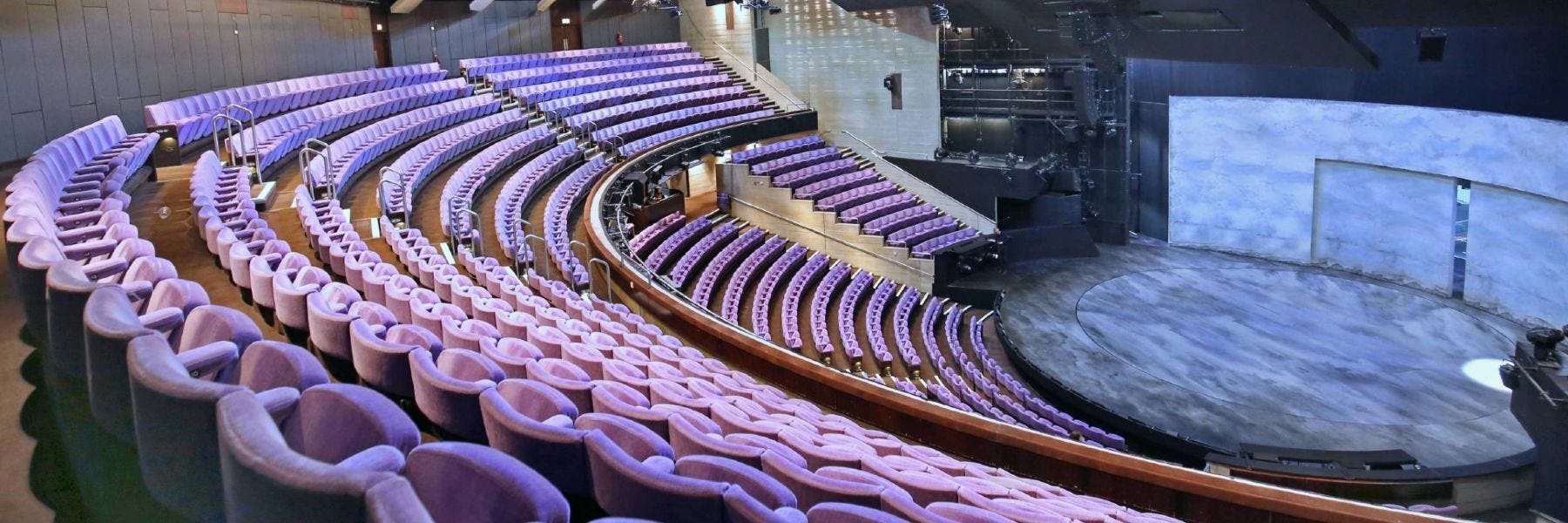
It was a performance of Shakespeare’s masterpiece “Hamlet” that would go down in the annals of theatrical history. Hamlet, wounded by Laertes’ poisoned blade, knows death is coming and utters his final words, “the rest is silence.”
And silence did indeed follow in the hallowed Olivier Auditorium, albeit briefly. And then, as the play ended just moments later, the applause began. Wave upon wave as a captivated audience recognised the artistic power that had transfixed them for about four hours.
It was 13 November, 1989, and the acclaimed Edinburgh-born actor Ian Charleson had given the stage performance of his all-too-brief life, cut short by AIDs as late-stage HIV was then known. His Hamlet, inside the biggest theatre within the brutalist National Theatre complex on London’s South Bank, is widely regarded as the greatest ever. Those who were part of the full house which bore witness recalled the biggest standing ovation they had ever seen for a classical performance.
What the audience did not know at that time was that the play happened in the most extraordinary circumstances, a story so compelling that it is now to be made into a movie.
The perfect Hamlet
Andrew Scott is to portray Ian Charleson in a new film about the life of the celebrated Edinburgh actor. Elsinore will focus on his preparations and performance of Hamlet and he will be joined by Olivia Colman in the Canal+ production, described as a “deeply moving and inspiring true story”.
On the day after that performance, Ian McKellen received the Evening Times award for Best Actor for his role as Iago in Othello. That great Shakespearean actor, however, said he had been among an audience that witnessed the “perfect Hamlet” the previous evening, and the award should go instead to Ian Charleson to whom he presented his statuette.
John Peter, the eminent Sunday Times theatre critic, effusively praised the “masterful new Hamlet” saying: “The way Charleson can transform a production is a reminder that actors are alive and well, that directors can only draw a performance from those who have one in them and that in the last analysis the voice of drama speaks to us through actors.”
And yet it was only the fact that another great young actor, Daniel Day Lewis, had abruptly left the production after essentially breaking down on stage that had allowed Charleson to take on the role.
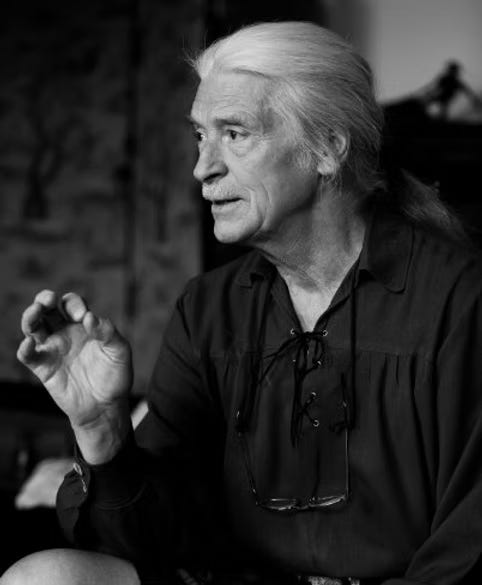
The quality of his performances on stage and screen did not surprise one of his old mentors in Edinburgh. David Campbell, now 90 years old and a renowned professional Storyteller, was an English master at the Royal High School, to which Charleson had won a scholarship. He also ran drama at the High School and had seen Charleson excel in a school production of “Beckett.”
He told the Inquirer: “I remember Ian Charleson very well. Those times were a bit of a golden age for drama at the Royal High, and we had several boys who went on to have good careers in acting, but he did stand out. He had a great talent, and great passion for drama.”
After leaving school, Charleson went to Edinburgh University, where he initially studied architecture, but he was active within the university’s drama activities and indeed changed study to reflect that. He was also to perform many times at the Edinburgh Festival and at the Fringe.
However, in November 1989 only his closest friends, including Hamlet Director Richard Eyre, had known that Charleson was so gravely ill. He had been diagnosed with HIV in 1986, and it had progressed to its final stages. His face was swollen, his eyes affected. Those not in the know were told he was recovering from a sinus operation.
Reports say that Charleson knew that the performance had been something special, and enjoyed the acclaim that followed, but he was also exhausted beyond continuing.
So much so that he was never to be seen on stage again. He died eight weeks later, of complications from AIDs. He left instructions that his cause of death should be made public to raise awareness of AIDS, and was the first major UK celebrity to openly do so. His brave decision, at a time when there was great public fear of HIV and hostility towards those who contracted the virus, has been seen as an important step towards greater understanding and acceptance. Indeed the Ian Charleson day centre for people with HIV at the Royal Free Hospital in London is named in his honour.
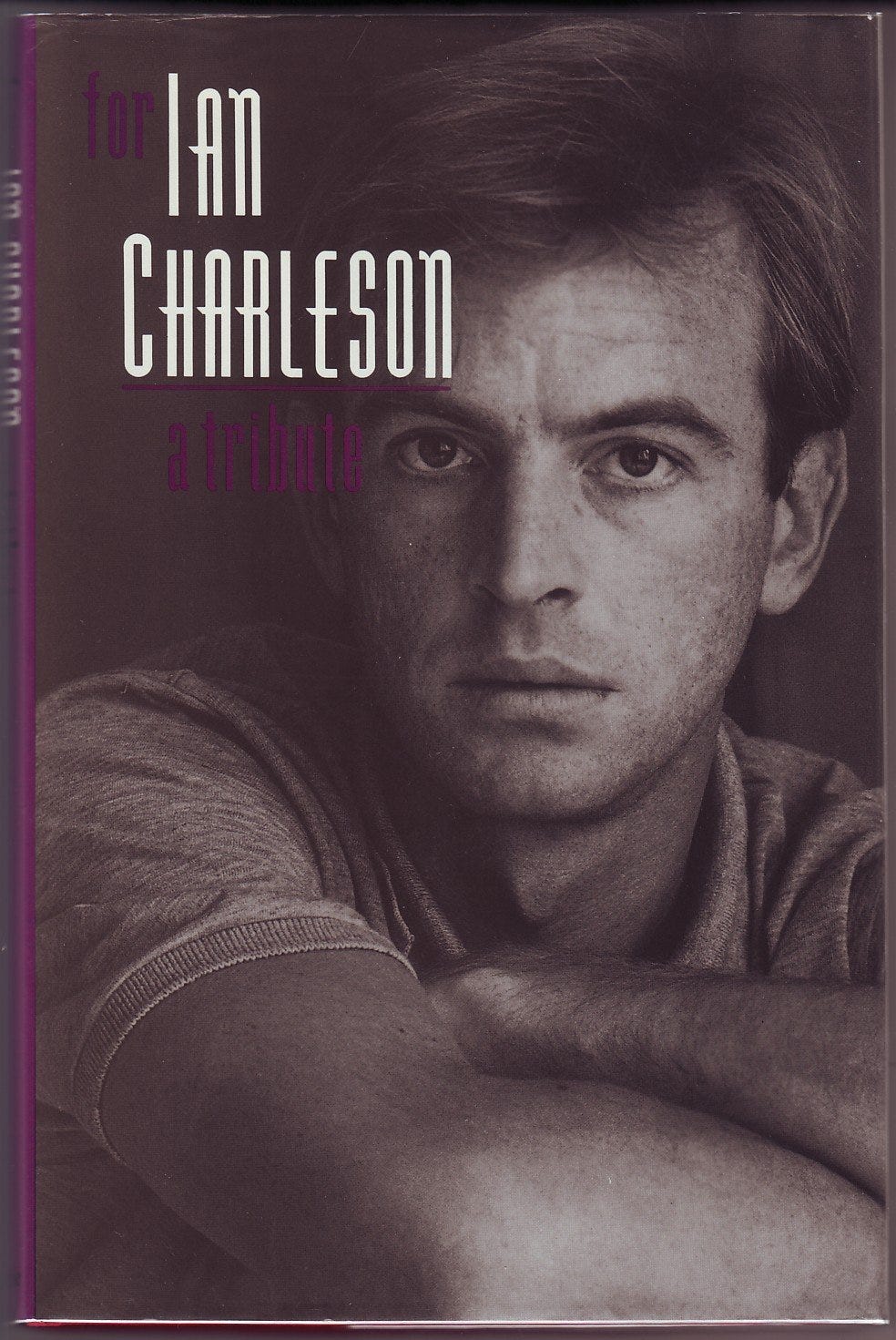
And in 1991, several friends including Sir Ian McKellen, Sir Richard Eyre, Alan Bates, David Puttnam, and Ruby Wax all contributed their memories of Ian to the book “For Ian Charleson: A Tribute” to raise funds for the Ian Charleson Trust, a charitable foundation which ran until 2007, finally winding up in 2012. In the book, Ian McKellen described the performance: “Most Hamlets rush at the journey and the part itself. We display the angst, the bewilderment and the pain so forcefully, that we miss the character’s everyday humanity. The revelation of the Charleson Hamlet was to show what he would have been like had he never met the ghost.”
So damn good…
His brother Kenneth - who sadly passed away late last year - also provided a contribution. In it, he remembered having dinner with Ian and discussing his plans to take on the role of Hamlet despite his illness.
“He chose to take on Hamlet when he knew his predicament was worsening. The sheer fire of his ambition and his belief in salvation through the part persuaded the director, Richard Eyre, against taking what might have been considered a common sense decision not to allow him to continue…”
Kenneth continued: “He still believed that his facial disfigurement might improve, but even if it didn’t, so what? It would do, because the rest would be so compelling, so captivating, so energising, so damn good that he could walk out on stage with bandages around his face for all the difference it would make.
“We believed that, he and I, in that restaurant that night and he believed it when he walked out on stage on the first and every night he performed Hamlet. And it was true, because he believed so much in what he was doing and why he was doing it…
“In his hour of greatest crisis, Ian gave everything he had to fight his illness and yet gave still more to achieve the greatest ever Hamlet.”
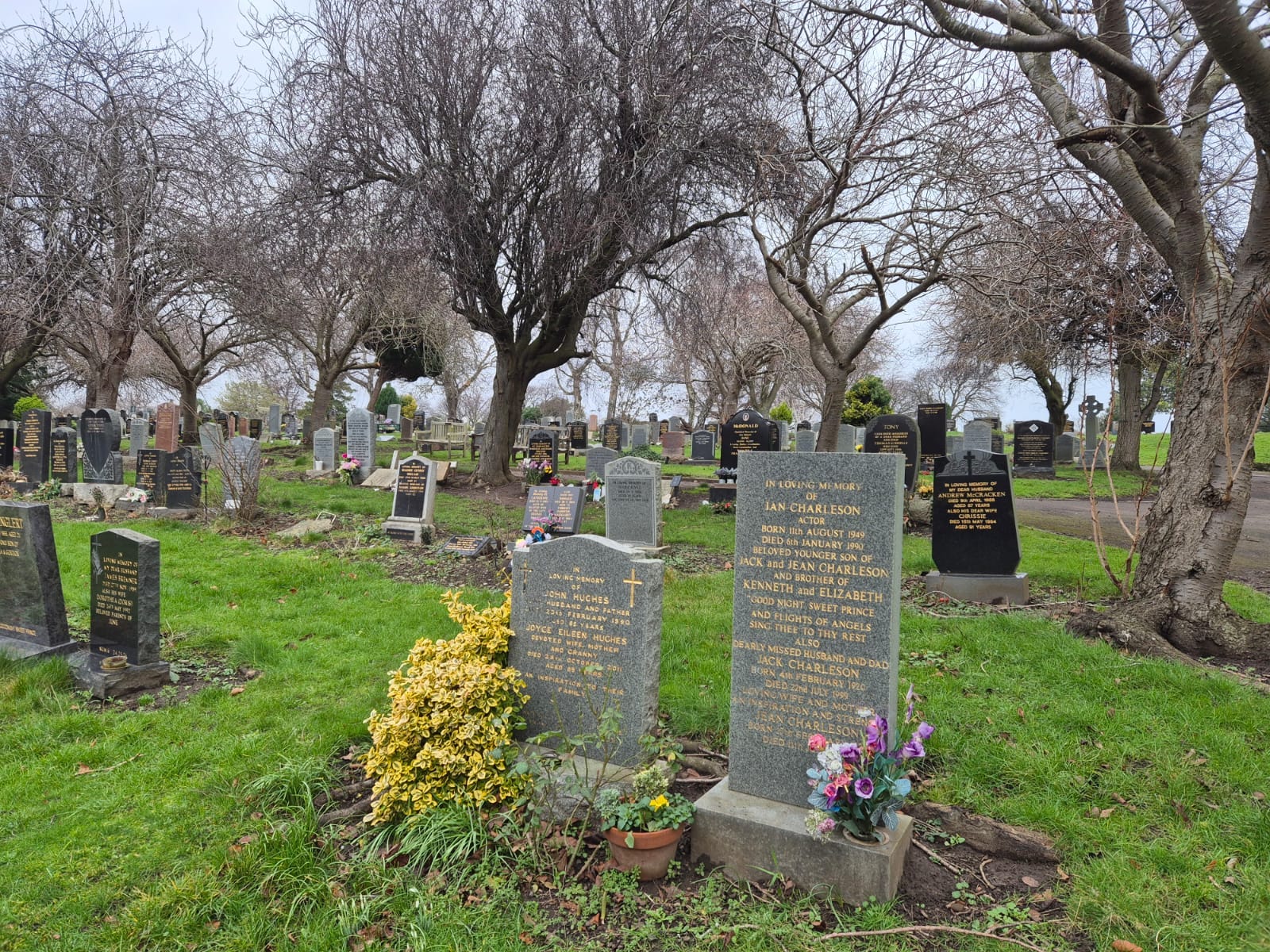
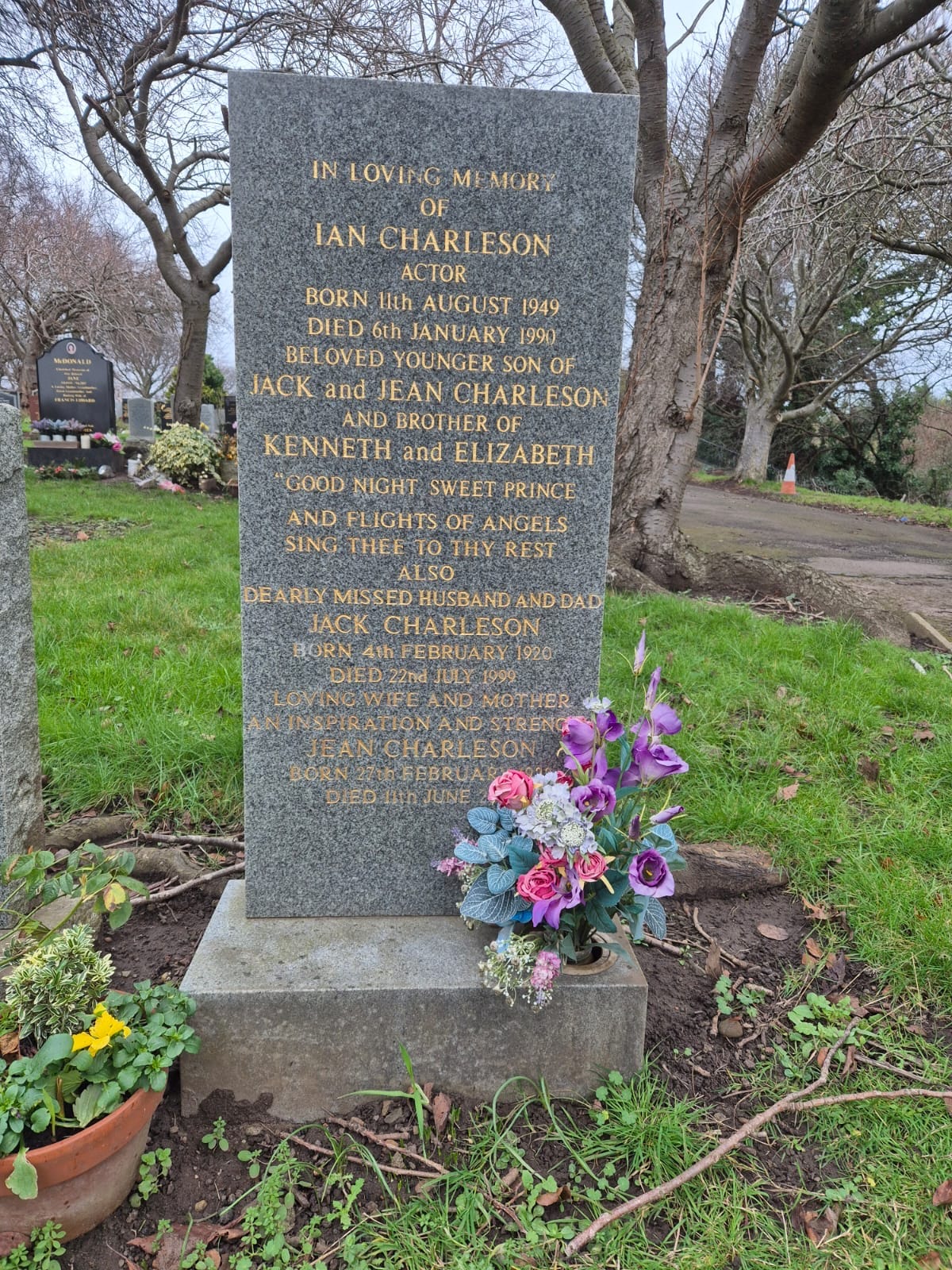
Ian Charleson died on 6 January, 1990. He was returned to Edinburgh, and buried in Portobello Cemetery on Milton Road. He was 40 years old.
His well-tended grave is inscribed with Horatio’s famous words of farewell to his dear friend Hamlet:
Good night sweet prince
And flights of angels sing thee to thy rest.
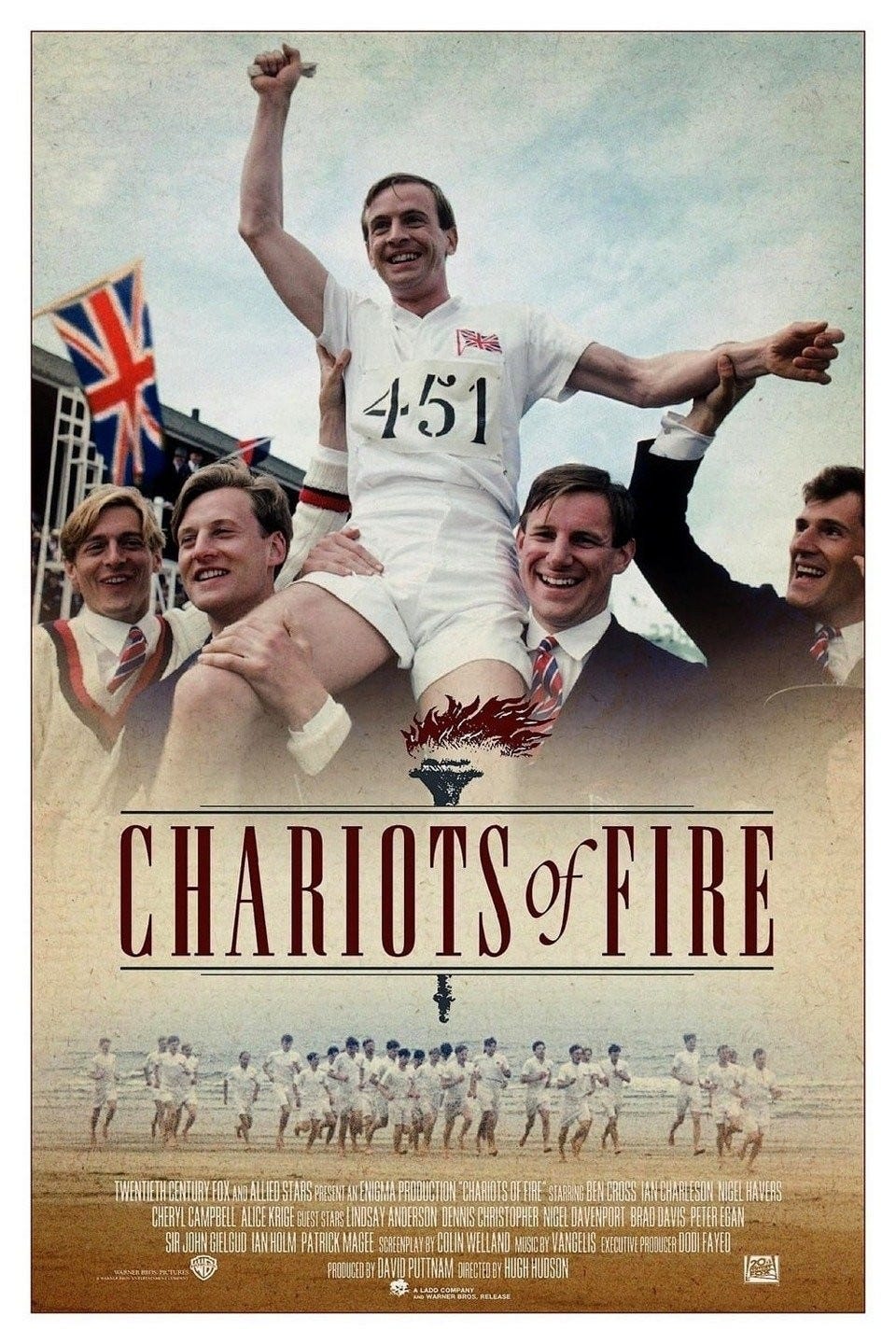
Charleson, of course, was known internationally for his fine film performance as the Scottish Olympic runner Eric Liddell in the Oscar-winning hit Chariots of Fire, and as a young Anglican priest who befriended Ghandi in Richard Attenborough’s film about the life of the Indian independence campaigner Mohatma Ghandi, which also won an Oscar for Best Picture.
But his great love was always the theatre, where he received many accolades and awards, and which that love had its roots deep in his native city of Edinburgh.
After his death the critic John Peter, so moved by his Hamlet performance, was the instigator in establishing the Ian Charleson Award, still presented to this day to the best actor under 30 in a classical play. Luminaries such as Tom Hollander, Dominic West, Emma Fielding, Rupert Penry Jones, Rebecca Hall, David Oyelowo have all been recipients, and in 2013/14 Edinburgh’s Jack Lowden won for his role as Oswald in Sir Richard Eyre’s production of Ibsen’s “Ghosts.”
Lowden’s win was full of poignant symmetry. Eyre was a close friend of Charleson and as well as being his director in “Hamlet” had regularly worked with him, notably in the award-winning musical “Guys and Dolls.” For his part, the young Jack Lowden had played the part of Eric Liddell in 2012, in the stage adaption of the film “Chariots of Fire.”