

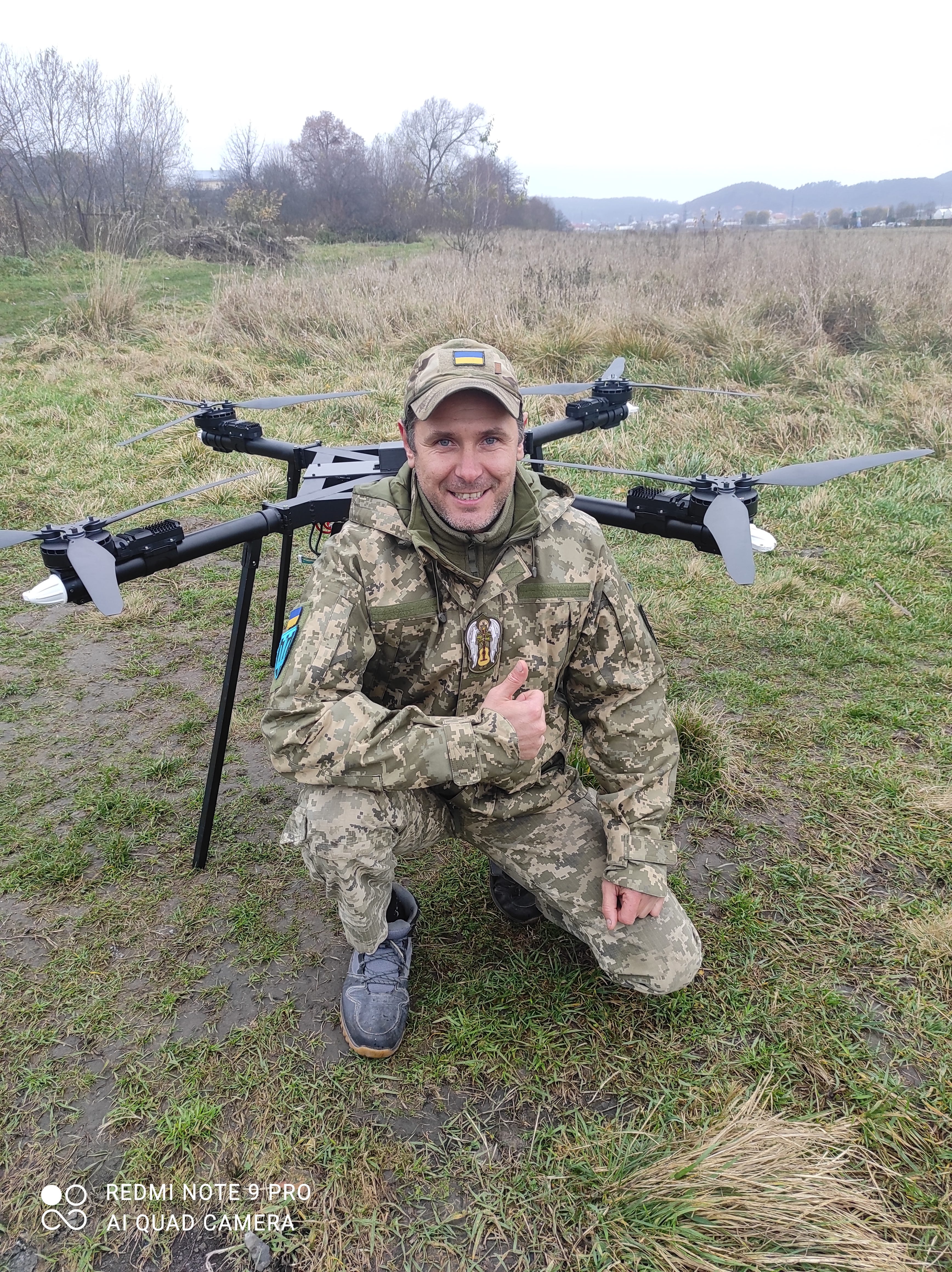
Commander Andrii Vecherynskyi arrives at The Wash Bar straight off the train from Falkirk, wearing khaki military fatigues and white Nike trainers.
A Ukrainian flag and drone unit patches decorate his arms, while a “Baby Yoda” motif sits proudly on his chest - a nod to his Star Wars-inspired call sign, “Jedi”. “I consider myself a warrior of light fighting against the darkness,” he explains.
Just a few days after Russia launched one of its largest air assaults on Ukraine since Putin’s full-scale invasion began over four years ago, Andrii’s latest mission in Scotland is clear:
“I’m coming here to show real images of the war and tell the true situation,” he says, because news coverage - and Russian disinformation - don’t always show the full picture.
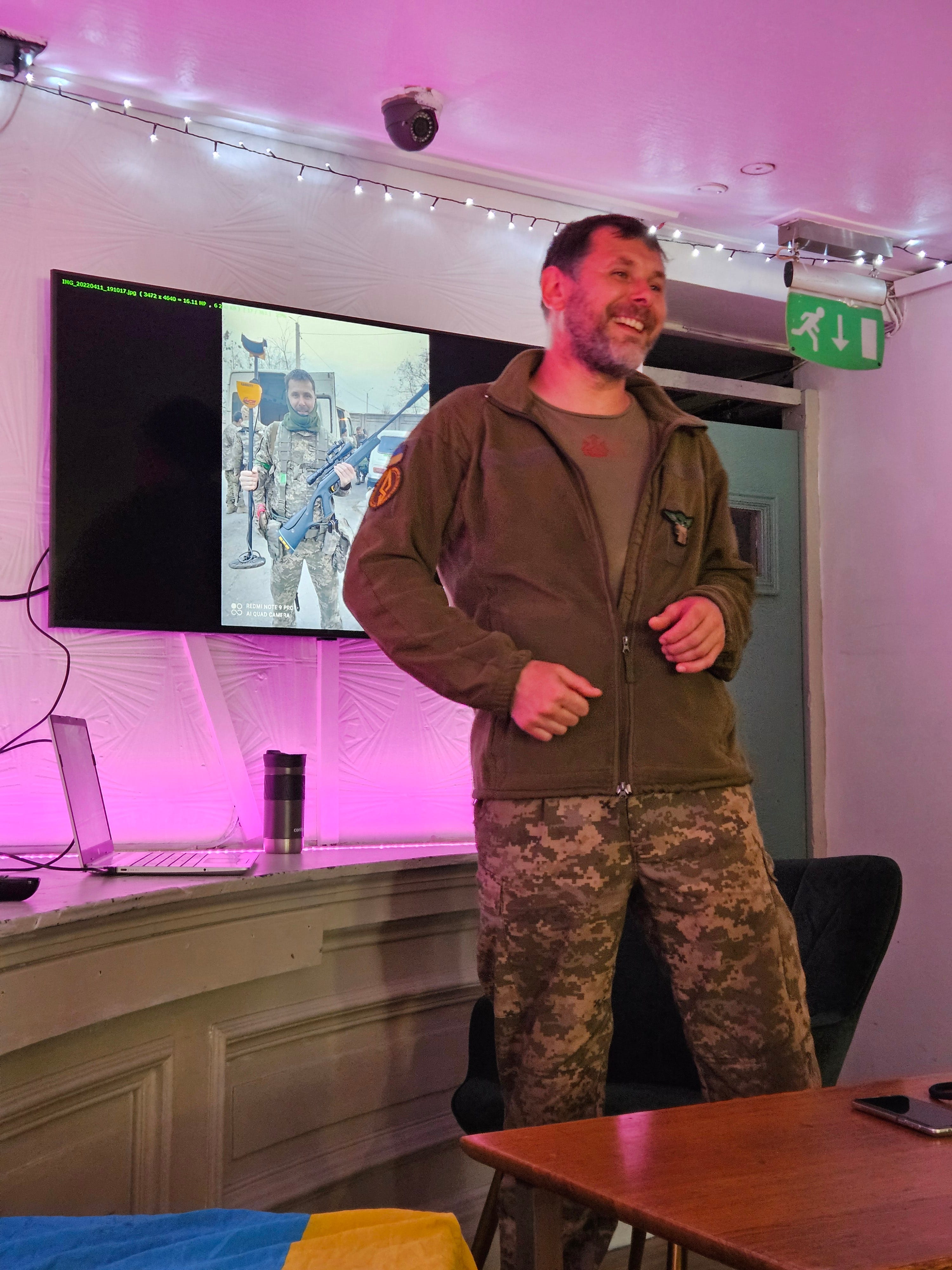
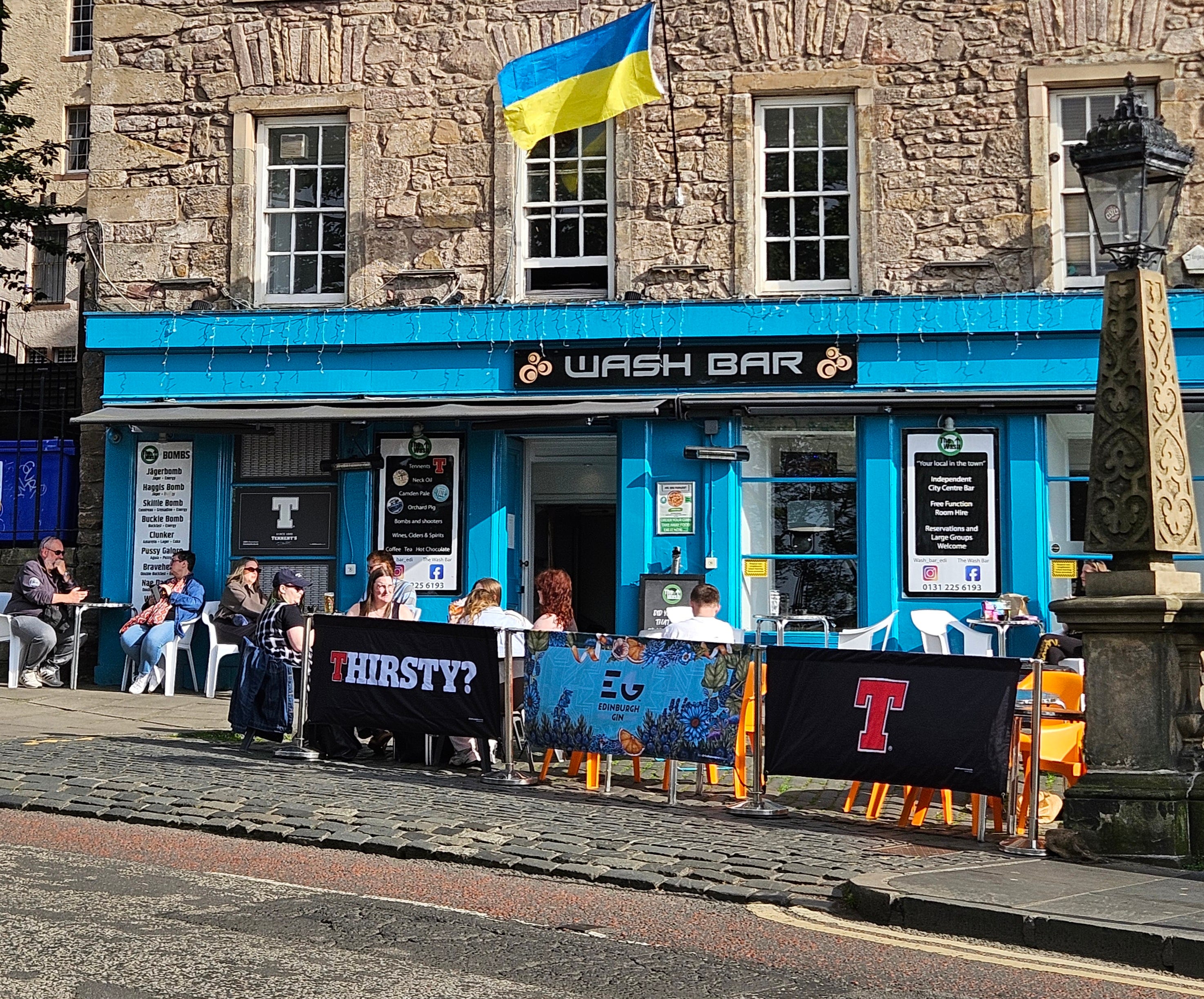
In the upstairs bar, Andrii shows unfiltered videos and photos from the front lines to around 20 people and wide-eyed passerby patrons en-route to the toilets, writes Natalie Berry. The event is hosted by the local Ukrainian Victory Campaign, an Edinburgh-based volunteer organisation of local Ukrainians and Scottish supporters who hold fundraising events and weekly demonstrations in solidarity with soldiers and civilians.
He repeats similar comments - “Very good guy, he is now dead” or “half of them are not alive anymore” - about his comrades.
He takes cover in a trench between positions as Russians close in, with a tank firing and shrapnel flying inches above his head. He had left his helmet in a vehicle. “It’s a miracle we didn’t die that day,” he says. A bullet lodges in his car door; another “miracle.” Russian soldiers’ bodies - and body parts - lie on the ground. “This is my work, Ukrainian Army,” he says.
‘The best shooter’
Andrii never wanted to have to do such work. Before Vladimir Putin launched his full-scale invasion on 24 February, 2022, Andrii was a mechanic with a car restoration business, importing vehicles from the US and refurbishing them in Kharkiv in northeastern Ukraine, 30km south of the border with Russia.
He was also a sportsman, ”the best shooter” in a basketball team. When Russian soldiers crossed the border and surrounded the city Andrii downed tools and took up arms to fight.
“As a patriot, as a Ukrainian, for me it was a duty,” Andrii, 46, says. “I didn’t even think twice. All I thought was where is my weapon, and I will go, because I need to defend the people that cannot defend themselves - children, women, older people, or those who are scared. I am able to go and defend, so I will.” Later, his wife and five-year-old daughter fled Ukraine to Falkirk.
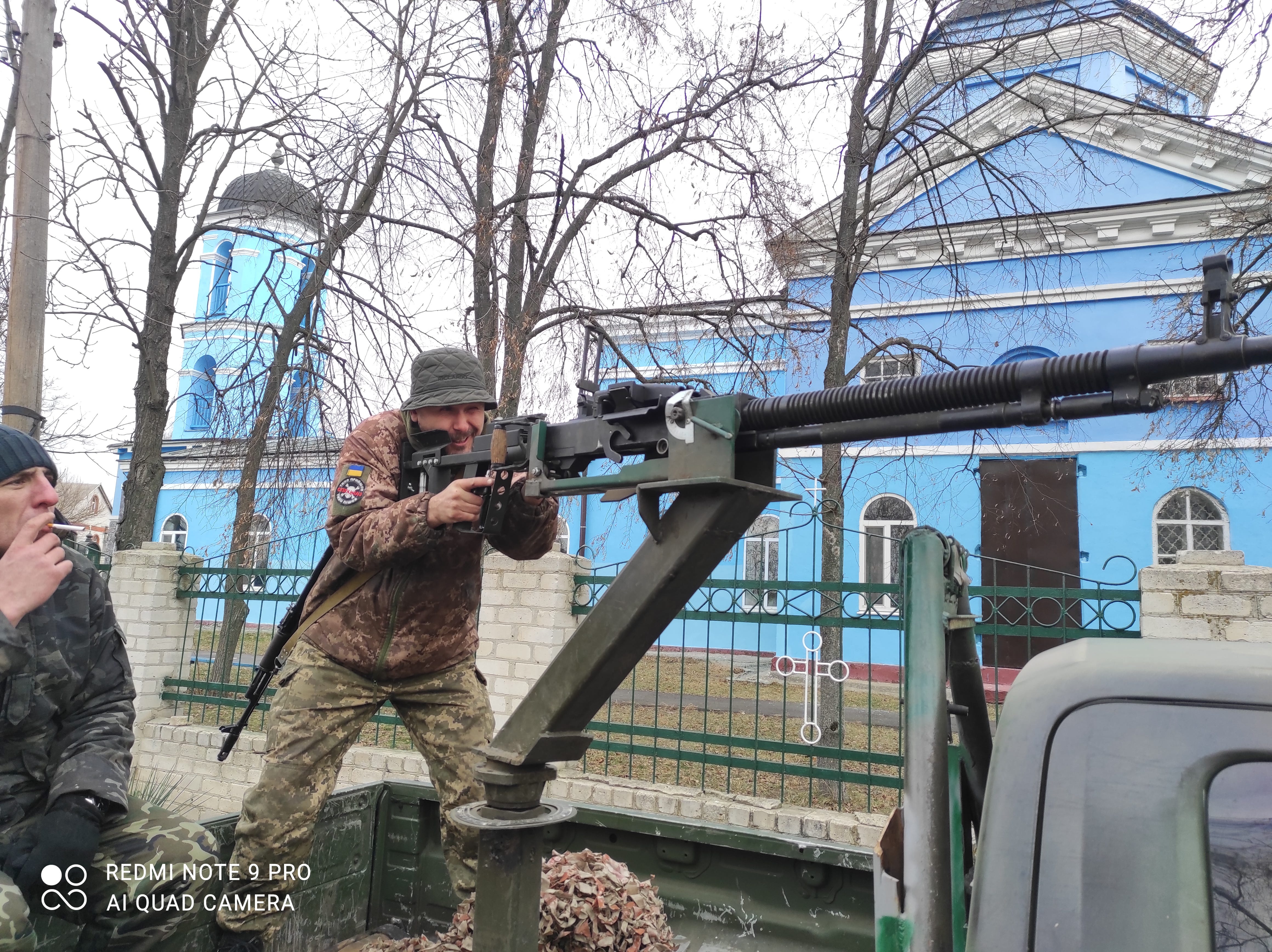
His first combat came just two days into the war, serving with the 226th Battalion of the 127th Territorial Defence Brigade, defending the Kharkiv region. “It was the first time I killed a person,” he says. “Has anyone here ever killed someone?” The audience looks around nervously. No hands raise. “I’m normally a very kind person,” he says. To distract from his fear, he filmed videos of himself and insects in trenches.
After serving for over a year in some of the bloodiest battles of the war, including the defense of Bakhmut, Andrii became a UAV (Unmanned Aerial Vehicle) pilot, flying strike drones, conducting reconnaissance missions and artillery fire correction. He now serves as commander in a UAV maintenance platoon.
Andrii shifted to drone operations “because of the reality of the front line” as drones changed the nature of the war, forcing units to become faster, lighter and more effective - both militarily and economically. A small ammunition dropped from a drone can destroy a $5 million tank. A 20km-wide “kill zone” contested by explosive drones and motion-activated loitering munitions has become the first line of defence and destruction. “Now it’s a war of drones and robots,” he says.
He highlights the ingenuity demonstrated by Ukraine to become a world leader in FPVs (First-Person View), interceptor and ground drone development, production and implementation.
A war waged through crowdfunding
Since the Ukrainian government has a limited budget after four years of war, most units rely on personal donations or crowdfunding campaigns. “War is not only about weapons, it’s also about patriotism, it’s about ideology, and about skills and inventions,” Andrii says. “This is the only way forward.”
The kill ratio on his unit’s current front line is 1:100, or one hundred Russian deaths for every Ukrainian loss. In more heavily contested areas such as Pokrovsk, Russian and Ukrainian losses are closer. There used to be 87 men in his department - now only 15 are alive.
Andrii has had some close calls himself. He says he’s “like a cat, with nine lives” - and a lucky one at that. “Several times, I’ve said goodbye to life,” he says, recalling last-second attempts to dodge FPVs. One hit his position, but failed to explode. Then his unit was hit by an explosive Shahed drone, giving him four wounds including one to his eye. He’s suffered four concussions. Years of living in tanks and underground dugouts have significantly impacted his health, causing back problems and memory loss. Although he is eligible for medical discharge, Andrii feels that his department could not function without him.
He urges Russians to think “not twice, but three times” before coming to Ukraine. In a video, he shows a Russian soldier’s temporary marked grave, including identity and contact details in case his family should come across it - and to serve as an additional warning to potential conscripts, the majority of whom come from remote regions such as Buryatia or Dagestan. One video shows a deceased Russian, wearing a t-shirt with the words: “We kill people that kill people because killing people is bad.”
‘I got nothing from the US’
In his early war videos, Andrii wears a US flag patch. His car business depended on the country. Today, however, he points at it with a face of disgust as his country’s future hangs in the balance. “Now, I don’t like the US, I don’t like Trump,” he says, reflecting the US President’s lack of military support and failed talks with Putin. In many videos, he shows off the “trophies” earned - five plundered Russian tanks, alongside various weapons and supplies. In one video, his skills as a car mechanic and engineer are adapted to a salvaged tank and he jokes: “I got a $4 million tank from Russia, but nothing from the US!”
While Scottish people are warm and supportive - shaking his hands, saying thank you and “Slava Ukraini!” (Glory to Ukraine!) - the UK and Scottish Governments are not helping enough, he believes. “We need more support, and if we don’t get it, this will affect the UK as well if Ukraine loses,” he says, “Ukraine is now like The Wall in Game of Thrones, standing between wild creatures and the rest of Europe,” he says. He holds talks in Scotland to raise awareness and money for his brigade, as Ukrainians have become less able to donate due the economic impact of the war.
Alongside fundraising, Andrii shares his experiences on social media to improve public and military morale. “I’m a hero for these people,” he says, but he also wants to build a profile to become a post-war politician, because if Ukraine wins, he believes that soldiers should change the country. He currently has 3,400 TikTok followers. “I will bite my way into politics,” he says. “I really like Scotland, but I love Ukraine as my country, so I want to eventually change the system. Someone has to do it.”
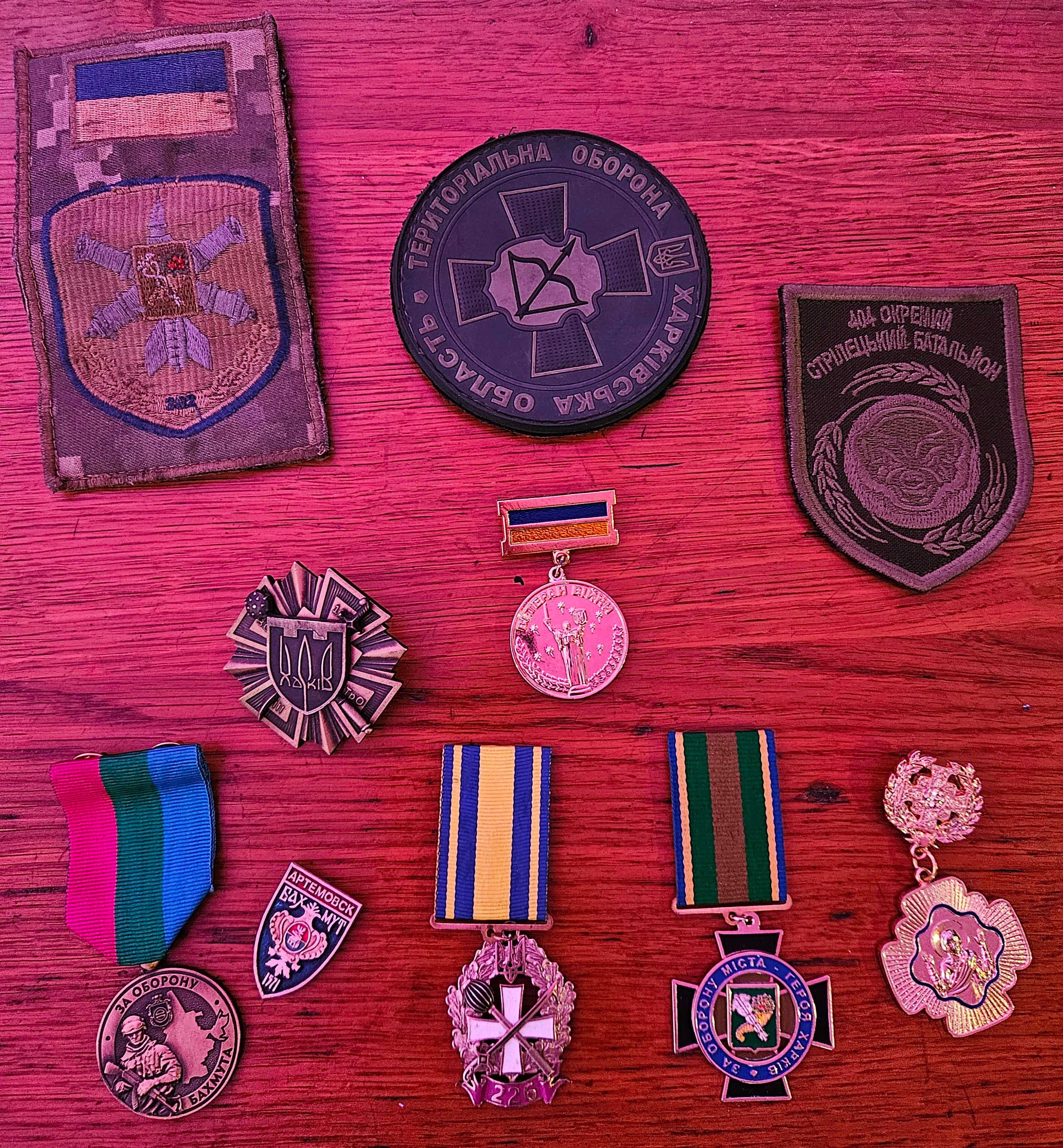
After the Q&A, Andrii shows a collection of medals earned for his defence of Bakhmut and Kharkiv. He has also brought three military patches, which are auctioned off at the end of the session to fund aid and supplies for his brothers in arms.
Given the subject of his talk, Andrii’s demeanour throughout is unexpectedly jovial and lighthearted. After outlining the practicalities and policies of war, the façade of the invincible hero melts away as he speaks candidly of the personal impact, while sipping a Guinness (a well-earned first-ever, bought for him by an attendee).
Before the war, Andrii was “a happy person”, with a family and business. He has since lost $160,000 in capital and has spent $40,000 of his own money on drones and other equipment. In four years, he has seen his wife and daughter in Scotland only twice, missing almost half of her childhood so far. “It’s like I have a family, but I don’t,” he says. “War took everything away, I have nothing left, really.”
‘I can’t leave my brothers in arms’
This isolation is part of the reason why soldiers form such strong bonds with their brothers in arms, because “we’re really alone,” he says.
He has nightmares reliving his traumatic experiences, he reveals. But after a month in Scotland, he’s sleeping more soundly. He likes the fresh air and friendly locals. After the full-scale invasion began, Andrii told his wife that she should go to England so that their daughter could learn English. “Now, she’s amazing at speaking English - even with a Scottish accent!” he says.
The event raises £502 to buy drone equipment and supplies for the 429th “Achilles” UAV Battalion. Every little bit of help for Ukraine can go a long way, he says: “The lives of soldiers and civilians are at stake - it’s a very critical situation. Ukraine is surviving as it can - and it will survive.” If Ukraine loses, Ukrainian soldiers will be conscripted into the Russian Army and sent to fight against Europe, Andrii believes: “Europe is not ready for that.”
As Russia stalls on the front lines and escalates air attacks on Ukrainian civilians, when and how the war will end remains uncertain.
Neither Ukraine’s military nor its civilians will bend to Russia’s will, Andrii believes. He hopes for victory and a return to independence with 1991 borders intact, and for the break-up of the Russian Federation into smaller states. He plans to return to Ukraine in July.
“I don’t want to go back to war, really,” he says. “I would like to be here with my family, but morally I can’t leave my brothers in arms. Hopefully, once my unit can operate effectively without me, then I will leave the army, and I would love to come to Scotland and be with my family.”
Behind the medals and near-misses is a vulnerable human being. “I still don’t know why I haven’t gone crazy in the head after living through all this,” he says. “What keeps me going is knowing that I have a daughter to come back to, and that she really needs a dad.”
Alina Livanova provided interpreting.
Andrii’s TikTok: @Andry_v24
Ukrainian Victory Campaign: Instagram