


‘It seems to us that no one is very sure what to do with St Andrew’s Day beyond re-enacting a shortbread tin scene with pre-recorded pipers and kilted dancers.’
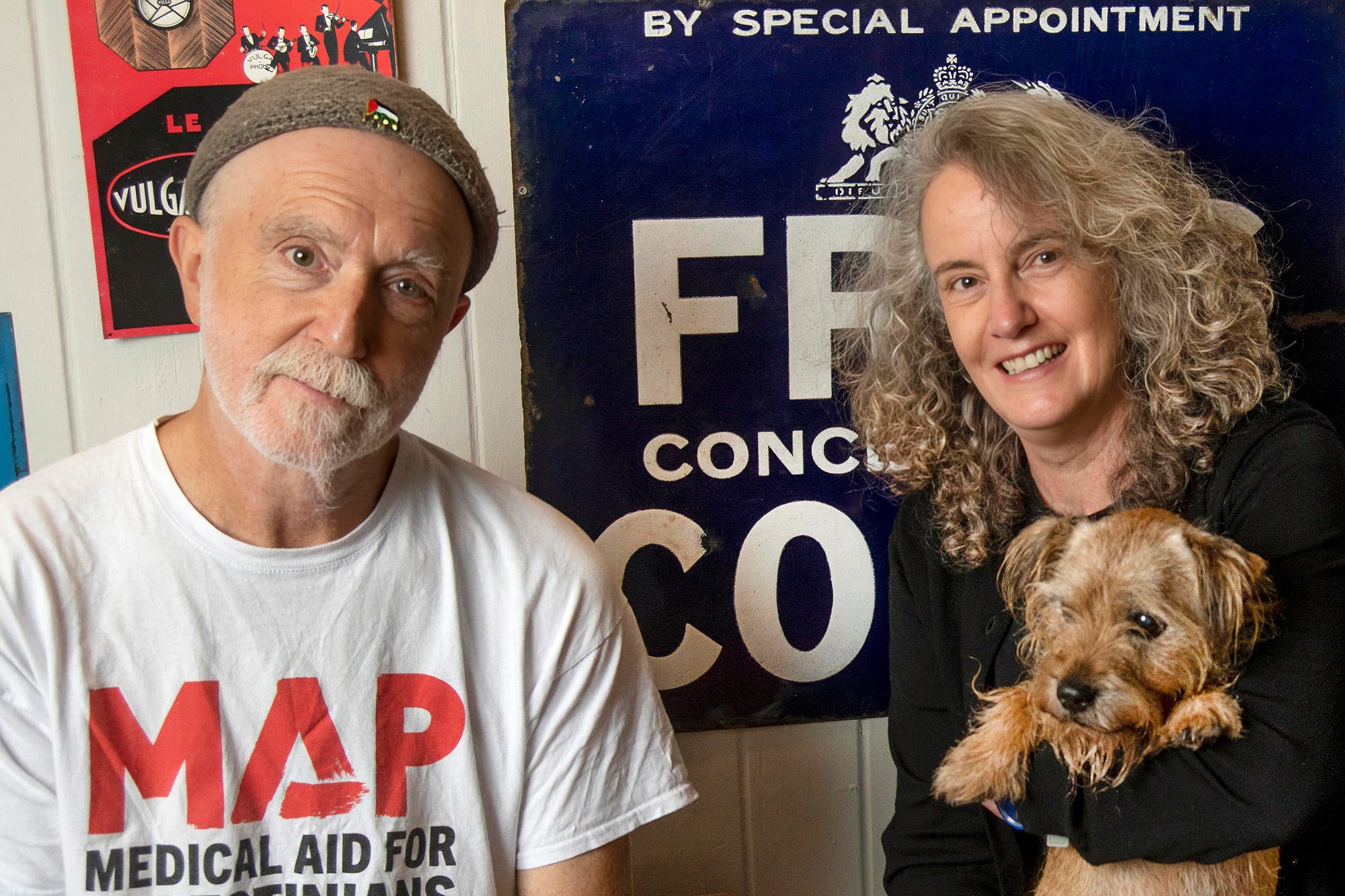
Jane-Ann Purdy and Douglas Robertson intend to offer something different. The co-founders of the Soundhouse Organisation return to Edinburgh’s Traverse Theatre from Thursday 26 to Monday 30 November 2026, launching the third iteration of the Soundhouse Winter Festival. The five-day programme aims to spotlight home-grown talent across jazz, trad, and indie genres, featuring acts from saxophonist Matt Carmichael to Irish singer Heidi Talbot, writes Will Quinn.
But this late-autumn fixture - alongside the organisation’s management of Edinburgh Tradfest - represents the culmination of an unconventional journey, to say the least. It is a trajectory rooted in art school rebellion, damp basement rehearsals, and an enduring battle to keep independent live music visible in a city increasingly dominated by commercial hospitality.
On a sunny Friday morning, I stop by the couple’s remarkable Royal Park Terrace maisonette. Despite a wedding to attend later that afternoon, they have ample time to entertain, offering up a tub of chocolate biscuits in the storied basement where their operation effectively began.
Robertson’s path to concert promotion began decades ago. ‘I studied at Edinburgh College of Art,’ says Robertson. ‘After two years, I took a “one-year out” that ended up lasting seven years, and then went back. The first time around, the people I hung out with were Eugene Reynolds, Fay Fife, and Jo Callis from The Rezillos. Jo went on to The Human League - ”Don’t You Want Me, baby,” and all that.’
Returning to his studies, Robertson found a new cohort. ‘When I returned to art school, the people there included James Mackintosh - the drummer from Shooglenifty - Quee MacArthur, and a bunch of others. One way or another, I tended to gravitate towards musicians rather than other visual artists.’
He established a photography studio in the property above our biscuits, complete with a vast, damp basement. ‘There were pools of water on the floor - really damp, horrible,’ says Robertson. ‘It was double the footprint you see now because it ran under the next two shops. We had two artists up there, a studio photographer who didn’t need natural light, a darkroom through the back, and this entire basement area was a free rehearsal space for bands.’
And bands certainly utilised it. ‘Shooglenifty effectively formed down here, as did Salsa Celtica,’ says Robertson.
‘I’d smell the dope coming up through the floorboards.’
Bohemia and the Schnauzer
By 2002, Robertson had saved enough to renovate the building, displacing the musicians in the process. He moved into the open-plan residential space upstairs. ‘I couldn’t justify people playing all day, every day to the neighbours anymore,’ he notes.
But the space begged for music. A serendipitous conversation with musician Dean Owens led to an escalating series of house concerts.
‘That led to the realisation that Edinburgh was suffering from venue closures,’ says Robertson. ‘This was the era when we lost places like Café Graffiti and The Venue on Calton Road. The list was as long as your arm. There was a desperate need for small, intimate venues.’
He’s not just saying that. The quality of artists queuing up to play in front of his living room curtains speaks for itself…
‘When you’ve got people like Martin Simpson, Martin Carthy, and Michelle Shocked wanting to play to 80 people in somebody’s living room, it suggests a serious flaw in the live music network of the city,’ says Robertson.
The gigs multiplied rapidly, eventually peaking at a punishing sixteen concerts a month. They had, in essence, become victims of their own success; a reality Purdy acknowledges with a wry nod when I suggest they ended up living inside a venue, rather than a home.
‘There were rows of chairs permanently set up in our living room,’ says Purdy. ‘There was no point in putting them away and bringing them out again!’
Purdy’s entry into the partnership - and the music business - came from a vastly different professional background, providing the administrative rigour required to tame the chaos. After working in television production for Muriel Gray in Edinburgh and on Eurotrash in London, she transitioned into journalism and website editing.
The two eventually met in a local park. ‘I had a flat around the corner,’ says Purdy. ‘While out walking my dog in the park, someone mentioned that Douglas was a photographer. I asked, “Who’s Douglas?” They replied, “You know Malcolm.” Of course I knew Malcolm - he was Douglas’s Schnauzer! It’s surprisingly common to know the dog long before you know the owner.’
Purdy applied her background in direct marketing to Robertson’s burgeoning, chair-filled living room gigs. ‘Because I had a background in direct marketing, I saw how he was emailing people about the house concerts and said, “You could do this an awful lot better. Let me handle that.”’
Battling the council and finding a home
The pair officially established the Soundhouse Organisation as a charity in 2013, fighting against a challenging local property market to secure a permanent venue to take the pressure off their living room. Yet, Robertson had long harboured ambitions to establish a dedicated music hub; an ambition repeatedly thwarted by an economy skewed toward student flats and hotels. Viable buildings were routinely snapped up by developers with infinitely deeper pockets.
Before they could secure that physical home, their success drew unwanted attention. The City of Edinburgh Council spent two years attempting to shut the house concerts down.
‘If anyone Googled my name or this address back then, countless articles appeared depicting me as this terrible character running an illegal party flat,’ says Robertson.
The council issued statutory notices; Robertson appealed them. The Scottish Government eventually intervened to support the the house concerts, prompting the council to threaten the Scottish Government with a Court of Session battle before finally backing down.
The controversy granted their efforts - which would grow into Soundhouse subsequently - an international platform, reaching an audience of 160 million during a BBC World Service broadcast. ‘We never cancelled a single gig,’ Robertson adds. ‘We carried on, and we still host house concerts here today.’
Eventually, they found a necessary compromise for their larger ambitions. In 2014, Soundhouse formalised a partnership with the Traverse Theatre, transforming the venue’s quiet Monday nights into a profitable, respectful listening space. This proven track record led TRACS (Traditional Arts and Culture Scotland) to hand them the programming - and, when their funding fell through, the entire operation - of Edinburgh Tradfest.
An ethical imperative
People naturally associate the duo with Edinburgh Tradfest, yet it may come as a surprise that neither are cradle-devotees of the genre. Robertson’s deep affection for folk is an acquired, enthusiastic taste; his foundational passion lies elsewhere.
‘I’m certainly not a trad fanatic,’ he admits. ‘When I relax at home, I listen to jazz.’ Programming the Winter Festival, then, represents a natural return to his first musical love, blending jazz and trad crossovers with an uncompromising eye for excellence.
‘I didn’t have extensive experience with folk or jazz until we started these concerts,’ Purdy notes. ‘I sang in choirs and played in school orchestras, but now I adore both genres.’
Their programming philosophy relies on a simple, pan-genre metric. ‘When people ask what I enjoy most about Soundhouse, the answer is simple: I love being at the gigs,’ says Purdy. ‘We have a golden rule: we only book artists we personally want to hear. We never program someone purely because they sell tickets if we don’t believe in the quality of their musicianship.’
This quality control extends directly to the ethics of their operation. They reject the bloated infrastructure typical of major arts organisations, ensuring capital goes to the creators.
‘Our philosophy remains identical to the first house concert: treat musicians with absolute respect, keep ticket prices accessible, and ensure artists are properly paid,’ says Robertson. ‘Major organisations carry massive overheads. We have zero permanent premises and no salaried staff. We cycle everywhere and run production on a shoestring so the revenue goes directly where it belongs: to the artists on stage.’
It is a stance that also dictates their choice of venue. ‘We won’t work with purely commercial venues that compromise on fair work,’ says Purdy, noting their alignment with spaces like the Traverse. ‘When we programmed events at EUSA venues, we verified beforehand that all venue staff received the Real Living Wage. If we receive public funding from Creative Scotland, we have an absolute obligation not to funnel that subsidy into debt-ridden corporate venue operators.’
And the artists notice the difference. ‘Musicians consistently tell us that their favourite shows aren’t necessarily the cavernous halls with stadium lighting; they remember the gigs where they were looked after, fed home-cooked meals, and treated like family,’ adds Robertson. ‘Alasdair Fraser and Natalie Haas have played our living room; Iain Morrison could easily sell out the Traverse’s main auditorium, but specifically asked to play our front room.’
The Soundhouse Winter Festival returns to the Traverse Theatre from Thursday, 26 November, to Monday, 30 November. You can browse the full programme here. Edinburgh’s own Oi Musica are among the many attractions.
The Rose Theatre gamble
The Soundhouse Winter Festival was ultimately born from a remarkable gamble during the 2023 Edinburgh Festival Fringe. In July of that year, just three weeks before the festival began, they were offered the empty Rose Theatre (now due to be turned into a boutique hotel).
‘The building was up for sale, but it was sitting empty right as festival companies were desperate for performance space,’ recalls Robertson. All Fringe programmes were finalised, brochures were printed, and London promoters had already plastered the city in posters.
To make it work, Robertson reached out to a local independent brewer, aiming to bypass the corporate monopolies that dominate Fringe hospitality. ‘Independent Edinburgh breweries routinely get locked out of festival venues because multinational mega-brewers drop £250,000 cash on the table to monopolize bar contracts,’ says Robertson. ‘Bellfield agreed: “We’ll run the bars if you program the music.”’
Despite warnings from the Soundhouse board of trustees regarding the immense financial risk, Robertson pressed forward. In two weeks, he booked 48 concerts, securing names like Tommy Smith, Fergus McCreadie, and Shooglenifty.
The practical challenges of the neglected building matched the economic peril. ‘The building had no PA, no stage lighting, no seating, broken furniture, and needed extensive cleaning,’ Robertson continues. ‘In one room, old church pews had been ripped out, leaving one-and-a-half-inch tiered drops across the floor that would have snapped ankles. A friend who is a master joiner volunteered and laid an entire wooden floor in a matter of days. We borrowed chairs from the Traverse and a local school, brought in sound rigs, and built bars.’
They opened with two concerts a night for three weeks. Week one was quiet and nerve-wracking; week two built momentum; week three was packed with sell-outs.
While they lost a small amount of money, the reception was extraordinary. Crucially, this triumph provided proof-of-concept. It demonstrated an undeniable, hungry audience for their specific programming vision, laying the direct blueprint for the Soundhouse Winter Festival.
Redefining St Andrew’s Day
The festival deliberately runs around St. Andrew’s Day, a riposte to the tartan-clad stereotypes presented to capital tourists. Purdy suggests a seminal event Robertson witnessed last year on Princes Street, complete with dancers in mini-kilts performing to piped recordings of ‘Auld Lang Syne’.
‘That tartan-biscuit-tin stereotype is what tourists are fed, but it bears no resemblance to the extraordinary reality of contemporary Scottish music,’ says Purdy.
Instead, Soundhouse champions an astonishing wealth of musicians emerging from the Royal Conservatoire and specialist schools. Robertson cites artists like pianist Fergus McCreadie and saxophonist Matt Carmichael, noting the need for high-quality stages to match their calibre.
Their festival programming criteria focus on musical excellence, jazz and trad crossover, and proactively addressing historical gender imbalances.
‘Anecdotally, male musicians are far more proactive about chasing gigs than women, so we actively seek out talent rather than waiting for submissions,’ says Robertson. To achieve this, they work closely with co-programmers, collaborating with artists like Harben Kay, Dara Watson and Laura Wilkie.
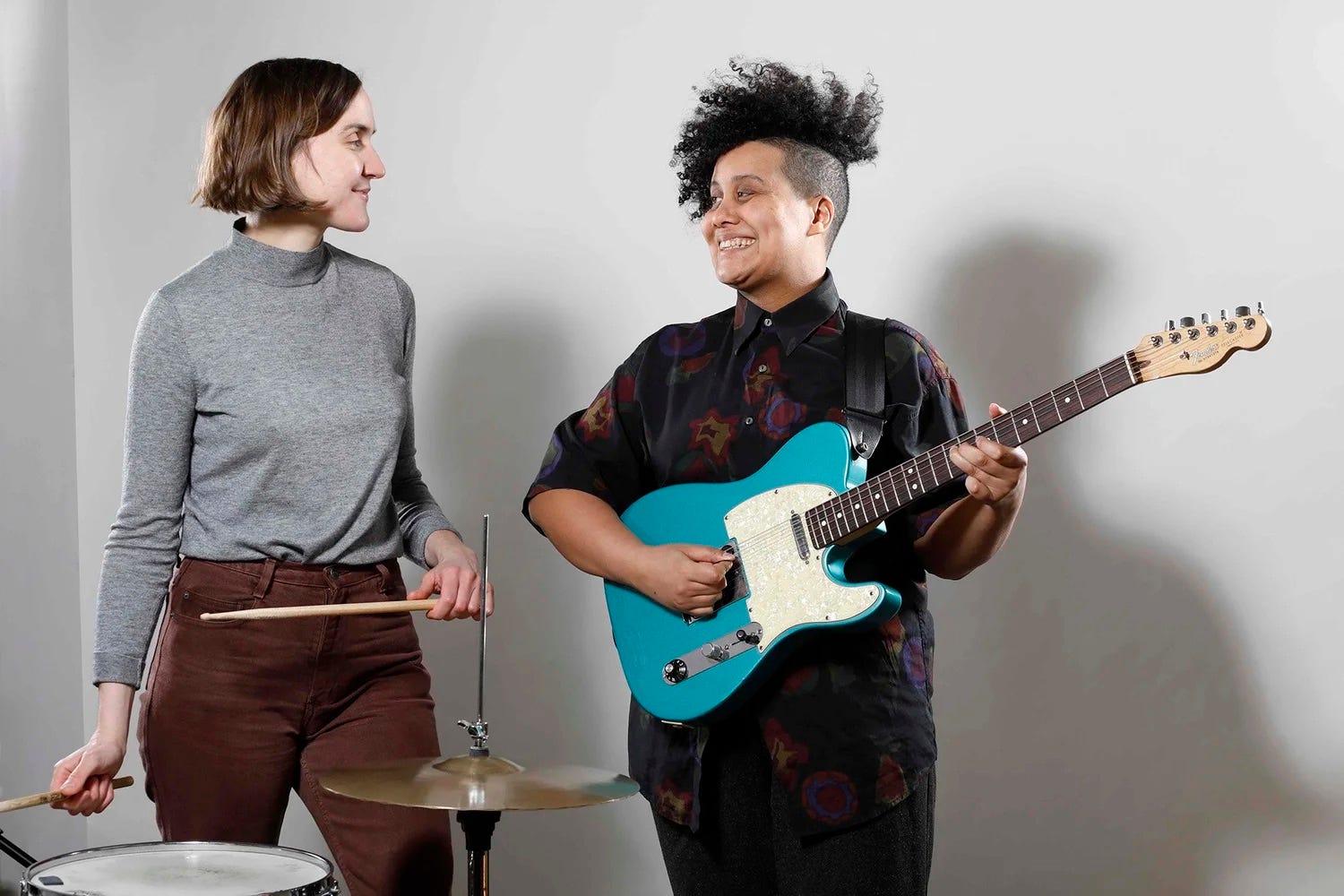
This proactive approach secures a range of notable acts. The upcoming festival features Sacred Paws - the duo of Aly Macrae and Rachel Newton. After pursuing the pairing for two years, Soundhouse brings them to Edinburgh fresh off their Scottish Album of the Year (SAY) Award win.
Returning to the Traverse this November, the festival brings this curated mix of talent to the capital, alongside the 10th anniversary celebration of The Soundhouse Choir, and a new commission by Kay titled Space for Dreaming. It’s safe to call the Soundhouse project a continuing success, and for Robertson and Purdy, the mission remains unchanged: supporting musicians while searching for a dedicated venue to call their own.
‘We keep our overheads minimal, we support causes that matter, and we keep fighting for live music in this city,’ says Robertson. ‘We’ll see what happens with the permanent building, but in the meantime, the music doesn’t stop.’
If you liked this, you might also enjoy The music street which helps shape the stars of tomorrow.