

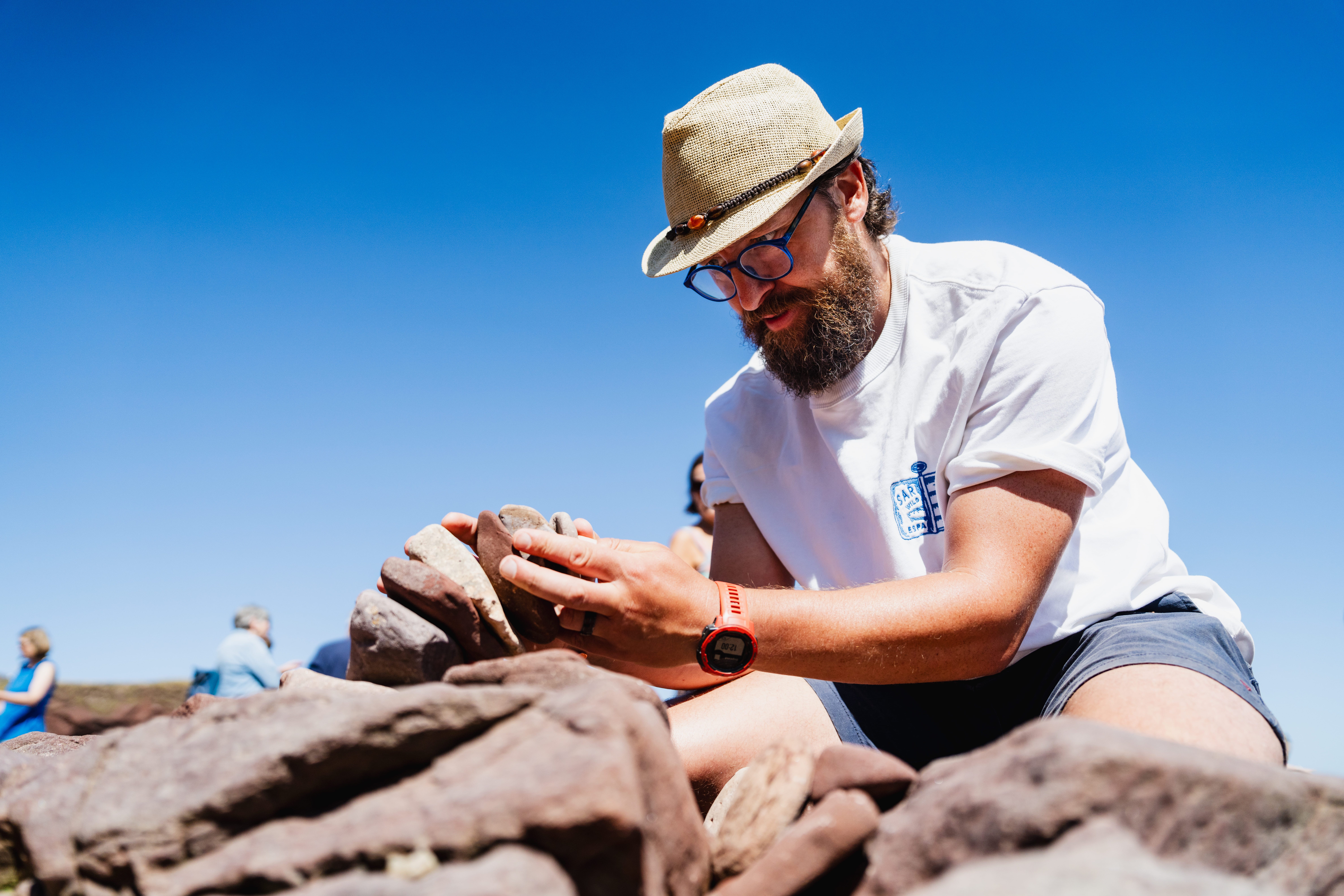
On a sunny Sunday afternoon at Dunbar’s Belhaven Beach, mind-boggling stone towers defy gravity, teetering on points in improbable formations. Suddenly, a countdown begins. “Three…two…one…time to stop collecting stones and build your arch!” This is the tenth anniversary edition of the European Stone Stacking Championships, where rock stars are competing for a place in the World Championships in Texas next year. But for both world-record-holders and first-timers, it’s about much more than playing with pebbles at the seaside, writes Natalie Berry.
Stone stacking is as simple as it sounds: balancing rocks using nothing more than the force of gravity. In practice, however, the art combines the meditative calm of sculpture with the suspense and occasional drama of a game of Jenga.
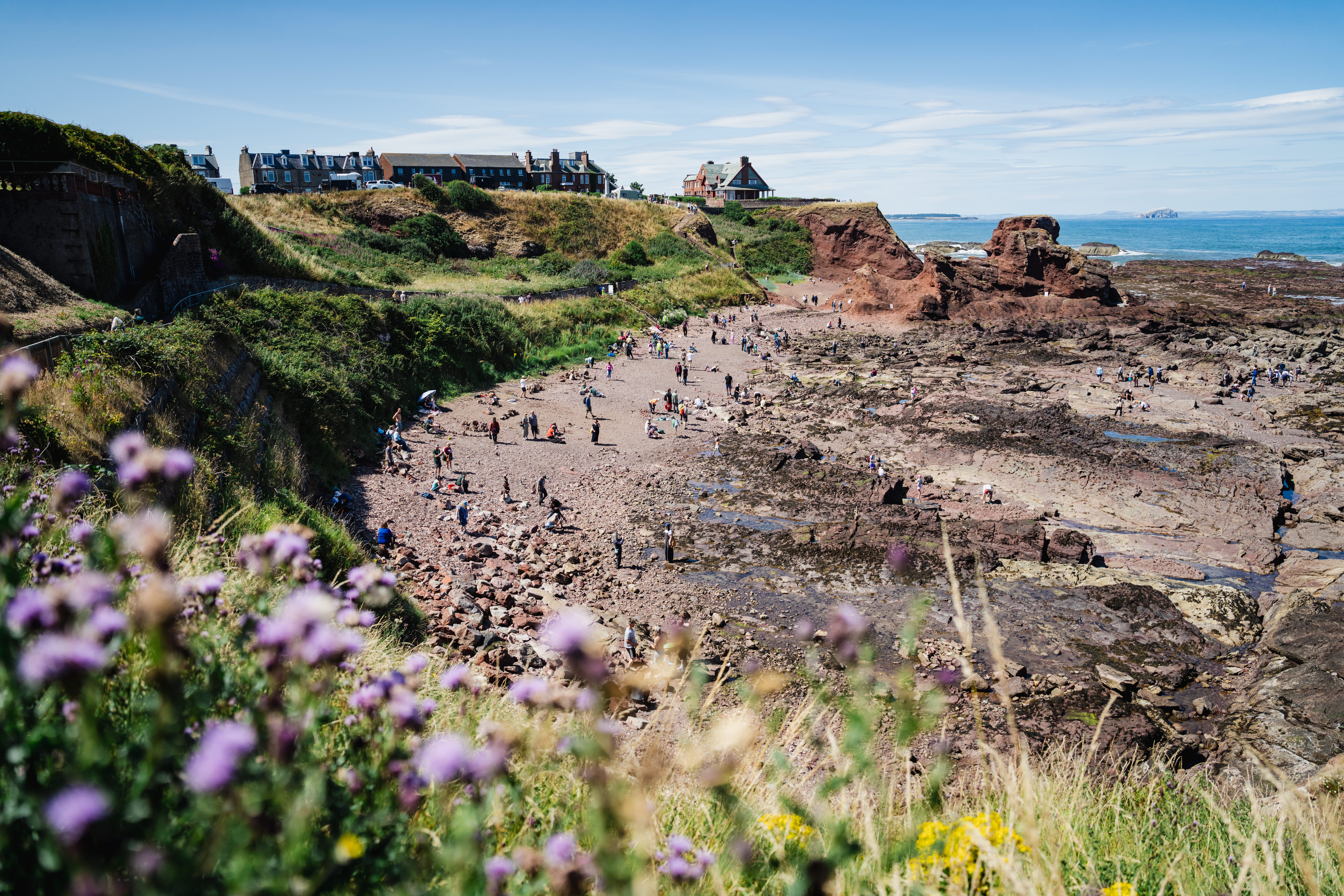
More than 30 people from 10 countries are competing here in Dunbar on 19 June, but hundreds of passersby and holidaymakers of all ages have come to marvel at the artworks - while many are giving stone stacking and balancing a go for the first time.
Stacking stones to build a community
The event was founded in 2016 by local artist James Craig Page as the John Muir Stone Stacking Challenge to commemorate the centenary of the U.S. National Park Service and honour the legacy of the Dunbar-born conservationist. It has since evolved into the European Championships and just one element of the six-day European Land Art Festivals (ELAF), attracting artists from around the world who create temporary designs on landscapes with natural materials.
“It’s about encouraging people’s creativity and building a community, and in a world of trauma and war, people going down the beach on a Sunday and stacking stones - what more wholesome event could there possibly be?” he says. Earlier, a family from Belgium even recreated their hometown on the beach using sand and rocks. This year’s event is the biggest and best yet, he believes.
When asked about the appeal of stone stacking, he responds simply: “The magic of it.”
Local Hailey McCausland is volunteering for the second year. “It brings Dunbar together, everybody just being able to relate over art, whether you’re a passerby who likes the art, or a competitor seeing other people’s ideas,” she says.
While visiting family in Dunbar, first-timers Pam and Chris Robinson from Kent are dabbling for fun, inspired by the experts. “We decided to have a little play and now we’ve got completely addicted and can’t stop doing it!” Pam says. “You don’t need any skill or training - we just ‘rocked up!’”
“Some glue would be nice!” a young girl in their party chips in.
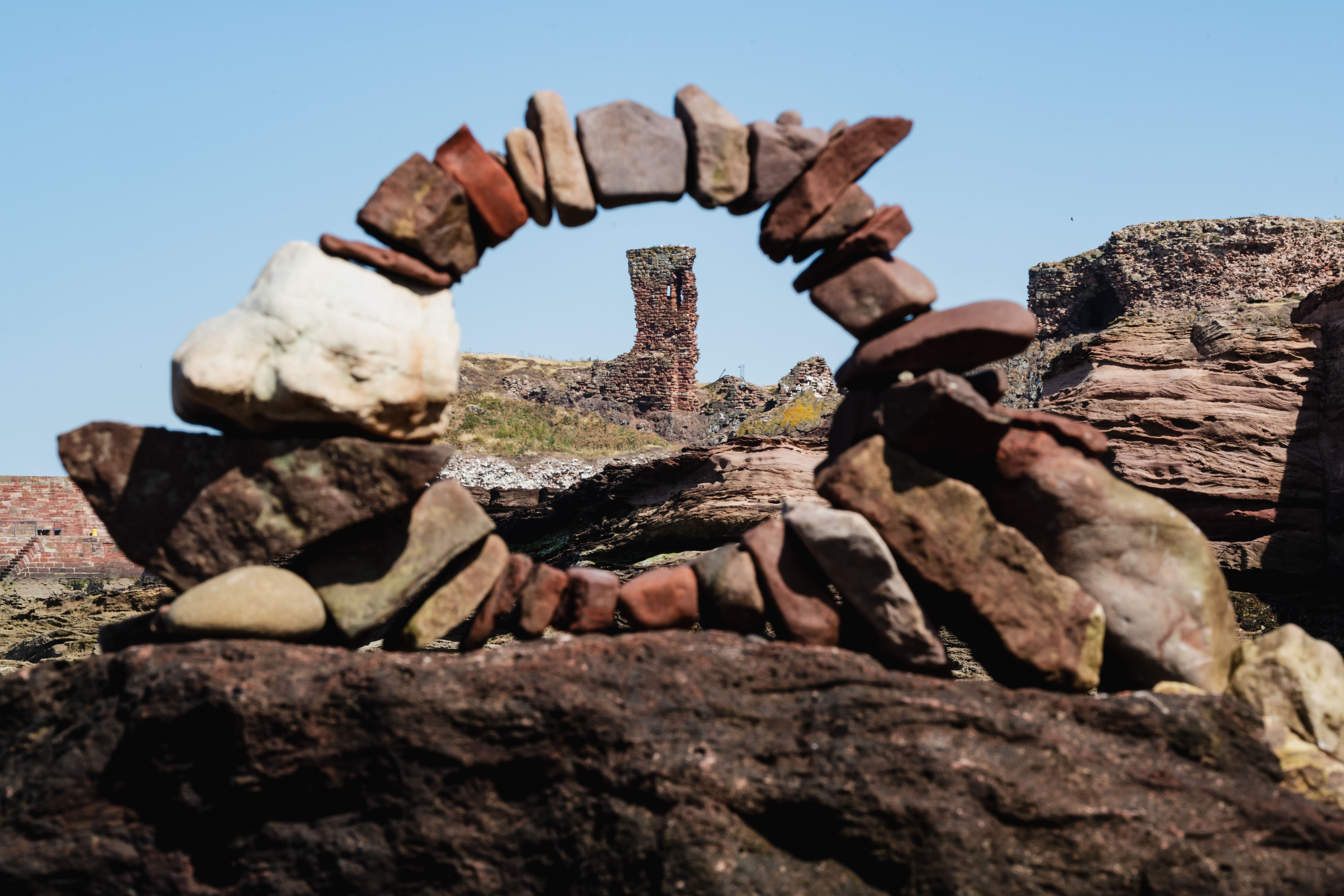
But stackers must rely on physics and friction alone. Competitors are showcasing their skills across four categories: quantity and timed balance - which took place the previous day - plus arch-building and an artistic challenge. The quantity event involves stacking as many stones as high as possible. In the two-minute timed balance challenge, competitors create a stack of seven preselected rocks and hope it outlasts their competitors’ efforts.
Arch-building is arguably the most difficult discipline, Page explains. “You’re either good at them, or it takes a long time to get good at them,” he says. The artistic category combines these skills to create a large-scale sculpture. Scores are kept secret until the very end.
Dunbar’s father-and-son team, Chris Green and 14-year-old Kyle, are building an arch for the first time. The trick is to find large rocks to form the foundation and add height, while keeping pressure constant. “It’s go big or go home!” says Kyle, who came third in the children’s competition.
Closer to the shore, a man with long hair, beard braids and face tattoos has completed a stable arch - demonstrating height and span in around 20 rocks. He poses underneath it for photos, the North Sea framed behind him. Travis Williams is from Texas and won gold in the World Championships last year - setting a world record for stack height of 108 inches/9 ft in the process, made possible by building a stone “stepladder” next to it. After the competition, Williams will be taking his skills from the beach to the streets at the Edinburgh Fringe.
“I like the whimsy it carries,” he says. “Somebody sees the stacks, they don’t know if it’s real, they don’t know how it’s done, and I don’t think there’s enough of that in the world.”
Nature’s healing gifts
After two hours of intense focus spent finding the perfect balance point connecting three or four large stones, Michael Grab’s effort is reduced to rubble. Grab is a Canadian based in Colorado, USA and he’s something of a legend of the art, with almost 100,000 Instagram followers as Gravity Glue. Today, he’s creating but not competing.
In fact, the event wouldn’t exist without him: its founder, Page, was so “dumbfounded” by Grab’s work that he became inspired to take up the art in 2015. Grab “just became obsessed” with stacking over 20 years ago, and describes it as a form of therapy. “You need patience, and it teaches patience,” he says.
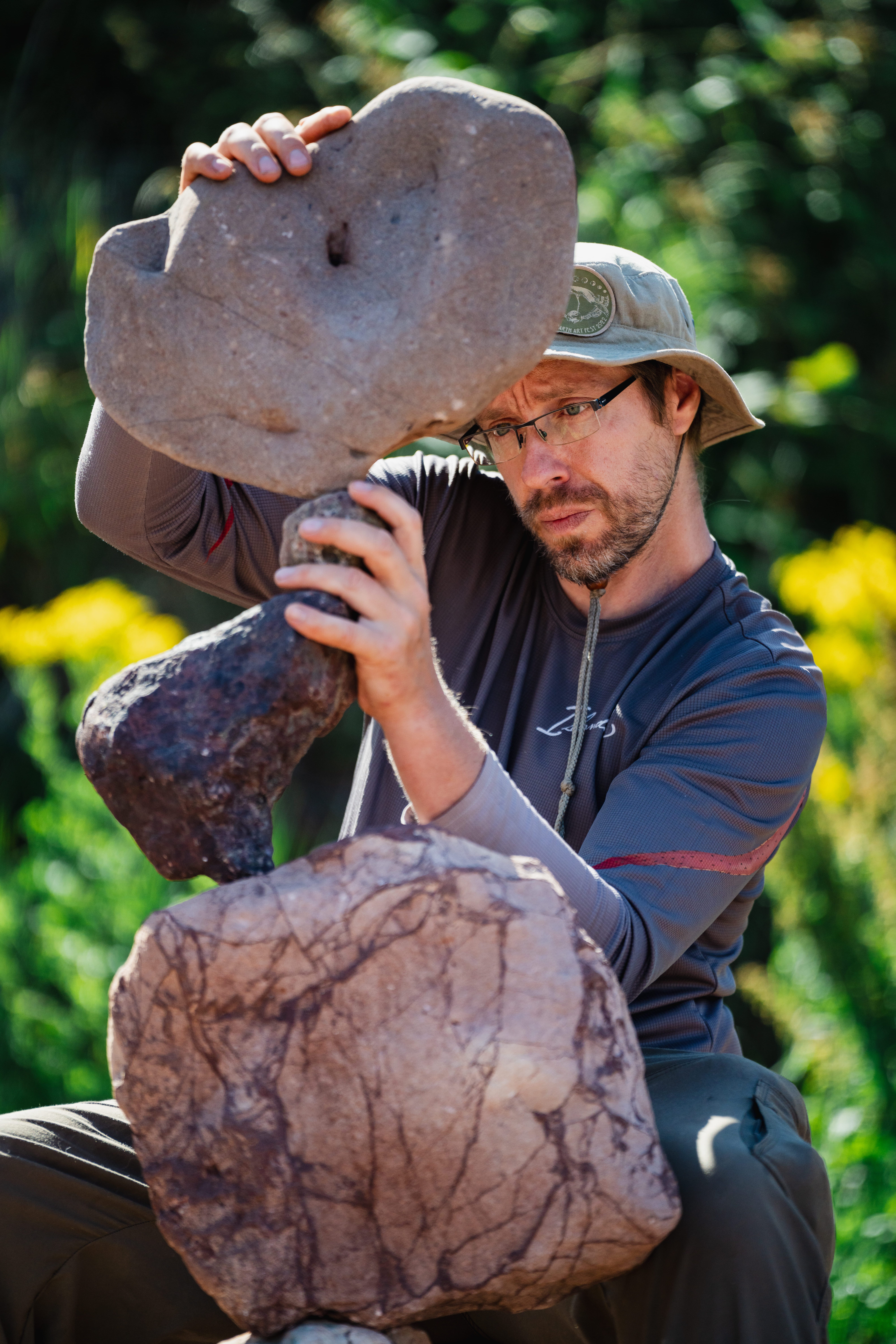
In the afternoon, the three-hour artistic event sees participants collecting stones, sea glass, washed-up seaweed and shells to adorn their designs. Giovanni Quatela from Italy, who found healing in stone stacking six years ago while suffering from illness, finishes early. He’s created a veritable house of cards with multiple precarious branches. Third time lucky, he hopes: “It collapsed…twice!”, he says. The judges rush to take a photo, should gravity - or a clumsy passerby - strike again.
Nearby, Nepalese competitor Sagar Adhikari is completing an aesthetic display of multiple arches. He started stacking during the COVID-19 lockdowns while meditating by a river. “It keeps you in the present moment,” he says. “It felt like I was achieving something, and nature was giving me prizes in return.” This is his first competition - a far cry from his usual solo escapism - but he’s enjoying the atmosphere. “The sea and the place and the people are all synchronising together,” he says.
“Impossible is not to try”
The Dunbar festival’s success has spawned events abroad. Marco Avenante is the founder of ILAF, the Italian “little cousin” of ELAF. Earlier, he created one of the most striking pieces of the competition: a stack relying on improbable counterbalances and minimal surface contact on precarious points.
“I enjoy the peacefulness and the interaction with the environment and nature,” he says. “The stones teach us how to live, because when we create this structure with an ephemeral life, we represent our own lives.”
Beyond the physical act of balancing the stones, the art also teaches emotional regulation, Avenante says. “When a structure falls down, you can repeat or leave,” he explains. But as a friend once told him: “Impossible is not to try!”
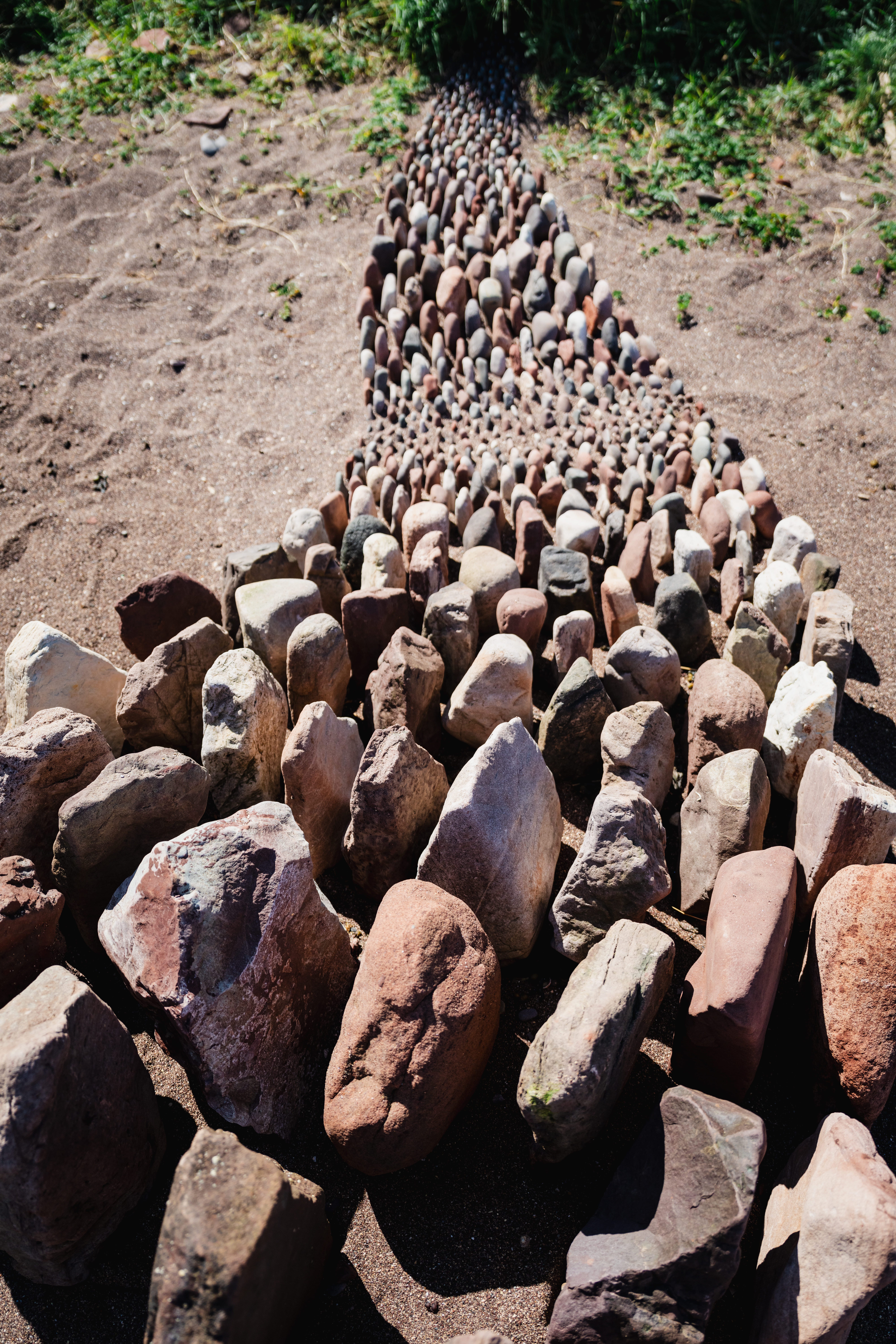
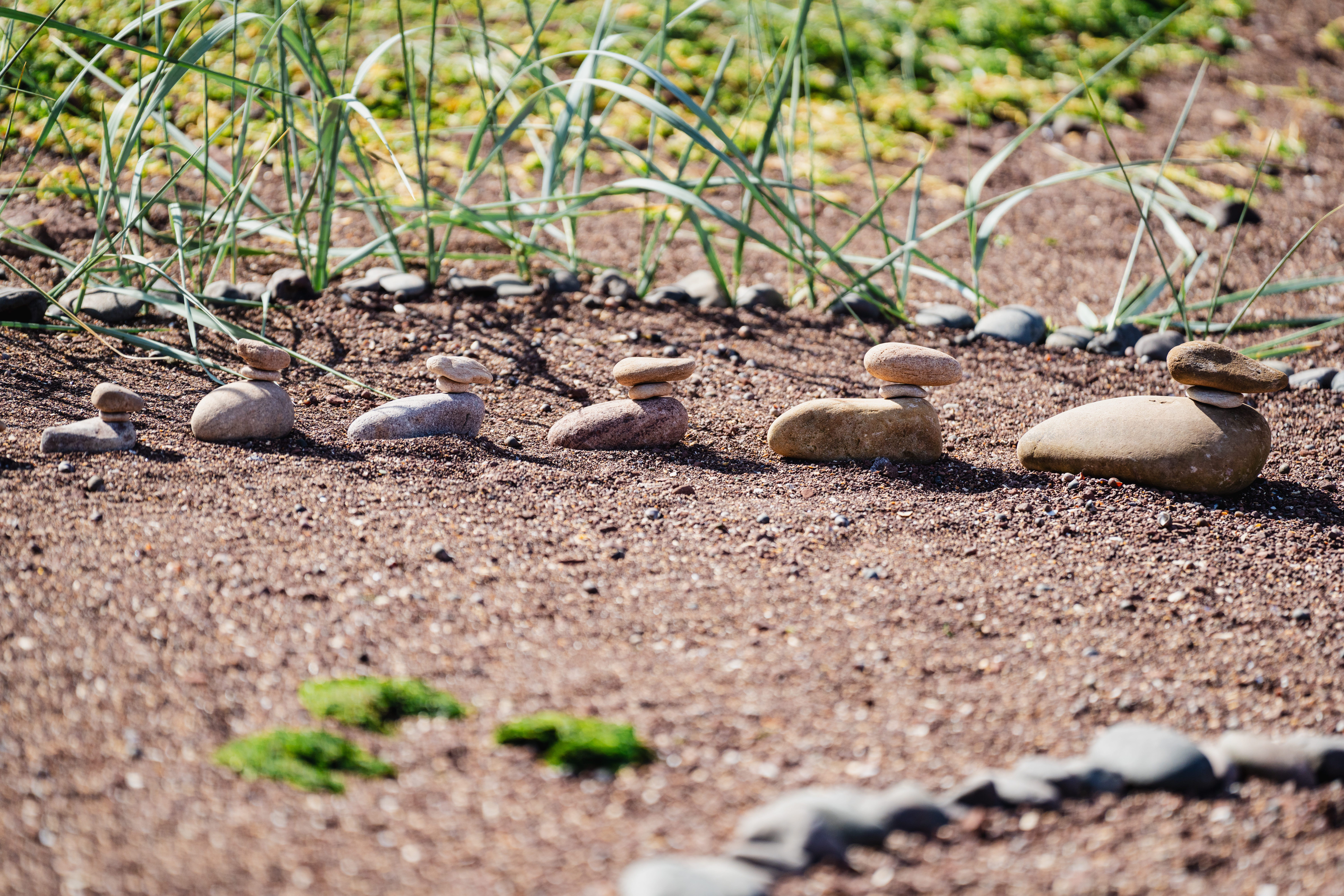
Over three hours, the beach gradually becomes a canvas for an octopus, a giant pair of feet, a family of ducks, a Danish flag and a portrait of John Muir, among myriad other designs. Ireland-based featured artist Mayumi Nakabayashi gets a helping hand with her intricate mandala design from a young girl, who feels inspired to create her own art. She proudly shows her new mentor her design once finished.
This contagious creativity is something that Patty St Louis, an artist from Connecticut, USA, takes seriously. “If you can inspire somebody to take two rocks and put them on top of one another, then you’ve created a creative person,” she says. “And when you identify as creative, you don’t sit back and let the world happen to you - you feel like you have agency over it.”
Every so often, collective gasps of despair signal a tumbled tower and a competitor stuck between a rock and a hard place. By the late afternoon, simply walking along the beach puts one at risk of destroying a hard-earned creation with one clumsy step. A zooming dog knocks over a stone arch - much to the embarrassment of its owner.
As the clock runs down, the judges do the rounds, discussing the artistic merit of each piece. “That one just zings to me,” I overhear.
A life-affirming experience
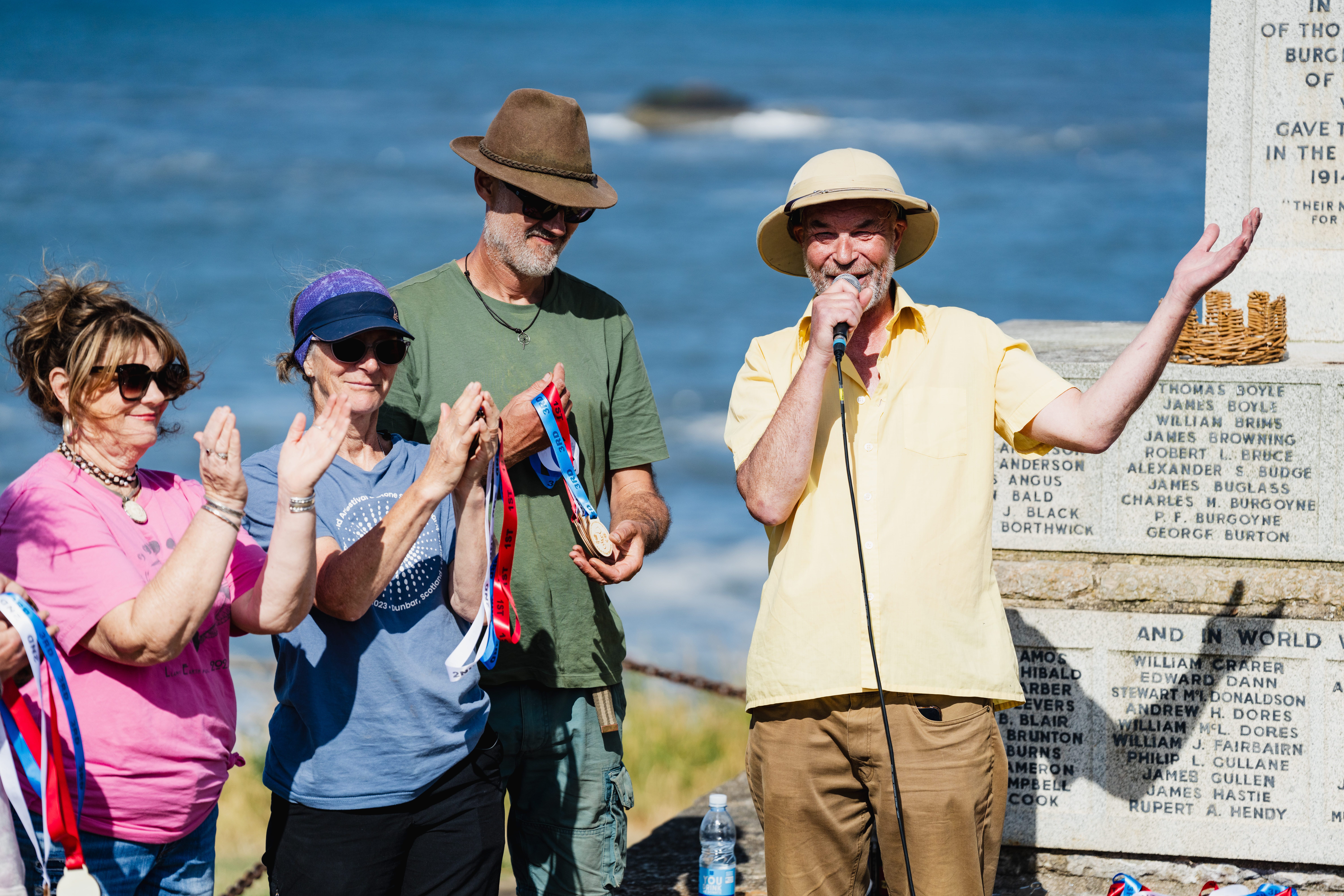
After the conflabs, Page praises the talent on show in a prizegiving speech. “People have come today and not only done land art for the first time, but also wowed the judges and made our creative hearts sing,” he says.
In the best newcomer category, Adhikari from Nepal places second. He vows to return next year, since Edinburgh and the Lothian coast have become his “favourite holiday destination,” thanks to the “friendly, lovely people”.
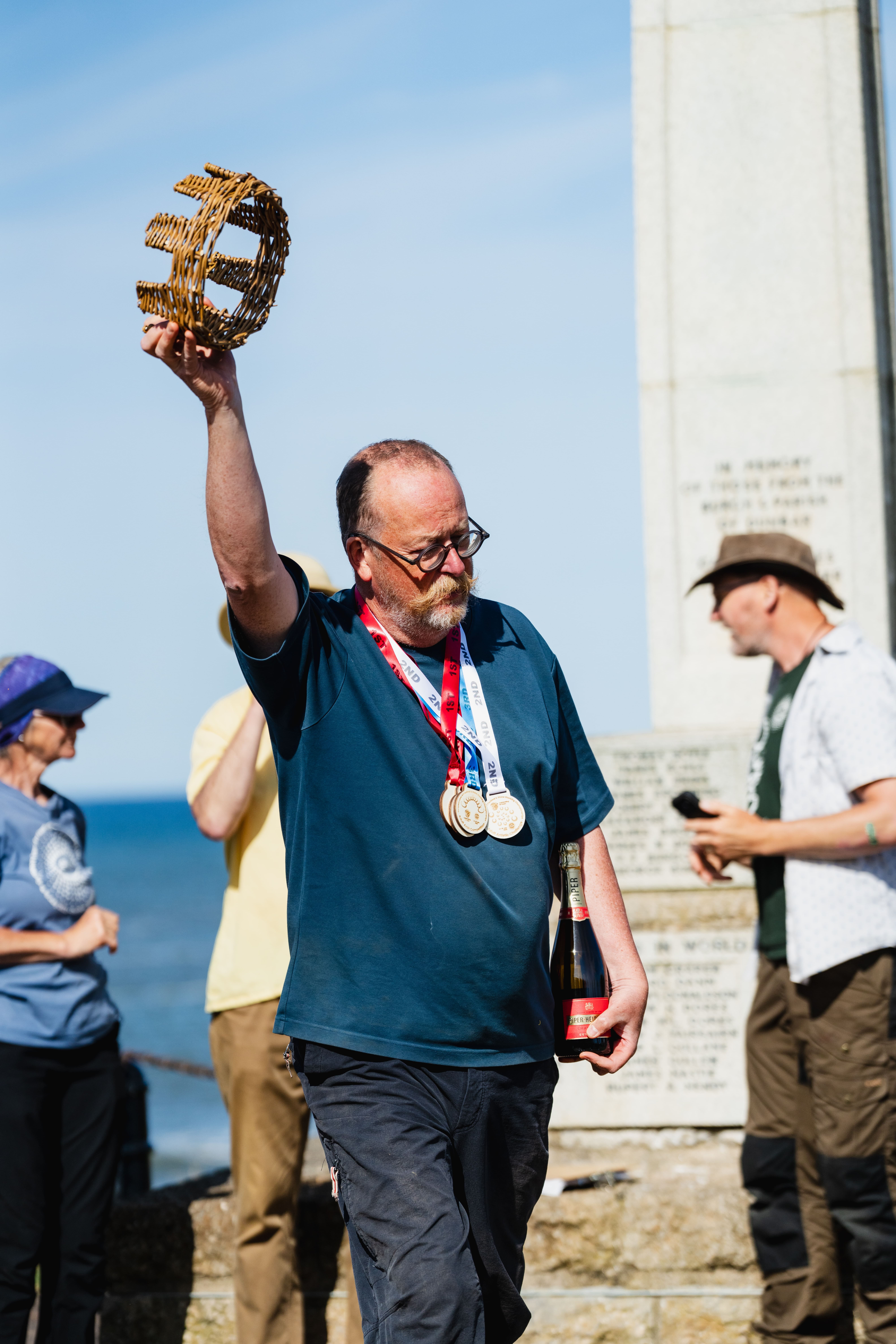
The newly-crowned champion is Clitheroe-based architect Neil Andrews, who finally takes the win after almost a decade of competing here and punches his ticket to the World Championships, in Llano, Texas next March.
Andrews wins the quantity event with 41 stones, places second in the artistic and third in the arch-building events to take the overall title.
“It’s a life-affirming, wonderful experience,” he says. “I’m delighted to win but I’m not bothered that I’ve won - it’s wonderful being here with everyone, they’re so supportive. I always go home with a smile on my face.”
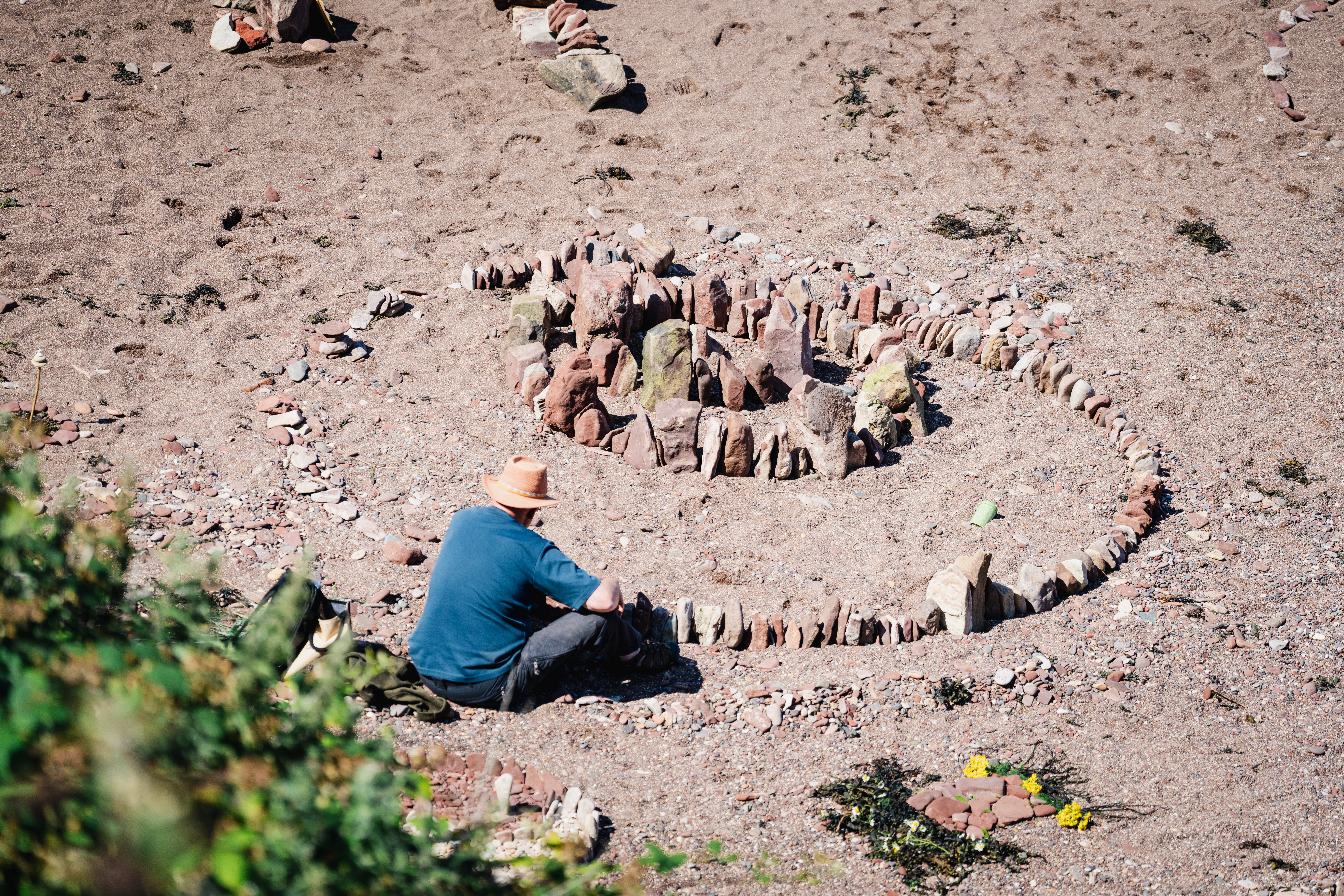
His stone stacking obsession began in childhood and later became competitive: “My wife found an article in a newspaper and said, ‘Look, there are other people like you who play with stones on the beach!’”
Andrews’ artistic piece is a tribute to his mother, who died recently. A series of concentric stone circles in the sand surround a container of his mother’s ashes, representing her children, grandchildren and future generations. “It’s about death and renewal, and she would love the fact that she is here and part of this,” he says.
The Picts used to believe that stones carry memories, Andrews explains. He feels that when you connect with a stone, you connect with both the history and the place. Evidently, it’s also a means to connect with people and form a cross-border community.
In his final address, Page urges attendees to pass on the “beautiful ripples of kindness” generated at the event.
As people depart, the tide rises and washes over the beach, resetting the canvas. The artworks disappear, but the memories and friendships formed live on.