


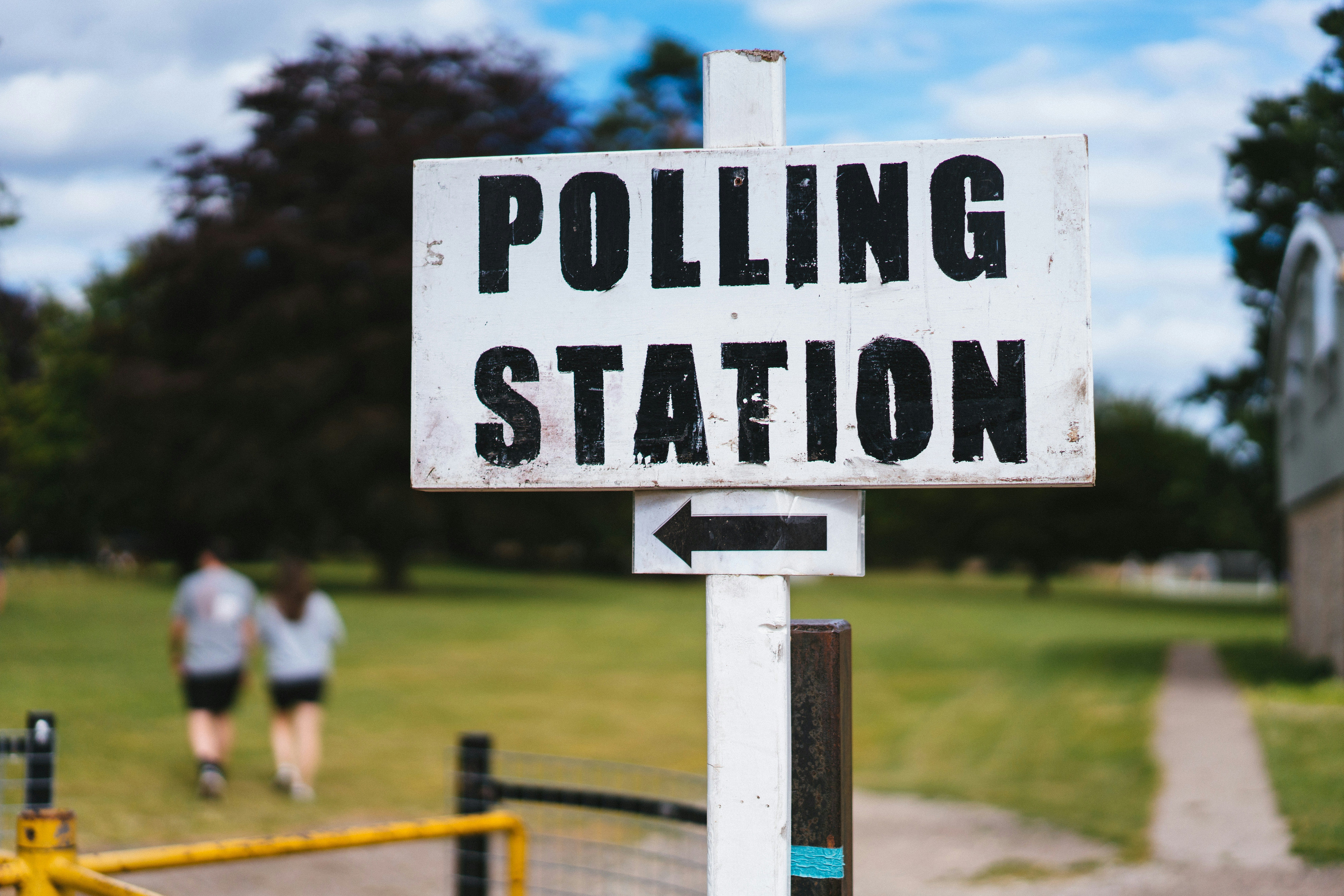
How are you feeling about this week’s Scottish elections? Uninspired? Disillusioned? Anxious? If so, you are not alone.
There is plenty of research to suggest disengagement with our politics is, in the words of polling expert Mark Diffley, “off the scale”.
Almost two in five people (38%) people in Scotland are feeling politically disaffected, according to research by the Diffley Partnership for the Joseph Rowntree Foundation, writes Matthew Leslie.
This isn’t an attack on our politicians. It is easy to fall into blanket cynicism - something we try to avoid at The Inquirer. We know many thoughtful, hard-working and principled individuals working in Scottish politics and standing in this election.
The reasons for this breakdown between people and politics are too many and complex to explore here.
But there are consequences to it - and some pretty immediate ones.
A record number of Scots are registered to vote, around 3.2 million.
Yet, the turnout for Thursday’s election is expected to be low, dropping about 10 percentage points from the last Scottish Parliament election in 2021 to around 50%.
At the same time, pre-election polling has been telling us consistently for around nine months that Reform UK are vying with Labour for second place, behind the SNP.
As things stand, it looks likely there will be either one or two Reform candidates elected to represent us as MSPs through the Lothians list.
Their chances of success rely on attracting a high proportion of the list votes cast in the region - the second vote you get on your Scottish Parliament ballot paper.
Clearly, anyone who is inclined to back another party, but doesn’t cast their vote, increases Reform’s chances of success by default.
To be clear, we believe Reform UK poison the well of Scottish politics.
That belief is based not just on the past behaviour of Nigel Farage and his followers, but the actions of their candidates during this election campaign.
They have casually pandered to racism with despicable ‘dog-whistle’ politics.
Malcolm Offord, the leader of Reform UK in Scotland, linked last month’s double stabbing in the Calders area of the city to “mass immigration” within hours of the incidents, as speculation and commentary by far-right activists took off on social media.
Police later appealed for people to stop spreading misinformation about the incident.
Offord is not a stupid man. He must have realised the potential for his comments to inflame the immediate situation and stir racial tensions.
His evidence for making his comments, he told reporters, was a photograph he had seen of the suspect (who had dark skin) and what his local taxi driver had told him that morning.
This mirrors the party’s campaigning in Glasgow portraying young immigrant men as sexual predators and a threat to women.
One of their recent repellent announcements is a pledge to set up detention centres to carry out mass deportations, with these centres deliberately sited within Green-controlled parliamentary constituencies and Green-controlled councils.
It sounds too grotesque to be true, but this once again shows this is a party bent on stoking hatred and division.
We are proud to live in Edinburgh and proud of the fact it is the most cosmopolitan, ethnically-diverse city in Scotland, as well as an inclusive and welcoming one. The power of the Capital to bring people from around the world together is one of the things that makes it such an incredible place to live.
That diversity needs protecting and defending against attacks like these.
That is enough to fear the arrival of Reform, but there is more. Their manifesto - we’ve read it - looks like it was drawn up in the back of a taxi. Their central tax-cutting pledge is described by the Institute for Fiscal Studies as “not credible” and “a mirage created by a misunderstanding or misrepresentation of the current devolution settlement and incorrectly comparing cumulative and annual figures”.
This isn’t serious stuff - and the candidates they are putting forward are not serious people.
Reporter Cliff Heberden has spent much of the last month trying to contact the Lothian candidates who may be in line for seats at Holyrood. You can read his report here:
Three weeks tracking down Lothians’ Reform UK election candidates
It was an extraordinary moment towards the end of a bizarre three weeks.
Angela Ross, the Reform UK candidate, is talking about the reception her party colleagues have received on the doorstep in the Lothians, including abuse shouted at them and leaflets being ripped up and thrown back at them, writes Cliff Heberden.
“I found it’s the further away you are from a doorstep that you’ve put a leaflet through or knocked on the door, the more abuse you will get, because they feel the safety and distance,” she says.
Then it happened.
“This is a side of society I haven’t been privy to,” she says. “I’m wondering if this breakdown in trust and this abuse just stems from quite a divisive way of doing politics in this country.”
The Lothians’ leading representative of perhaps the most divisive political party this country has seen in generations appeared to be arguing her colleagues are the victims here.
What then does she make of the party’s Scottish leader Malcolm Offord’s comments about the double stabbing in the city’s Calders area?
Offord risked fuelling racial tensions in the area by linking the incident to “a massive insurge of immigrants and illegal immigrants.” He told reporters his remarks were based on seeing a picture of the suspect (who had dark skin) and what his local taxi driver had told him. Police later warned about the dangers of spreading misinformation about the incident.
Ross had no words of condemnation or concern.
“What I can say is my experience of Reform and its messaging is that it’s a party that stands up for hard working people of this country no matter what their religion, race, age or any other characteristic might be. They are very welcoming and inclusive in my experience.”
The former teacher took on contract work through her compliance company working on ethics boards and EDI (Equality, Diversity and Inclusion) programmes for major corporations.
She said that work had taken her to Los Angeles and throughout the world with companies like the Hamad Medical Corporation in Doha, L’Oréal and Airbus in Paris, as well as financial firms and banks.
“Teaching them rights from wrong, basically, how to do the right thing within the organization, how to behave appropriately with code of conduct,” she said. “I’ve always had a strong ethical compass within me, it’s always been about ensuring people do the right thing.”
Ross effectively disowned the work through a statement from the party.
She talked of her admiration for Farage, people feeling “left behind” and returned more than once to the need for stronger public services, such as schools and social work, which sits uneasily with Reform’s tax-cutting proposals.
Tracking the candidates down
Ross had agreed to be interviewed two weeks after I started calling Reform UK, charged by The Inquirer with establishing whether or not the party was putting up so-called ‘paper candidates’ in the Lothians.
The Guardian had reported the party was cold calling anyone who signed up for their mailing list, asking if they would stand in the election without having to do any campaigning and undergoing minimum background checks.
Unusually, there is barely any online trace of the party’s top candidates on the Lothians list, Ross and Pal Chidambaram, with none of the usual campaign or personal accounts on Facebook, LinkedIn or other popular platforms.
There is a Pal Chidambaram who appears on official records at Companies House, a serial entrepreneur who has established and dissolved a series of enterprises.
Is this our man?
A series of unanswered messages to party media contacts in London, Glasgow and Edinburgh, led me to a line where I was shouted at by a party staffer in London not to call back, after I had called on a number apparently reserved for Reform members.
You would assume any opportunity for an interview in a campaign cycle of this importance would be met with great enthusiasm and a redirection to appropriate contacts, but these are no ordinary times and this is no ordinary party.
Eventually, after six days, one of my messages received a response from Cameron Rose, the former Conservative leader on the city council, who sent me the phone numbers for the party’s top list candidates, Ross and Pal Chidambaram.
Unlike Ross, Chidambaram proved to be difficult to reach.
His phone provider has a screening system, asking all to identify themselves and leave a message without letting calls run their course.
He only answered texts after my interview with Ross who told him of me and our conversation. After a few days’ back and forth, Chidambaram agreed to an interview.
The location and time was never confirmed.
Eventually, Chidambaram declined any further attempt to set a date for our interview, blaming a busy campaign and bad timing.
In the last month, the Midlothian View has published opinions by Chidambaram, one on child poverty that seems to have been taken offline, and one on the disputed cutting of bus route 46 in Midlothian.
He appeared at the publication’s husting on April 23rd where a reader, Bill Kerr-Smith, writing up the evening, said he seemed to be “a poorly-prepared candidate with no insight into Midlothian issues and a one-size-fits-all approach to all problems.”
“I’m afraid I conclude that Mr. Chidambaram is only a paper candidate, put forward to make up numbers,” wrote Kerr-Smith as his bottom-line.
Is he the very definition of a paper candidate? Is he the serial entrepreneur listed at Companies House? With no public record of the candidates birthdate or address, it is impossible to tell, without a willingness from him to answer questions.
Many of you have asked about the best advice for voting in an effort to keep Reform UK out of the Lothians.
Tactical voting has achieved some notable successes over the years, but it is fraught with uncertainty. The various factors are so hard to predict that campaigners Stop Reform UK, for example, are still not offering any specific advice on Edinburgh and Lothians seats.
Yet, with the potential for even a relatively small shift in support for one party to have a significant effect on results, tactical voting remains an attractive option for many. That’s especially the case with the Scottish Parliament’s complicated voting system, which combines first-past-the-post constituency seats with a proportional representation-based regional list.
First up, the constituency vote is relatively straightforward. As our seat by seat guide to the election shows, there is almost zero chance of Reform winning any constituency seat locally.
More generally, both the SNP and Labour have been campaigning on the basis that a vote for them is the best way of keeping out Reform.
In the SNP’s case, there is a sound logic, based on the polls suggesting they are likely to be able to secure a majority, either with or without the Greens, and lock Reform MSPs out of any position of influence.
Labour’s position is less straightforward. Its best chance of power appears to be hoping it can confound the polls and emerge as the biggest single party, enabling it to strike an agreement with other unionist parties to form a government.
In that scenario, the maths suggests the party might need some form of “confidence and supply” agreement with Reform. Labour leader Anas Sarwar has repeatedly and emphatically ruled out the possibility of any type of deal with Reform, but the reality of that broader picture means the question keeps being raised.
The list - the peach part of the ballot paper - is where it gets more interesting.
The list system rewards parties which do not win constituency seats, as it is designed to give representation to parties who have widespread support but not enough to secure seats through first-past-the-post. That obviously includes Reform UK in Lothians at this election.
Voting on the list for other parties who are likely to have no constituency MSPs, while still retaining a relatively high level of region-wide support, is the best way to dilute Reform’s chances. Failing that, a party that wins just one constituency seat is worth considering backing.
The hard bit is working out which parties are most likely to be in that position.
Before we go into that, this is probably the part where it is worth saying that tactical voting always works best when it is for a party whose values broadly align with your own. Otherwise, you risk buyer’s remorse.
In previous elections, you could confidently point to the Greens as having region-wide support and winning no constituency seats. This time round, that could still be the case, but they are in the running for at least one, and possibly even two, constituency seats.
The Conservatives - who are campaigning hard for list votes - are the most likely of the major parties to end up with no Edinburgh and Lothians constituency seats.
The best guess from recent polling is that Labour and the Lib Dems will each pick up one seat, but both also have realistic ambitions to pick up at least one more.
Our plea is simply for you to cast your vote - and cast it for a party that does not seek to stoke racial tensions in our communities.
Thank you deeply for that short piece on your diligence to track down Reform candidates..which adds credibility to my largely gut instinct that resource has been funneled into promotion not substance to create self perpetuating headlines.