

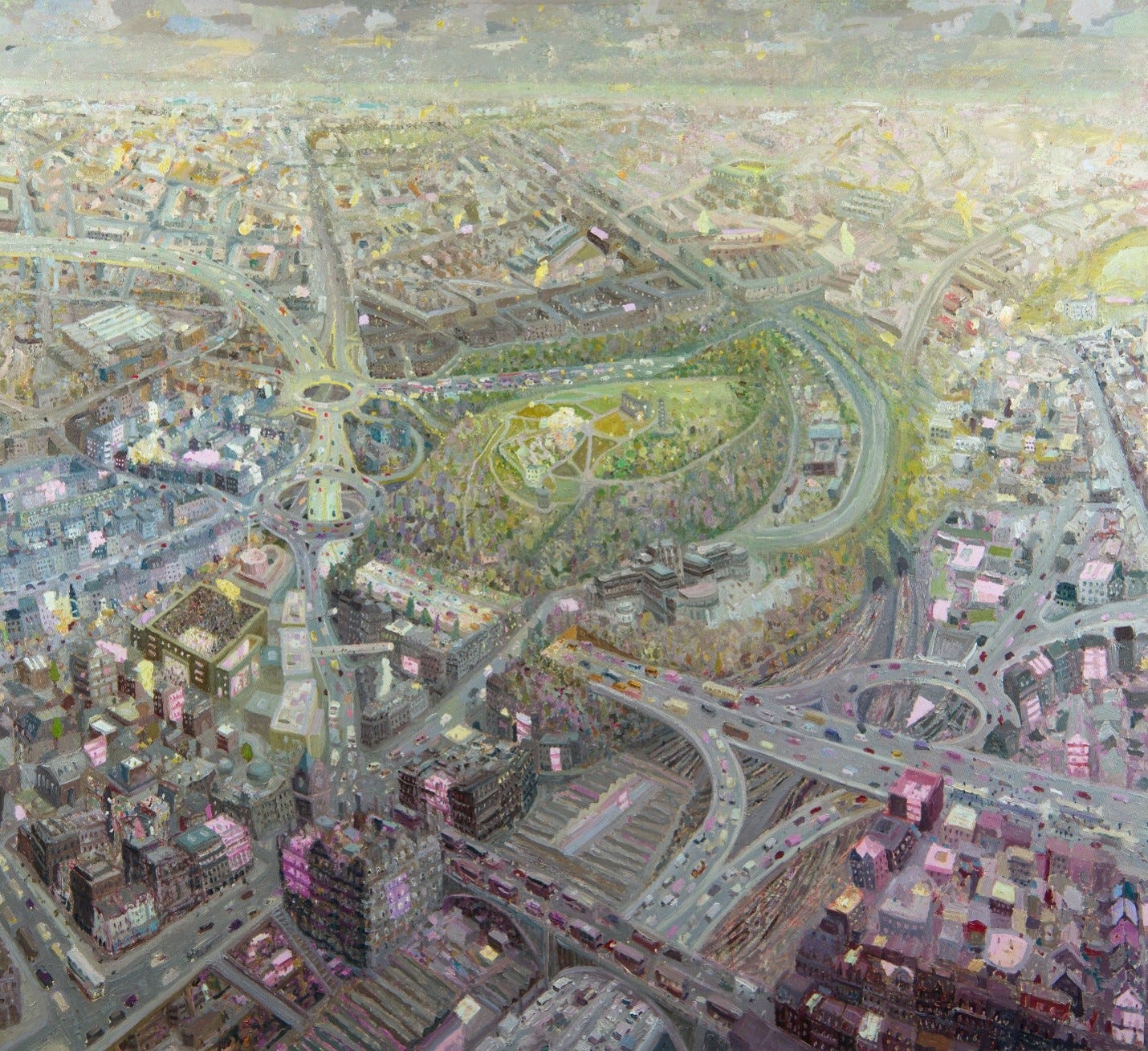
This is not a love letter to the bike. And it is not a declaration of War on Cars. The car has already won.
Workers need their vans. Rural communities often have no alternative. Carers and people with mobility issues should arguably find driving easier than they do. And some people simply love it.
But be honest. How truly joyous was your driving experience in the past year?
It’s usually the school run, the supermarket dredge, the parking prowl, the pothole slalom, the soul-sucking slog at Sheriffhall, the cost of living crisis at the pump, and the daily bout of road rage.
It is not just you suffering. The ONS has measured it: people who drive to work are less happy and more anxious than people who get there any other way.
This piece is for drivers, my own hypocritical self included: for people who “hate cyclists”, worry about parking, complain about potholes, and feel the squeeze, which is just about all of us. Cars have their place. But in a city like Edinburgh, using them for the short trips is more expensive and more damaging than we like to admit. Seven in ten journeys in Britain are under five miles. Six in ten are made by car.
“Car brain” - our excuse
The car was sold to us as freedom. For most of us, it has become the opposite, without us even realising.
There is a name for that. Psychologists call it motonormativity, or “car brain”: the unconscious habit of excusing from driving the harm we would never accept from anything else. Once you see it, you see it everywhere.
Dr Patrick Miner at the University of Edinburgh has helped calculate the human cost. The result? The car has killed somewhere between 60 and 80 million people, around the same as both world wars combined, and it injures roughly 102 million more every year.
Over three parts, I want to take apart the car-centric society we accept as normal, confront Edinburgh’s disgrace, its poverty, and show that a cycling city, where the bike is how most people make most journeys, is the healthier, fairer alternative.
But this starts with children.
The Child Murderer
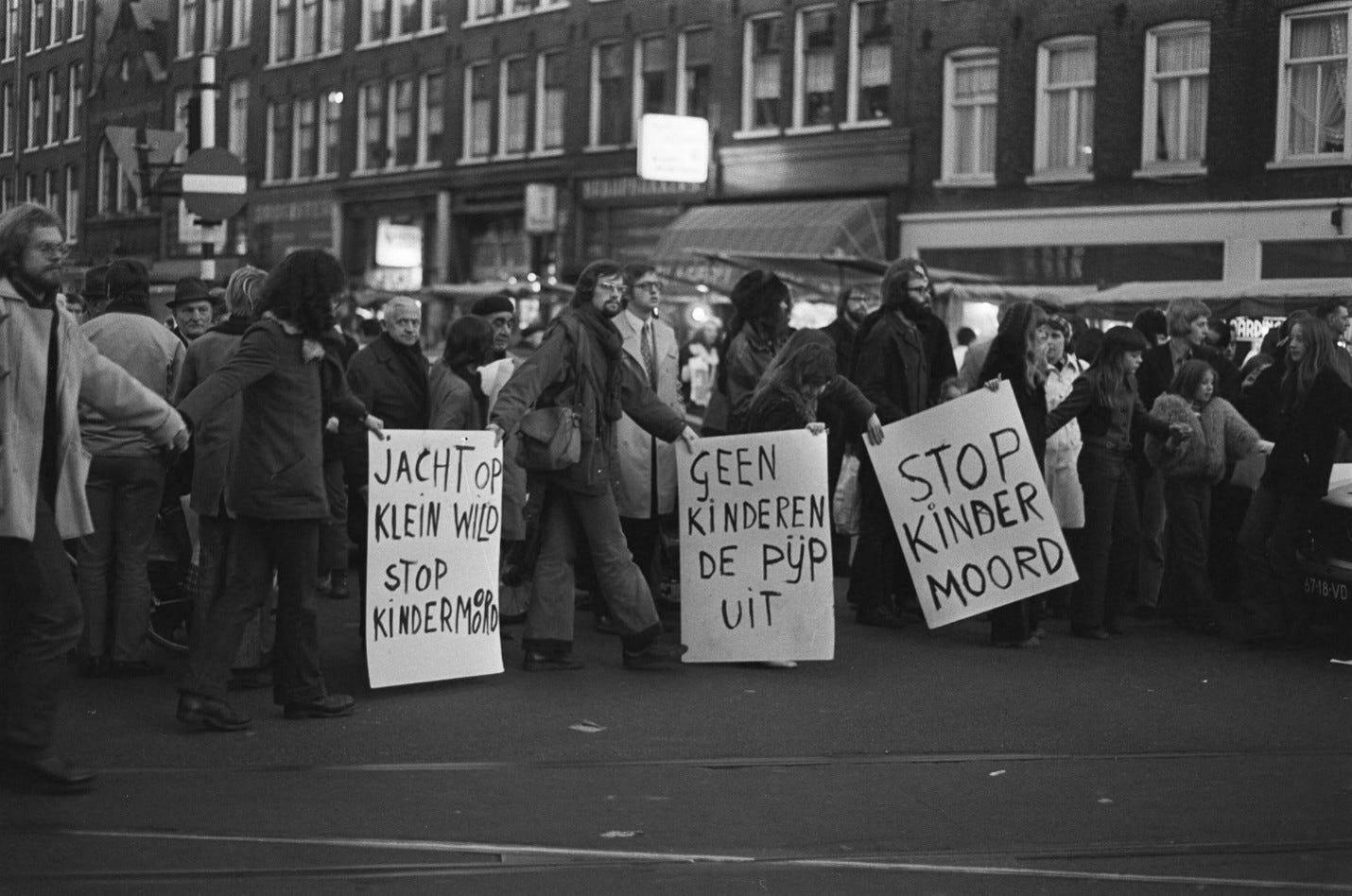
In the autumn of 1971, a six-year-old girl called Simone Langenhoff was cycling to school in the Netherlands when a speeding driver killed her. She was one of around 450 children to die on Dutch roads that year, in a country where traffic was injuring 25 children a day.
Her father, Vic Langenhoff, was a journalist. In his grief, he wrote a front-page headline that would help change a nation.
“Stop de Kindermoord.” Stop the Child Murder.
Parents campaigned under the headline’s name. And here is the part we forget, or never knew. They won, and the Netherlands became the cycling nation of the world. In the early 1970s it was exactly where we were: choking on traffic, ripping up old towns and cities for the car.
Tale of two cities
The difference is what each country did next. While Dutch parents took back their streets, Edinburgh had a few years earlier approved a six-lane ring road that would have split the Old Town in two, tunnelled under Calton Hill and divided the Meadows. The oft-maligned Cockburn Association is one reason it was never built to carve through what is now a World Heritage Site.
The Dutch chose their children. We chose the car.
Road traffic is the single biggest killer of 5 to 29 year olds on earth, and kills around 500 children every day. In 2024, 161 people, three of them children, died on Scotland’s roads, up 13% in a year. Twelve were in Edinburgh and the Lothians.
These are preventable deaths. Zero should be the goal.
The not so silent killer
Here the honest version of this argument gives the car its due. Drink-driving crackdowns and speed cameras meant fewer crashes; seatbelts, airbags and crumple zones meant more people walked away from the rest. Road deaths in Britain have fallen about 75% since 1970, to 1,602 last year.
That looks like a triumph. But look a little closer.
Over those same decades we did not make the roads safe for children. We took the children off the roads. In 1971, 80% of seven and eight year olds got to school on their own. By 1990 it was 9%, and the fall has not stopped: more children are driven than ever, and cycling to school still barely registers. We did not defeat the danger. We surrendered to it.
The car got safer for the person inside it, not those outside. The airbag protects the driver. It does nothing for the baby in a pram at exhaust-pipe height, where University of Surrey researchers found an infant takes in up to 60% more fine particle pollution than the adult pushing it. And that pollution is not a footnote in child health. Research in Bradford put up to 38% of childhood asthma cases down to air pollution, and 24% to traffic fumes alone.
Going electric is not the answer
And going electric solves the exhaust and little else. Car tyres are now the largest source of microplastics in our towns and cities, and the heavier the vehicle, the more they shed, making a heavy electric car the worst offender yet. Those particles turn up in blood, in placentas, in the first stool a newborn passes. The science is still young. But none of it is reassuring.
That same weight does two more things. It kills, and it breaks the road.
