


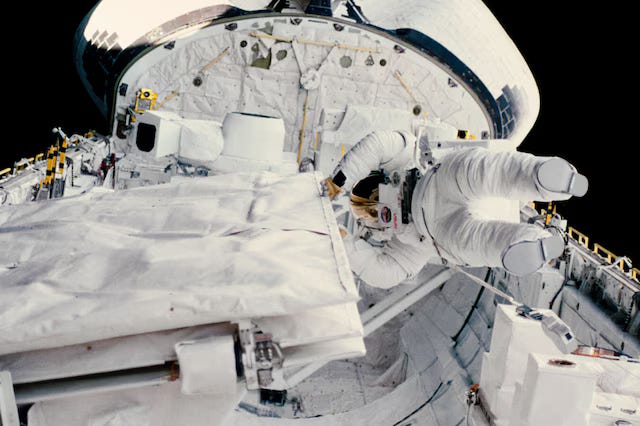
When you’ve “walked” almost 200 miles above the earth and later plunged almost seven miles deep to the deepest part of the world’s oceans, you deserve all the accolades that come your way.
NASA veteran Dr Kathy Sullivan, the “world’s most vertical person,” received yet another when she accepted an honorary doctorate from the University of Edinburgh over the past few days, in recognition of her substantial contributions as an astronaut and as an oceanographer.
A gravity-defying CV, Dr Sullivan was one of the first women accepted into the astronaut programme, as part of the Space Shuttle Challenger team, and was the first USA woman to carry out a spacewalk, and helped launch the Hubble telescope.
Yet before launching her career as an astronaut she had trained as an oceanographer and fulfilled another first when she became the first woman to reach the deepest known point in the ocean, Challenger Deep, in 2020 gaining entry to the history books and Guinness Word Records as the only person to have both orbited the world and reached its greatest depths.
After her ground-breaking time with NASA no less than two Presidents, Clinton and Obama, asked her to help lead the National Oceanic and Atmospheric Administration (NOAA).
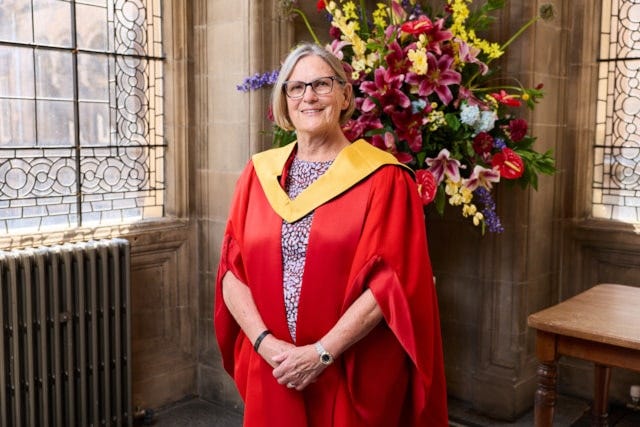
Dr Sullivan’s degree recognition follows a 2025 visit to the University of Edinburgh, where she toured the newly launched Edinburgh Space Hub and at that time she also spoke at the Edinburgh Science Festival.
Based at the University’s Bayes Centre, the Space Hub brings together academics and industry together to drive advancements in space technology.
Dr Sullivan said: “I am deeply honored to receive this degree from the University of Edinburgh, an institution renowned for its long commitment to inquiry and public service.”
Ahead of her visit to Scotland’s capital last year, and a talk on the “The New Space Age”, she told IFL Science magazine: “I think the one thing that most excites me is there are so many new players, companies, universities, and other countries. I think the kinds of challenges that they will undertake, their approaches, the technologies they may develop, that’s going to be very exciting. You can expect a blossoming of new possibilities, new capabilities, and new ways of doing things that Russia, the US, and China haven’t needed to do or haven’t gotten around to doing or just didn’t think of! So that imaginative, creative, entrepreneurial, innovative dimension, I think it’s going to be very exciting.
“There are going to be a lot of challenges. It’s common to cluster those together and say there’s going to be a challenge in the years ahead: space will be ever more congested, ever more contested, and ever more commercial.”
She has long been a champion of diversity in space, and is on the record as saying that it’s essential the first crew on Mars includes a woman. She explained her view on diversity thus: “A wider range of prior experiences and frames of reference really matters when you’re trying to do something creative. Common groups of people are shaped by common sets of experiences. That gives you blinkers.
“But mix more people in with different perspectives, different backgrounds and the amount of lateral thinking and creativity just soars. Absolutely soars.
“Secondly, if you really mean you come in peace for all mankind, then you ought to be bringing all mankind with you.”
After three NASA Space Shuttle missions, including the 1990 deployment of the Hubble space telescope, she was asked by President Clinton in 1993 to become Chief Scientist of NOAA, and during the Obama administration she was elevated to the position of Undersecretary of Commerce for Oceans and Atmosphere and NOAA Administrator.
Her first love had been studying the oceans, and she fully intended to pursue the career had her brothers had not talked her into applying for the astronaut programme after reading that the Space Shuttle programme was seeking women to get involved.
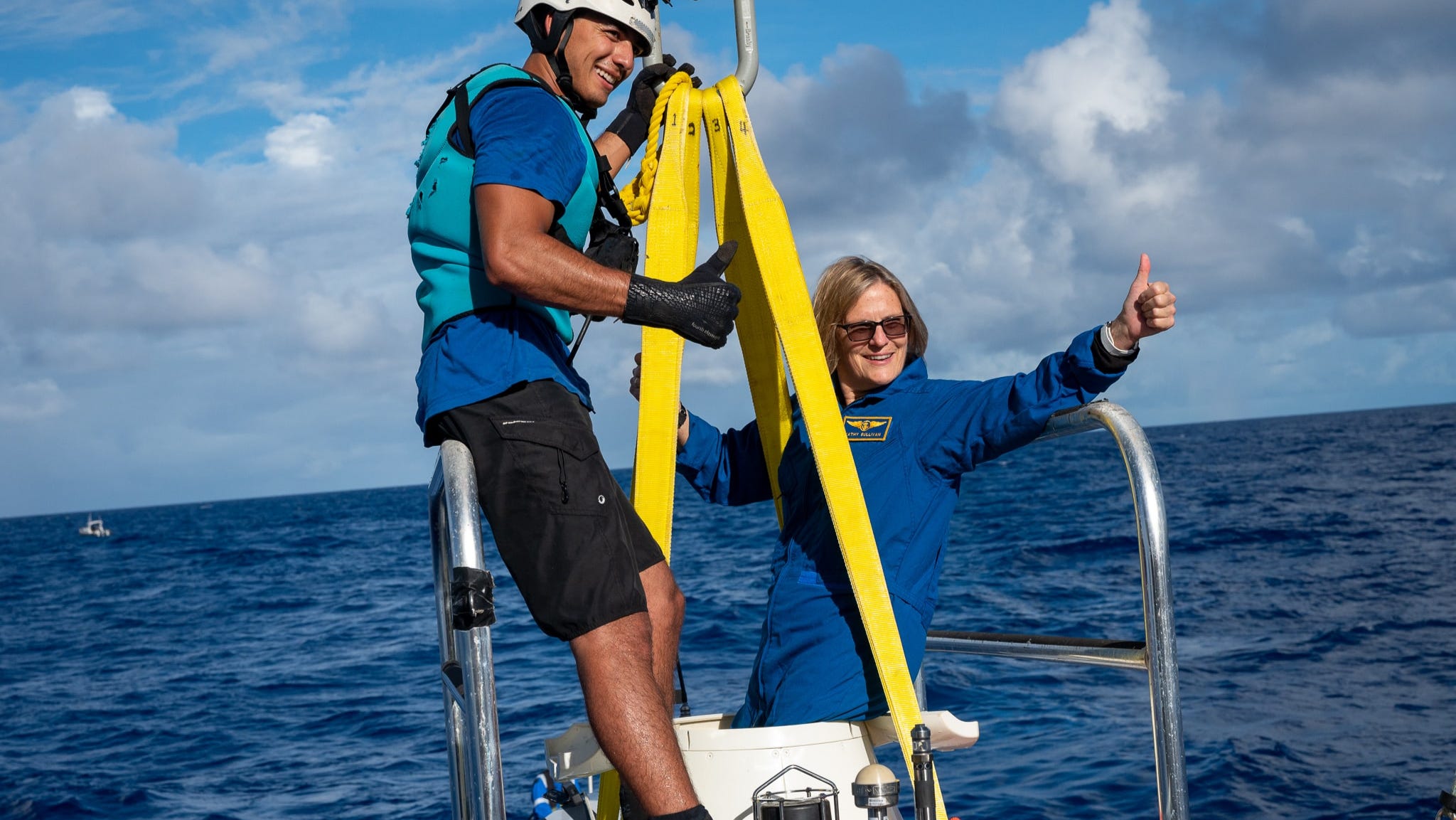
Her interest in space was always rooted firmly in the opportunities it gave to study the earth. “My deepest personal motivation for even filling out the astronaut application,” she said, “was that if by some miracle I beat the odds and got selected, I’d get to see the Earth with my own eyes.”
The great science communicator and astronomer Carl Sagan memorably persuaded NASA to turn the Voyager 1 camera around to photograph earth, what he later described as “a pale blue dot.” For Sullivan, looking at earth from space provided a different experience, saying she saw “a vivid blue beach ball.!”
The Edinburgh link for Dr Sullivan does not end with the visits last year, as Professor Iain Woodhouse, Chair of Applied Earth Observation at the University, said in his laureation address:
“Exactly 150 years ago, the HMS Challenger expedition, led by Sir Charles Wyville Thomson, a professor here at the University of Edinburgh, returned from its 3.5-year voyage circumnavigating the globe. This expedition transformed ocean science and defined modern oceanography. Today, it is quite fantastic that this University continues its tradition of celebrating scientific exploration by recognising Dr Sullivan, a scientist who has ventured to both outer space in the Challenger space shuttle and to the ocean’s deepest location, the Challenger Deep, both named after HMS Challenger.”