


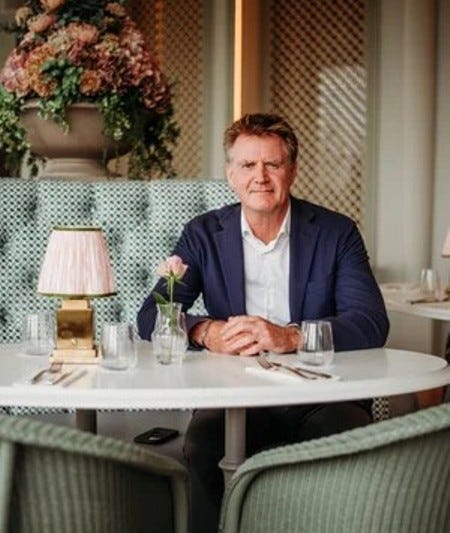
Marshall Dallas is excited. The man who led the transformation of Edinburgh International Conference Centre over a decade at the helm is on a new mission – to convince local and national politicians throughout Scotland of the impact the hospitality sector can have on economic regeneration and growth and to invest in it.
He took over at EICC in 2014, when the flagship conference venue was loss-making, and by the time he left last year it had recorded record revenues and profits, and had successfully negotiated the Covid pandemic.
Some 18 months after stepping down from the high-profile role of Chief Executive of EICC Ltd - after falling out with its arms-length owner City of Edinburgh Council over failed plans for EICC to work in partnership with developers to create a 350 bedroom hotel next to the EICC at Haymarket - he has established the Beò Partnership. He intends to work with local authorities, government and the sector “to deliver transformative developments that serve as economic engines for Scotland’s towns and cities.”
He’s already working with one Scottish council - but the work is at an early stage and the commercial agreement means he can’t identify it - and he is hoping for more. Including Edinburgh, where he believes the potential to build on the city’s existing successful visitor economy remains strong - perhaps more than is recognised by political decision-makers.
Jobs created fast
The word “Beò” comes from the Gaelic, meaning alive or vital, words he believes “rather sum up what good regeneration should achieve for a town or city.” And Marshall was feeling enthused as he spoke to The Inquirer.
He said: “First, the politicians need to understand the scale of the economic benefit. Hospitality is labour intensive, so it creates jobs quickly and at every skill level, and it drives footfall for the retail and culture around it.
“The most successful schemes are genuine public-private partnerships rather than a council simply selling a site to the highest bidder. I’d like to see the public purse used more boldly to de-risk and unlock projects, with private capital, operators and expertise bringing them to life. Done properly, the public sector gets a positive return: new business rates, high levels of local employment and more spend flowing into surrounding businesses.
“Just as importantly, a well-executed anchor project sets a template of success. Once investors and operators see a scheme working, they follow, and new or revitalised hospitality businesses cluster around it.”
He believes that is something that could be applied in busy Edinburgh with its successful visitor economy – where he points to the impact of the hospitality industry on empty buildings on Princes Street where hundreds of millions has already been invested in restorations and conversions to hotels.
Such regeneration is not only possible but advantageous in Edinburgh, he argues, away from the city centre in creating more vibrant neighbourhoods by bringing people in, and bringing them together. “It’s not just about the city centre. For example, on the north side of the city, Granton is interesting where an enormous regeneration project is happening. A well-constructed hospitality element could really help bring it alive.”
