


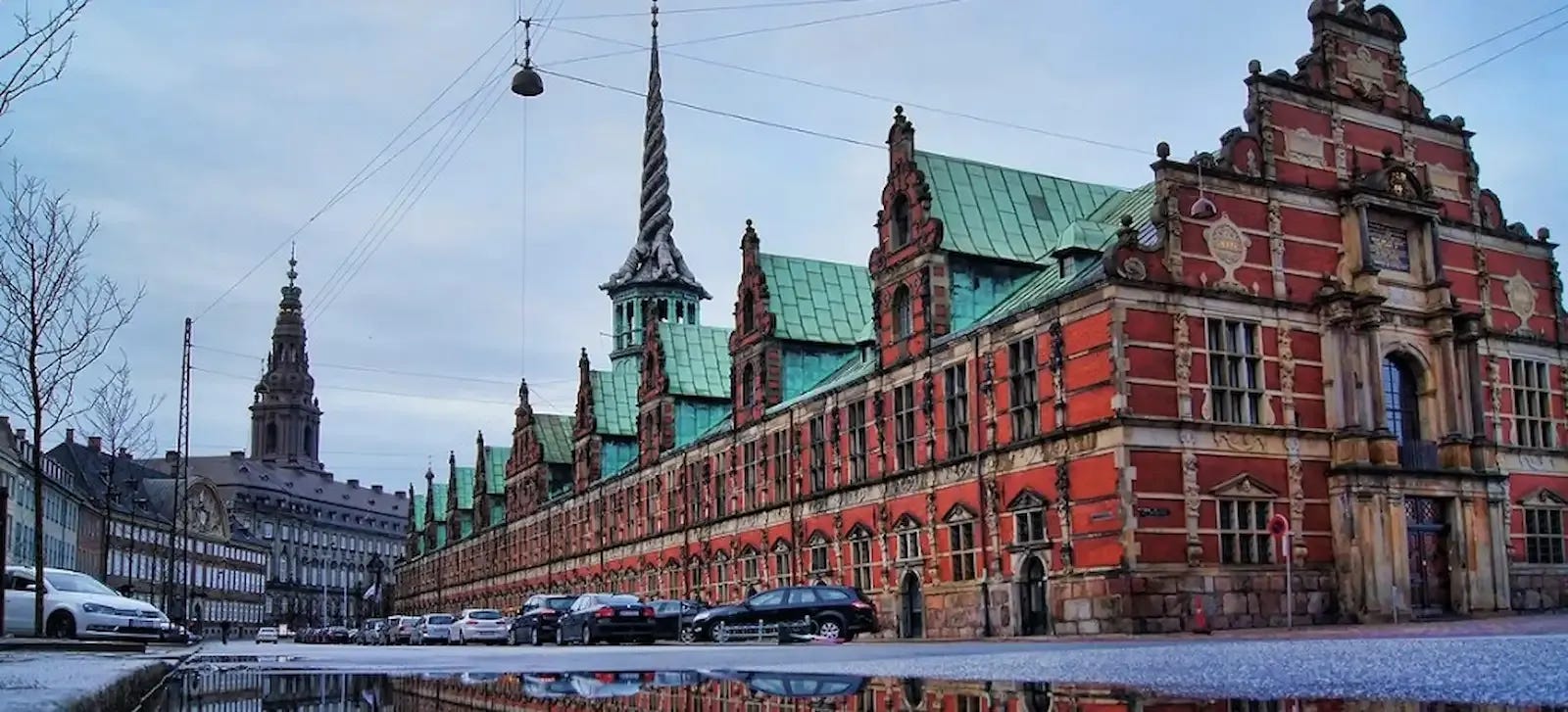
In Copenhagen, work continues apace to bring back to life the historic Borsen stock market building after it was ravaged by fire in 2024.
“We believe we’ve managed to strike a balance between form and function,” Brian Mikkelsen, boss of the building’s owner the Danish Chamber of Commerce, has previously said of the refurbishment plans, which are expected to complete in 2029. It includes restoring the copper roof using historic techniques, writes Emma Newlands.
Moving from Scandinavia’s capital to Scotland’s, the embers have only relatively recently cooled on the site of July’s fire on Princes Street.
But what will be the next incarnation of a building that has its own key role to play in its home city’s past, present, and future? Can it strike an artful balance between heritage and function that keeps up with the evolving nature of high streets? Or will it remain a derelict eyesore that blights rather than brightens for years to come?
There are obviously more practical pressing priorities to contend with in the short term. Edinburgh City Council Leader Jane Meagher told The Edinburgh Inquirer that it is “still too early to go into more detail, and particularly to speculate about what will happen in years to come… our priority now is making the site safe, and reopening Princes Street as soon as we can”.
But in terms of what examples can be followed in the long term, Danish building is cited by Professor Soledad Garcia Ferrari of the Edinburgh School of Architecture and Landscape Architecture as a city dealing with heritage in innovative ways. The Scandinavian city is transforming the building “into a public cultural centre,” she said.
Turning to Auld Reekie, the professor suggested that as well as any new incarnation potentially incorporating historic parts of the Princes Street building, it could “reflect over a future that enhances the ‘city of the festivals’, the ‘international city’, the ‘sustainable and just city’”.
However, the specialist in urban development and regeneration also expressed concern that plans for the site “might respond to objectives that are external to the city, to economic interests that reflect external market needs”. The city’s peak August Festivals season, currently in inescapably full flow, is worth an estimated £850 million to the Scottish economy per year, while debate rages around the new tourist tax that just come into force.
But the academic added: “I would expect that [a potential] development could benefit from an innovative partnership which could establish a co-design programme with local groups and organisations, particularly those that are capable of shaping a thriving future for Edinburgh.”
“There are a few examples where the private sector invests in developments that have a cultural purpose. Princes Street would benefit from a regeneration approach that is rooted in the city’s core values, heritage, history, art, performance, etc, and this building may be a starting point.
“The planning system in the UK is not a prescriptive one that determines exact functions of a building, but at the same time it is a system that may enable debate and negotiation.”
The city could organise an ideas competition for the site, she suggests, raising the international profile of the site and encouraging private investment in creative soultions.
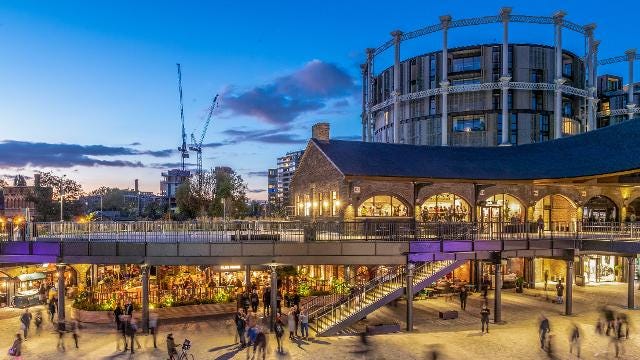
She points to Coal Drops Yard beside King’s Cross Station in London as one example of a private development which created an accessible public space and cultural venue in space which might have been purely commercial. Hull’s Fruitmarket Gallery, a public-private partnership waterfront regeneration, is another project she feels could provide inspiration for Edinburgh.
The next chapter
The fire is the latest dramatic chapter in the history of a building that started life more than a century ago as three-story tenements, later housing the Palace Hotel as Princes Street became more commercialised following the opening of Waverley Station. The site was then converted for use by the Scottish Liberal Club, while the Scottish Conservative Club constructed a building nearby, with both then forming part of a new Debenhams department store.
Fast-forward to today, and it is currently owned by Criterion Capital, the investment vehicle of property magnate Asif Aziz, which planned to house Scotland’s first Zedwell hotel on the premises. This, however, hadn’t materialised before the fire struck and its appetite for the scale of changes it may have to make to its proposals following the fire is unclear.
The plans of previous owner Legal & General also failed to see the light of day. The financial giant in 2020 outlined plans to invest more than £50m in a new hotel and city centre “hub,” including shopping, dining, hospitality, leisure and event space, topped and tailed by a Sky Bar and Basement Spa.
